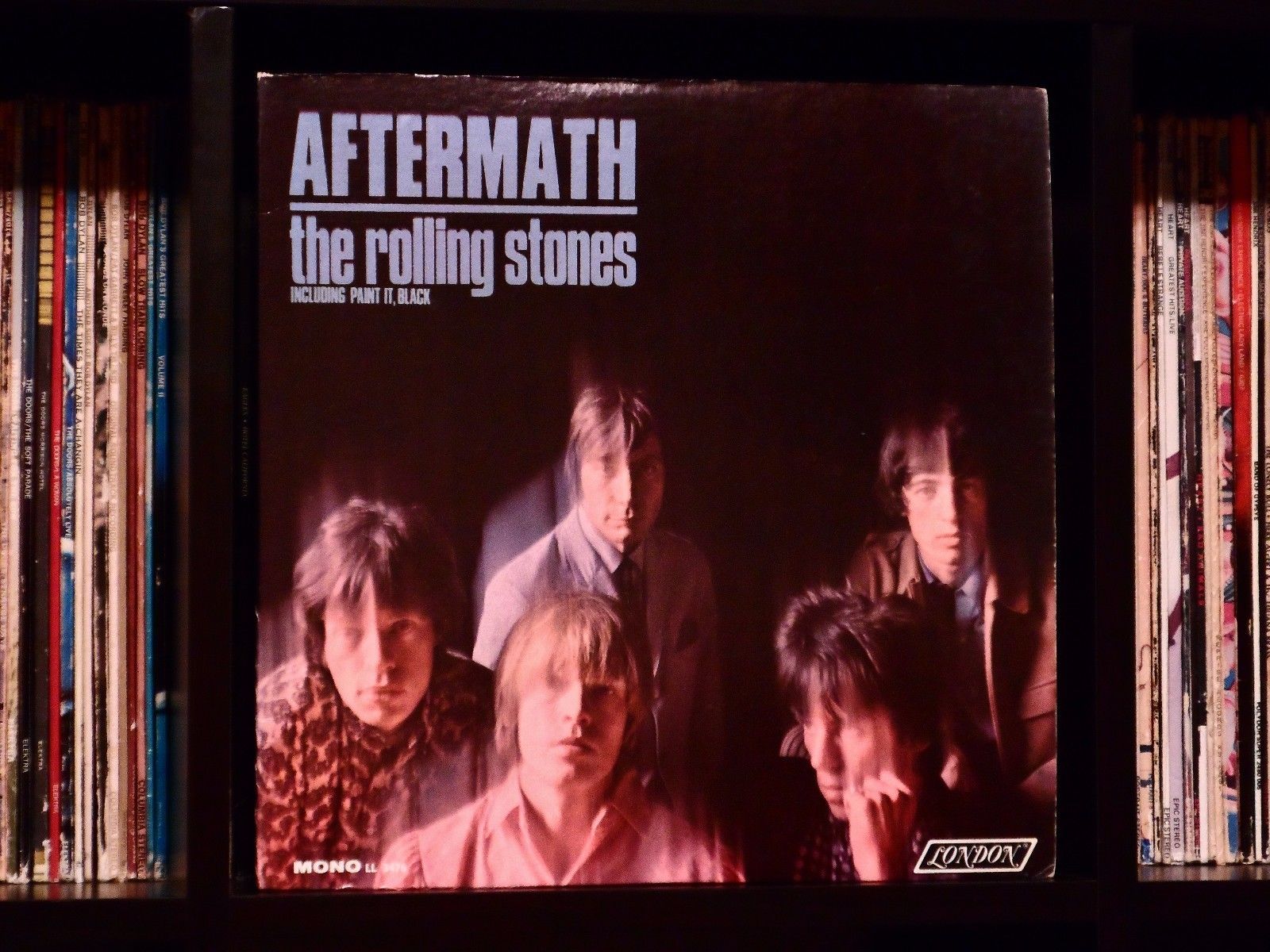
The Rolling Stones ? Aftermath ? RARE 1966 London Original US Mono LP w/EX Cover
$
40


Favourite Auctions
To save auctions to your favourites, please login
If you don't have an account, please register
Description
Welcome to Classic Cadillac Records! My goal is to provide each and every customer with the best possible buying experience, no matter the size of the order. Unlike most sellers, I advertise all my items clearly and in as much detail as possible, without shouting at you in all caps. I take multiple high quality pictures and never use stock photos, so you know exactly what you’re buying. I take great pride in my work and go the extra mile, which can clearly be seen in my listings compared to other sellers that put minimal effort into theirs. I visually grade all my records as accurately as possible and will never grade anything above Near Mint unless it’s still sealed. Please note that a visual grade can differ from a play grade, and am happy to spot check a record upon request. All orders are shipped within 1 business day (usually sooner) and packed with extra care to ensure fast, safe arrival. I combine shipping on multiple orders to save you money and gladly ship worldwide. Please look closely at all pictures, read all relevant details and ask any questions you may have before buying. I offer a full 30-day return policy on everything I sell, so buy with confidence! And most importantly, thanks for looking!
Aftermath Studio album by The Rolling Stones Released 15 April 1966 Recorded 3–8 December 1965, 6–9 March 1966 Studio RCA Studios, Hollywood, California Genre Rock, pop Length 53:20 Label Decca (UK) Producer Andrew Loog Oldham The Rolling Stones British chronology Out of Our Heads(1965) Aftermath
(1966) Between the Buttons
(1967)
Aftermath, released in April 1966 by Decca Records, is the fourth British studio album by the Rolling Stones. It was issued in the United States in June 1966 by London Records as the group's sixth American album. The album is considered an artistic breakthrough for the band: it is the first to consist entirely of Mick Jagger–Keith Richards compositions, while Brian Jones played a variety of instruments not usually associated with their music, including sitar, Appalachian dulcimer, marimbas and Japanese koto, as well as guitar, harmonica and keyboards, though much of the music is still rooted in Chicago electric blues. It was the first Rolling Stones album to be recorded entirely in the US, at the RCA Studios in California, and their first album released in true stereo. It is also one of the earliest rock albums to eclipse the 50-minute mark, and contains one of the earliest rock songs to eclipse the 10-minute mark ("Goin' Home").
The US edition of Aftermath was ranked No. 109 on the List of Rolling Stone's 500 Greatest Albums of All Time. The album was included in Robert Dimery's 1001 Albums You Must Hear Before You Die.
Creation
According to Bill Wyman in Rolling With The Stones, the album was originally conceived as the soundtrack for the never filmed feature Back, Behind And In Front. The whole deal fell off, though, when Jagger met with the potential director, Nicholas Ray, but didn't like him. These recording sessions were also very busy for the group, as they recorded 20 Jagger–Richards compositions while in Los Angeles. They were also much more comfortable during that album's sessions, as they had room and time for experimenting and polishing the arrangements, something they weren't able to do on earlier albums due to the "rushed" way these sessions were done.
The main engineer for the album was also pivotal in making the group feel comfortable during the sessions as he, according to Wyman, let them experiment with instrumentals and teaming up with session musicians like Jack Nitzsche to variegate their sound. Wyman also stated that he and Brian Jones would pick up instruments that were in the studio and experiment with various sounds for each song. This album is also notable for being the first LP to feature completely original material for the group, as Jagger and Richards were growing not only as songwriters, but as arrangers as well. In 2003, Jagger recalled that Richards was writing a lot of melodies and the group would perform them in a number of different ways which were mainly thought out in the studio, as opposed to the strict arranging and recording planning of other groups of the epoch.
Brian Jones was very important in shaping the album's tone and arrangements, as he experimented with a vast array of ethnic instruments such as the marimba, sitar, Appalachian dulcimer and organ, which contrasted with the folk, pop, country, blues and rock compositions, thus resulting in a diverse mix of musical styles. Aftermath was also the first record on which the majority of the guitar playing was left to Richards due to Jones' multi-instrumentalism, a habit that served as an intense training period for Richards' craftsmanship which culminated in his playing almost all of the guitars on Let It Bleed.
Critical reception
Professional ratings Review scores Source Rating AllMusic (UK) AllMusic (US) Blender Encyclopedia of Popular Music MusicHound NME 7/10 The Rolling Stone Album Guide Music StoryAt the time of its release, Aftermath was well received. Keith Altman of the New Musical Express stated that "those masterminds behind the electric machines – The Rolling Stones – have produced the finest value for money ever on their new LP." In retrospect the album is considered a milestone in the group's career. In his review for AllMusic, Ritchie Unterberger praises the combination of influences, but nevertheless opines that "some of the material is fairly ho-hum, to be honest, as Mick Jagger and Keith Richards were still prone to inconsistent songwriting; 'Goin' Home,' an 11-minute blues jam, was remarkable more for its barrier-crashing length than its content." Writing for MusicHound, Greg Kot highlights Jones' musical contributions while identifying Aftermath as the album that marked "the entry of these erstwhile blues traditionalists into the album-rock pantheon alongside Dylan and the Beatles, with its canny use of sitar, marimba, and dulcimer".
On its top 10 Rolling Stones albums list, NME listed Aftermath at no. 6, while stating that "1966’s ‘Aftermath’ saw the Stones at once rejecting and redefining rock’n’roll lore. The first all-originals Stones album, it's so classic-packed their reputation as sub-Beatles hopefuls never recovered."
Release history
As with all the Stones' pre-1967 LPs, different editions were released in the UK and the US. This was a common feature of British pop albums at that time – the same practice was applied to all the Beatles' releases before Sgt. Pepper's Lonely Heart's Club Band – because UK albums typically did not include tracks that had already been released as singles.
North American version
Aftermath Studio album by The Rolling Stones Released 20 June 1966 Recorded 3–8 December 1965, 6–9 March 1966 Genre Rock, pop, rhythm and blues, psychedelic rock Length 42:31 Label London (US) Producer Andrew Loog Oldham The Rolling Stones American chronology December's Children (And Everybody's)(1965) Aftermath
(1966) Between the Buttons
(1967) Singles from Aftermath
- "Paint It Black" / "Stupid Girl"
Released: 7 May 1966
The American version featured different cover art and a shorter running order that eliminated "Out of Time", "Take It or Leave It", "What to Do", and "Mother's Little Helper". All four tracks were later issued in the US on other compilations, and "Mother's Little Helper" was also issued as a single in 1966, peaking at No. 8 on the Billboard charts. In their place, the album substituted their current No. 1 hit "Paint It, Black". The revamped Aftermath still reached No. 2 in the US, eventually going platinum.
Track listingAll tracks written by Mick Jagger and Keith Richards.
Side one No. Title Length 1. "Paint It Black" 3:22 2. "Stupid Girl" 2:56 3. "Lady Jane" 3:08 4. "Under My Thumb" 3:41 5. "Doncha Bother Me" 2:41 6. "Think" 3:09 Side two No. Title Length 7. "Flight 505[1]" 3:27 8. "High and Dry" 3:08 9. "It's Not Easy" 2:56 10. "I Am Waiting" 3:11 11. "Goin' Home" 11:13Other songs
Title Length Notes "19th Nervous Breakdown" Single "Sad Day" "19th Nervous Breakdown" B-side "Long Long While" "Paint It, Black" B-sideCould You Walk on the Water
Several of the songs on the album were initially meant for the US release Could You Walk on the Water. This LP was rejected by Rolling Stones' American record company, London Records, who instead opted for the greatest hits package Big Hits (High Tide and Green Grass). The track list for the shelved album includes "Take It or Leave It", "Mother's Little Helper", "Think", "Goin' Home" (short edit) and "Doncha Bother Me". Of these, all five would be released on the UK version of Aftermath, three on the US version. Of the remaining tracks, "19th Nervous Breakdown" and "Sad Day" were released as a single, "Sittin' on the Fence" and "Ride On, Baby" were later to be released on the US album Flowers, along with "Mother's Little Helper" and "Take It or Leave It". "Looking Tired" remains unreleased to this day.
price rating