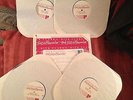
???? The Beatles ? Let It Be ? RARE 1970 Apple Records True 1st Press Vinyl LP ????
$
30


Favourite Auctions
To save auctions to your favourites, please login
If you don't have an account, please register
Description
Welcome to Classic Cadillac Records! My goal is to provide each and every customer with the best possible buying experience, no matter the size of the order. Unlike most sellers, I advertise all my items clearly and in as much detail as possible, without shouting at you in all caps. I take multiple high quality pictures and never use stock photos, so you know exactly what you?re buying. I take great pride in my work and go the extra mile, which can clearly be seen in my listings compared to other sellers that put minimal effort into theirs. I visually grade all my records as accurately as possible and will never grade anything above Near Mint unless it?s still sealed. Please note that a visual grade can differ from a play grade, and am happy to spot check a record upon request. All orders are shipped within 1 business day (usually sooner) and packed with extra care to ensure fast, safe arrival. I combine shipping on multiple orders to save you money and gladly ship worldwide. Please look closely at all pictures, read all relevant details and ask any questions you may have before buying. I offer a full 30-day return policy on everything I sell, so buy with confidence! And most importantly, thanks for looking!
Let It Be Studio album by the Beatles Released 8 May 1970 (UK)
18 May 1970 (US) Recorded
- February 1968
- January 1969
- January; March–April 1970
Apple Studio, London
Twickenham Film Studios, London Genre
- Rock[1]
- blues[2]
- R&B[2]
(1969) Let It Be
(1970) From Then to You
(1970) The Beatles North American chronology Hey Jude
(1970) Let It Be
(1970) The Beatles' Christmas Album
(1970) Singles from Let It Be
- "Let It Be"
Released: 6 March 1970 - "The Long and Winding Road" / "For You Blue"
Released: 11 May 1970
Let It Be is the twelfth and final studio album by the English rock band the Beatles. It was released on 8 May 1970, almost a month after the group's break-up. Like most of the band's previous releases, it was a number one album in many countries, including both the US and the UK, and was released in tandem with the motion picture of the same name.
The album was conceived as a return to the Beatles' earlier, less complicated approach to music. It was recorded and projected for release (under its original title of Get Back) before their album Abbey Road (1969); for this reason, some critics and fans, such as Mark Lewisohn, argue that Abbey Road should be considered the group's final album and Let It Be the penultimate. Rehearsals began at Twickenham Film Studios in January 1969 as part of a planned documentary showing the Beatles preparing to return to live performance. A project initiated by Paul McCartney, the filmed rehearsals were marked by ill-feeling, leading to George Harrison's temporary departure from the group. As a condition of his return, the Beatles reconvened at their own Apple Studio, where they completed the recordings with the help of guest musician Billy Preston.
Following several rejected mixes by Glyn Johns, a new version of the album was produced by Phil Spector in March–April 1970. While three songs from the sessions were released as singles before the album's release, "Get Back"/"Don't Let Me Down" and "Let It Be", the songs were remixed by Spector for the album and "Don't Let Me Down" was not included. Let It Be... Naked was released in 2003, an alternative version of the album, without any of Spector's production work and using some different takes of songs.
Background
By late 1968, more than two years after the Beatles gave up touring, Paul McCartney was eager for the group to perform live again. The sessions for that year's The Beatles (commonly known as the "White Album") had seen a number of serious arguments and strained relations among the group. McCartney felt that the band's cohesiveness had been lost through years without playing live, and from each Beatle playing parts individually in the studio and using overdubs rather than as a group. He believed that the best way to improve band relations and revive enthusiasm was to get the group back into rehearsal as quickly as possible and begin work on a new album that made little or no use of studio artifice or multiple overdubbing. This would allow the group to return to their roots by playing as a true ensemble, recording some or all of the new album during a one-off live concert or full concert tour. This idea mirrored the "back to basics" attitude of a number of rock musicians at this time in reaction against the psychedelic and progressive music dominant in the previous two years. The concert itself would be filmed for broadcast on worldwide television, with the album released to coincide with it.
McCartney also decided to invite audio engineer Glyn Johns to contribute to the recording. His proposed role was apparently not clearly defined, as McCartney also wished to retain the services of George Martin. As a result, Johns was not entirely sure whether he was supposed to be producing (or co-producing) the album or merely engineering it, with Martin having no clear idea of where he stood either. As it turned out, Johns acted as engineer, while the band used Martin for advice and ideas as they worked.
The other three Beatles were less enthusiastic about McCartney's proposals. They had just completed five months' work on their previous album and were sceptical about the prospects of returning to live performance. George Harrison in particular was opposed to the idea of touring, having taken the strongest dislike of any in the group to the gruelling tours of the Beatlemania era. However, he had recently enjoyed a series of jam sessions with Bob Dylan and the Band in America, rediscovering his liking for straightforward ensemble playing, and was attracted to the idea of the "back to basics" approach. The same approach greatly appealed to John Lennon, who had grown increasingly weary of what he regarded as the excessive technical artifice used on their recordings since Revolver and had also made a recent return to no-frills ensemble playing with an appearance on The Rolling Stones Rock and Roll Circus. In addition, all the group members had greatly enjoyed the recording of Lennon's The Beatles track "Happiness Is a Warm Gun", which, due to its multiple sections and time signature changes, had required the Beatles to focus sharply and revive their ensemble playing skills to lay down a coherent basic rhythm track. In the end, the group agreed to convene for rehearsals immediately following 1 January 1969, even though no firm direction for the new project had been agreed on.
Recording and production
The rehearsals and recording sessions for the album did not run smoothly. The acrimony that began during the recording of the White Album resumed soon after the rehearsals began. The Beatles were not getting along, and Lennon and McCartney weren't working together as before. McCartney assumed the role of the leader, while a detached Lennon was more interested in spending time and making music with his soon-to-be wife Yoko Ono, who was present in the studio with him at all times. Lennon was in a fragile emotional state, with Ono having suffered a miscarriage of their child just six weeks before the start of the sessions, following a drug bust the month before. All of these factors led to friction within the band. At one point, Harrison quit the group after several arguments with McCartney and a falling out with Lennon, due to the former's perfectionism and the latter's disengagement. Harrison was coaxed back a few days later. The film version is famous for showcasing a number of conflicts between the group members and has frequently been referred to as a documentary that was intended to show the making of an album but instead shows "the break-up of a band".
Twickenham rehearsals
Since all the rehearsals were to be filmed by Michael Lindsay-Hogg and his film crew, the decision was made to use a film studio for rehearsals and the sound stage at Twickenham Studios was chosen. Rehearsals began on 2 January 1969. Sound recordings were made on Nagra mono recorders solely for the purpose of the film sound track; no professional multi-track recordings were made of the Twickenham sessions as the Beatles were simply rehearsing for a proposed live performance. Phil Spector later used a snippet of dialogue from one of these rehearsals (Lennon announcing "Queen says no to pot-smoking FBI members") to introduce "For You Blue" on the finished album. Numerous bootleg records taken from the many hours of soundtrack recordings are in wide circulation, and various bits of music and dialogue from the same source were eventually used on the second disc of the 2003 release Let It Be... Naked.
The rehearsals quickly disintegrated into what one biographer characterised as a "hostile lethargy". On the first day, both Lennon and Harrison complained about the venue they were using to rehearse in. Although the very first song to be worked on, "I've Got a Feeling", had been semi co-written by Lennon and McCartney in the days leading up to the start, Lennon quickly ran out of ideas himself, and showed little interest in the songs McCartney and in particular Harrison were offering. Unable to generate much enthusiasm or focus their attention, the Beatles' playing was largely ragged and unprofessional, not helped by the fact that they were severely out of practice at playing as a live ensemble. McCartney tried to organise and encourage his bandmates, but his attempts to hold the band together and rally spirits were seen by the others as controlling and patronising. Matters came to a head on 6 January, when Harrison had a heated argument with McCartney during a rehearsal of "Two of Us", which later became one of the most famous sequences in the Let It Be film. What is not shown in the film is another, allegedly much more severe argument that Harrison had with Lennon on 10 January. Harrison had become fed up with Lennon's creative and communicative disengagement from the band and the two had a heated row during the day's lunch break. According to journalist Michael Housego of The Daily Sketch, this descended into violence with Harrison and Lennon allegedly throwing punches at each other. Harrison denied this in a 16 January interview for the Daily Express, saying: "There was no punch-up. We just fell out." After lunch, Harrison announced that he was "leaving the band now" and told the others "see you round the clubs". He promptly drove to his Esher home, Kinfauns, where he documented his frustrations with the group in a new composition, "Wah-Wah".
Continued sessions
American R&B pianist Billy Preston (pictured here in 1971) was asked to perform with the group to ease tension amongst the band membersA week later the band agreed to Harrison's terms for returning to the group, which included abandoning the cold and cavernous soundstage at Twickenham. Sessions resumed on 22 January when the Beatles moved to Apple Studio, in the basement of their Apple Corps building at 3 Savile Row, central London. Multi-track recording began on that date and continued until 31 January. Harrison brought in keyboardist Billy Preston to ease tensions and supplement the band's sound. Preston worked with the group throughout their stay at Apple.
As another condition of his rejoining the Beatles, Harrison had the others agree to drop the plan of making a return to public performance. From now on, the filming would simply capture the band making a new album. The band subsequently revisited the idea of playing a concert merely to provide a suitable ending for Lindsay-Hogg's film. On 30 January, the Beatles and Preston performed on the rooftop of the Apple building before a small audience of friends and employees. Only Harrison was against this, calling it "silly", but went along with it for the sake of the film. The performance was cut short by the police after complaints about noise. The complete concert has circulated among bootleg collectors for many years. Three numbers recorded at the rooftop concert – "Dig a Pony", "I've Got a Feeling" and "One After 909" – were subsequently issued on the Let It Be album, while several portions of dialogue from the live performance appear between tracks that were taped in the studio. The final rooftop number was that day's third performance of "Get Back" and featured McCartney's ad-lib about getting arrested for playing on rooftops. This version was released on Anthology 3.
The band played hundreds of songs during the Get Back/Let It Be sessions. Aside from original songs ultimately released on Let It Be, there were early versions of many tracks that appeared on Abbey Road, including "Mean Mr. Mustard", "She Came in Through the Bathroom Window", "Sun King", "Polythene Pam", "Golden Slumbers", "Carry That Weight", "Something", "Maxwell's Silver Hammer", "Oh! Darling", "Octopus's Garden" and "I Want You (She's So Heavy)". Other original compositions would eventually end up on Beatle solo albums, including Lennon's "Jealous Guy" (called "Child of Nature" at the time and originally written and rehearsed for the White Album) and "Gimme Some Truth"; Harrison's "All Things Must Pass", "Isn't It a Pity" (a song he initially put forward for Revolver in 1966), "Let It Down" and "Hear Me Lord"; and McCartney's "Another Day", "Teddy Boy", "Junk" (another track from the White Album era) and "The Back Seat of My Car". Throughout the rehearsals and recording sessions, much of the band's attention was focused on a broad range of covers, extended jams on 12-bar blues, and occasional new efforts such as Lennon's uncompleted "Madman". These covers included classical pieces such as Samuel Barber's "Adagio for Strings", jazz standards such as "Ain't She Sweet", and an array of songs from the early rock and roll era such as "Stand By Me", "Words of Love", "Lonely Sea", "Bésame Mucho" by Mexican composer Consuelo Velázquez (a song that was part of the Beatles' repertoire at the start of their career) and "Blue Suede Shoes". Several Bob Dylan songs were also played, including "Positively 4th Street", "All Along the Watchtower" and "I Shall Be Released". Only a handful of these cover versions were complete performances; the vast majority were fragmentary renditions with at most a verse or two of misremembered lyrics.
Two songs appearing on the album were not recorded during the January 1969 sessions. "Across the Universe" had been recorded at Abbey Road Studios in February 1968, and "I Me Mine" was not recorded until January 1970, after Lennon's unannounced departure from the group. Lewisohn recognises "I Me Mine" as the final song to be recorded by the Beatles before their official dissolution. Overdubbing of vocals and instrumentation for other tracks continued into April 1970, just before the album's release.
Final mixing
"Let It Be" MENU 0:00 The Beatles' "Let It Be" from Let It Be Problems playing this file? See media help.In March 1970, American producer Phil Spector was brought in by business manager Allen Klein to work on the album. Spector remixed all of the tracks, adding orchestra and choir to three tracks, and compiled the eventually released album – by now entitled Let It Be. The album and the film of the same name were released on 8 May 1970; the Beatles had already broken up by that time. The film captured the critical tensions within the band, and also included footage from the rooftop concert. The rooftop performance closed with the song "Get Back", and afterwards Lennon said, "I'd like to say 'thank you' on behalf of the group and ourselves, and I hope we passed the audition." The joke was added to the studio version of the song that appeared on the album, referring to the group's rejection by Decca Records in 1962
Several songs from the recording sessions have been released officially in versions different from those on the Let It Be album. "Get Back"/"Don't Let Me Down" and "Let It Be" were released as singles in 1969 and 1970, respectively. Seven tracks were live performances, in accordance with the original album concept: "I've Got a Feeling", "One After 909" and "Dig a Pony" from the rooftop performance, and "Two of Us", "Dig It", "Get Back" and "Maggie Mae" (not to be confused with the Rod Stewart song of the same name) from studio sessions. Contrary to the original concept, the album versions of "For You Blue", "I Me Mine", "Let It Be" and "The Long and Winding Road" feature editing, splicing and/or overdubs. "Don't Let Me Down", also recorded live and previously released as the B-side of "Get Back", was not included on the album. The third track on the album is an edited version of the original 1968 recording of "Across the Universe", slowed down from D-natural to D-flat, which had only been rehearsed at Twickenham and not professionally recorded on multi-track tape during the January 1969 sessions.
McCartney was deeply dissatisfied with Spector's treatment of some songs, particularly "The Long and Winding Road". McCartney had conceived of the song as a simple piano ballad, but Spector dubbed in orchestral and choral accompaniment. McCartney unsuccessfully attempted to halt release of Spector's version or at least have it altered. Despite the criticisms levelled at Spector over the years for his handling of the material, Lennon defended him in his December 1970 Rolling Stone interview, saying, "He was given the shittiest load of badly-recorded shit with a lousy feeling to it ever, and he made something of it." When EMI informed Martin that he would not get a production credit because Spector produced the final version, he commented "I produced the original, and what you should do is have a credit saying 'Produced by George Martin, over-produced by Phil Spector'".
Critical reception
Professional ratings Review scores Source Rating AllMusic The A.V. Club B? Billboard Chicago Sun-Times Christgau's Record Guide A? The Daily Telegraph Encyclopedia of Popular Music Pitchfork 9.1/10 The Rolling Stone Album Guide Sputnikmusic 4/5Let It Be topped albums charts in both America and the UK, and the "Let It Be" single and "The Long and Winding Road" also reached number one in the US. Despite its commercial success, according to Beatles Diary author Keith Badman, "reviews [were] not good". NME critic Alan Smith wrote: "If the new Beatles' soundtrack is to be their last then it will stand as a cheapskate epitaph, a cardboard tombstone, a sad and tatty end to a musical fusion which wiped clean and drew again the face of pop." Smith added that the album showed "contempt for the intelligence of today's record-buyer" and that the Beatles had "sold out all the principles for which they ever stood". Reviewing for Rolling Stone, John Mendelsohn was also critical of the album, citing Spector's production embellishments as a weakness: "Musically, boys, you passed the audition. In terms of having the judgment to avoid either over-producing yourselves or casting the fate of your get-back statement to the most notorious of all over-producers, you didn't."
However, John Gabree of High Fidelity magazine found the album "not nearly as bad as the movie" and "positively wonderful" relative to the recent solo releases by McCartney and Starr. Gabree admired "Let It Be", "Get Back" and "Two of Us", but derided "The Long and Winding Road" and "Across the Universe", the last of which he described as "bloated and self-satisfied – the kind of song we've come to expect from these rich, privileged prototeenagers". While questioning whether the Beatles' split would remain permanent, William Mann of The Times described Let It Be as "Not a breakthrough record, unless for the predominance of informal, unedited live takes; but definitely a record to give lasting pleasure. They aren't having to scrape the barrel yet." In his review for The Sunday Times, Derek Jewell deemed the album to be "a last will and testament, from the blackly funereal packaging to the music itself, which sums up so much of what The Beatles as artists have been – unmatchably brilliant at their best, careless and self-indulgent at their least."
In a retrospective review, Richie Unterberger of AllMusic described Let It Be as the "only Beatles album to occasion negative, even hostile reviews", but felt that it was "on the whole underrated". He singles out "some good moments of straight hard rock in 'I've Got a Feeling' and 'Dig a Pony'", and praises "Let It Be", "Get Back", and "the folky 'Two of Us', with John and Paul harmonising together". Despite a mixed review from Rolling Stone at the time of its release, the album was ranked number 86 in the magazine's list of the 500 greatest albums of all time in 2003 but was moved down to number 392 in the 2012 version.
Release history
Original release
The original box set packaging of Let It Be. It contained a 160-page booklet with photos and quotes from the film.In the UK and Canada, the album was originally issued by Apple (and distributed by EMI) in a lavish box that also included a book featuring stills from the Let It Be film. Several months later, the album was reissued in a standard LP jacket (the same one that was included in the box set), sans book. In the United States, the Let It Be album was issued in a gatefold cover, without the book.
Original American copies of Let It Be bore the Apple Records label, but because United Artists distributed the film, United Artists Records held the rights to distribute LP copies of the album in America. (EMI subsidiary Capitol, which held the Beatles' US contract, had simultaneous rights to the music on the album, allowing them to distribute pre-recorded tape versions of the album, as well as to release its songs on singles and compilation albums. Capitol, however, did not have the rights to release or distribute the album in LP format.) To indicate that Let It Be was not distributed by Capitol, the Apple logo and record label in America sported a red apple, rather than the Beatles' usual green Granny Smith apple.
In early 1976, when the Beatles' EMI contract expired, the group's catalogue in the US transferred from Apple to Capitol; Let It Be, however, went out-of-print in America for three years. In 1979, Capitol/EMI acquired United Artists Records; with this acquisition, Capitol acquired the rights to two Beatles albums previously distributed in the US by United Artists, Let It Be and the soundtrack album A Hard Day's Night (as A Hard Day's Night had never been issued by Apple in the US, it remained in print in America under the United Artists label when the Apple contract expired in 1976). Shortly after acquiring United Artists Records, Capitol re-issued both UA distributed Beatles albums on the Capitol label.
The album was first released on CD on 19 October 1987. Along with the other Beatles albums, EMI released a re-mastered CD on 9 September 2009 and an electronic version (24-bit FLAC and MP3 formats on a USB drive) on 4 December 2009.
The Beatles won the Academy Award for the Best Original Song Score in 1970 for the songs in the film.
Track listing
All tracks written by Lennon–McCartney, except where noted. Side one No. Title Lead vocals Length 1. "Two of Us" McCartney with Lennon 3:36 2. "Dig a Pony" Lennon 3:54 3. "Across the Universe" Lennon 3:48 4. "I Me Mine" (George Harrison) Harrison 2:26 5. "Dig It" (Lennon, McCartney, Harrison, Richard Starkey) Lennon 0:50 6. "Let It Be" McCartney 4:03 7. "Maggie Mae" (Traditional, arr. Lennon, McCartney, Harrison, Starkey) Lennon with McCartney 0:40 Side two No. Title Lead vocals Length 1. "I've Got a Feeling" McCartney with Lennon 3:37 2. "One After 909" Lennon with McCartney 2:54 3. "The Long and Winding Road" McCartney 3:38 4. "For You Blue" (Harrison) Harrison 2:32 5. "Get Back" McCartney 3:09price rating