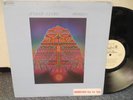
Sealed LP: Pharoah Sanders: Elevation
$
25


$ 25
Sold For
Jun 30, 2010
Sold Date
Jun 23, 2010
Start Date
1
Number Of Bids
USA
Country Of Seller
eBay
Sold at
Favourite Auctions
To save auctions to your favourites, please login
If you don't have an account, please register
Description
Pharoah Sanders: Elevation
FACTORY SEALED LP
Format: Sealed LPRecord Company/Release Number: ABC/Impulse: AS-9261
Bar Code: NONE
Original release date: 1973
Country: U.S.A.
Condition of the cover: Near Mint
Condition of the record: Sealed - Assumed Mint
Shipping Weight: 1 pounds, 4 ounces
Inventory number: 209624
Notes: Minor "ding" to the upper left corner of the cover. Please contact me if you have any difficulty viewing the photos.
Songs:
- Elevation
- Greeting to Saud (Brother McCoy Tyner)
- Ore-Se-Rere
- Gathering
- Spiritual Blessing
- Ed Michel: Producer
- Pharoah Sanders: Flute, Percussion, Sax (Tenor), Bells, Shaker, Main Performer, Vocals, Sax (Soprano)
- Michael White: Violin
- Bob Irwin: Mastering
- Tim Bryant: Design
- Hollis King: Art Direction
- Bryan Koniarz: Producer
- Ken Druker: Executive Producer
- Myles Wiener: Engineer
- Jayme Pieruzzi: Mastering
- John Blue: Percussion, Vocals
- Sedatrius Brown: Vocals
- Bodhi Wind: Cover Illustration
- Kenneth Nash: Percussion
- Baker Bigsby: Engineer, Mixing
- Ken Caillat: Engineer
- Thabo Michael Carvin: Drums
- Calvin Hill: Bass, Tambourine, Vocals
- Jimmy Hopps: Percussion
- Stephen Jarvis: Engineer
- Lawrence Killian: Percussion, Vocals, Bell Tree, Conga
- Kathryn King: Engineer
- Joe Bonner: Percussion, Harmonies, Piano, Cowbell, Wood Flute, Vocals
- Michael Carvin: Drums, Vocals
- Elevation, Pharoah Sanders' final album for Impulse!, is a mixed bag. Four of the five cuts were recorded live at the Ash Grove in Los Angeles in September of 1973, and the lone studio track, "Greeting to Saud (Brother McCoy Tyner)," was recorded in the same month at Wally Heider's studio. The live date is fairly cohesive, with beautiful modal piano work from Joe Bonner, Pharoah playing tenor and soprano as well as a myriad of percussion instruments and vocalizing in places, and a percussion and rhythm section that included Michael Carvin on drums, bassist Calvin Hill, and hand drummers John Blue and Lawrence Killian. The standout on the set is the opener. At 18 minutes, it's the longest thing here and gives the band a chance to stretch into African and Latin terrains. Sanders' long, loping, suspended lines create a kind of melodic head that is underscored by Bonner's hypnotically repetitive piano work, playing the same chord progression over and over again as he begins his solos (one on each horn). Somewhere near the five-minute mark, Pharoah enters into a primal wail and the whole thing becomes unhinged, moving into a deep blowing session of free improv. Honks, squeals, wails, and Bonner pounding the hell out of the piano erase any trace of what came before, and this goes on for four minutes before the theme restates itself and once more the magic begins. It's utterly compelling and engaging. "Saud" finds a host of percussionists (including Sanders) along with Hill on tamboura, Bonner, and violinist Michael White. It's a subtle and droning work, full of a constant hum. The other long track, "The Gathering," clocks in at almost 14 minutes, but instead of being a somber nocturnal work it's a lively South African-inspired work that nods to Dollar Brand for inspiration. A gorgeous, nearly carnival piece, it rolls and chugs and runs along on the steam created by Bonner's beautiful chord work. The chorus of vocals chanting in the foreground and background adds to the party feel, but once again it choogles right off the track into some rather angry and then spooky free improv, with a fine solo by Hill. This may not rate as highly as some of Sanders' other recordings for the label like Thembi or Karma, but there is plenty here for fans, and it is well worth the investigation and the purchase. ~ Thom Jurek, All Music Guide
- Pharoah Sanders possesses one of the most distinctive tenor saxophone sounds in jazz. Harmonically rich and heavy with overtones, Sanders' sound can be as raw and abrasive as it is possible for a saxophonist to produce. Yet, Sanders is highly regarded to the point of reverence by a great many jazz fans. Although he made his name with expressionistic, nearly anarchic free jazz in John Coltrane's late ensembles of the mid-'60s, Sanders' later music is guided by more graceful concerns. In the free-time, ultra-dense cauldron that was Coltrane's last artistic stand, Sanders relied heavily on the non-specific pitches and timbral distortions pioneered by Albert Ayler and further developed by Coltrane himself. The hallmarks of Sanders' playing at that time were naked aggression and unrestrained passion. In the years after Coltrane's death, however, Sanders explored other, somewhat gentler and perhaps more cerebral avenues -- without, it should be added, sacrificing any of the intensity that defined his work as an apprentice to Coltrane.
- Pharoah Sanders (a corruption of his given name, Ferrell Sanders) was born into a musical family. Both his mother and father taught music, his mother privately and his father in public schools. Sanders' first instrument was the clarinet, but he switched to tenor sax as a high school student, under the influence of his band director, Jimmy Cannon. Cannon also exposed Sanders to jazz for the first time. Sanders' early favorites included Harold Land, James Moody, Sonny Rollins, Charlie Parker, and John Coltrane. As a teenager, he played blues gigs for ten and 15 dollars a night around Little Rock, backing such blues greats as Bobby "Blue" Bland and Junior Parker. After high school, Sanders moved to Oakland, CA, where he lived with relatives. He attended Oakland Junior College, studying art and music. Known in the San Francisco Bay Area as "Little Rock," Sanders soon began playing bebop, rhythm & blues, and free jazz with many of the region's finest musicians, including fellow saxophonists Dewey Redman and Sonny Simmons, as well as pianist Ed Kelly and drummer Smiley Winters. In 1961, Sanders moved to New York, where he struggled. Unable to make a living with his music, Sanders took to pawning his horn, working non-musical jobs, and sometimes sleeping on the subway. During this period he played with a number of free jazz luminaries, including Sun Ra, Don Cherry, and Billy Higgins. Sanders formed his first group in 1963, with pianist John Hicks (with whom he would continue to play off-and-on into the '90s), bassist Wilbur Ware, and drummer Higgins. The group played an engagement at New York's Village Gate. A member of the audience was John Coltrane, who apparently liked what he heard. In late 1964, Coltrane asked Sanders to sit in with his band. By the next year, Sanders was playing regularly with the Coltrane group, although he was never made an official member of the band. Coltrane's ensembles with Sanders were some of the most controversial in the history of jazz. Their music, as represented by the group's recordings -- Om, Live at the Village Vanguard Again, and Live in Seattle among them -- represents a near total desertion of traditional jazz concepts, like swing and functional harmony, in favor of a teeming, irregularly structured, organic mixture of sound for sound's sake. Strength was a necessity in that band, and as Coltrane realized, Sanders had it in abundance.
- Sanders made his first record as a leader in 1964 for the ESP label. After John Coltrane's death in 1967, Sanders worked briefly with his widow, Alice Coltrane. From the late '60s, he worked primarily as a leader of his own ensembles. From 1966-1971, Sanders released several albums on Impulse, including Tauhid (1966), Karma (1969), Black Unity (1971), and Thembi (1971). In the mid-'70s, Sanders recorded his most commercial effort, Love Will Find a Way (Arista, 1977); it turned out to be a brief detour. From the late '70s until 1987, he recorded for the small independent label Theresa. From 1987, Sanders recorded for the Evidence and Timeless labels. The former bought Theresa records in 1991 and subsequently re-released Sanders' output for that company. In 1995, Sanders made his first major-label album in many years, Message From Home (produced by Bill Laswell for Verve). The two followed that one up in 1999 with Save Our Children. In 2000, Sanders released Spirits -- a multi-ethnic live suite with Hamid Drake and Adam Rudolph. In the decades after his first recordings with Coltrane, Sanders developed into a more well-rounded artist, capable of playing convincingly in a variety of contexts, from free to mainstream. Some of his best work is his most accessible. As a mature artist, Sanders discovered a hard-edged lyricism that has served him well.
FINE PRINT
- All pictures are of the exact item being sold.
- This record came from a record store called "Phantasmagoria" which was located in Allentown, Pennsylvania. Phantasmagoria went out of business in 1978. I purchased most of their leftover inventory some years later when I owned a new & used record store in Catasauqua called "Music Madness".
- Phantasmagoria used round colored stickers to indicate the price of the albums. They had a sign on the wall with the color sticker combinations for the customers to use so they knew the price of the albums. Most of the albums still have these stickers on them, and in some rare cases, the stickers are written on. Some of the records have prices on them. This is the price you would have paid for the record in 1978 if you would have bought it at Phantasmagoria. Please don't confuse these prices with their current value.
- Your item(s) will be shipped within two business days after I receive your payment.
- I always leave feedback before your item ships. Please consider leaving feedback for me after you have had a chance to inspect and enjoy this record.
- Please avoid questions on the last day of the auction. I might not have enough time to give you an answer before the auction ends.
- Payment by PayPal is preferred. Other payment methods can be discussed. Local pick-ups will require cash at the time of pick-up.
- Almost all album reviews, credits and artist biographies are from All Music Guide. If you haven't been to their web site, you should check it out. It's one of the most comprehensive music references on the internet. In some cases, the above credits may include reissue (CD) information. Obviously any credits referenced to CDs do not apply to these album releases.
- All sealed albums are being sold as collector's items and cannot be returned due to manufacturer's defects. It may be almost impossible to replace many of the sealed albums that I am selling.
- NOTE ABOUT NON-PAYMENT: Unless previous arrangements are made with me, on the 7th day an auction is not paid for, I will submit an unpaid item request to eBay, and start sending daily reminder notices. If I do not get any replies from the winning bidder by the tenth day, the bidder will be blocked from bidding on any more of my auctions. On the 14th day I will cancel the auction and let eBay deal with the bidder at that time.
I DO NOT END ANY OF MY AUCTIONS EARLY. PLEASE DON'T ASK (unless you are willing to offer enough to pay off my mortgage).
IT IS NOT MY INTENTION TO MAKE A PROFIT ON THE POSTAGE. ANY ACCIDENTAL OVERCHARGE GREATER THAN $1 WILL BE REFUNDED TO YOU. (I've been know to refund less than $1 overcharges too.)
Shipping
Domestic (U.S.A.) buyers:- Priority Mail will be the only option available if you are the winning bidder. If you want your purchase shipped by Media Mail, you will have the option to request a revised invoice.
- Priority Mail: Buyer pays the actual USPS cost.
- Pick-up is fine with me. Just be prepared to pay by cash. No shipping fees apply. E-mail me to setup a time that is convenient for the both of us.
- All uninsured and underinsured shipments are the responsibility of the buyer.
- Foreign buyers must pay with US dollars through PayPal only. Please do not send cash - it's too risky.
- SHIPPING: I will send an invoice with options for the cost of shipping after the auction ends. You will have the choice of the following two options:
- USPS First Class International: Estimated delivery time to most countries is about 10-30 days. (Customs may delay delivery)
- USPS Priority Mail International: Estimated delivery time to most countries is about 6-10 days. (Customs may delay delivery)
- All uninsured and underinsured shipments are the responsibility of the buyer.
- The buyer is responsible for all customs regulations and fees in their own country.
- I will value all records at $5 on the Customs Form. Please let me know if you want the actual winning bid price listed on the Customs Form.
If you also collect Grand Funk, let me know if you have anything that you might want to sell or trade. I am always looking to add something new to my collection.
price rating