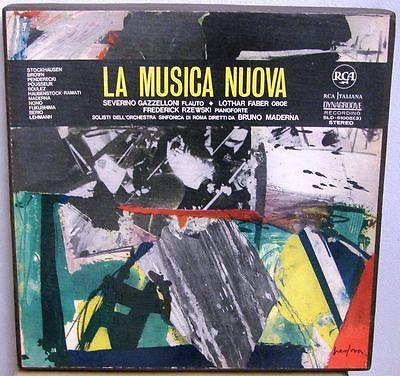
STOCKHAUSEN+EARLE BROWN+LUIGI NONO 3-LP BOX EMILIO VEDOVA+TOTI SCIALOJA ARTWORK
$
85


Favourite Auctions
To save auctions to your favourites, please login
If you don't have an account, please register
Description
LUIGI NONO / KARLHEINZ STOCKHAUSEN / HENRI POUSSEUR / BRUNO MADERNA / PIERRE BOULEZ / KRZYSZTOF PENDERECKI / ROMAN HAUBENSTOCK-RAMATI / KAZUO FUKUSHIMA
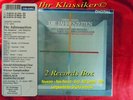
LA MUSICA NUOVA 3-LP BOXSET
RCA Italiana
w/book
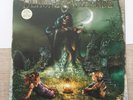
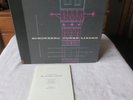
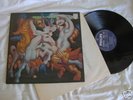
Deluxe boxset original italian release with pieces from Karlheinz Stockhausen, Luigi Nono, Earle Brown, etc. Includes 2 rice papers with graphic notations and 3 collaged artworks from Emilio Vedova, Toti Scialoja and Achille Perilli.
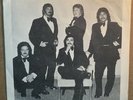
Some info on the release: Rare original issue, released in Italy sometime in the 60's on the great RCA Italiana label. Beautiful deluxe issue with great collaged artworks by italian artists Emilio Vedova, Toti Scialoja and Achille Perilli coming inside a beautiful 26 page book that also contains biographies of the composers and photos from the recordings. Are contained historic recordings from pioneer avant-garde composers like Luciano Berio, Karlheinz Stockhausen, Earle Brown, Pierre Boulez, Roman Haubenstock-Ramati and many more. This was the original 1st edition of the release that were subsequently included in the series "The New Music" volumes 1-3 that were re-released by RCA in Usa and have been among the most well known records of avant-garde music. Includes performers like Frederic Rzewski, Severino Gazzelloni and Orchestra Sinfonica di Roma.
Karlheinz Stockhausen (22 August 1928 – 5 December 2007) was a German composer, widely acknowledged by critics as one of the most important but also controversial composers of the twentieth and early twenty-first centuries. Another critic calls him "one of the great visionaries of 20th-century music" (Hewett 2007). He is known for his ground-breaking work in electronic music, aleatory (controlled chance) in serial composition, and musical spatialization. He was educated at the Hochschule für Musik Köln and the University of Cologne, and later studied with Olivier Messiaen in Paris, and with Werner Meyer-Eppler at the University of Bonn. One of the leading figures of the Darmstadt School, his compositions and theories were and remain widely influential, not only on composers of art music, but also on jazz and popular-music artists. His works, composed over a period of nearly sixty years, eschew traditional forms. In addition to electronic music—both with and without live performers—they range from miniatures for musical boxes through works for solo instruments, songs, chamber music, choral and orchestral music, to a cycle of seven full-length operas. Stockhausen met the Belgian composer Karel Goeyvaerts, who had just completed studies with Olivier Messiaen (analysis) and Darius Milhaud (composition) in Paris, and Stockhausen resolved to do likewise. He arrived in Paris on 8 January 1952 and began attending Messiaen's courses in aesthetics and analysis, as well as Milhaud's composition classes. He continued with Messiaen for a year, but was disappointed with Milhaud and abandoned his lessons after a few weeks. In March 1953, he left Paris to take up a position as assistant to Herbert Eimert at the newly established Electronic Music Studio of Nordwestdeutscher Rundfunk (NWDR) (from 1 January 1955, Westdeutscher Rundfunk, or WDR) in Cologne (Kurtz 1992, 56–57). In 1962, he would succeeded Eimert as director of the studio (Morawska-Büngeler 1988, 19). From 1954 to 1956, he studied phonetics, acoustics, and information theory with Werner Meyer-Eppler at the University of Bonn (Kurtz 1992, 68–72). Together with Eimert, Stockhausen edited the influential journal Die Reihe from 1955 to 1962. Stockhausen's two early Electronic Studies (especially the second) had a powerful influence on the subsequent development of electronic music in the 1950s and 1960s, particularly in the work of the Italian Franco Evangelisti and the Poles Andrzej Dobrowolski and W?odzimierz Koto?ski. French composer Jean-Claude Éloy regards Stockhausen as the most important composer of the second half of the twentieth century, and cites virtually "all his catalog of works" as "a powerful discoveration, and a true revelation". Dutch composer Louis Andriessen acknowledged the influence of Stockhausen's Momente in his pivotal work Contra tempus of 1968. German composer Wolfgang Rihm, who studied with Stockhausen, was influenced by Momente, Hymnen, and Inori. Jazz musicians such as Miles Davis, Cecil Taylor, Charles Mingus, Herbie Hancock, Yusef Lateef, and Anthony Braxton cite Stockhausen as an influence. Stockhausen was influential within pop and rock music as well. Frank Zappa acknowledges Stockhausen in the liner notes of Freak Out!, his 1966 debut with the Mothers of Invention. Rick Wright and Roger Waters of Pink Floyd also acknowledge Stockhausen as an influence. San Francisco psychedelic groups Jefferson Airplane and the Grateful Dead are vaguely said to have done the same, though Stockhausen himself merely says the former band included students of Luciano Berio and both were "well orientated toward new music". Founding members of Cologne-based experimental band Can, Irmin Schmidt and Holger Czukay, state they studied with Stockhausen, and this is confirmed to have been from 1963 to 1966 at the Cologne Courses for New Music. German electronic pioneers Kraftwerk also say they studied with Stockhausen, and Icelandic vocalist Björk has acknowledged Stockhausen's influence. He's also mentioned in the Nurse with wound list of influences.
Born in Venice, Luigi Nono was a member of a wealthy artistic family, and his grandfather was a notable painter. Nono began music lessons with Gian Francesco Malipiero in 1941 at the Venice Conservatory. After graduating with a degree in law from the University of Padua, he was given encouragement in composition by Bruno Maderna. Through Maderna, he became acquainted with Hermann Scherchen—then Maderna's conducting teacher—who gave Nono further tuition and was an early mentor and advocate of his music.
It was Scherchen who presented Nono's first acknowledged work, the Variazione canoniche sulla serie dell'op. 41 di A. Schönberg in 1950, at the Internationale Ferienkurse für Neue Musik Darmstadt—a centre for the rediscovery of modern music after the devastation of dictatorship and war. The Variazioni canoniche, based on the twelve-tone series of Arnold Schoenberg's Op 41, marked Nono as a committed composer of anti-fascist political orientation (Annibaldi 1980). Nono had been a member of the Italian Resistance during the Second World War. In fact Nono's striking political commitment, while allying him with some of his contemporaries at Darmstadt such as Henri Pousseur and in the earlier days Hans Werner Henze, distinguished him from others, including Pierre Boulez and Karlheinz Stockhausen. Nevertheless, it was with Boulez and Stockhausen that Nono became one of the leaders of the New Music during the 1950s. While Nono was against any sort of chance or aleatoric technique and especially John Cage. Nono influenced many contemporary composers like György Kurtág, Wolfgang Rihm, Helmut Lachenmann, Salvatore Sciarrino, Heinz Holliger, Brian Ferneyhough, and Nicolaus A. Huber. Other distinguished admirers include architect Daniel Liebeskind and novelist Umberto Eco (Das Nonoprojekt), for Nono totally reconstructed music and engaged in the most fundamental issues with regards to its expressivity.
Emilio Vedova was born in Venice into a working-class family. After an initial formative experience within Expressionism, he joined the group "Corrente" (1942–43), which included other artists such as Renato Guttuso and Renato Birolli. He participated in the Resistenza and played a key role in the post-war Italian art movement, which was opening up and contributing originally to the European avant-garde. In 1946 he co-signed the manifesto of the Fronte Nuovo delle Arti, which included several Italian artists who were to become famous. In 1952 he became a member of the influential Gruppo degli Otto (Afro, Birolli, Corpora, Santomaso, Morlotti, Vedova, Moreni, Turcato), organised by the critic Lionello Venturi. His work exerted a significant influence on the Arte Povera group. He later established a fruitful cooperation with composer Luigi Nono, designing scenographies and costumes for the opera Intolleranza 1960. In 1984 he designed a highly original light setting for Nono's opera Prometeo at La Fenice. Nono dedicated to Vedova his first work for magnetic tape Omaggio a Vedova (1960).
Condition: Vinyls lie in very good+ condition, look to have some surface marks and play nicely with occasional crackle, while cover lies in very good++ shape, with some age wear (see picture).
Tracklist
A1 Karlheinz Stockhausen – Kontra-Punkte A2 Krzysztof Penderecki – Aux Victimes De Hiroshima - Thrène Conductor – Bruno MadernaEnsemble – Solisti Dell'Orchestra Sinfonica Di RomaPiano – Frederick Rzewski B1 Earle Brown – Available Forms 1 For Chamber Ensemble B2 Henri Pousseur – Rimes Pour Differentes Sources SOnores Orchestra – Orchestra Sinfonica Di Roma C1 Pierre Boulez – Sonatine Pour Flûte Et Piano C2 Roman Haubenstock-Ramati– Interpolation Mobile Pour Flûte (1, 2 Et 3) Flute – Severino GazzelloniPiano – Frederick Rzewski D Bruno Maderna – Concerto Per Oboe E Orchestra Da Camera Conductor – Bruno MadernaEnsemble – Solisti Dell'Orchestra Sinfonica Di RomaOboe – Lothar Faber E1 Luigi Nono – Y Su Sangre Ya Viene Cantando Per Archi, Flauto E Percussione (2.a Parte Dell'Epitaffio A Federico Garcia Lorca) E2 Kazuo Fukushima – Hi-Kyò Per Flauto, Pianoforte, Archi E Percussione Conductor – Bruno MadernaEnsemble – Solisti Dell'Orchestra Sinfonica Di RomaFlute – Severino Gazzelloni F1 Luciano Berio – Serenata I. Per Flauto E 14 Strumenti F2 Hans Ulrich Lehmann – Quanti Conductor – Bruno MadernaEnsemble – Solisti Dell'Orchestra Sinfonica Di RomaFlute – Severino Gazzelloni Credits- Artwork By – Achille Perilli, Emilio Vedova, Toti Scialoja
- Liner Notes – Massimo Mila
- Photography – Kay Harris, Luciano Costarelli, Pierre Cordier
- Recorded By – Sergio Marcotulli
- Recorded By [Re-recording] – Mario Rosselli
- Recording Supervisor [Assistente Musicale] – Guido Podestà
SHIPPING & PAYMENT
Shipping: Shipping for this 3LP boxset is 22$ airmail in Europe / 33$ for the rest of the world
Registered mail: +5$
Insurance: optional
Combined shipping: BIG discounts
Payment: Paypal
Packaging: I am a collector too and i know




![Led Zeppelin [ House Of The Holy ] VINTAGE 7](https://www.popsike.com/php/thumbnail.php?url=https://www.popsike.pics/pix/20241018/267033243771.jpg)