OWEN SOUND 7" BILL BISSETT-SOUND POETRY-MINT-PSYCH
$
80


Favourite Auctions
To save auctions to your favourites, please login
If you don't have an account, please register
Description
OWEN SOUND
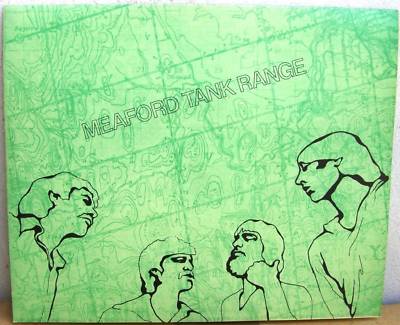
Meaford Tank Range 7"
Wild Press
Obscure 70's psychedelic sound poetry from Canada from Owen Sound Collective, reminding The Four Horsemen and Bill Bissett.
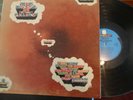
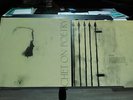
Some info on the release: Original 70's canadian pressing. This is the only vinyl recording of sound poetry collective Owen Sound. Comes in an oversized folder cover, released by Wild Press. In the same vein as Henri Chopin, Bob Cobbing, François Dufrêne, Gust Gils, C. Christer Hennix, Åke Hodell, Bengt Emil Johnsson, Sandro Key-Åberg, Annea Lockwood & Harvey Matusow, Arrigo Lora-Totino, Ghérasim Luca, Arne Mellnäs, Franz Mon, Ladislav Novák, Diter Rot & Emmet Williams, Erik Thygesen, Paul de Vree.
"Owen Sound was a collective language experiment which began its life in 1975. Our initial purpose in forming the group was to provide ourselves with a context which would become a performing writers ensemble doing what we loosely termed as 'sound poetry'. Its members included Richard Truhlar, Steven Smith, Michael Dean and David Penhale.
Beyond the fact that Owen Sound did become a professional performing ensemble, probably the single most important revelation in its lifetime was that 'sound poetry', 'text/sound composition', 'intermedia language art', call it what you will, was a direct confrontation with that phenomenon we call language.
While each of us came from such differing backgrounds as music, film and theatre, we all shared one common passion: writing and an intense love of language; and this passion was to lead us together down creative pathways that none of us could foresee as being outside the traditional realm of writing, pathways which inevitably led to the discovery and creation of new ways of communicating, new ways of relating amongst ourselves and to the world, and above all to the discovery of what Steve McCaffery has called "the total range of the nomadic consciousness".
When we first met as a group in 1975, the first challenge we faced was to overcome our fears of making sounds together. I remember thinking at the time, "How could we, grown men who had been struggling for years in our writing to clearly articulate our feelings and ideas through semantic form, how could we now desert that and begin babbling with meaningless sounds, and even worse, how could we exhibit such nonsensical behaviour in front of other men our own age?"
Our collective curiosity, however, was stronger than our inhibitions, and so we began the experiment. At first, what we heard issuing from our mouths sounded like a barnyard full of squeals, grunts and howls; but then it changed as one of us took the lead and initiated a strong rhythm with alternatingly sounded vowels and consonants. What became apparent to me as we all joined in and built to a fortissimo polyphonic chant-like wail was an overwhelming and exhilarating release of libidinal energy. The force of it was so powerful that we all sat for the next hour discussing what each of us had just individually experienced.
Our common conscensus was that we needed to harness this new frightening energy, this release of primal pre-verbal utterance, and give it form and meaning. In attempting to do this, we fell back upon linear, narrative structure. One of us mentioned that he felt like a bomb had just been dropped in our midst, and this association of 'bomb' led us to the creation of our first formal experiment aptly entitled Hiroshima. We followed the traditional, narrative form of introduction with setting and characters, development, climax and denouement, trying to convey in abstract vocal sounds how a people were tragically destroyed yet how their spirit struggled back to rebuild a shattered world.
In subsequent meetings we began by talking about sound poetry, how we felt about it personally; and sometimes the talking became a defense, a way of avoiding the inevitable confrontation with our nervous systems and the sounds they would manifest through our mouths. I think each of us knew that when we began 'sounding' we would reveal ourselves, our naked emotions, and at that time in our personal growth our emotions were quite raw and in some cases severely wounded. So to ease ourselves into the situation we began to do simple vocal exercises; and this gave us the needed discipline to counter the irresistable urge for an emotional/vocal blow-out. One exercise consisted of exploring a different letter of the alphabet each time we would meet. It alone became a valuable tool in discovering the range of the vocal apparatus: how mouth, lungs, throat and nasal cavities could be manipulated to produce sounds not commonly found in everyday communication.
After the Fat Albert's performance we went through a period of research and reassessment. We began to bring other sources to bear upon our recent experience. We researched the dadaist and futurist sound poets of the early 20th century. Books such as Hugo Ball's Flight Out of Time and Richard Huelsenbeck's Diary of a Dada Drummer were common reading; Dean was acquainting himself with Antonin Artaud's 'theatre of cruelty'; Smith was exploring the permutational texts of Emmett Williams; and Truhlar was absorbing the vocal tape works of Steve Reich such as Come Out and It's Gonna Rain. We began realizing that there was a wealth of knowledge and invention in language arts performance that stretched back in time and gave the appearance of a tradition. We also questioned what we doing with sound poetry. At Fat Albert's we had performed three works, all full of sonic invention, verbal rhythms and vocal complexity. Two of the works, however, lacked a major ingredient - call it context or perhaps direction - and failed to sustain themselves past their initial performance. Only one piece - an adaptation of American composer Robert Ashley's She was a Visitor - survived and became part of the Owen Sound repertoire because its subtleties of context and concept had been provided by its composer.
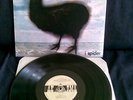
Condition: Vinyl and cover lie in mint condition, this is an unplayed stock copy.
Tracklist
A Simultaneous Translation B KesawagasSHIPPING & PAYMENT
Shipping: Shipping for this LP is 10$ airmail in Europe / 12$ for the rest of the world
Registered mail: +6$
Insurance: optional
Combined shipping: BIG discounts
Payment: Paypal
Packaging: I am a collector too and i know
price rating