JETHRO TULL Benefit WHITE LABEL PROMO LP
$
83


Favourite Auctions
To save auctions to your favourites, please login
If you don't have an account, please register
Description
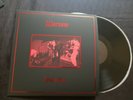
RS 6400 Reprise .. 1970 .... Benefit .. White Label Promo .. This record is not MINT but it is damn close.. This is the nicest white label that has passed through these hands in years .. the spindle hole is very tight and the labels are snowy white. An unbelievable specimen overall.
Cover: EX+ .. takes a real close look to see ringwear on front of cover. A coupleof edge areas exhibit minor color loss but this cover is much closer to NM. There is a dj timing strip.
Vinyl: EX+ / EX+ .. Side 1 has a couple more paper sleeve marks and what appear to be some pressing shadow marks... Side 2 has a couple of light ghost lines.
Side One: With You There To Help Me ... Nothing To Say ... Inside ... Son ... For Michael Collins, Jeffrey And Me
Side Two: To Cry You A Song ... A Time For Everything ... Teacher ... Play In Time ... Sossity You're A Woman
Jethro Tull (band)
From Wikipedia, the free encyclopedia
[edit] 1963–1967: Origins Ian Anderson's first band, started in 1963 in Blackpool, was known as The Blades. It had developed by 1966 into a seven-piece white soul band called the John Evan Band (later the John Evan Smash), named for pianist/drummer John Evans, who dropped the final "s" from his name to make it sound less ordinary. At this point, Barriemore Barlow was the band's drummer, as he would later be for Tull itself.
The band moved to the London area in search of more bookings, basing themselves in nearby Luton. However, money remained short and within days of the move most of the band quit and headed back North, leaving Anderson and bassist Glenn Cornick to join forces with blues guitarist Mick Abrahams and his friend, drummer Clive Bunker, both from the Luton-based band "McGregor's Engine"[2]. At first, the new band had trouble getting repeat bookings and they took to changing their name frequently to continue playing the London club circuit. Band names were often supplied by the staff of their booking agents, one of whom, a history buff, eventually christened them Jethro Tull after the 18th-century agriculturist who invented the seed drill. This name stuck simply by virtue of the fact that they were using it the first time a club manager (namely, John Gee of the Marquee Club, London) liked their show enough to invite them to return. They were signed to the blossoming Ellis-Wright agency, and became the third band managed by the soon-to-be Chrysalis empire.
[edit] 1968: Progressive Blues
After an unsuccessful single produced by Derek Lawrence (an Abrahams-penned pop tune called "Sunshine Day" on which the band's name was misspelled "Jethro Toe", making it a collector's item), they released the bluesy album This Was in 1968. Accompanying music written by Anderson and Abrahams was the traditional arrangement "Cat's Squirrel", which highlighted Abraham's blues-rock style. The Rahsaan Roland Kirk-penned jazz piece "Serenade to a Cuckoo" gave Anderson a showcase for his growing talents on the flute, an instrument which he started learning to play only half a year before the release of the album. The overall sound of the group at this time was described in the Record Mirror by Anderson in 1968 as "a sort of progressive blues with a bit of jazz"[3].
Following this album, Abrahams left, forming his own band, Blodwyn Pig. There were a number of reasons for his departure: he was a blues purist, while Anderson wanted to branch out into other forms of music; Abrahams and Cornick did not get along; and Abrahams was unwilling to travel internationally or play more than three nights a week, while the others wanted to be successful by playing as often as possible and building an international fan base.
Earth/Black Sabbath guitarist Tony Iommi took on guitar duties for a short time after the departure of Abrahams, appearing in The Rolling Stones Rock and Roll Circus (in which the group mimed "A Song For Jeffrey") in 1968, but returned to Earth/Black Sabbath after the performance.
1969–1971: Developing their own style
After auditions for a replacement guitarist, Anderson chose Martin Barre, a former member of Motivation, Penny Peeps, and Gethsemane, who was playing with Noel Redding's Fat Mattress at the time. Barre impressed Anderson with his persistence more than anything else: he was so nervous at his first audition that he could hardly play at all, and then showed up for a second audition without a cable to connect his guitar to an amplifier. Nevertheless, Barre would become Abrahams' permanent replacement on guitar and the second longest-standing member of the band after Anderson.
This new line-up released Stand Up in 1969, the band's only UK number-one album. Written entirely by Anderson — with the exception of the jazzy rearrangement of J. S. Bach's Bourée (fifth movement from Suite for Lute in e minor BWV 996 (BC L166)) — it branched out further from the blues, clearly evidencing a new direction for the group, which would come to be categorised as progressive rock alongside such diverse groups as King Crimson, Genesis, The Nice and Yes. Stand Up feels, instrumentally, not entirely unlike a jazz-tinged early Led Zeppelin album, with a heavy and slightly dark sound. The "Living in the Past" single of the same year reached number three in the UK chart, and though most other progressive groups actively resisted issuing singles at the time, Tull had further success with their other singles, "Sweet Dream" (1969) and "The Witch's Promise" (1970), and a five-track EP, Life Is a Long Song (1971), all of which made the top twenty. In 1970, they added keyboardist John Evan (initially as a guest musician) and released the album Benefit.
Bassist Cornick left following Benefit, replaced by Jeffrey Hammond, a childhood friend of Anderson whose name appeared in the songs "A Song for Jeffrey", "Jeffrey Goes to Leicester Square", "For Michael Collins, Jeffrey, and Me", and who also is the writer and narrator of "The Story of the Hare Who Lost His Spectacles" featured in the A Passion Play album. Jeffrey was often credited on Tull albums as "Jeffrey Hammond-Hammond", but the extra "Hammond" was an inside joke regarding the fact that Hammond's mother's maiden name was also "Hammond", no relation to his father.
Benefit (album)
Benefit Studio album by Jethro Tull Released April 20, 1970 (US) Recorded December 1969 Genre Progressive rock Length 42:49 Label Island Records (UK)Reprise Records (US) Producer(s) Ian Anderson Professional reviews
- All Music Guide link
- George Starostin (overall rating: 10/15) link
(1969) Benefit
(1970) Aqualung
(1971)
Benefit is the third album by Jethro Tull. It was released in April 1970. It was the first album to feature John Evan on keyboards.
price rating