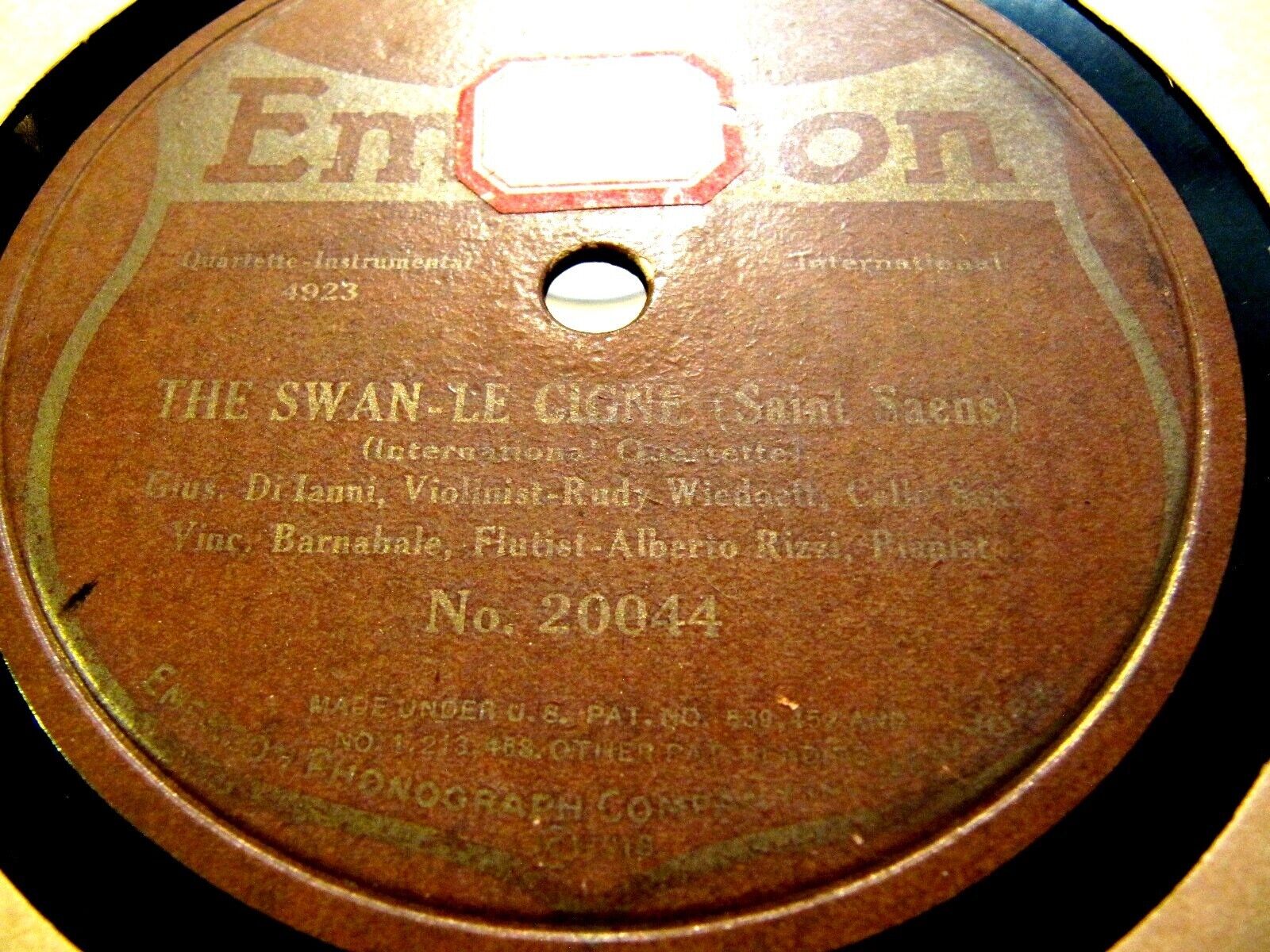
1920 Rudy Wiedoeft CELLO Alberto Rizzi Di Ianni Vincente Barnabale FLUTE EMERSON
$
25


$ 25
Sold For
Jan 20, 2025
Sold Date
Jan 18, 2025
Start Date
1
Number Of Bids
USA
Country Of Seller
eBay
Sold at
Favourite Auctions
To save auctions to your favourites, please login
If you don't have an account, please register
Description
A series of great Solo instrumentals - Piano Violin Cello Harp, Winds and Brass on 78 rpm records
Click on this link to see more Solo Instrumental Records!
Wiedoeft in 1920 Great recording by the Emerson International Quartet
Rudy Wiedoeft in his only ? CELLO recording
Alberto Rizzi PIANO
Giuseppe Di Ianni Violin
Vincente Barnabale Flute
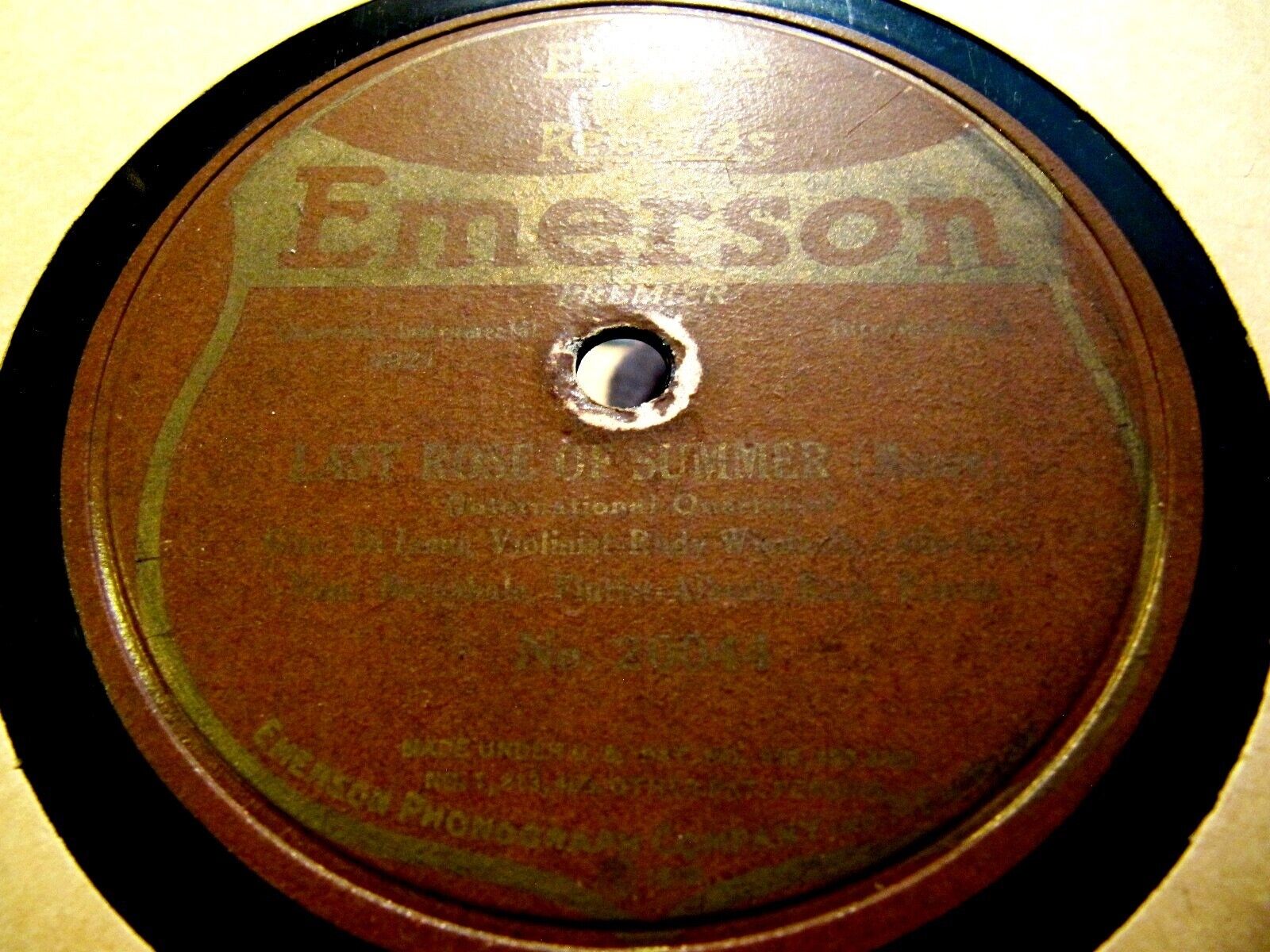
EMERSON 20044
Saint Saens Le Cygne/ Moore Last Rose of Summer
Orig Issue Ethnic Emerson Brown Label 10" 78 rpm record
Condition:
Swan: G+ rubs longer light scratches, wear at start, noisey start, then plays VG very quiet w ticks
ROSE: Very good plus plus basically unworn but rubs, rim chip NAP, swishy hiss first measure then plays VG++ very quiet some ticks
Rudolph Cornelius Wiedoeft (January 3, 1893 – February 18, 1940) was an American saxophonist.
Biography
Born in Detroit, Michigan, the son of German immigrants, at a young age Wiedoeft started playing with his family orchestra, first using a violin, then a clarinet. He relocated to New York City and, after a series of successful clarinet recordings with his Frisco Jass Band, switched to saxophone, then still an unusual instrument. He became known as a virtuoso saxophonist during the 1910s, made more than 300 recordings for many different record companies, and did much to popularize the saxophone as an instrument in both the U.S. and overseas. His main instrument was the C melody saxophone, a variety which was immensely popular from the 1910s until about 1930. He also played and recorded sometimes using E-flat alto and B-flat soprano saxophones as well.
His style was noted for very rapid runs of well-articulated notes in between long legato phrases in a ragtime influenced style. The rapidly articulated notes were made possible by the advanced techniques of double-tonguing and triple-tonguing, similar to those used by brass (trumpet, trombone, etc.) players and flutists. He was also known for his style of vibrato, which was very wide during the later years of his playing. During his earlier years, Wiedoeft's use of vibrato was quite spare. Wiedoeft employed several other 'sound effects,' such as slap tonguing and "laughing" (altering/bending the pitch of the note) through his horn, and alongside his very distinguishable vibrato, became a part of his musical repertoire. While he incorporated some elements of early jazz into his playing, he remained stylistically a pre-jazz artist. Some of his original compositions were successes, notably Valse Erica, Valse Llewellyn, Saxema, Saxophobia, and Sax-o-Phun.
He remained a very popular entertainer into the 1920s and performed regularly by radio, but his style started to sound more and more dated to the public as his career continued into the 1930s. He worked for a while in Rudy Vallee's band, then for a while in France. From the mid-1930s on, he essentially stopped playing and was involved in several mining investments that were not successful.
Rudy and his wife Mary Wiedoeft had a difficult relationship partially due to difficulties of maintaining their rather flamboyant lifestyle and alcohol abuse. During 1937, he was nearly killed when he was stabbed by his wife. The couple reconciled, however, and during the same year, Rudy made his last radio performance.
He died in Flushing, New York, on February 18, 1940, from cirrhosis of the liver.
price rating