Voltz - Knight's Fall - NWOBHM LP
£
128
$
169


Favourite Auctions
To save auctions to your favourites, please login
If you don't have an account, please register
Description
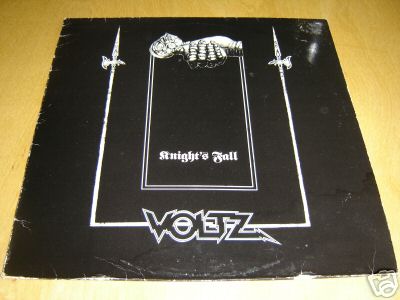
VOLTZ - KNIGHT'S FALL - AIRSHIP 1982 - MEGA RARE NWOBHM LP!!
This auction is for a copy of the mega-rare 1982 LP KNIGHT'S FALL by VOLTZ. As fans of NWOBHM will know, this LP is one of the best, and also rarest, of the genre. Mixing classic NWOBHM with a proggy melodic feel, the album is a true classic deserving of its reputation.
I've had the LP in my possession for a number of years now, but I'm in the process of thinning out my record collection, so it's about time that it went to a NWOBHM specialist.
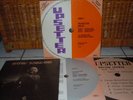
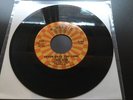
As for condition, I would describe both sleeve and record as somewhere around the VG mark. Cover: some marks, wear and tear, scuffing, etc, but all intact. Record: light scratching only, plays cleanly, a very slight warp which does not affect play. Please see pictures for further information.
After many years, some information is beginning to emerge regarding the band themselves. Below are two articles which I found on the web.
I'm happy to discuss insured postage with the winning bidder, and will be happy to send via whatever insured method the winning bidder is prepared to pay for.
Any additional questions, please ask. Of course, will be shipped in a pro mailer with double stiffeners.
Thanks for looking, and good luck!!
VOLTZ - BIOGRAPHY
Hampshire, England's Voltz first came into existence toward the end of 1979, undergoing repeated lineup changes even as they got busy playing local pubs and working on a few demos. Progress was slow, however, and by 1981, the band had actually split up, and it was only through the dogged persistence of brothers Glen (vocals, guitar) and Gary Leinster that Voltz hung around long enough to recruit new members Mark Fisher (guitar) and Paul Hancock (bass) and to give this rock star thing another go. Inspired by the New Wave of British Heavy Metal's D.I.Y. ethic, the quartet eventually decided to say "bollocks" to the unappreciative music industry at large, and followed in the footsteps of other scene luminaries such as Diamond Head and Legend in simply financing and producing their own LP, Knight's Fall, themselves, thank you very much. As expected given its title, this contained fantasy-laced hard rock and metal mixed in with surprisingly ambitious, and shockingly mellow, progressive rock tendencies. Interestingly, the end results were distinctive enough to get the album panned by all-important Kerrang! magazine, yet launched a small cult behind Voltz, who soon founded themselves playing gigs in London and negotiating a deal with French label Amidisque. But when the company inexplicably got cold feet (despite having already invested in a batch of new demos and even brought the band to Paris for some shows), a demoralized Voltz suddenly found themselves back in England, close to square one, and entering "Battle of the Bands" competitions to try to keep their profile up. The final nail in their coffin was hammered home soon after, when frontman Glen Leinster was admitted to hospital for a long-delayed operation on his over-abused vocal chords, initiating an enforced hiatus from which the luckless Voltz never returned.(By Eduardo Rivadavia, All Music Guide.)
THE STORY OF VOLTZ
Having emerged towards the end of 1979 from the ashes of a small-time act called AIRLINE, the embryonic incarnation of Hampshire’s VOLTZ (featuring, in their very early days, third guitarist Rick Over, formerly of the imaginatively-named RICK OVER BAND) wasted little time before setting about the unenviable task of promoting themselves as dependable crowd-pleasers, initially as a glorified covers outfit. As time progressed, though, the slimmed-down unit started to write their own songs (which were, apparently, fairly typical of the primitive, hard ‘n’ heavy NWOBHM style and finally made a few attempts to get their name known to those who really mattered. The quartet’s activities garnered regular mentions in the local press, and their first proper demo tape even received a limited amount of airplay on regional radio, so things looked quite promising for VOLTZ at that point. However, the musicians involved (for reasons best known to themselves) somehow reached the conclusion that things weren’t working out too well, and so they elected to go their seperate ways at the beginning of 1981. Although there was no additional activity on the VOLTZ front for much of the year, the nucleus of the brothers continued to work on the rudiments of the existing compositions and, after a while, eventually began penning newer, guitar-heavy material. Towards the end of the year, a version of VOLTZ was resurrected with an altered line-up, although it wasn’t long before original members Mark Fisher and Paul Hancock returned to the fold to try their luck again. Feeling much happier as an ensemble with the fresh material, the out-fit recorded a second demo in more of a sophisticated hard rock style than before, which was soon drawing the attention of various influential parties such as local Airship Records concern. After impressing Airship (also responsible for the likes of CHINATOWN, HIGH RISK and PARADYNE) with the depth and maturity of their recently-composed material, VOLTZ set about recording their debut album for the electric label by booking sessions at the nearby Chestnut facility (also frequented by band such as TRUFFLE) and at Toucan Studios (with erstwhile member Rick Over helping out on the production side of things). The end result of this period of frenzied activity was the epic “Knight’s Fall” album, released in the summer of 1982, and now regarded by many as one of the classic LP releases of the genre. Hard-hitting, heavy compositions with a respectful nod towards BLACK SABBATH and LED ZEPPELIN, particularly opener ”After Armageddon” and the memorable “Badon Hill” (bringing forth comparisons with the likes of CRACKED MIRROR and QUARTZ), alternated with more reflective numbers such as “In A Dream” , although both stylistic extremes were carried off with equal aplomb. In spite of a rather tepid review in “Kerrang” (which tended to suggest that VOLTZ were a bit of 70’s-style anachronism with nothing to offer the modern fan), the album sold extremely well in local shops, and, thanks to several selections being given exposure on BBC Radio’s rock programmes, the group soon developed a solid following. Indeed, their reputation swiftly grew to an extent wherby a handful of gigs in London became a possibility for the first time (the band supporting the likes of GRAND PRIX on such occasions), including productive trips to such well-attended venues as the Marquee and Hamersmiths Clarendon. Surprisingly, in addition to making quite an impact in the UK itself, a considerable quantity of VOLTZ albums had somehow made their way overseas within a matter of months, resulting in a significant level of interest being generated in mainland Europe, which culminated in a little-known French label called Amidisque taking the talented bunch under their wing. Following some rather protracted negotiations during 1983, both parties finally agreed on a recording contract which suited each other adequately, and it was soon all systems go for a second VOLTZ long-player. Things went swimmingly at first, and the quartet’s supportive label stumped up the nescessary cash for the lads to undertake recording sessions at several well-appointed studio facilities in the coming months. A handful of demos were laid down in due course, and VOLTZ soon had more than enough usable material to fill another LP. However, notwithstanding the fact that numerous studio visits had already been completed at quite considerable expense, and, despite the relevant observation that VOLTZ had recently played an incredible well-received series of sold out gigs at the City Rock Club in Paris, Amidisque got cold feet for no particular reason and eventually backed out of the deal at short notice. The dejected outfit had little option but to pack their bags and return home, wondering exactly what had happened to their record deal. Upon their subsequent return to England, it wasn’t long before VOLTZ lost the sevices of disenchanted guitarist Mark Fisher, although the latter was rapidly replaced by new recruit Graham Bushall, and the revised quartet were soon appearing in front of several hundred appreciative fans at the South Parade Pier in Portsmouth, having successfully reached the semi-finals of one of the countless “Battle Of The Bands” competitions being organized throughout the country at the time. Within a matter of days, however the ailing Glenn Leinster was admitted to hospital, whereupon the singer underwent a much postponed operation on his damaged vocal cords, something which forced the entire project to be placed on ice once more.This time, however, temporarily suspending their activities effectively signalled the end of the road for the luckless outfit, as the participants never really managed to get things going again properly after this enforced break. It was a great pity and I have no doubt that the second VOLTZ LP would have been a worthy offering, so hopefully it’ll be exhumed at some point in the future. Nowadays, Glenn Leinster continues to pursue his musical interests at his own facility (Tracks Studio) and the frontman also collaborates with drummer Mike payne and basist Johnny Hatch in an occasional project entitled ZED, an act who even includes a selection of unreleased VOLTZ originals in their live repertoire. (By Malc Macmillan, who wrote the Encyclopædia of the NWOBHM, published by Iron Pages in 2001. This is a comprehensive guide to the genre, nearly 800 pages and featuring around 500 groups.)
price rating