The Rise & Fall of Paramount Records: Volume Two, 1928-1932 RARE OOP Box Set
$
368
Favourite Auctions
To save auctions to your favourites, please login
If you don't have an account, please register
Description
Step back in time to the golden era of American music with "The Rise & Fall of Paramount Records, Volume 2." This meticulously crafted box set from Third Man Records offers a captivating journey through the rich tapestry of early 20th-century recordings, showcasing the diverse sounds and voices that defined an era.
Inside this limited edition box set, you'll discover a treasure trove of musical gems, carefully remastered and pressed onto high-quality vinyl. From blues and jazz to gospel and country, each record in this collection offers a glimpse into the vibrant and ever-evolving landscape of American music during the Paramount Records era.
Featuring rare and iconic recordings from legendary artists such as Blind Lemon Jefferson, Louis Armstrong, and Ethel Waters, "The Rise & Fall of Paramount Records, Volume 2" is a testament to the enduring legacy of one of the most influential record labels in history. Immerse yourself in the raw energy and timeless beauty of these historic recordings, beautifully presented in this deluxe box set.
Whether you're a seasoned collector or a music enthusiast eager to explore the roots of American sound, this box set is sure to captivate and inspire. With its exquisite packaging and meticulous attention to detail, it's not just a collection of records; it's a window into a bygone era of creativity and innovation.
Features:
- Limited edition box set from Third Man Records
- Volume 2 of "The Rise & Fall of Paramount Records" series
- Includes rare and remastered recordings from iconic artists
- High-quality vinyl pressing for superior sound
- A comprehensive exploration of early 20th-century American music
- Perfect for collectors, music enthusiasts, and history buffs alike
Volume Two contains the following:
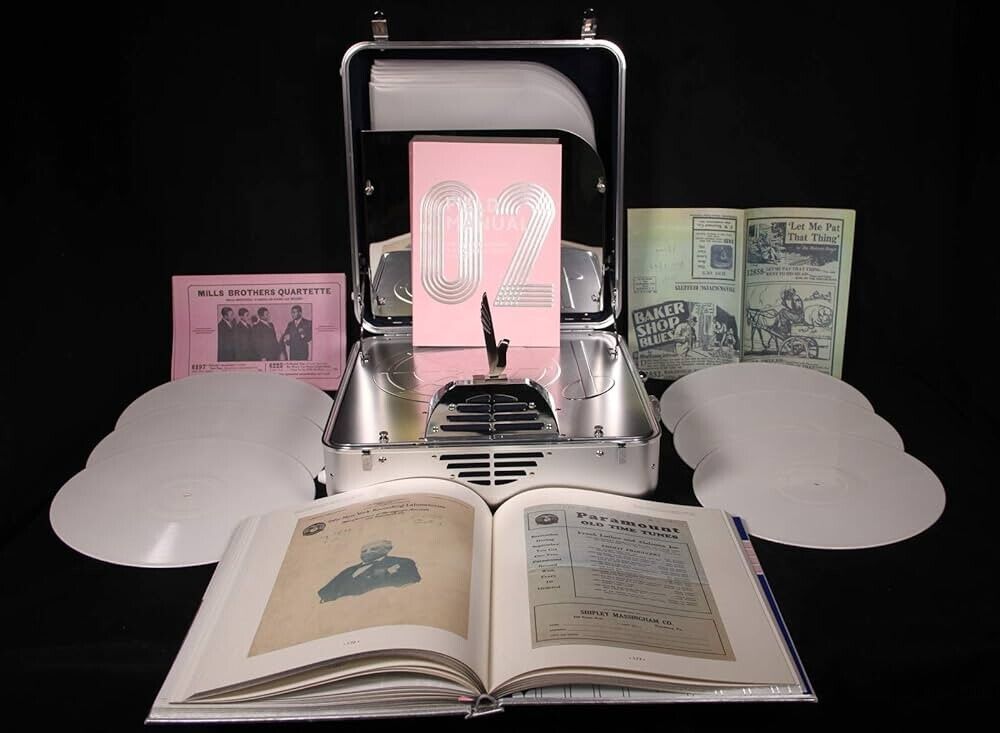
- 6 x 180-gram LPs pressed on label-less alabaster white vinyl, each side with its own hand-etched numeral and holographic image.
- 800 newly remastered digital tracks, representing 175 artists and accessible via a first-of-its-kind music and image player app containing all tracks and ads, housed on custom metal USB drive.
- 250-page clothbound, large-format hardcover book featuring original Paramount art and the label's curious tale
- 400-page encyclopedia-style softcover field guide containing artist bios and portraits as well as a full Paramount discography
- 90+ fully-restored original 1920s-30s Paramount ads from The Chicago Defender
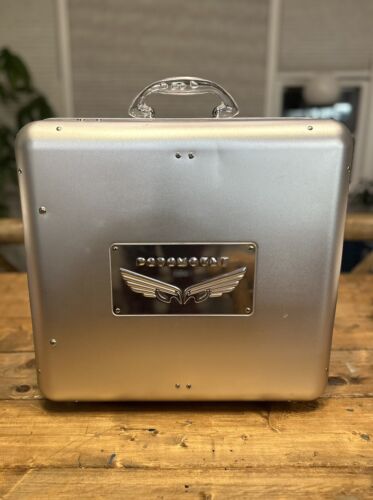
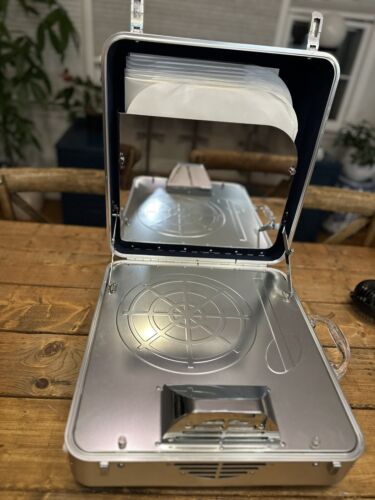
- Polished aluminum and stainless steel cabinet inspired by Machine Age design and upholstered in sapphire blue velvet
The first volume in this collection was called "spectacular" (New York Times), "unprecedented" (Rolling Stone), "breathtaking" (Boing Boing), and "a cabinet of wonder, indeed" (Pitchfork). Third Man and Revenant Records now proudly bring you the second and last installment, The Rise & Fall of Paramount: Volume Two, which was hailed by Wired as "the ultimate box set of iconic American music."
Volume One (1917-1927) chronicled Paramount's improbable rise from a furniture company to jazz-blues juggernaut, launching the recording careers of giants like King Oliver, Jelly Roll Morton, Louis Armstrong, Blind Lemon Jefferson, Alberta Hunter, Blind Blake, Ethel Waters, Ma Rainey, Papa Charlie Jackson, Big Bill Broonzy, and Fats Waller. (You can order it here.) But just as it seemed Paramount might be losing steam, it began a second act that threatened to dwarf its first. This astonishing second act is the subject of The Rise & Fall of Paramount: Volume Two, 1928-32, the final chapter in our commemoration of America's greatest record label.
In its final 5 year push, Paramount embarked on a furious run for the ages, birthing the entire genre of Mississippi Delta blues and issuing some of the most coveted records in the history of wax - a staggering playlist including Skip James, Charley Patton, Son House, Tommy Johnson, Willie Brown, King Solomon Hill, Tampa Red, Lottie Kimbrough, Rube Lacy, Meade Lux Lewis, Buddy Boy Hawkins, Jaydee Short, George "Bullet" Williams, Cow Cow Davenport, Clifford Gibson, Ishman Bracey, Louise Johnson, Geeshie Wiley & Elvie Thomas, The Mississippi Sheiks, and hundreds of other artists.
Paramount simply killed. But more than that, it changed how this country thought of itself. It was the first enterprise of any kind to capture what America really sounded like in the 1920s and 30s - on its street corners, at its fish fries and country suppers, in its nightclubs and dance halls and showtents. In the process, it was this profit-minded side of Paramount - and not a preservationist body like the Library of Congress - that inadvertently created the most significant repository of this young nation's greatest art form.
Co-produced by leading Paramount scholar Alex van der Tuuk and with all masters issued under license agreement with GHB Jazz Foundation, this compendium features the same breadth of fascinating material as you came to expect with the first but turns its focus to the label’s last and most prolific years.
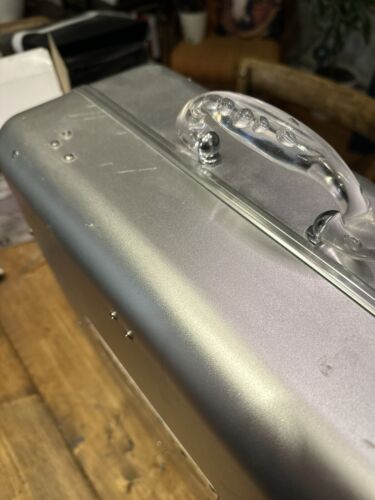
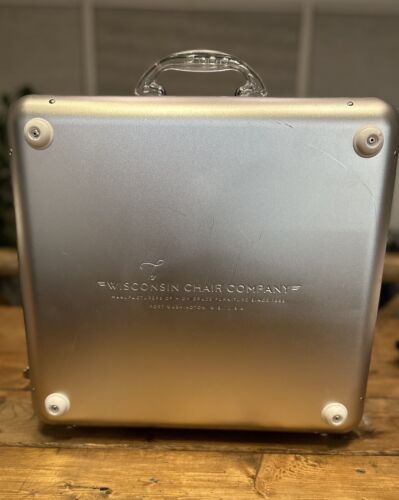
Product Note: Unlike the brushed aluminum chassis used by modern product manufacturers - a process which dulls the finish to hide the slight irregularities naturally occurring in the process of molded aluminum forms - we have elected to treat the aluminum finish in a manner appropriate to the Machine Age era. All aluminum surfaces have undergone several polishing stages to maintain a mirror-like finish and have then been anodized for durability and high gloss. This anodization process can reveal subtle surface irregularities in the aluminum form which would be absent in a more muted finish, but we do not regard these as defects and think the payoff in overall character is worth it.
Shipping policy: Combined shipping (media mail) within the US is $7 for up to 2 LPs, then $1 for each additional LP.
All records are shipped in corrugated 7" or Whiplash LP mailers with appropriate cardboard padding for a snug fit & safe journey! See why thousands have given us positive feedback on Discogs (shop name: deadwaxrecordsonline).
Feel free to reach out with any questions or for international combined shipping quotes.
About the Goldmine Grading System: Mint [M]: Absolutely perfect in every way - certainly never played, possibly even still sealed. (More on still sealed below). Should be used sparingly as a grade, if at all. Near Mint [NM or M-]: A nearly perfect record. Many dealers won't give a grade higher than this implying (perhaps correctly) that no record is ever truly perfect. The record shows no obvious sign of wear. A 45 rpm sleeve has no more than the most minor defects, such as almost invisible ring wear or other signs of slight handling. An LP jacket has no creases, folds, seam splits or any other noticeable similar defect. No cut-out holes, either. And of course, the same is true of any other inserts, such as posters, lyric sleeves, and the like. Basically, Near Mint looks as if you just got it home from a new record store and removed the shrink wrap. Very Good Plus [VG+]: Shows some signs that it was played and otherwise handled by a previous owner who took good care of it. Record surfaces may show some slight signs of wear and may have slight scuffs or very light scratches that don't affect one's listening experience. Slight warps that do not affect the sound are OK. The label may have some ring wear or discoloration, but is should be barely noticeable. The center hole is not misshapen by repeated play. Picture sleeves and LP inner sleeves will have some slight wear, lightly turn-up corners, or a slight seam-split. An LP jacket my have slight signs of wear also and may be marred by a cut-out hole, indentation or corner indicating it was taken out of print and sold at a discount. Very Good [VG]: Many of the defects found in a VG+ record are more pronounced in a VG disc. Surface noise is evident upon playing, especially in soft passages and during the song's intro and fade, but will not overpower the music otherwise. Groove wear will start to be noticeable, as will light scratches deep enough to feel with a fingernail) that will affect the sound. Labels may be marred by writing, or have tape or stickers (or their residue) attached. The same will be true of picture sleeves or LP covers. However, it will not have all of these problems at the same time, only two or three of them. Good [G], Good Plus [G+]: Good does not mean bad! A record in Good or Good Plus condition can be put onto a turntable and will play through without skipping. But it will have significant surface noise and scratches and visible groove wear. A jacket or sleeve has seam splits, especially at the bottom or on the spine. Tape, writing, ring wear or other defects will start to overwhelm the object. If it's a common item, you'll probably find another copy in better shape eventually. Pass it up. But if it's something you have been seeking for years, and the price is right, get it. Poor [P], Fair [F]: The record is cracked, badly warped, and won't play through without skipping or repeating. The picture sleeve is water damaged, split on all three seams and heavily marred by wear and/or writing. The LP jacket barely keeps the LP inside it. Inner sleeves are fully seam split, and written upon.
price rating




![AMALGAMATED/KIMBLE - THE CREATORS [R/STEADY] 7](https://www.popsike.com/php/thumbnail.php?url=https://www.popsike.pics/pix/20160107/301841941179.jpg)








![Tenacious D - Rize Of The Fenix [VINYL]](https://www.popsike.com/php/thumbnail.php?url=https://www.popsike.pics/pix/20240424/296388180766.jpg)