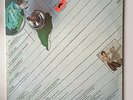
The New Blockaders Changez Les Blockeurs original LP
£
256
$
339


Favourite Auctions
To save auctions to your favourites, please login
If you don't have an account, please register
Description
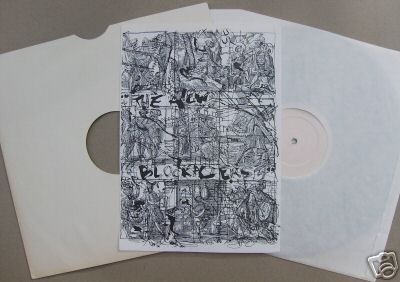
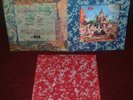
The New Blockaders: Changez Les Blockeurs LP
Housed in card die cut sleeve with A4 insert
Tracks: Changez Les Blockeurs Pts. I & II Label: Private
Edition: 100 Release date: 1982 Condition: Excellent Pic. is of the actual item Changez Les Blockeurs turned the international Noise scene on its head – a bastard form that married the Industrial fury of early Throbbing Gristle with acoustic improvisation. Their surreal timbral juxtapositions revealed a feel for the physical properties of sound, even as their approach was pure Punk. With the creak of wheelchair runners and the sounds of broken glass vying with microphone feedback and bowed metal, the album was a suburban restaging of Einsturzende Neubauten's salvage rituals. A classic record. The Wire The one that caused all the fuss in 1982. If only I'd been there and got me the original LP - my life would have taken a much different path. Brought up on the camouflaged Pop absurdism of Throbbing Gristle the short step into the anti-art/Fluxus/Dada ethos of TNB would have been manna from a post-Punk heaven. Listened to now, twenty-two years after the event, Changez sounds nothing more like a baby elephant blindly trying to escape a room full of bicycles and sackbutts. Sounds like they went down to the shed at the bottom of their garden and threw lumps of metal around in a bid to resurrect the ghost of Tristan Tzara. And twenty-two years on it works better than ever. It's a discomforting listen that has gained near mythical status: odd parps, the sound of scraping metal, rain spatters on a tin roof, a squeaky bicycle seat being pounded by a fat arse, the distant elephant call, somebody trying to drag a box filled with lead weights across a sandy floor, two invalids in wheelchairs fencing with broken car aerials. Its magnificence is its absurdity. It deserves its status as one of the most sought after releases of all time. Idwal Fisher TNB's debut is full of chaotic Dada referentialism putting in the bag cryptic Max Ernst collages on the inserts, Hegel or nihilistic Situationism on a declamatory manifesto, and disturbed tumult on their sound, to bring the corpse of art into the crematory again. And you will expect to hear overcharged electricity or deranged machinery, which is as far from that as it makes this edition an intelligent turn in retrospect. You will be tempted to think first of Erik Satie's Musique D'ameublement (Furniture Music) in a perverse manner. TNB reversed the logics that would generate muzak, 'a music which was urging you to take no notice of it and to behave (during the intervals) as if it did not exist,' according to Satie. The noises here are intrusive and sound as if the furniture is what produces them. A squawk symphony filled with rusty wheels and creaking wood floor. There's even a dog disturbed or a trombone that sings along the crawled households; so that in difference to the angst of their Industrial contemporaries (Throbbing Gristle, Whitehouse) it was in Changez Les Blockeurs' case a syntax destruction, an anti-narrative in the form of a happening that would draw a sort of acoustic noise art continuity with the assemblages and environments, early sixties pre-Fluxus, of Allan Kaprow, Jim Dine, Robert Whitman or Claes Oldenburg, or in case you permit me the license to align them to something academic, John Cage's 1940 score Living Room Music which reads: 'To be played on household objects such as magazines, a table, books, the floor or using architectural objects like window frames,' will allow it. Predating the Guds Soner, TNB refurnish. e/i
TNB cleared a new path for Noise in the early 1980s, unshackling the genre from the knowing glances of Throbbing Gristle and their ill begotten spawn and re-setting the form in shafts of white light. Their debut, Changez Les Blockeurs, is one of the few noise recordings I would unhesitatingly command as 'essential,' containing some of the most pure and untamed experimentation recorded in the late 20th. century. Signal To Noise
One can only imagine the impact of a work such as Changez Les Blockeurs made in 1982. The profundity of such anti-music seems a little distant in 2004, however such an anti-work being released in 1982, at this time politically, socially, artistically, seems to be almost crucial. Changez Les Blockeurs is riveting in its audacity, raw metals and simple machinations and industrial paraphernalia the ultimate anti-instruments. Contemporary ‘noise’ ideas drawn from musicality – dynamics, structure, composition – are no reference point: the sound works even through few timbral variations in its quest to be as devoid of such references as possible. Night Science






![Victoria Monet - Jaguar II [New Vinyl LP] Explicit, Brown, Colored Vinyl, Gatefo](https://www.popsike.com/php/thumbnail.php?url=https://www.popsike.pics/pix/20240313/266718426531.jpg)