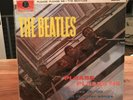
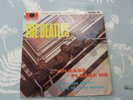
The Beatles Please Please Me LP Mono PMC 1202 Early Pressing UK BBC Library
$
595
Favourite Auctions
To save auctions to your favourites, please login
If you don't have an account, please register
Description
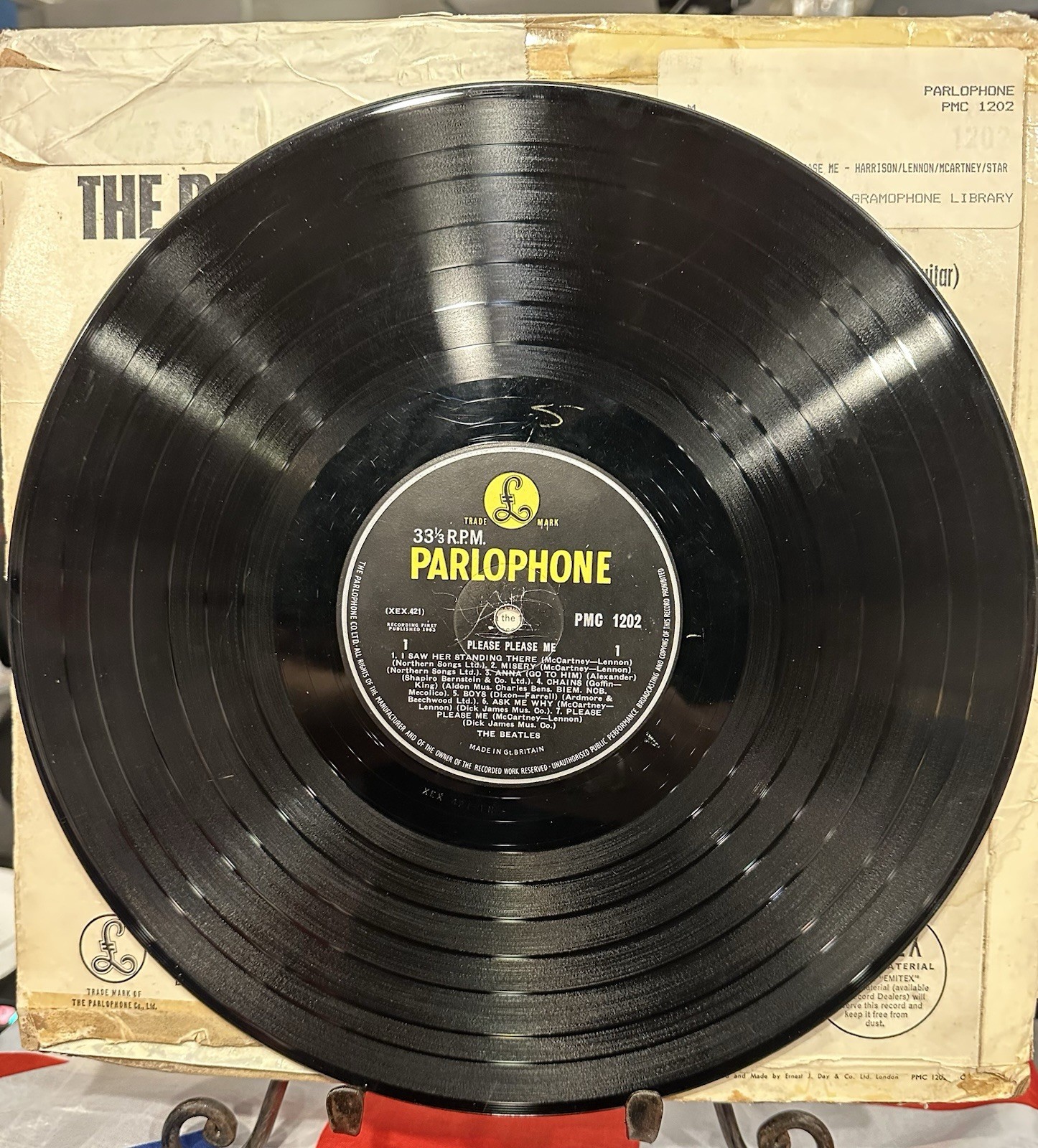
This copy is not represented as a black/gold first issue. It is an early UK mono pressing using first-cut (-1N) metalwork, with BBC Gramophone Library provenance. All deadwax markings are photographed.
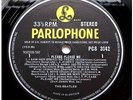
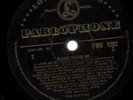
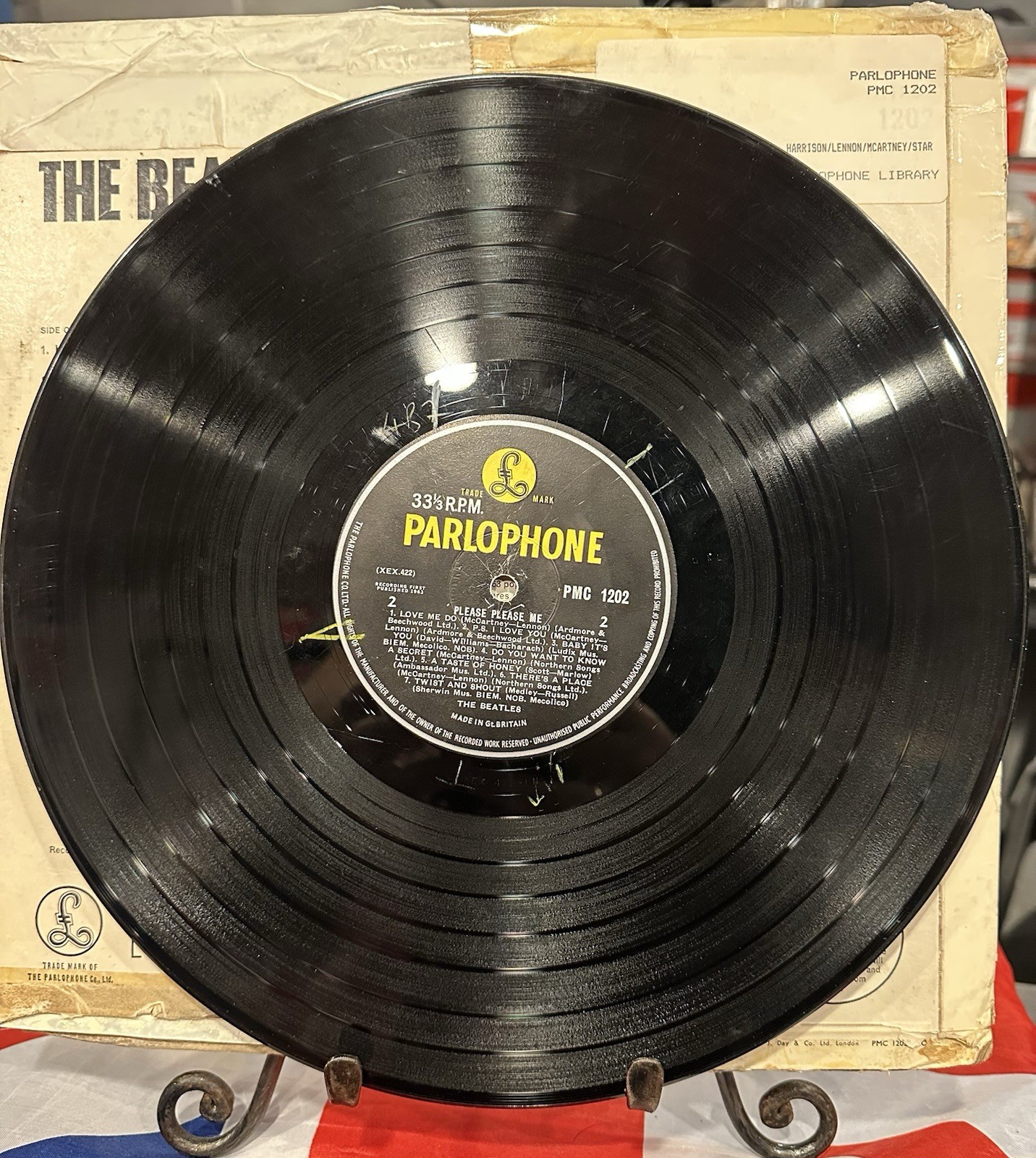
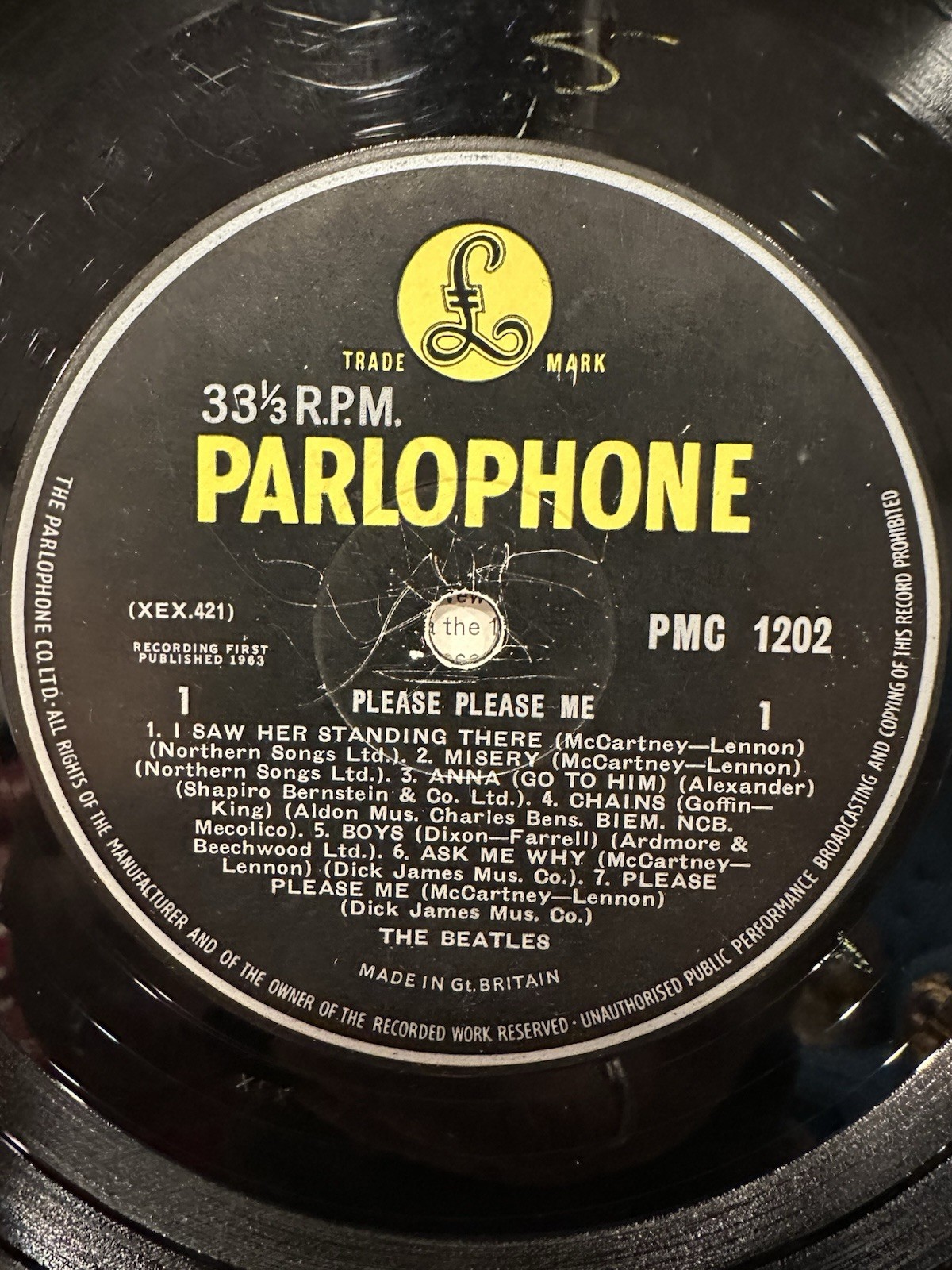
Yellow and black Parlophone label with the “Recording First Published 1963” text — this was used in early pressings between April and late 1963.
The sides are marked as “Side 1 / Side 2”, not “Side One” — this detail also aligns with early pressings.
• Matrix Numbers (etched/stamped near center):
• Side 1: XEX 421-1N
• Side 2: XEX 422-1N
• Tax Code: There is a visible “MT” code above the spindle hole (faint but discernible), used between Jan–Aug 1963 for UK tax purposes.
Mother Stamper information
On Side 1, the deadwax clearly shows early EMI stamper letters “G” and “D” alongside the XEX 421-1N matrix. The mark between them is not clearly legible as a numeral, so I’m not speculating on a mother number there. What is clear is that the stamper letters are early, and the matrix confirms the first lacquer cut.
On Side 2, the deadwax shows EMI stamper letters “M” and “L” (low-number stampers under the standard EMI/GRAMOPHLTD system) alongside XEX 422-1N.
Taken together:
• Both sides retain -1N matrices, confirming the original 1963 lacquer cut
• Stamper letters on both sides are low, consistent with early pressings within that cut
• Differences in stamper markings between sides are normal and reflect production sequencing, not later re-pressing
This copy is therefore an early first-cut UK mono pressing, even though it is not the black/gold label variant. Nothing in the deadwax indicates a later cut, reissue, or late-period pressing.
The BBC Gramophone Library stamp on the sleeve reflects institutional ownership history and does not relate to manufacturing chronology.
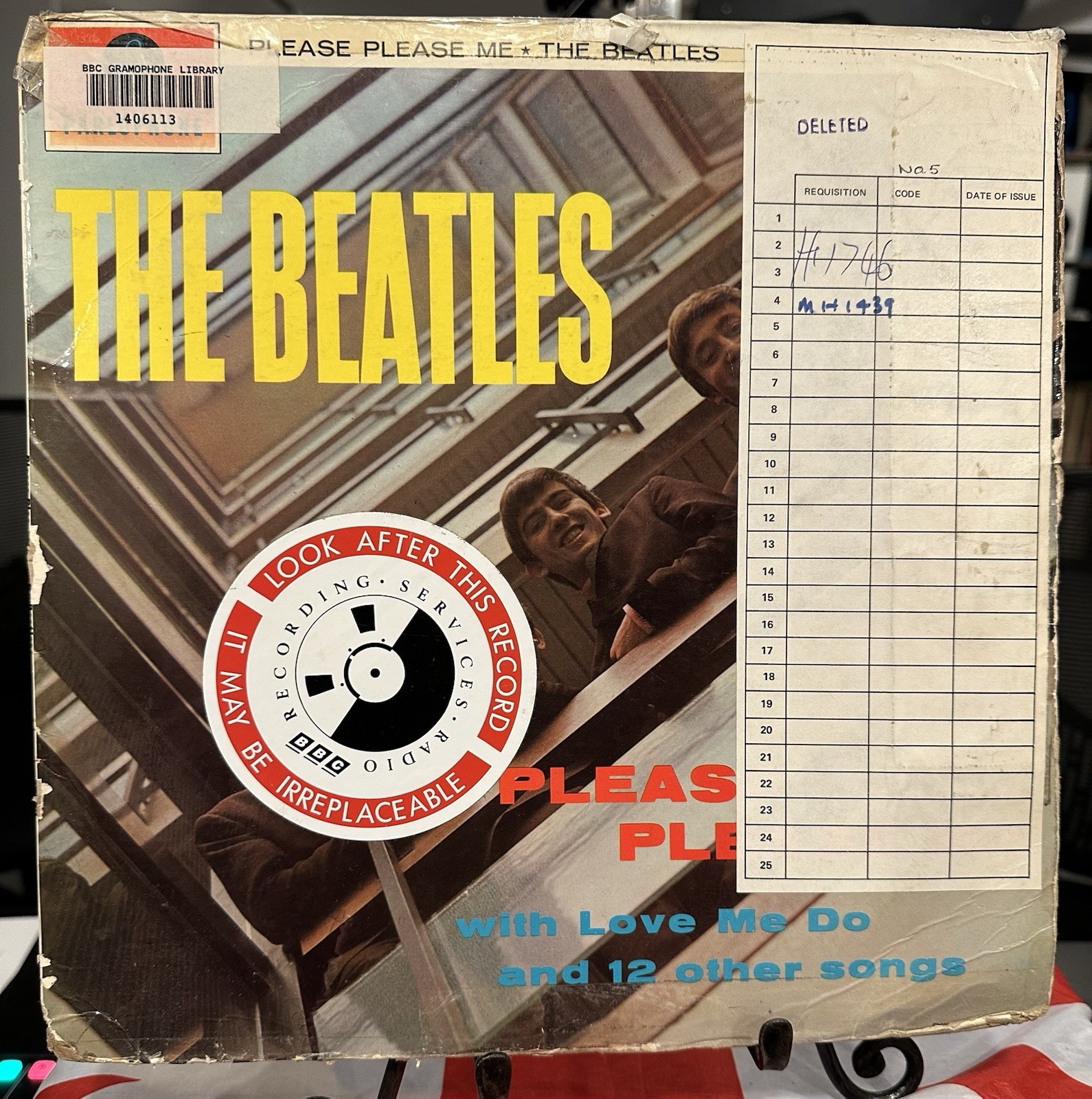
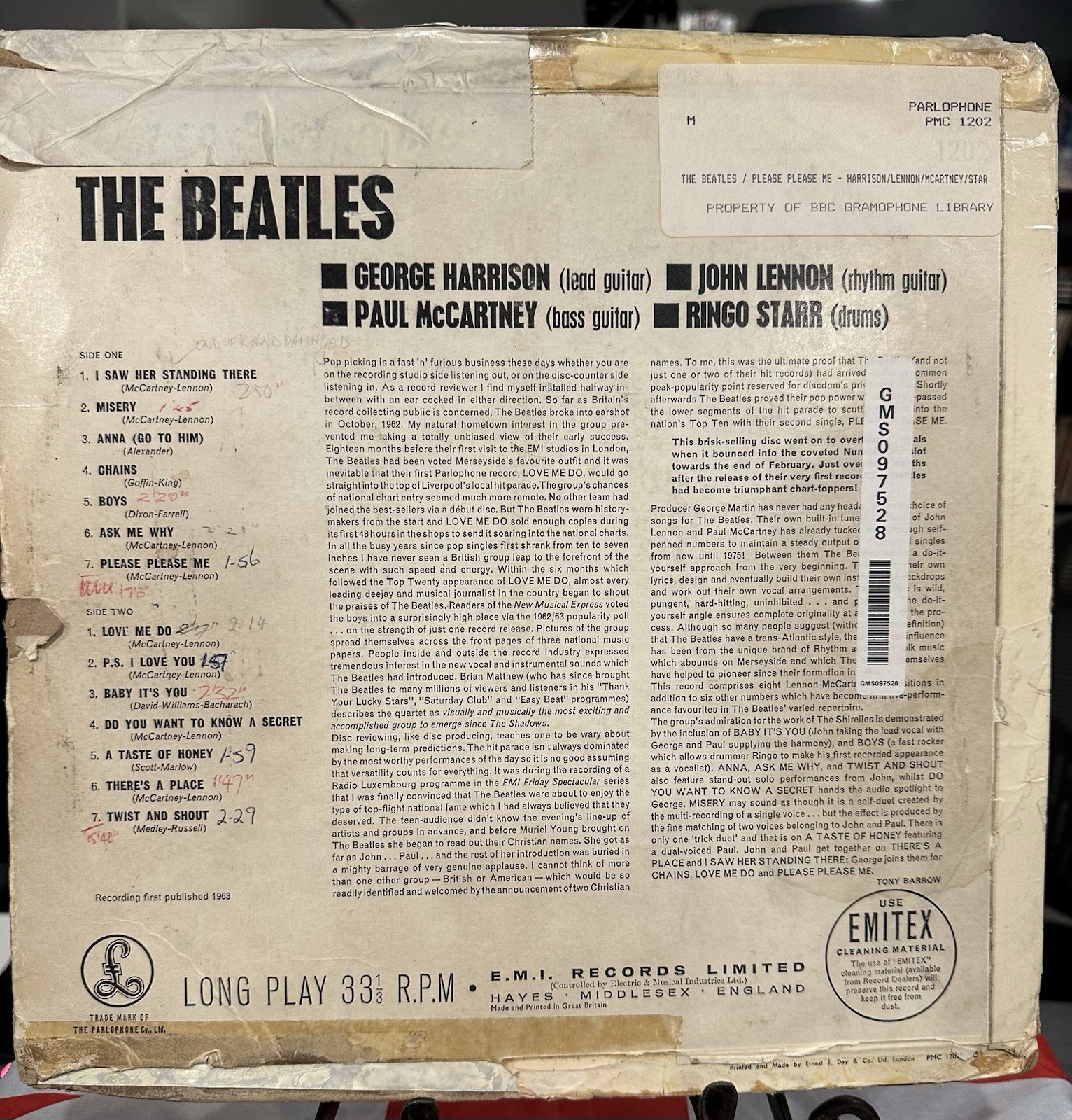
Cover Details: Ernest J. Day printed sleeve with large mono text and no barcode (authentic early 60s UK print).
These -1N lacquer cuts are the very first mastering done by EMI’s Abbey Road engineers, and only the earliest pressings have them.
This exact pressing was used only on second editions, likely within the first few thousand copies.
This particular version is widely referred to as the “gold standard” collector’s pressing of Please Please Me.
Please understand that this is an official UK archival record from the British Broadcasting Corporation and the sleeve(s) may contain archival stickers from the BBC. Some of these stickers are 'on top' of the plastic with some 'underneath' (i.e. on the sleeve itself). Some sleeves have been 'laminated' either by way of 'punching' the plastic wallet to two parts of the sleeve or by fully wrapping the plastic to the sleeve. Where sleeves are laminated stickers can be removed with the use of appropriate sticker removal fluids however it is unlikely that stickers can be removed from any sleeves that are not laminated. The sleeves as such in this collection are generally graded as VG with the records often VG+ to Ex+.
NOTE
Claims against it being a 2nd or 5th pressing
IDENTIFICATION DETAILS:
1. Label Type:
• Black and yellow Parlophone label
• “THE PARLOPHONE CO. LTD.” printed in the perimeter text.
• “Recording First Published 1963” text (not “℗ 1963”) — this was only used on the very first pressings before July 1963.
CONCLUSION:
This is not a second or fifth pressing — it is a true first UK mono pressing of Please Please Me (PMC 1202) with all hallmarks:
• Black/yellow Parlophone labels
• “Recording First Published 1963”
• Matrix: XEX 421-1N / XEX 422-1N
• Ernest J. Day sleeve with early alignment
• Dick James Mus. credits
2. Catalogue Number:
• PMC 1202 — correct for the mono issue.
3. Matrix Numbers:
• Side 1: XEX 421-1N
• Side 2: XEX 422-1N
• These are the very first mother/stamper matrix codes used for the first UK mono pressing.
4. Label Errors / Details:
• Dick James Music Co. publishing credit for most tracks (before it changed to Northern Songs).
• “Made in Gt. Britain” under the spindle hole.
• Large “33⅓ R.P.M.” text above the Parlophone logo — consistent with early labels.
5. Sleeve Details:
• Printed by Ernest J. Day & Co. Ltd. with the “Photo: Angus McBean” credit aligned to the far right — another trait specific to early sleeves.
• BBC Gramophone Library stickers — while not affecting pressing designation, this provenance boosts collectibility.
⸻
❌ WHY IT’S NOT A FIFTH PRESSING:
Fifth pressings (from 1965 onward) typically include:
• “Sold in U.K. Subject to Resale Price Conditions…” text on the label.
• Different matrix numbers (e.g., -2N or -4N).
• “℗ 1963” instead of “Recording First Published 1963”.
• Sometimes different EMI rims or layout spacing.
Please understand that this is an official UK archival record from the British Broadcasting Corporation and the sleeve(s) may contain archival stickers from the BBC. Some of these stickers are 'on top' of the plastic with some 'underneath' (i.e. on the sleeve itself). Some sleeves have been 'laminated' either by way of 'punching' the plastic wallet to two parts of the sleeve or by fully wrapping the plastic to the sleeve. Where sleeves are laminated stickers can be removed with the use of appropriate sticker removal fluids however it is unlikely that stickers can be removed from any sleeves that are not laminated. The sleeves as such in this collection are generally graded as VG with the records often VG+ to Ex+.
The BBC Gramophone Library: A Historic Institution in British Broadcasting
Overview
The BBC Gramophone Library was the centralized archive and distribution hub for music and spoken-word recordings used by the British Broadcasting Corporation (BBC) across its radio and television networks. Established in the 1930s and reaching its peak usage from the 1950s through the 1980s, the library served as a critical resource for programming, background music, and live broadcasts.
Primary Roles:
1. Music Programming & Licensing
• The BBC did not allow advertising, so it relied heavily on pre-licensed or internally approved music for airplay.
• The Gramophone Library held tens of thousands of LPs, singles, and 78s, carefully cataloged and labeled for legal and logistical reasons.
2. Record Circulation Across Studios
• Library copies were loaned out to BBC producers and engineers working on everything from Radio 1 pop shows to classical music programs and regional BBC radio stations across the UK.
• Many records bear checkout stickers and barcodes with issued/returned fields, tracking circulation between studios.
3. Archiving Broadcast-Ready Media
• The BBC required high-quality and clean copies for broadcasting, so many library records were early or first pressings sourced directly from record labels or distributors.
• Labels often provided the BBC with promo or advanced copies, which were then filed and made broadcast-ready.
4. Editing, Marking, and Custom Labeling
• Library staff often marked faults or added stickers (e.g., “STEREO”, “DO NOT USE SIDE B”, “OBSCENE LYRICS”) based on BBC content standards.
• Some records have cue sheets or fade/duration notes handwritten on inner sleeves for radio DJs and engineers.
5. Preservation & Disposal
• When formats shifted (vinyl to CD, then digital), the BBC began deaccessioning large portions of the library.
• Many records were sold, gifted to staff, or disposed of — though some were retained for archival and legal purposes.
Collecting Significance
Records from the BBC Gramophone Library are now highly sought after due to:
• Direct association with British radio history
• Unique, institutional provenance (often impossible to fake convincingly)
• Early pressings used during the golden age of BBC radio (1950s–1980s)
• The possibility that famous BBC DJs (e.g., John Peel, Annie Nightingale) handled or played the exact copies
1/6/2026
price rating
![Ten [LP] by Pearl Jam (Vinyl, Jun-2003, Simply Vinyl Records)](https://www.popsike.com/php/thumbnail.php?url=https://www.popsike.pics/pix/20150216/201288702655.jpg)








![Anal Cunt - Morbid Florist [Vinyl New]](https://www.popsike.com/php/thumbnail.php?url=https://www.popsike.pics/pix/20160112/141875488112.jpg)