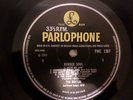
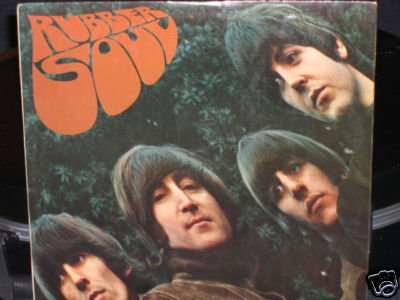
THE BEATLES RUBBER SOUL 1965 1ST PRESS MONO *EX*
£
18
$
23


Favourite Auctions
To save auctions to your favourites, please login
If you don't have an account, please register
Description
THE BEATLES - RUBBER SOUL Matrix No's: XEX579-4/XEX580-1. MONO Yellow/Black Parlophone PMC 1267 label - "the Gramophone Co" & "Sold In UK" Label Text First Pressing - G&L Sleeve
THIS RECORD IS IN EXCELLENT CONDITION AND PLAYS WELL FOR A 44 YEAR OLD LP. IT IS ON THICK HEAVY BLACK VINYL WITH SHINY MIRROR LIKE SURFACES. THERE ARE A FEW MINOR MARKS WHEN HELD UP TO A VERY BRIGHT LIGHT BUT OVERALL LOOKS AND PLAYS GREAT FOR AGE. SLEEVE IS IN EXCELLENT CONDITION WITH NO RIPS OR SPINE DAMAGE. NO DAMAGE TO FLIP BACKS AND FULLY LAMINATED. A LITTLE FADED ON THE BACK (like an old photograph) BUT ALL IN ALL A BEAUTIFUL COPY OF THIS CLASSIC ALBUM!!!
The Beatles and George Martin were beginning to expand the conventional instrumental parameters of the rock group, using a sitar on "Norwegian Wood (This Bird Has Flown)," Greek-like guitar lines on "Michelle" and "Girl," fuzz bass on "Think for Yourself," and a piano made to sound like a harpsichord on the instrumental break of "In My Life.
Musically, the Beatles broadened their sound, most notably with influences drawn from the contemporary folk-rock of the Byrds and Bob Dylan.The album also saw the Beatles broadening rock n' roll's instrumental resources, most notably on "Norwegian Wood (This Bird Has Flown)". Although both the Yardbirds and the Kinks had used Indian influences in their music, this track is generally credited as being the first pop recording to use an actual sitar, an Indian stringed instrument, and "Norwegian Wood" sparked a musical craze for the sound of the novel instrument in the mid-1960s. The song is now acknowledged as one of the cornerstones of what is now usually called "world music" and it was a major landmark in the trend towards incorporating non-Western musical influences into Western popular music. Harrison had recently been introduced to Indian classical music and the sitar by David Crosby of the Byrds. George Harrison soon became fanatically interested in the genre and began taking sitar lessons from renowned Indian sitar virtuoso Ravi Shankar. A broadening use of percussive arrangements, led by Ringo Starr's backbeats and frequently augmented by maracas and tambourine, can also be heard throughout the album, showcased in tracks such as "Wait" and "Think For Yourself." Perhaps Ringo's most unusual percussion source on the album, which was revealed by him to Barry Tashian of The Remains in the book "Ticket To Ride", is created by his tapping a pack of matches with his finger. This "tapping" sound can be heard in the background of "I'm Looking Through You".
Recording innovations were also made during the recording of the album—for instance, the keyboard solo in "In My Life" sounds like a harpsichord, but was actually played on a piano. George Martin found he could not match the tempo of the song while playing in this baroque style, so he tried recording with the tape running at half-speed. When played back at normal speed during the mixdown, the sped-up sound gave the illusion of a harpsichord. Other production innovations included the use of electronic sound processing on many instruments, notably the heavily compressed and equalised piano sound on Lennon's "The Word"; this distinctive effect soon became extremely popular in the genre of psychedelic music.
Also on Rubber Soul, the Beatles were seen heading into psychedelic rock. They introduced a genuine sitar on "Norwegian Wood," and on the "The Word," they voiced the drug-influenced peace-and-love sentiments that would color many psychedelic lyrics.
Lyrically, the album was a major progression. Though a smattering of earlier Beatles songs had expressed romantic doubt and negativity, the songs on Rubber Soul represented a pronounced development in sophistication, thoughtfulness, and ambiguity. In particular, the relationships between the sexes moved from simpler boy-girl love songs to more nuanced, even negative portrayals. "Norwegian Wood", one of the most famous examples and often cited as the Beatles' first conscious assimilation of the lyrical innovations of Bob Dylan, sketches a poetically ambiguous extramarital affair between the singer and a mysterious girl. "Drive My Car" serves as a satirical piece of reverse sexism. Songs like "I'm Looking Through You", "You Won't See Me", and "Girl" express more emotionally complex, even bitter and downbeat portrayals of romance, and "Nowhere Man" was arguably the first Beatles song to move beyond a romantic subject (arguable because the song "Help!", released earlier in 1965, also appears not to be specifically about a boy-girl relationship—the song takes the form of a general cry for "help" from the singer to another person, whose relationship to the singer remains unspecified. Even the line "now I find I need you like I've never done before", could be addressed to any close friend of the singer, not necessarily a romantic partner).
After completing the album and the accompanying single "We Can Work It Out" and "Day Tripper", the Beatles were exhausted from years of virtually non-stop recording, touring, and film work. They subsequently took a three-month break during the first part of 1966, and used this free time exploring new directions that would colour their subsequent musical work. These became immediately apparent in the next album, Revolver.
Until very late in their career, the "primary" version of the Beatles' albums was always the monophonic mix. According to Beatles historian Mark Lewisohn, the group, producer George Martin, and the Abbey Road engineers devoted most of their time and attention to the mono mixdowns, and the band were usually all present throughout these sessions and actively participated in them. Even with their landmark Sgt. Pepper's Lonely Hearts Club Band LP, the stereo mixdowns were considered less important than the mono version and were completed in far less time than the mono mixdown.
While the stereo version of the original release of Rubber Soul was similar to that of their earliest albums, featuring mainly vocals on the right channel and instruments on the left, it was not produced in the same manner. The early albums were recorded on twin-track tape, and they were intended only for production of monaural records, so they kept vocals and instruments separated allowing the two parts to later be mixed in proper proportion. By this time, however, the Beatles were recording on four-track tape, which allowed a stereo master to be produced with vocals in the centre and instruments on both sides, as evidenced in their prior albums Beatles for Sale and Help!. But Martin was looking for a way to easily produce a stereo album which sounded good on a monaural record player. In what he admits was some experimentation, he mixed down the four-track master tape to stereo with vocals on the right, instruments on the left, and nothing in the middle.
The song "Wait" was initially recorded for, and then left off, the album Help!. The reason the song was released on Rubber Soul was that album that was one song short, and with the Christmas deadline looming, the Beatles chose to release "Wait" instead of recording a new composition.
Paul McCartney claims to have conceived the album's title after overhearing a black musician's description of Mick Jagger's singing style as "plastic soul". John Lennon confirmed this in a 1970 interview with Rolling Stone, stating, "That was Paul's title... meaning English soul. Just a pun." Also, Paul says the words "Plastic soul, man. Plastic soul..." at the end of "I'm Down" take 1, on Anthology 2.
Album artwork
The photo of the Beatles on the Rubber Soul cover appears stretched. McCartney relates the story behind this in Volume 5 of the documentary film Anthology. Photographer Bob Freeman had taken some pictures of the Beatles at Lennon's house. Freeman showed the photos to the Beatles by projecting them onto an album-sized piece of cardboard to simulate how they would appear on an album cover. The unusual Rubber Soul album cover came to be when the slide card fell slightly backwards, elongating the projected image of the photograph and stretching it. Excited by the effect, they shouted, "Ah! Can we have that? Can you do it like that?" Freeman said he could.
Capitol Records used a different colour saturation for the US version, causing the orange lettering used by Parlophone Records to show up as different colours. On some Capitol LPs, the title looks rich chocolate brown; others, more like gold. Yet on the official 1987 CD of the British version, the Capitol logo is visible, and the letters are not brown, nor the official orange, but a distinct green. The lettering was designed by Charles Front.
Reception
The album was commercially successful, beginning a 42-week run in the British charts on 11 December 1965. On Christmas Day it replaced Help!—The Beatles' previous album—at the top of the charts, a position Rubber Soul held for eight weeks. The album was a major artistic leap for the group, and is often cited by critics, as well as members of the band, as the point at which the Beatles' earlier Merseybeat sound began to be transformed into the eclectic, sophisticated pop/rock of their later career. John Lennon later said this was the first album on which the Beatles were in complete creative control during recording, with enough studio time to develop and refine new sound ideas. The US version of the album also greatly influenced the Beach Boys' Brian Wilson, who "answered" the album by releasing Pet Sounds in 1966. Rubber Soul is also believed to have been a major muse in the creation of Freak Out! by Frank Zappa and the Mothers of Invention, which was also released in 1966 and in turn inspired the creation of Sgt. Pepper's Lonely Hearts Club Band. The album became a classic—on 9 May 1987, it returned to the album charts for three weeks, and ten years later made another comeback to the charts.
Rubber Soul is often cited as one of the greatest albums in pop music history. In 1998, Q magazine readers voted it the 40th greatest album of all time, while in 2000 the same magazine placed it at number 2 in its list of the 100 Greatest British Albums Ever. In 2001, VH1 placed it at number 6. In 2003, the album was ranked number 5 on Rolling Stone magazine's list of the 500 greatest albums of all time.[1] In 2006, the album was chosen by Time magazine as one of the 100 best albums of all time.
Track listing.
All songs written and composed by John Lennon and Paul McCartney, except where noted.
Side one # Title Lead vocals Length 1. "Drive My Car" Paul McCartney 2:30 2. "Norwegian Wood (This Bird Has Flown)" John Lennon 2:05 3. "You Won't See Me" Paul McCartney 3:22 4. "Nowhere Man" John Lennon 2:44 5. "Think for Yourself" (George Harrison) George Harrison 2:19 6. "The Word" John Lennon, Paul McCartney and George Harrison 2:43 7. "Michelle" Paul McCartney 2:42 Side two # Title Lead vocals Length 8. "What Goes On" (John Lennon, Paul McCartney, Richard Starkey) Ringo Starr 2:50 9. "Girl" John Lennon 2:33 10. "I'm Looking Through You" Paul McCartney 2:27 11. "In My Life" John Lennon 2:27 12. "Wait" John Lennon and Paul McCartney 2:16 13. "If I Needed Someone" (George Harrison) George Harrison 2:23 14. "Run for Your Life" John Lennon 2:18I'VE TRIED TO GRADE IT AS HONESTLY AS POSIBLE AND IF YOU HAVE ANY QUESTIONS PLEASE DO NOT HESITATE TO ASK. IF YOU ARE THE WINNING BIDDER AND ARE NOT 100% SATISFIED PLEASE CONTACT ME BEFORE LEAVING NEGATIVE FEEDBACK AS I WILL BE MORE THAN HAPPY TO RESOLVE THE MATTER PERSONALLY AND SORT SOMETHING OUT. ALL MY RECORDS ARE PACKED WITH CARDBOARD STIFFENERS AND ARE SENT RECORDED DELIVERY WITH INSURANCE TO MAKE SURE THEY ARRIVE IN THE SAME CONDITION AS THEY WERE SENT. GOOD LUCK AND HAPPY BIDDING!!!
POSTAGE COSTS:- UK 2ND CLASS RECORDED= £3.50. EU AIRMAIL=£8.00. ROW AIRMAIL= £9.00. ADDITIONAL RECORDS:- £2.00 PER RECORD
my records are condition graded visually in accordance with Record Collector's Grading System as follows:
MINT
The record itself is in brand new condition with no surface marks or deterioration in sound quality. The cover and any extra items such as the lyric sheet, booklet or poster are in perfect condition. Records advertised as Sealed or Unplayed should be Mint.
EXCELLENT
The record shows some signs of having been played, but there is very little lessening in sound quality. The cover and packaging might have slight wear and/or creasing.
VERY GOOD
The record has obviously been played many times, but displays no major deterioration in sound quality, despite noticeable surface marks and the occasional light scratch. Normal wear and tear on the cover or extra items, without any major defects, is acceptable.
GOOD
The record has been played so much that the sound quality has noticeably deteriorated, perhaps with some distortion and mild scratches. The cover and contents suffer from folding, scuffing of edges, spine splits, discoloration, etc.
FAIR
The record is still just playable but has not been cared for properly and displays considerable surface noise; it may even jump. The cover and contents will be torn, stained and/or defaced.
POOR
The record will not play properly due to scratches, bad surface noise, etc. The cover and contents will be badly damaged or partly missing.
BAD
The record is unplayable or might even be broken, and is only of use as a collection-filler.
price rating









![Parkway Drive - Reverence [VINYL]](https://www.popsike.com/php/thumbnail.php?url=https://www.popsike.pics/pix/20221214/285075308055.jpg)
![`Sublime - 40oz. To Freedom [2LP] (remastered, gatefold)` VINYL LP NEW](https://www.popsike.com/php/thumbnail.php?url=https://www.popsike.pics/pix/20171228/302580986937.jpg)