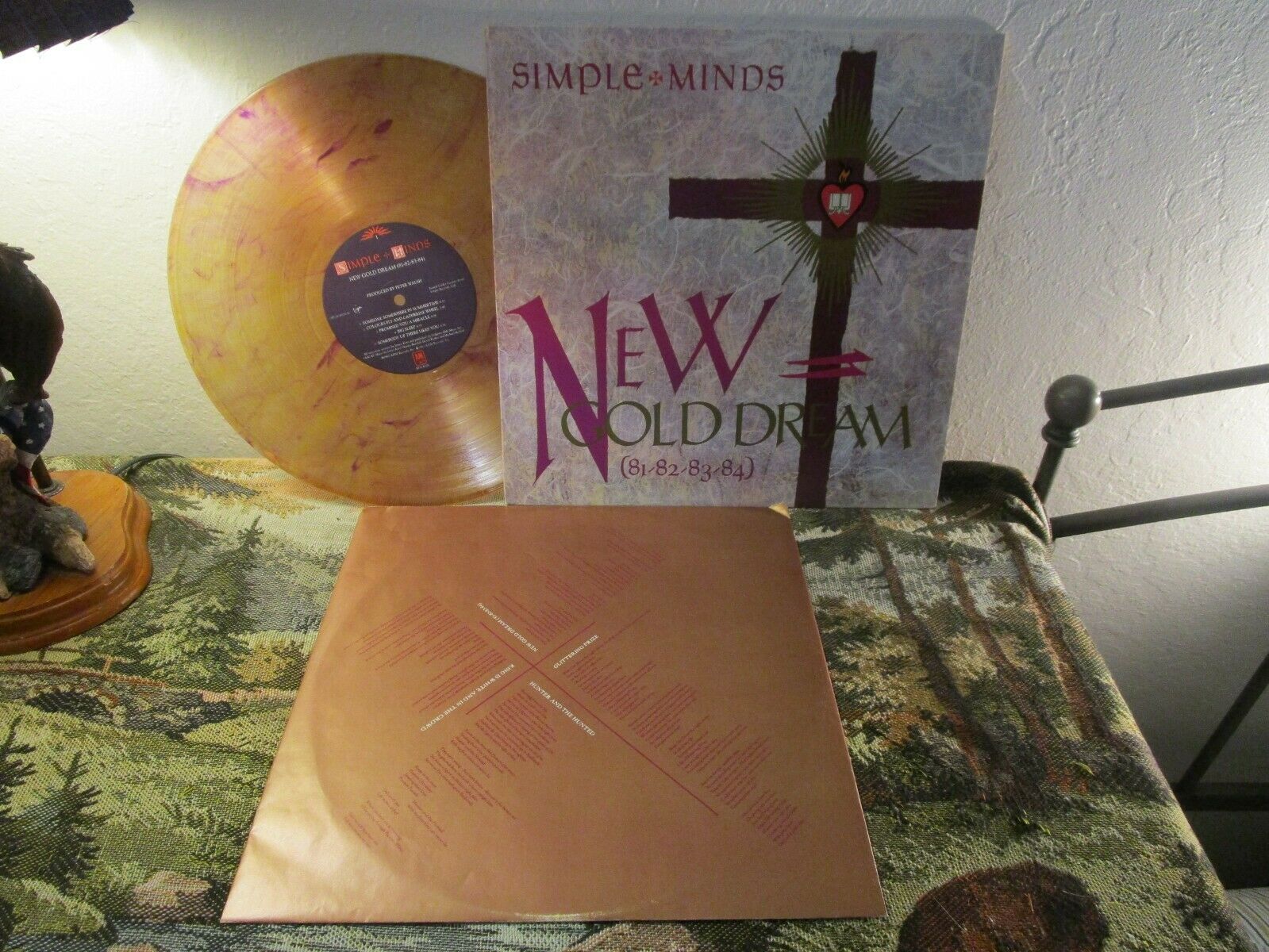
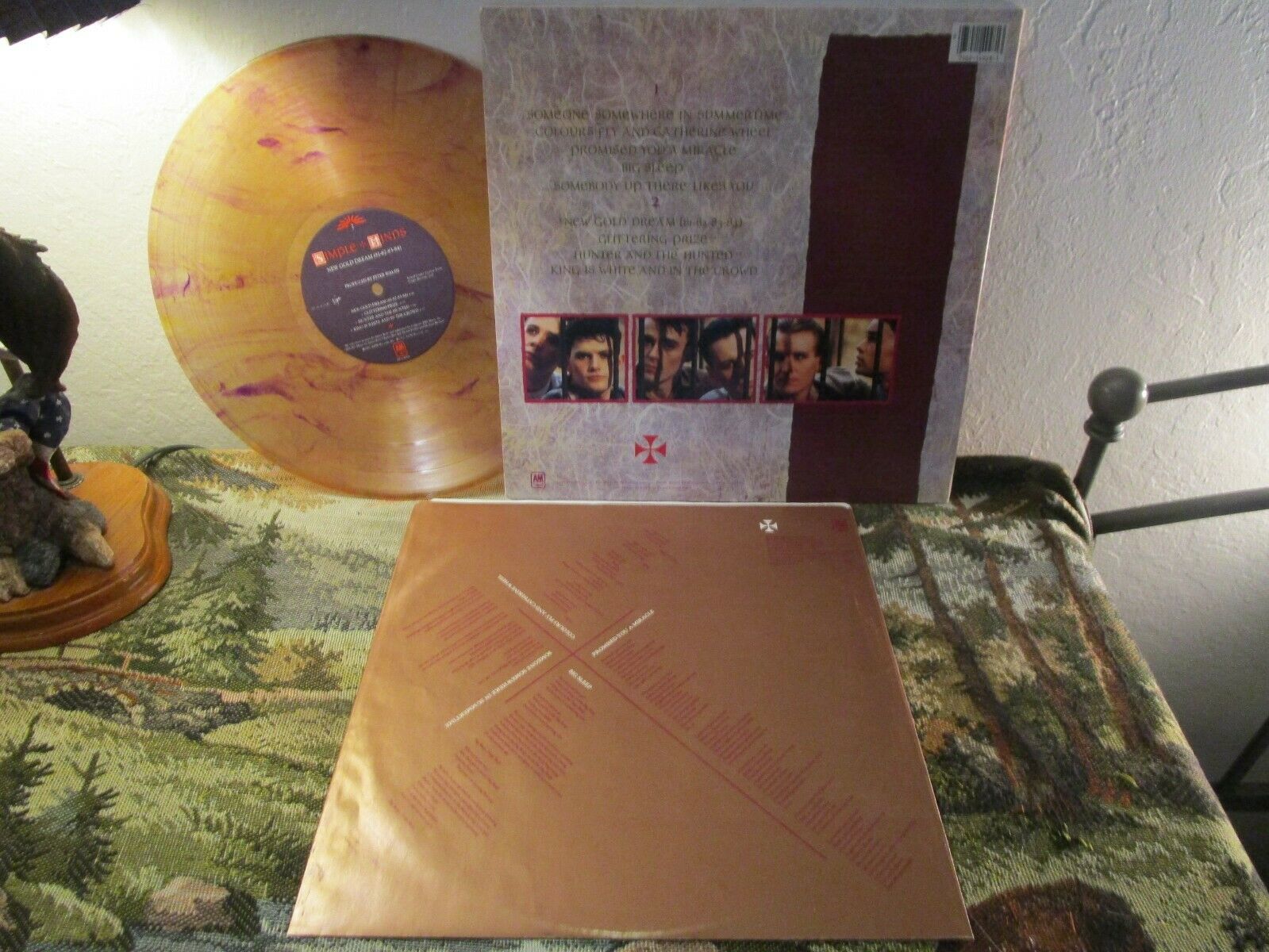
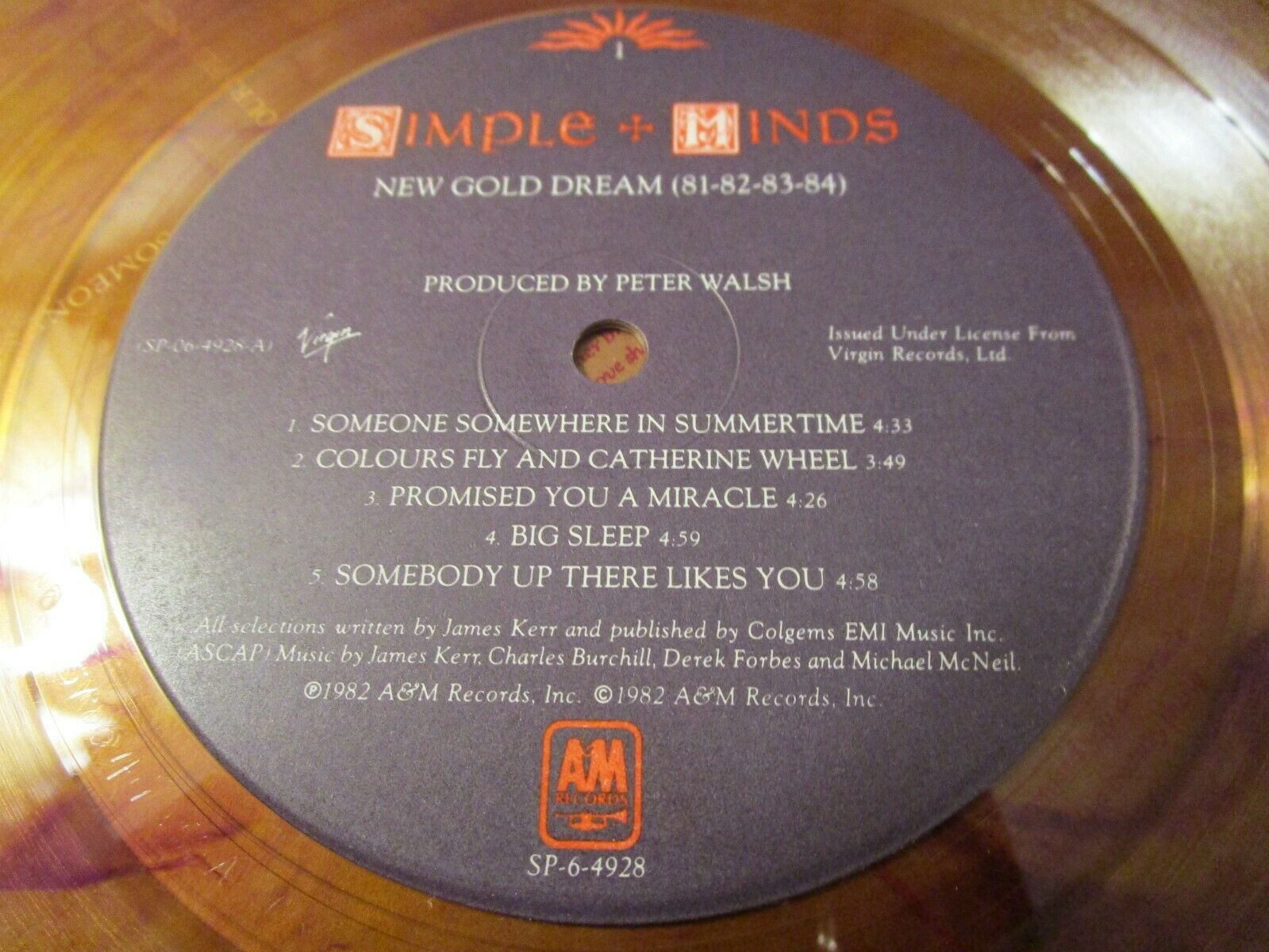
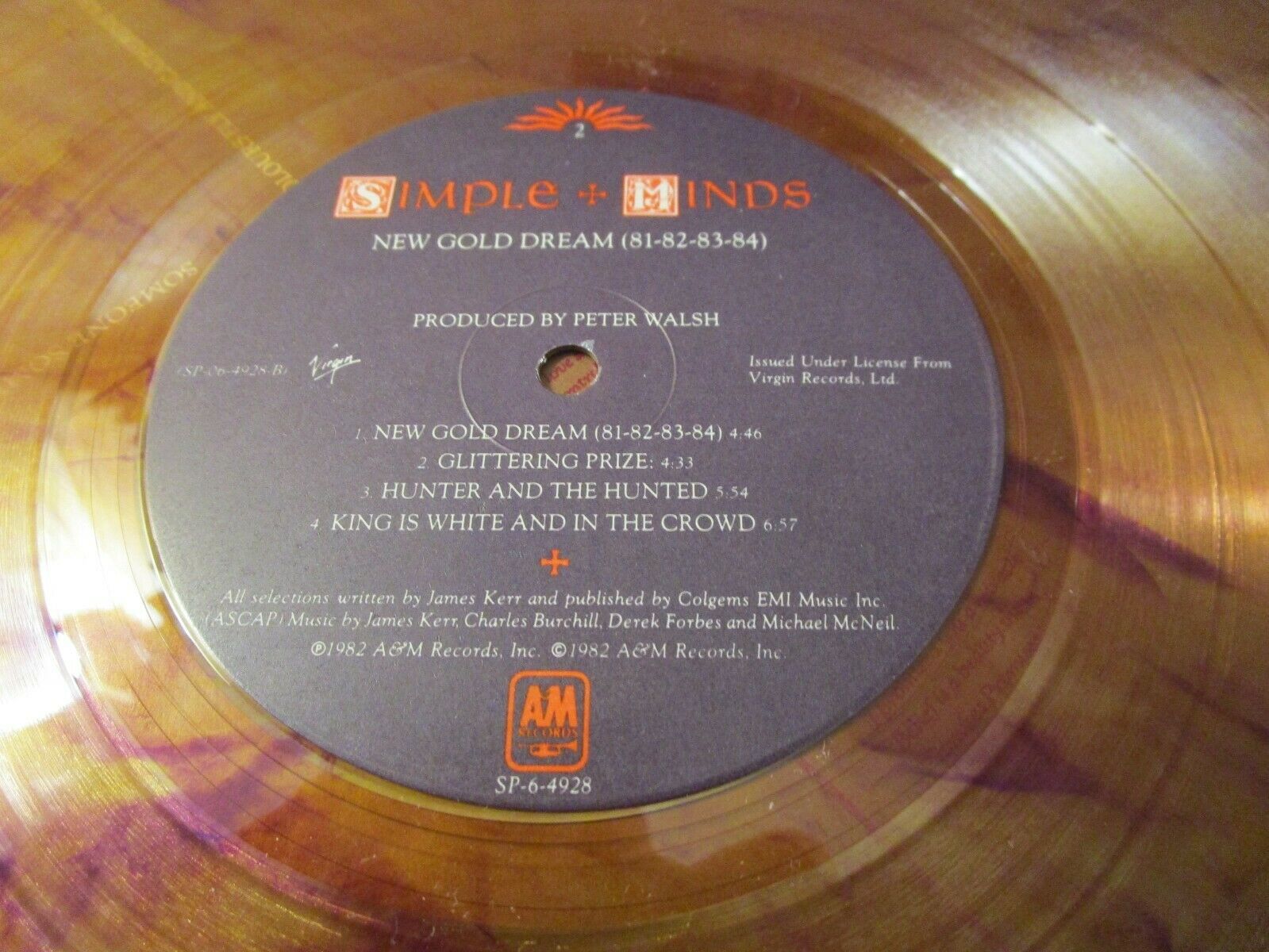
Simple Minds - New Gold Dream (81-82-83-84) - LP ex/ex Translucent Gold
$
22
Favourite Auctions
To save auctions to your favourites, please login
If you don't have an account, please register
Description
Competitive pricing is my goal to get rid of the hundred's of Lp's. I try my best to grade lp's, and on occasion I will play test if time allows... I am trying to clean records that raises my ire of suspicion, but am finding my self these days cleaning everything. My only method of cleaning is a soft brush and cloth and some Audio Advisor product. I do not have a vacuum. I listen with my turntable & needle when I play grade an LP. If a stubborn noise erupts I will then look under a light and microscope. It is quite time consuming. So I may miss a thing or two sometimes on my listings, but I will always be here to help resolve the issue. All I ask is my buyers realize these points and be rest assured I offer a refund policy but I would prefer you email me so we can work something out first, I may have a back up copy... I have been collecting records since my 20's... Its has been a passion and a part-time hobby, I hope you love and enjoy music as much as I do, and selling is another way to get to know other people with a like minded interest as I. I offer a refund policy, so please give me the opportunity to make good if there is a problem with a transaction. I reserve the right to cancel a transaction after the sale If I find a missed defect on your behalf.
check prices, email me with concerns please.
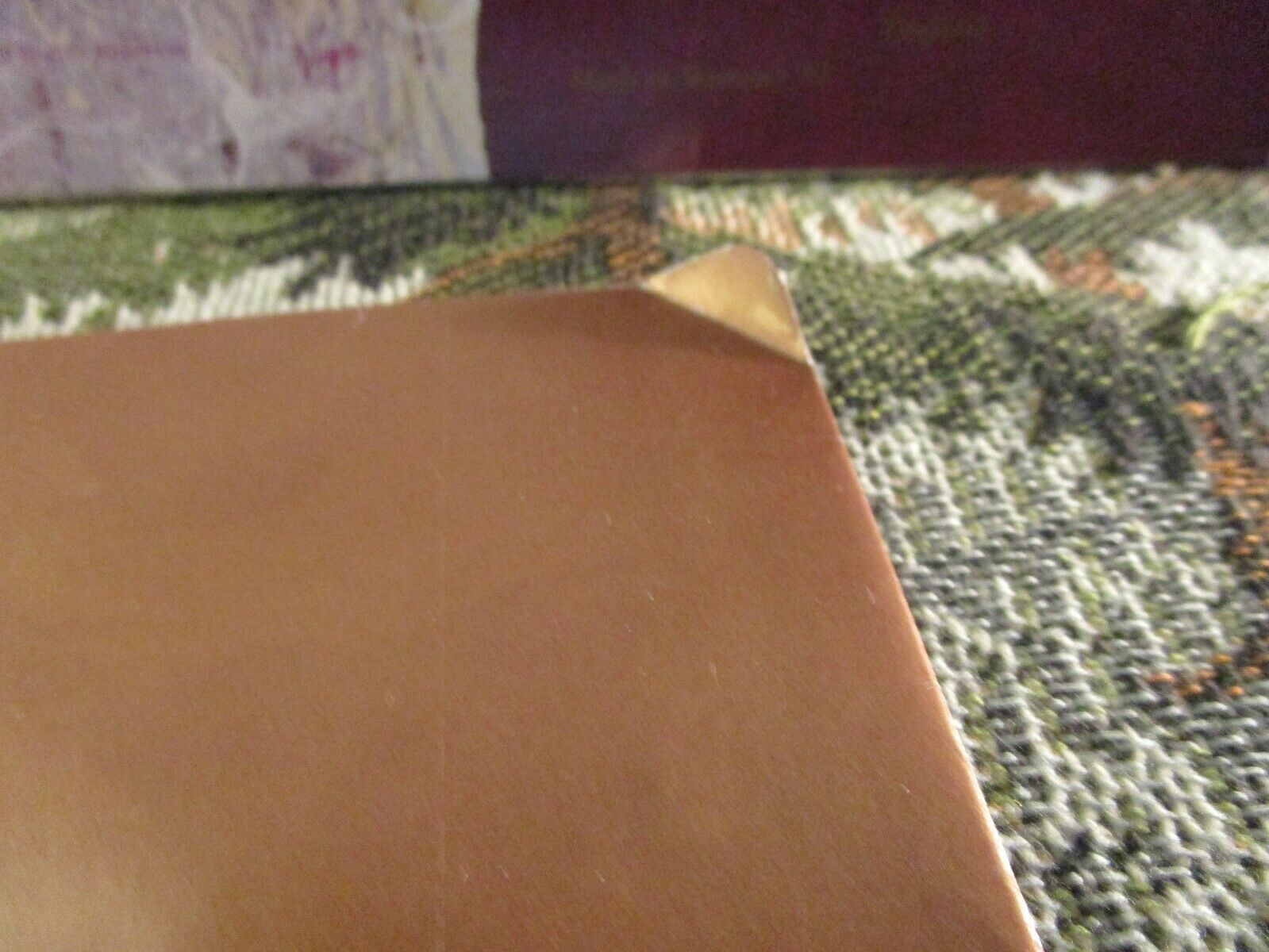
Jacket...looks great Record play tested, no issues... corner bend on vg+ inner sleeve...
shipping: 1-2 Lp's: $3.50 3-3 Lp's: $3.80 4-5 Lp's: $4.50 6-6 Lp's $5.50 7-9 Lp's $6.50
The roots of Simple Minds are in the short-lived punk band Johnny & The Self-Abusers, founded on the South Side of Glasgow in early 1977. The band was conceived (initially as an imaginary band) by would-be Glasgow scene-maker Alan Cairnduff, although he left the job of organising the band to his friend John Milarky. At Cairnduff's suggestion, Milarky teamed up with two musicians he had never worked with before – budding singer and lyricist Jim Kerr and guitarist Charlie Burchill. Kerr and Burchill had known each other since the age of eight. After joining Johnny & The Self-Abusers, they brought in two of their school friends, Brian McGee on drums and Tony Donald on bass (all four had previously played together in the schoolboy band Biba-Rom!).
With Milarky established as singer, guitarist and saxophonist, the line-up was completed by his friend Allan McNeill as third guitarist. Kerr and Burchill also doubled on keyboards and violin respectively. In common with the early punk bands, various members took on stage names—Milarky became "Johnnie Plague", Kerr became "Pripton Weird", McNeill chose "Sid Syphilis" and Burchill chose "Charlie Argue".
Johnny & The Self-Abusers played their first gig on Easter Monday, 11 April 1977, at the Doune Castle pub in Glasgow. The band played support to rising punk stars Generation X in Edinburgh two weeks later. The band went on to play a summer of concerts in Glasgow. The band soon split into two factions, with Milarky and McNeill on one side and Kerr, Donald, Burchill and McGee on the other: at the same time, Milarky's compositions were being edged out in favour of those of Kerr and Burchill.
In November 1977, Johnny & The Self-Abusers released its only single, "Saints and Sinners", on Chiswick Records (which was dismissed as being "rank and file" in a Melody Maker review). The band split on the same day that the single was released, with Milarky and McNeil going on to form The Cuban Heels. Ditching the stage names and the overt punkiness, the remaining members continued together as Simple Minds (naming themselves after a David Bowie lyric from his song "Jean Genie").
In January 1978, Simple Minds recruited Duncan Barnwell as a second guitarist (allowing for an optional two-guitar line-up while also enabling Burchill to play violin). Meanwhile, Kerr had abandoned keyboards to concentrate entirely on vocals. In March 1978, Kerr, Burchill, Donald, Barnwell and McGee were joined by the Barra-born keyboard player Mick MacNeil. The band rapidly established a reputation as an exciting live act (usually performing in full makeup) and gained a management deal with Bruce Findlay, owner of the Bruce's Records chain of record shops. Findlay also owned Zoom Records (a subsidiary of the Arista Records label), and used his position to get Simple Minds signed to Arista. By early 1980, Findlay would have become the band's full-time manager via his Schoolhouse Management company.
The band's line-up did not settle until the end of 1978. Tony Donald quit in April 1978, before the first Simple Minds demo tape was recorded (he later became Burchill's guitar technician). He was replaced by Duncan Barnwell's friend Derek Forbes (formerly the bass player with The Subs). In November 1978, Barnwell was asked to leave. The remaining quintet of Kerr, Burchill, MacNeil, Forbes and McGee—generally considered as the first serious line-up of Simple Minds—began rehearsing the set of Kerr/Burchill-written songs which appear on their début album.
The first Simple Minds album, Life in a Day, was produced by John Leckie and released by Arista in April 1979. The album's title track "Life in a Day" was released as Simple Minds' first single and reached No. 62 in the UK Singles Chart, with the album reaching No. 30 in the UK Albums Chart. The next single ("Chelsea Girl") failed to chart. While preparing ideas for the next record, they played a support slot for Magazine, following which they went back to the studio with Leckie to work on new material.
Simple Minds' second release, Real to Real Cacophony was a significant departure from the pop tunes of Life in a Day. The album had a darker and far more experimental atmosphere, announcing some of the new wave experimentation that became the band's trademark sound over the next two albums. Much of the album was written in the studio, although Simple Minds had been playing early versions of several tracks during the recent tour dates.
Innovations which the band displayed on Real to Real Cacophony included minimalist structures based around the rhythm section of Forbes and McGee, plus the occasional use of unconventional time signatures. The band also experimented with elements of dub, and included the wordless and atmospheric "Veldt" in which they attempted to create an impression of an African landscape using electronic buzzes and drones, Burchill's improvised saxophone lines and Kerr's chants and cries. The album also generated the single "Changeling". Real to Real Cacophony caught the attention of Peter Gabriel who selected Simple Minds as the opening act on several dates of his European tour starting in August 1980.
The next album was Empires and Dance, released in September 1980. Many of the tracks were minimal and featured a significant use of sequencing. McNeil's keyboards and Forbes' bass became the main melodic elements in the band's sound, with Burchill's heavily processed guitar becoming more of a textural element. With this album, Kerr began to experiment with non-narrative lyrics based on observations he had made as the band travelled across Europe on tour. While a modest commercial success, Empires and Dance received enthusiastic response in the British music press and the tour as support act for Peter Gabriel gave the band the opportunity to play at bigger venues.
In 1981, Simple Minds switched record labels from Arista to Virgin. The following year, Arista put out a compilation album, Celebration, featuring tracks from the three previous albums. Simple Minds' first release on Virgin was two albums: the Steve Hillage-produced Sons and Fascination and Sister Feelings Call. The latter album was initially included as a bonus disc with the first 10,000 vinyl copies of Sons and Fascination, but it was later re-issued as an album in its own right. (For the CD release, it was paired on a single disc with Sons and Fascination – at first with two tracks deleted, but in full on later issues.) Further increasing the band's visibility, the single "Love Song" became an international hit (reaching the Top 20 in Canada and Australia), and the instrumental "Theme for Great Cities" proved so enduring a composition that it was later re-recorded in 1991 as a B-side to the single "See the Lights".
During this period, the band's visual aesthetic was established, masterminded by Malcolm Garrett's graphic design company Assorted iMaGes. Characterised at first by hard, bold typography and photo-collage, Garrett's designs for the band later incorporated pop-religious iconography in clean, integrated package designs that befitted the band's idealised image as neo-romantic purveyors of European anthemic pop. Drummer Brian McGee left the band at the end of the Sons and Fascination sessions, citing exhaustion at Simple Minds' constant touring schedule, and a desire for more time at home with family. He later joined Propaganda.
McGee's initial replacement as Simple Minds' drummer was Kenny Hyslop (ex-Skids, Slik, Zones), who joined the band in October 1981 in time to play the first leg of the Sons and Fascination tour. His interest in New York music (including funk, hip-hop and dance) had an immediate effect on the band's musical development. He stayed long enough to drum on the band's next single, the disco-friendly "Promised You a Miracle" (based on a funk riff from one of the cassettes he played on the band's tour bus) which hit the UK Top 20 and the Australian Top 10. Hyslop "didn't fit in" with the band or their management and was replaced for the second leg of the Sons and Fascination tour in early 1982.
Hyslop was replaced by the Kilmarnock-born percussionist Mike Ogletree (the former drummer for Café Jacques). Ogletree joined Simple Minds for rehearsals in a large converted barn in Perthshire, where he wrote and played the drum parts for the songs that were to become New Gold Dream (81–82–83–84). Ogletree also performed with the band on TV and the second leg of the 'Sons and Fascination Tour'.
The band moved to Townhouse Studios for recording sessions with producer Peter Walsh, who introduced them to a London-born drummer called Mel Gaynor, a 22-year-old session musician with plenty of experience from playing with funk-bands such as Beggar and Co and Light of the World. Working closely with Ogletree in order to capture and maintain the beats from the Perthshire sessions, he played drums on the majority of the record (although Ogletree played drums on three tracks and is credited for percussion across the entire album).
New Gold Dream (81–82–83–84) was released in September 1982, combining the results of the Walsh sessions along with "Promised You a Miracle". The album was a commercial breakthrough and generated charting singles including "Glittering Prize" (which reached the UK Top 20 and Australian Top 10). While some tracks ("Promised You a Miracle", "Colours Fly and Catherine Wheel") continued the formula perfected on Sons and Fascination, other tracks ("Someone Somewhere in Summertime", "Glittering Prize") were pure pop. Jazz keyboardist Herbie Hancock performed a synth solo on the track "Hunter and the Hunted".
Mike Ogletree played on the first leg of the New Gold Dream tour, but left the band immediately afterwards in November 1982 to join Fiction Factory. Mel Gaynor was recruited (as a full member of the band) for the remaining dates. Simple Minds' first non-Scottish member, Gaynor went on to become the band's longest-standing drummer (and member aside from mainstays Burchill and Kerr) despite thrice leaving and returning in the following decades.
thxs 2 ~ wiki
Someone Somewhere In Summertime 4:35 Colours Fly And Catherine Wheel 3:49 Promised You A Miracle 4:26 Big Sleep 4:59 Somebody Up There Likes You 4:58 New Gold Dream (81-82-83-84) 5:40 Glittering Prize 4:33 Hunter And The Hunted 5:54 King Is White And In The Crowd 6:57
price rating



![Devin Townsend Project Transcendence [2LP+CD]Clear/Silver Colored Vinyl, gatfld)](https://www.popsike.com/php/thumbnail.php?url=https://www.popsike.pics/pix/20160926/371747102685.jpg)