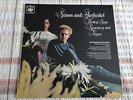
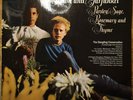
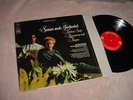
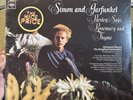
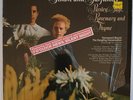
SIMON&GARFUNKEL PARSLEY,SAGE ,ROSEMARY AND THYME MONO
$
30


Favourite Auctions
To save auctions to your favourites, please login
If you don't have an account, please register
Description
Mono phonograph records from the fifties and early 60's are frequently and demonstrably more convincing than their stereo counterparts, and often more engaging than many prized stereo recordings. Do not be alarmed. I am not proposing a competition between mono and stereo like that which has developed between analog and digital, though I am acquainted with very sane and respected audiophiles and music lovers who feel that just such a comparison is overdue. What I am suggesting is that for the music-loving record collector -- even the audiophile! -- there is a vast, unsung, relatively untapped abundance of recordings of musical worth and surprising technical excellence waiting to be grabbed up.
The attitude about recordings differed dramatically a half century ago. For the most part, recording producers were more concerned with recording music as a document of performance; today's producers are more concerned with a product that will make a profit. Recordings of the last couple of decades have been more the creations of the producer than of the performing artists. (I would go so far as to say that much of today's recorded music is anti-performance, especially non-classical music.) At mid-century, all genres of music were treated with respect and with the intention of at least trying to recreate a real (rather than "virtual" if I can be permitted the distinction) performance, if not the precise acoustical environment of the recording. Today's recordings are self-evidently market-driven; decisions about musical content are made for commercial, rather than musical reasons. Given that today's artists sound so much like each other (again, I'm speaking mostly, though not entirely, of non-classical music), it is a relief to listen to a generation of musicians who felt that their function was to channel music through their unique understandings and passions rather than through the bank accounts of their producers.
The previous generation of producers and engineers supported this aesthetic. The music went from somewhere to somewhere; the journey was fascinating, engaging, entertaining. The pursuit of high-tech hasn't so much brought us better recordings as it has a kind of perfection that is little more than an absence of defect. It is no surprise that "new age" music is known as "acoustic wallpaper." The surprise is that this consistency of idea, performance, production and engineering has found its way into all forms of music, even classical.
Simon & Garfunkel's first masterpiece, Parsley, Sage, Rosemary and Thyme was also the first album on which the duo, in tandem with engineer Roy Halee, exerted total control from beginning to end, right down to the mixing, and it is an achievement akin to the Beatles' Revolver or the Beach Boys' Pet Sounds album, and just as personal and pointed as either of those records at their respective bests. After the frantic rush to put together an LP in just three weeks that characterized the Sounds of Silence album early in 1966, Parsley, Sage, Rosemary and Thyme came together over a longer gestation period of about three months, an uncommonly extended period of recording in those days, but it gave the duo a chance to develop and shape the songs the way they wanted them. The album opens with one of the last vestiges of Paul Simon's stay in England, "Scarborough Fair/Canticle" -- the latter was the duo's adaptation of a centuries-old English folk song in an arrangement that Simon had learned from Martin Carthy. The two transformed the song into a daunting achievement in the studio, however, incorporating myriad vocal overdubs and utilizing a harpsichord, among other instruments, to embellish it, and also wove into its structure Simon's "The Side of a Hill," a gentle antiwar song that he had previously recorded on The Paul Simon Songbook in England. The sonic results were startling on their face, a record that was every bit as challenging in its way as "Good Vibrations," but the subliminal effect was even more profound, mixing a hauntingly beautiful antique melody, and a song about love in a peaceful, domestic setting, with a message about war and death; Simon & Garfunkel were never as political as, say, Peter, Paul & Mary or Joan Baez, but on this record they did bring the Vietnam war home. The rest of the album was less imposing but just as beguiling -- audiences could revel in the play of Simon's mind (and Simon & Garfunkel's arranging skills) and his sense of wonder (and frustration) on "Patterns," and appreciate the sneering rock & roll-based social commentary "The Big Bright Green Pleasure Machine." Two of the most beautiful songs ever written about the simple joys of living, the languid "Cloudy" and bouncy "The 59th Street Bridge Song (Feelin' Groovy)," were no less seductive, and the album also included "Homeward Bound," their Top Five hit follow-up to "The Sound of Silence," which had actually been recorded at the sessions for that LP. No Simon & Garfunkel song elicits more difference of opinion than "The Dangling Conversation," making its LP debut here -- one camp regards it as hopelessly pretentious and precious in its literary name-dropping and rich string orchestra accompaniment, while another holds it as a finely articulate account of a couple grown distant and disconnected through their intellectual pretentions; emotionally, it is definitely the precursor to the more highly regarded "Overs" off the next album, and it resonated well on college campuses at the time, evoking images of graduate school couples drifting apart, but for all the beauty of the singing and the arrangement, it also seemed far removed from the experience of teenagers or any listeners not living a life surrounded by literature ("couplets out of rhyme" indeed!), and understandably only made the Top 30 on AM radio. "For Emily, Whenever I May Find Her" was a romantic idyll that presented Art Garfunkel at his most vulnerable sounding, anticipating such solo releases of his as "All I Know," while "Flowers Never Bend With the Rainfall" was Simon at his most reflectively philosophical, dealing with age and its changes much as "Patterns" dealt with the struggle to change, with a dissonant note (literally) at the end that anticipated the style of the duo's next album. "A Simple Desultory Philippic," which also started life in England more than a year earlier, was the team's Dylanesque fuzz tone-laden jape at folk-rock, and a statement of who they weren't, and remains, alongside Peter, Paul & Mary's "I Dig Rock & Roll Music," one of the best satires of its kind. And the last of Simon's English-period songs, "A Poem on the Underground Wall," seemed to sum up the tightrope walk that the duo did at almost every turn on this record at this point in their career -- built around a beautiful melody and gorgeous hooks, it was, nonetheless, a study in personal privation and desperation, the "sound of silence" heard from the inside out, a voice crying out. Brilliantly arranged in a sound that was as much rock as film music, but with the requisite acoustic guitars, and displaying a dazzling command and range of language, it could have ended the album. Instead, the duo offered "7 O'Clock News/Silent Night," a conceptual work that was a grim and ironic (and prophetic) comment on the state of the United States in 1966. In retrospect, it dated the album somewhat, but that final track, among the darkest album-closers of the 1960s, also proved that Simon & Garfunkel weren't afraid to get downbeat as well as serious for a purpose. Overall, Parsley, Sage, Rosemary and Thyme was the duo's album about youthful exuberance and alienation, and it proved perennially popular among older, more thoughtful high-school students and legions of college audiences across generations. [The August 2001 reissue offers not only the best sound ever heard on this album in any incarnation, but also a few bonuses -- a slightly extended mastering of "Cloudy" that gives the listener a high-harmony surprise in its fade; and, as actual bonus tracks, Simon's solo demos of "Patterns" and "A Poem on the Underground Wall." Raw and personal, they're startling in their intimacy and their directness, and offer a more intimate view of Paul Simon, the artist, than ever seen.]
Tracks
"Patterns" – 2:42
Recorded: June 8, 1966
"Cloudy" (Paul Simon, Bruce Woodley) – 2:10
Recorded: June 10, 1966
"Homeward Bound" – 2:30
Recorded: December 14, 1965
"The Big Bright Green Pleasure Machine" – 2:44
Recorded: June 15, 1966
"The 59th Street Bridge Song (Feelin' Groovy)" – 1:43
Recorded: August 16, 1966
"The Dangling Conversation" – 2:37
Recorded: June 21, 1966
"Flowers Never Bend with the Rainfall" – 2:10
Recorded: December 22, 1965
"A Simple Desultory Philippic (Or How I Was Robert McNamara'd into Submission)" – 2:12
Recorded: June 13, 1966
"For Emily, Whenever I May Find Her" – 2:04
Recorded: August 22, 1966
"A Poem on the Underground Wall" – 1:52
Recorded: June 13, 1966
"7 O'Clock News/Silent Night" (Josef Mohr, Franz Gruber) – 2:01
Recorded: August 22, 1966
VISUAL GRADING:
AT RECORDMART-165 WE USE GOLDMINE (MAGAZINE) STANDARDS.ALBUMS ARE VIEWED UNDER THREE FORMS OF LIGHTING; NATURAL (DIRECT SUNLIGHT),FLORESCENT AND DIFFUSED LIGHT.RECORDS ARE INSPECTED FOR SCRATCHES, ABRASIONS, SLEEVE WEAR ,WARPING AND LUSTER.OUR GRADING IS CONSERVATIVE AS WE NEITHER WANT TO WASTE OUR TIME NOR DISAPPOINT YOU.SPECIFIC QUESTIONS PERTAINING TO THE STATE OF THE ALBUM ARE WELCOMED AND ENCOURAGED.WE DO NOT LISTEN TO THE RECORDS AND FOR THE MOST PART ,HAVE NOT SINCE THEY WERE ISSUED.
GRADING STANDARDS
Near Mint (NM or M-)
A nearly perfect record. Many dealers won't give a grade higher than this implying (perhaps correctly) that no record is ever truly perfect. The record should show no obvious signs of wear. A 45 RPM or EP sleeve should have no more than the most minor defects, such as almost invisible ring wear or other signs of slight handling. An LP cover should have no creases, folds, seam splits or other noticeable similar defects. No cut-out holes, either. And of course, the same should be true of any other inserts, such as posters, lyric sleeves and the like. Basically, an LP in near mint condition looks as if you just got it home from a new record store and removed the shrink wrap. Near Mint is the highest price listed in all Goldmine price guides. Anything that exceeds this grade, in the opinion of both buyer and seller, is worth significantly more than the highest Goldmine book value.
Very Good Plus (VG+)
Generally worth 50 percent of the Near Mint value. A Very Good Plus record will show some signs that it was played and otherwise handled by a previous owner who took good care of it. Record surfaces may show some signs of wear and may have slight scuffs or very light scratches that don't affect one's listening experiences. Slight warps that do not affect the sound are "OK". The label may have some ring wear or discoloration, but it should be barely noticeable. The center hole will not have been misshapen by repeated play. Picture sleeves and LP inner sleeves will have some slight wear, lightly turned up corners, or a slight seam split. An LP cover may have slight signs of wear also and may be marred by a cut-out hole, indentation or corner indicating it was taken out of print and sold at a discount. In general, if not for a couple things wrong with it, this would be Near Mint. All but the most mint-crazy collectors will find a Very Good Plus record highly acceptable.
Very Good (VG)
Generally worth 25 percent of Near Mint value. Many of the defects found in a VG+ record will be more pronounced in a VG disc. Surface noise will be evident upon playing, especially in soft passages and during a song's intro and fade, but will not overpower the music otherwise. Groove wear will start to be noticeable, as with light scratches (deep enough to feel with a fingernail) that will affect the sound. Labels may be marred by writing, or have tape or stickers (or their residue) attached. The same will be true of picture sleeves or LP covers. However, it will not have all of these problems at the same time, only two or three of them. Goldmine price guides with more than one price will list Very Good as the lowest price. This, not the Near Mint price, should be your guide when determining how much a record is worth, as that is the price a dealer will normally pay you for a Near Mint record.
Good (G), Good Plus (G+)
Generally worth 10-15 percent of the Near Mint value. Good does not mean Bad! A record in Good or Good Plus condition can be put onto a turntable and will play through without skipping. But it will have significant surface noise and scratches and visible groove wear (on a styrene record, the groove will be starting to turn white). A cover or sleeve will have seam splits, especially at the bottom or on the spine. Tape, writing, ring wear or other defects will start to overwhelm the object. It is a common item, you'll probably find another copy in better shape eventually. Pass it up. But, if it's something you have been seeking for years, and the price is right, get it...but keep looking to upgrade.
Poor (P), Fair (F)
Generally worth 0-5 percent of the Near Mint price. The record is cracked, badly warped, and won't play through without skipping or repeating. The picture sleeve is water damaged, split on all three seams and heavily marred by wear and writing. The LP cover barely keeps the LP inside it. Inner sleeves are fully seam split, crinkled, and written upon. Except for impossibly rare records otherwise unattainable, records in this condition should be bought or sold for no more than a few cents each.
THIS RECORD
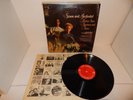
RECORD/VINYL IS IN NM(-) SHAPE ,THE JACKET IS IN NM(-) SHAPE .LINER ON THIS RECORD IS ORIGINAL COLUMBIA ISSUED POLY BAG.ONLY DEFECT IS SMALL FOLD ON TOP RIGHT CORNER OF BACK COVER (AS PICTURED) WE JUDGE THIS RECORD AS A VERY SOLID (NM-).
HAPPY BIDDING
-NO SPINEWARE or RINGWARE
-NO SPLIT SEAMS
-LABEL IS INTACT AND CONTAINS NO MARKINGS OR WEAR WHATSOEVER
-NO MOLD OR GENERAL WATER DAMAGE
-NO SCUFFS OR MARRING OF VINYL
-NO BARCODE OR RIAA LABELING
-NO CUT OUTS OR DRILL HOLES
THE RECORD WILL SHIP IN A STURDY CARDBOARD MAILER WITH FOAM PADDING SO AS TO ARRIVE IN THE SHAPE IT IS SHIPPED OUT IN.RECORD IS REMOVED FROM JACKET AS TO AVOID SEAM SPLITTING.
=====================================================================================
Payment Must Be Received Within 5 Days After Auction Close
=============================================================
About Us:
-Please note,At Recordmart165 we strive for complete customer satisfaction!! To this end we want to keep our clientele happy and (hopefully)returning.If satisfied please tell a friend,if not please allow us to rectify the problem before leaving feedback.
-When bidding,remember all bids are taken seriously and the bid is considered binding.We do value communication and find it a invaluable tool in this format.Our response time is quite quick,all questions received are answered within 24 hours.
-We relish our overseas customer and have safely landed many items abroad.
-Items sold that exceed $150.00 (US) are sent Priority Mail and are insured,there is added cost to this but there is also added security.
-ITEMS CLOSING OVER $150.00 RECEIVE A 25% SHIPPING DISCOUNT
-ITEMS CLOSING OVER $200.00 SHIP 1ST CLASS FREE.$25.00 PRIORITY MAIL FEE THOUGH.IF THAT IS HOW YOU CHOSE TO SHIP (RECOMMENDED)
INVOICE SENT WITHIN 24 HOURS OF AUCTIONS CLOSE.PLEASE DO NOT MAKE PAYMENT UNTIL INVOICE IS RECEIVED.
SHIPPING
USA: I can send this LP to you by Media Mail for $4.00, 1st Class Mail for $5.00 or Priority Mail which will be calculated after the auction using your zip code. Most of my customers prefer Media Mail because it is very cheap. Please keep in mind that it's cheap because it is SLOW.
CANADA: If you are in Canada, I can send this LP to you by 1st Class Airmail for $7.00.
MEXICO: If you are in Mexico, I can send this LP to you by 1st Class Airmail for $11.00.
EVERYWHERE ELSE: Due to questionable customs problems in Italy we will no longer ship there. If you are not in the USA, Canada, or Mexico, STANDARD INTERNATIONAL SHIPPING (AIR MAIL) IS $14.50 .I can send this LP to you by PRIORITY for $29.50. International customers please contact before completion of transaction (ie: Invoice Sent) so as to discuss shipping requirements or requests. THE ADDITIONAL COST FOR PRIORITY INTERNATIONAL SHIPPING IS FOR PROTECTION OF BUYER AND SELLER ALIKE. INSURANCE ,TRACKING AND CONFIRMATION ARE PROVIDED WITH THIS SERVICE. IN THE EVENT ITEM CLOSES FOR MORE THAN $150(USD) THERE IS AN AUTOMATIC SHIPPING REDUCTION OF 25%.
price rating