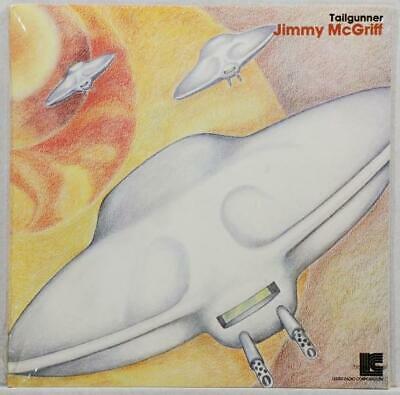
SEALED LP: JIMMY MCGRIFF: TAILGUNNER
$
25


$ 25
Sold For
Sep 8, 2019
Sold Date
Jun 24, 2019
Start Date
1
Number Of Bids
USA
Country Of Seller
eBay
Sold at
Favourite Auctions
To save auctions to your favourites, please login
If you don't have an account, please register
Description
Jimmy McGriff: Tailgunner
FACTORY SEALED LP
Format: Sealed LPCountry: U.S.A.
Record Company & Release Number: Lester Radio Corp.: LRC-9316
Original release date/year: 1977
Bar Code: NONE
Condition of the cover: Mint
Condition of the record: Sealed - Assumed Mint
Shipping Weight: 1 pounds, 3 ounces
My inventory number: 209319A
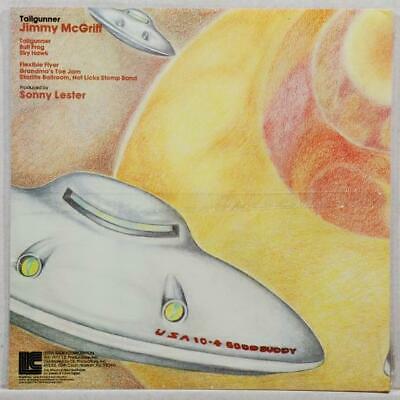
Notes: Gatefold cover.
Please contact me if you have any difficulty viewing the photos.
The Sealed LP shown in the photos is the exact one being sold.
I DO NOT END ANY OF MY AUCTIONS EARLY. PLEASE DON'T ASK (unless you are willing to offer enough to pay off my mortgage. Songs
- Tailgunner
- Bullfrog
- Sky Hawk
- Flexible Flyer
- Grandma's Toe Jam
- Starlite BallrooHot Licks Band Stomp
- Richard Maximoff: Strings
- Dominic Menardo: Horn
- Gene Orloff: Strings
- Tony Posk: Strings
- Lance Quinn: Guitar, Arranger, Musical Supervision
- Joe Randazzo: Horn
- Pat Rebillot: Keyboards
- Barry Rogers: Horn
- Alan Rubin: Horn
- Allan Schwartzberg: Drums
- Ralph Schuckett: Keyboards
- Allen Schwarzberg: Drums
- Joseph J. Shepley: Horn
- John Sheply: Horn
- Denise Wooten: Vocals
- Jimmy Young: Drums
- Ronald Zito: Drums
- Chuck Stewart: Photography
- Brad Baker: Arranger, Conductor
- Al Downing: Vocals
- Hal Wilson: Art Direction, Design, Illustrations
- Lew DelGatto: Horn
- Big Al Downing: Vocals
- Jimmy Maelen: Percussion
- David Taylor: Horn
- Centella: Bass
- Sanford Allen: Strings
- Bob Babbitt: Bass
- Julien Barber: Strings
- Rubens Bassini: Percussion
- Tony Bongiovi: Engineer, Remixing
- Randy Brecker: Horn
- Glenn Burger: Engineer
- Francisco Centeno: Bass
- Eddie Daniels: Horn
- Louis del Gatto: Horn
- Jerry Friedman: Guitar
- John Frosk: Horn
- Gerald Tarack: Strings
- Paul Gershman: Strings
- Paul Griffin: Keyboards
- Harry Lookofsky: Strings
- Patricia Johnson: Vocals
- Will Lee: Bass
- Sonny Lester: Producer
- Jesse Levy: Strings
- Richard Locker: Strings
- Guy Lumia: Strings
- Jimmy McGriff: Organ, Main Performer, Keyboards
- Jimmy Ponder: Guitar
- Marvin Stamm: Horn
- George Young: Flute, Horn, Sax (Alto), Sax (Tenor)
ALBUM REVIEW NOT AVAILABLE ON ALLMUSIC.COM
Biography
Jimmy McGriff biography by Steve Huey, All Music Guide
- One of the all-time giants of the Hammond B-3, Jimmy McGriff sometimes gets lost amid all the great soul-jazz organists from his hometown of Philadelphia. He was almost certainly the bluesiest of the major soul-jazz pioneers, and indeed, he often insisted that he was more of a blues musician than a jazz artist; nonetheless, he remained eclectic enough to blur the lines of classification. His sound -- deep, down-to-earth grooves drenched in blues and gospel feeling -- made him quite popular with R&B audiences, even more so than some of his peers; what was more, he was able to condense those charms into concise, funky, jukebox-ready singles that often did surprisingly well on the R&B charts. His rearrangement of Ray Charles' "I Got a Woman" was a Top Five R&B hit in 1962, and further hits like "All About My Girl," "Kiko," and "The Worm" followed over the course of the '60s. McGriff spent much of the '70s trying to keep pace with the fusion movement, switching to various electric keyboards and adopting an increasingly smooth, polished style. As the '80s dawned, McGriff gave up trying to sound contemporary and returned to his classic organ-trio sound; as luck would have it, vintage soul-jazz soon came back into vogue with a devoted cult of fans and critics, and McGriff was able to recover his creative vitality and take his place as one of the genre's elder statesmen.
- James Harrell McGriff, Jr. was born April 3, 1936, in Philadelphia. His mother and father both played the piano, and he counted saxophonist Benny Golson and soul singer Harold Melvin among his cousins. First getting involved in music through his family's church, he received his first instrument, a drum set, at age eight; by his teen years, he had taken up acoustic bass and alto sax, and also learned vibes, piano, and drums by the time he finished high school. Bass remained his primary instrument for a while, although he was inspired to try his hand at the Hammond organ after seeing Richard "Groove" Holmes at a club in Camden, NJ. However, McGriff was drafted into the military after high school, and served in the Korean War as a military policeman. Upon returning to the United States, he decided to make law enforcement a career, and after completing the necessary training, he worked on the Philadelphia police force for two and a half years. Still, he never lost interest in music, and around 1955 he augmented his day job by working as a bass player behind vocalists like Carmen McRae and, most frequently, Big Maybelle, who had a regular gig at the local Pep's Showboat club.
- With the Hammond organ rising in popularity around Philadelphia, jobs for bass players were scarce, and McGriff contacted Groove Holmes about learning the organ, this time in earnest. He bought his own Hammond B-3 in 1956, and spent the next six months practicing as hard as he could, either at Holmes' house or at Archie Shepp's house (where he stored the instrument). Skipping more and more work time to play gigs, he finally quit the police force, and enrolled at the local Combe College to study music. He later moved on to the prestigious Juilliard School of Music in New York, and also studied privately with Milt Buckner, Jimmy Smith, and Sonny Gatewood. McGriff's first recording was the single "Foxy Due," cut for the small White Marsh label in 1958; it featured a young saxophonist named Charles Earland, who subsequently learned the organ from McGriff and, like his mentor, went on to become one of the instrument's quintessential performers.
- McGriff was performing in a small club in Trenton, NJ in 1962 when a talent scout from the small Jell label heard him and offered him a chance to record. McGriff's instrumental soul-jazz rearrangement of Ray Charles' classic "I've Got a Woman" was released as a single, and sold well enough for Juggy Murray's New York-based Sue label to pick it up for wider release. With better distribution and promotion behind it, "I've Got a Woman" hit the national charts and became a bona fide hit, climbing into the Top Five on the R&B charts and the Top 20 over on the pop side. Sue issued McGriff's debut album, naturally also titled I've Got a Woman, in 1963; it too was a hit, nearly making the pop Top 20, and it spun off two more charting singles in the McGriff originals "All About My Girl" (number 12 R&B, Top 50 pop) and "M.G. Blues." Sue released several more McGriff albums over the next two years, including the live At the Apollo, Jimmy McGriff at the Organ (which produced the chart single "Kiko"), the holiday hit Christmas With McGriff (actually his highest-charting album at number 15 pop), the charting Topkapi (a collection of soundtrack themes with orchestral backing), and another chart hit, Blues for Mister Jimmy, which proved to be his last on Sue.
- In 1966, McGriff moved over to the Solid State label, where he hooked up with producer Sonny Lester, who would helm most of his records through the '70s. He debuted with Jimmy McGriff and the Big Band, which found him fronting an all-star swing orchestra featuring many Count Basie alumni (it was later reissued as A Tribute to Count Basie). McGriff recorded prolifically for Solid State over the remainder of the decade, including albums like A Bag Full of Soul (1966), A Bag Full of Blues (1967), and I've Got a New Woman (1968; mostly a look back at his Sue material). Most notably, though, McGriff scored another hit single with "The Worm," which made the R&B Top 30 and sent the LP of the same name rocketing into the R&B Top Ten in early 1969. In addition to his Solid State recordings, McGriff cut several albums for Blue Note over 1969-1971, most notably Electric Funk, an early foray into jazz-funk fusion that teamed him with arranger/electric pianist Horace Ott; a similar outing that featured pop/rock and R&B covers, Soul Sugar, was released on Capitol during the same period. Additionally, McGriff toured as part of Buddy Rich's band during the late '60s, and again from 1971-1972.
- McGriff made Groove Merchant his primary label in 1971, and although he briefly quit the business in 1972 to start a horse farm in Connecticut, the lure of music proved too powerful to overcome. Early in the decade, he alternated between funky electric outings (usually with covers of contemporary rock and R&B hits) and more traditional, small-group organ-jazz settings. Notable albums included 1973's Giants of the Organ Come Together, a summit with mentor and longtime friend Groove Holmes; a duo album with bluesman Junior Parker; 1976's Mean Machine, a slicker jazz-funk LP that returned him to the R&B album chart's Top 50; and the 1977 follow-up Red Beans, which also sold respectably.
- After 1977's Tailgunner (on LRC), McGriff's recorded output tailed off over the next few years. He resurfaced on the Milestone label in 1983, debuting with Countdown, a return to his classic, bluesy soul-jazz style that started to bring him back into the jazz spotlight. A series of strong albums followed during the '80s, including 1984's Skywalk, 1985's State of the Art, 1986's acclaimed The Starting Five, and 1988's Blue to the 'Bone (a near-Top Ten hit on the jazz LP charts); he also recorded a one-off session for Headfirst in 1990, You Ought to Think About Me, that made the jazz Top Ten. Additionally, McGriff co-led a group with saxophonist Hank Crawford during the late '80s, which released several albums, including 1990's popular On the Blue Side (number three on the jazz charts). He also returned to his roots in the church by playing on gospel singer Tramaine Hawkins' 1990 live album. McGriff and Crawford moved over to Telarc for a pair of albums over 1994-1995, Right Turn on Blue and Blues Groove. As soul-jazz returned to cult popularity in both America and the U.K., McGriff found himself playing higher-profile gigs and venues on both sides of the Atlantic. He returned to Milestone and resumed his solo career in 1996 with The Dream Team, which featured saxman David "Fathead" Newman and drummer Bernard "Pretty" Purdie, both of whom would become familiar faces on McGriff recordings in the years to come. Follow-ups included solid records like 1998's Straight Up, 2000's McGriff's House Party, 2001's Feelin' It, and 2002's McGriff Avenue, which looked back on some of his '60s hits.
- This Sealed LP came from a record store called "Phantasmagoria" which was located in Allentown, Pennsylvania. Phantasmagoria went out of business in 1978. I purchased most of their unsold inventory some years later when I owned "Music Madness" - a new & used record store in Catasauqua, Pennsylvania.
- Phantasmagoria used round colored stickers to indicate the price of the albums. They had a chart on the wall with the color sticker combinations for the customers to use so they knew the price of the albums. Most of the albums still have these stickers on them, and in some rare cases, the stickers are written on. Some of the records have prices on them. This is the price you would have paid for the record in 1978 if you would have bought it at Phantasmagoria. Please don't confuse these prices with their current value.
- All Sealed LP(s) are being sold as collector's items and cannot be returned due to manufacturer's defects. It may be almost impossible to replace many of the sealed albums that I am selling.
- If I list an album as "New", but not sealed, it is because the album is probably an import or from a small USA record company. Back in the 70's, many imported albums were not sealed by the record companies, and the importers/distrubutors did not spend the time or money to seal them before being sent to the stores. I will not knowingly misrepresent an album as new if I have any doubts.
- All pictures are of the exact Sealed LP being sold.
- I always leave feedback before your item ships. Please consider leaving feedback for me after you have had a chance to inspect and enjoy your purchase.
- Please avoid questions on the last day of the auction. I might not have enough time to give you an answer before the auction ends.
- All reviews, credits and artist biographies are from All Music Guide. If you haven't been to their web site, you have to check it out. It's one of the most comprehensive music references on the internet. In some cases, credits may include reissue (CD) information. Obviously any credits referenced to CDs do not apply to this album release.
Shipping and pick-up
Your Sealed LP(s) will be shipped within 2 business days after I receive your cleared payment. When possible, if payments are made by 2 PM Eastern time, I will try to send your package the same day if my local Post Office is open.
I photograph all packages before taking them to the Post Office to confirm their condition prior to being handed over to the Post Office. Damage to your package after being handed over to the postal system will not be my responsibility. If you are concerned about damage during shipping, consider upgrading to Priority Mail. It includes free insurance.
If you have ANY special shipping requirements (extra padding, oversized boxes, etc., you must let me know BEFORE making your payment. The pre-calculated cost of your shipping is based my standard packaging (new boxes, padded envelopes, etc.).
WITHIN U.S.A.
- The default shipping is Media Mail. You can opt to pay extra for for Priority Mail if you choose.
- Priority Mail is faster and includes free insurance.
- Pick-up is fine with me, but be prepared to pay by cash. E-mail me to setup a time and place that is convenient for the both of us.
OUTSIDE U.S.A.
- International Shipping is calculated by the weight of your package.
- If you purchase multiple items, please wait until after all the auctions end for eBay to send an invoice.
- I cannot ship by International First Class if it is not available to your country. The USPS discontinued this service to several countries. If it is not an available option, I will send a revised invoice with the least expensive option available to your country. This is non-negotiable because I have no control over the shipping options and rates to your country.
- The buyer is responsible for all customs regulations and fees in their own country. I will declare the value of all items at $10 each on the Customs Form. Please let me know if you want the actual winning bid price listed on the Customs Form. This is something to consider if you think there is a potential for damage or loss of your package. Insurance (if purchased by the buyer)will only reimburse you for the actual declared value.
If you also collect Grand Funk, let me know if you have anything that you might want to sell or trade. I am always looking to add something new to my collection.
price rating