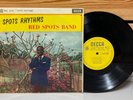
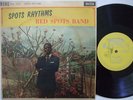
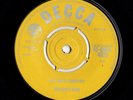
Rare 10" 33 record mono ffrr Decca Red Spots Band vinyl highlife album
£
50
$
66


Favourite Auctions
To save auctions to your favourites, please login
If you don't have an account, please register
Description
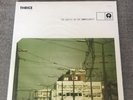
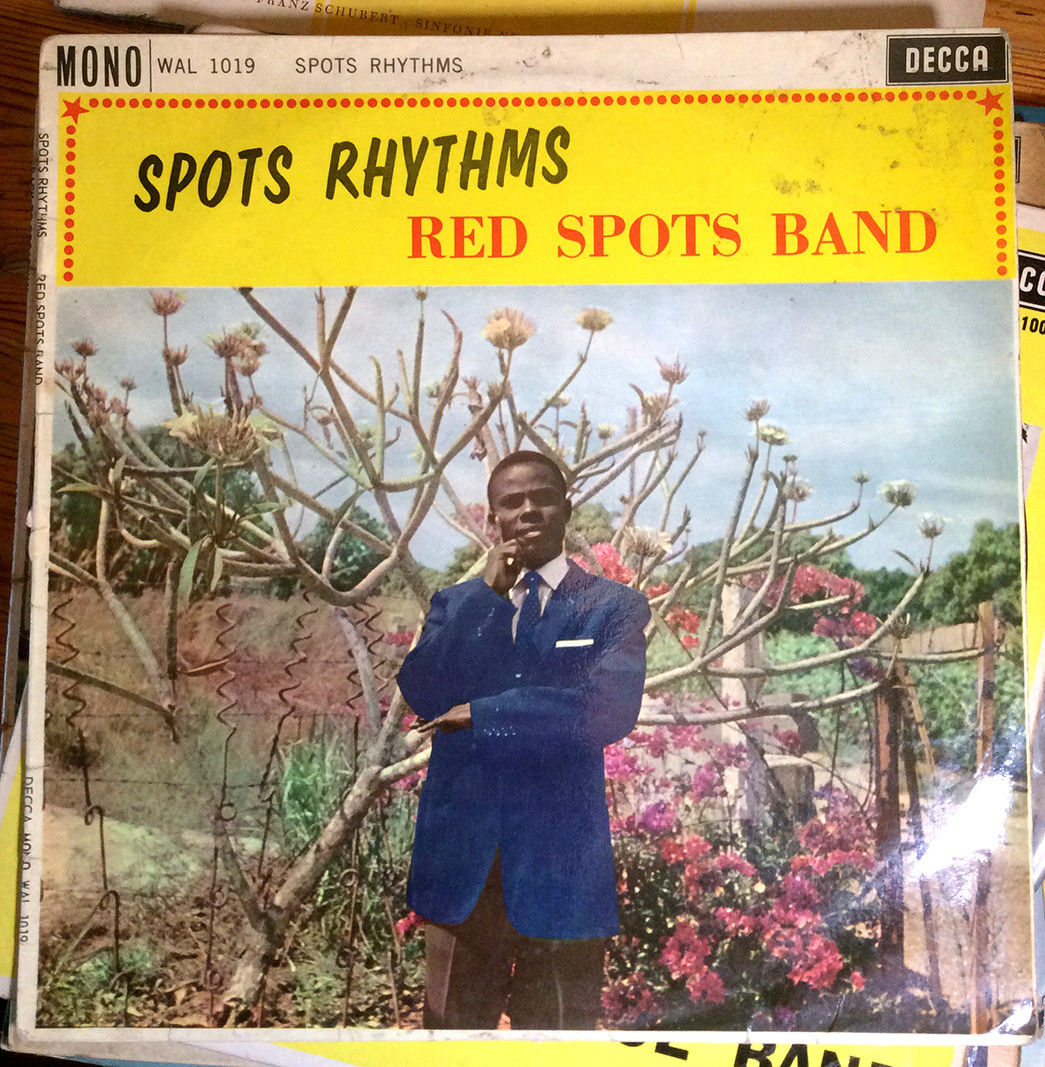
A 10" 33 rpm long playing mono record - part of the Decca West Africa series. This is an album by the Red Spots Band called 'Spots Rhythms' in which they play a range of highlife tracks from Ghana:
Tracklist
A1 Agyanka
A2 Masem Ye Yawo
A3 Ma Ye Wo Den
A4 Oya Kae Me
A5 Bo Whe Me
B1 Ma Nsei Madzin
B2 Alee Enye
B3 Me Dofo Christie
B4 Kantam Anto
B5 Ma San Maba
I think it was made in 1952 and is an early example of ffrr (full frequency range recordings).
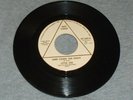
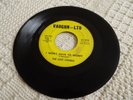
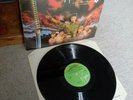
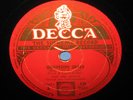
The record label shows 'Made in England' and WAL-1019. It was printed by the McNeill Press in London.
The inner wax has the following stamp markings:
KWAL-38-1N
KWAL-37-1N
Looking at the record visually, seems to have a number of light scratches (that I can't feel if I run my finger over them) and one deep scratch covering most track 3 and the beginning of track 4 on side 1. It does not have its internal plastic sleeve. I haven't played it so couldn't comment on its oral quality.
I'll post recorded signed for delivery by Royal Mail in the UK unless you need it sent by another service. Just let me know, I'll work out the cost and then send you a new invoice. Thanks.
No returns as I'm having a clear out. Please check out my other items.
Thanks for reading!
//
Some info on Decca in West Africa:
Decca set up its Decca West Africa subsidiary in Ghana, releasing over 20 records in local languages in the first year. By 1952 they had released over 100 78s and had Ghanaian artists like E.T. Mensah, the Black Beats, Onyina, the Builders Brigade, Broadway, the Red Spots and Gyasi’s guitar band on their roster, plus performers from Nigeria and Sierra Leone.
In the 50s Decca set up a recording studio in Accra and was sending engineers to Lagos regularly to record. By the early 1960s Decca West Africa was selling 250,000 records a year.
With the collapse in the Ghana economy in the 1970s, Decca moved its West Africa operations to oil-rich Nigeria, setting up a studio in Lagos and a sister label, Afrodisia, managed and part-owned by oil tycoon (and later presidential candidate) Chief Moshood Abiola. When Decca fell apart in 1979 and got taken over by Polygram, the rights to the West Africa catalogue were sold to Afrodisia.
This info was taken from this web page: https://folkcatalogue.wordpress.com/2010/02/16/let%E2%80%99s-hear-it-for-the-bad-guys-%E2%80%93-decca-uk%E2%80%99s-folk-output/
price rating