ROLLING STONES 'STONEAGED' 1969 TOUR SAN DIEGO RARE TMOQ S-183 CLEAN/SHRINK
$
26
Favourite Auctions
To save auctions to your favourites, please login
If you don't have an account, please register
Description
ROLLING STONES 'STONEAGED' 11-10-69 SAN DIEGO SPORTS ARENA TMOQ TRADE MARK OF QUALITY S-183 SHRINK CLEAN
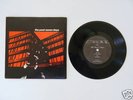
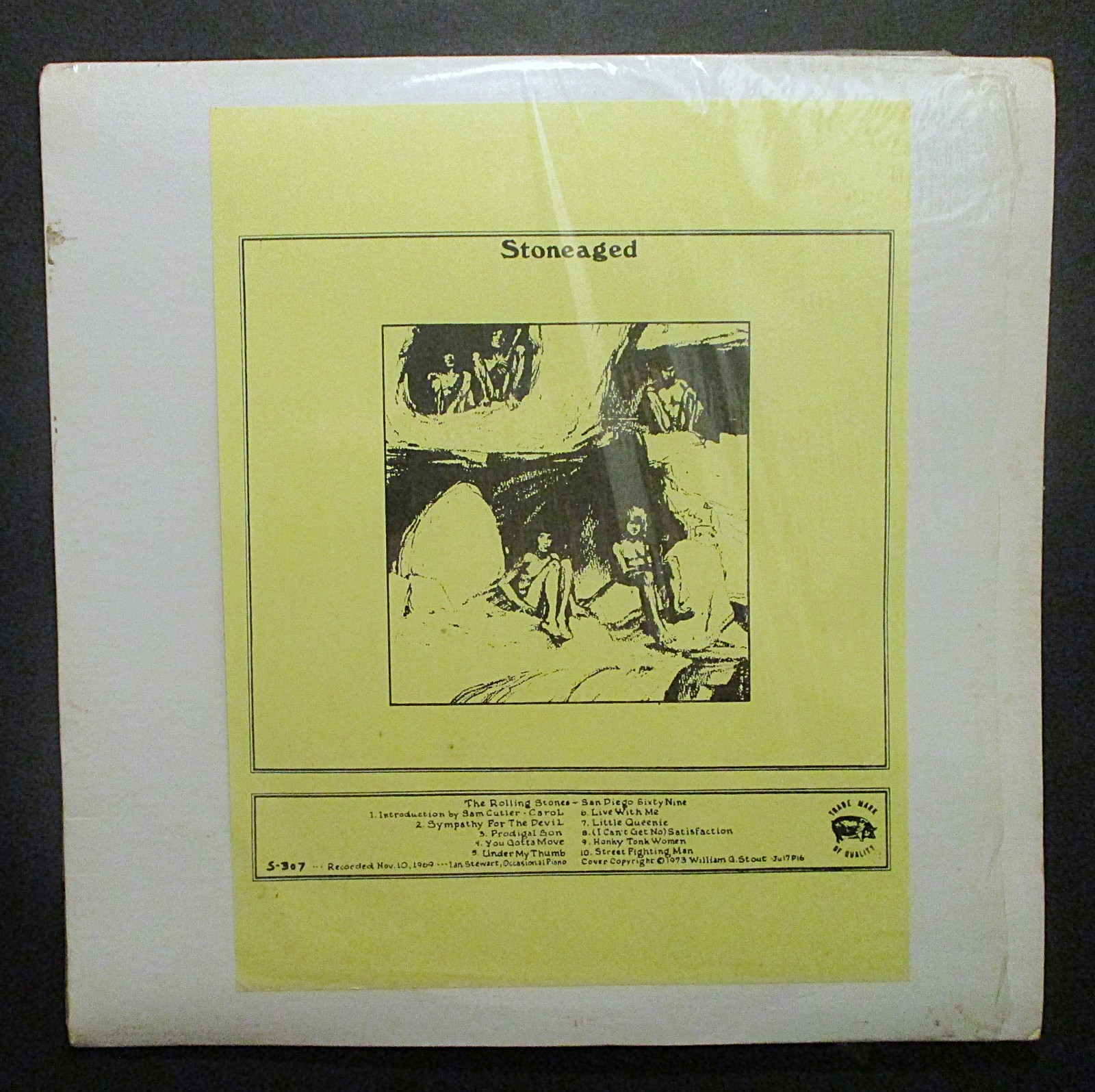
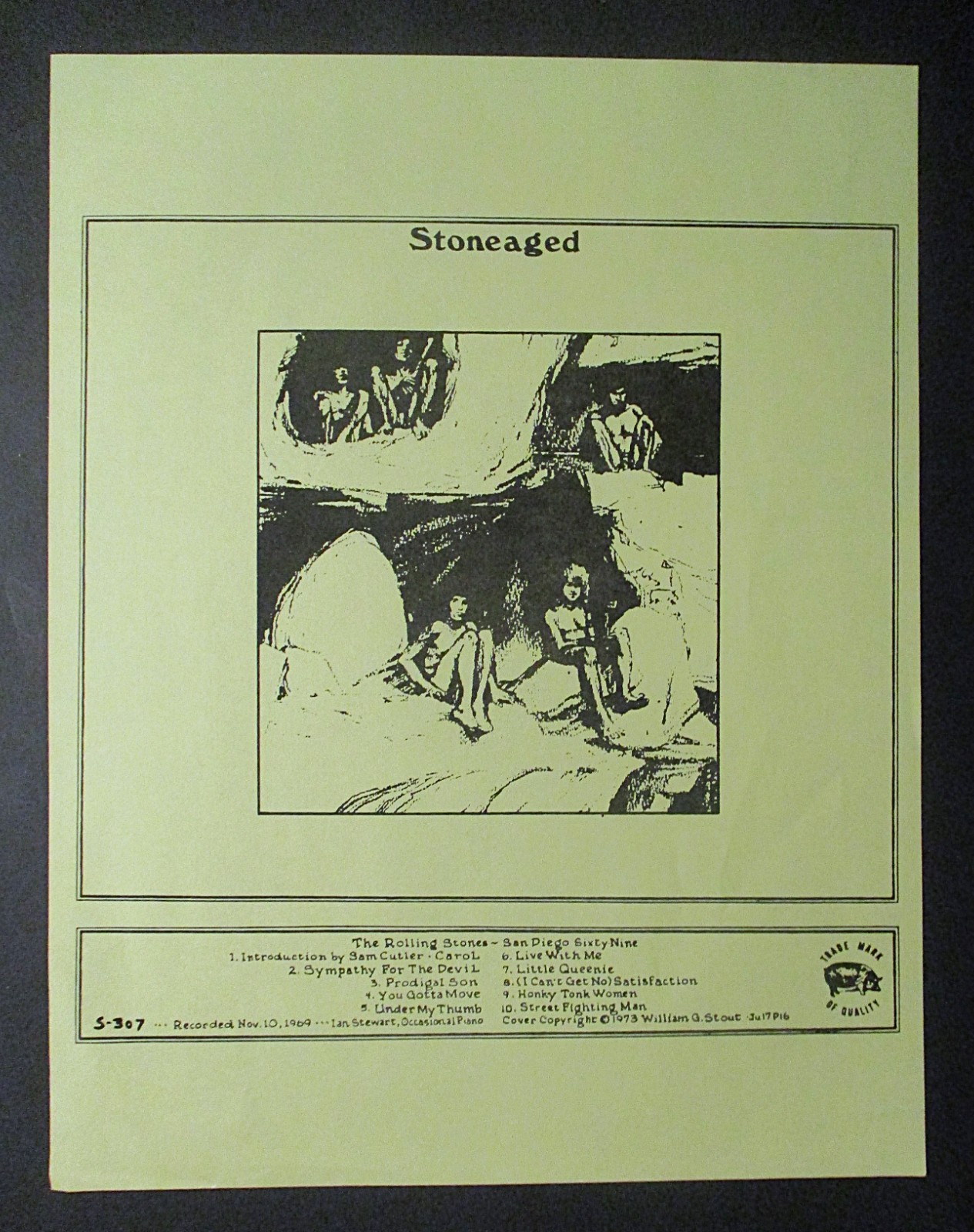
THE ROLLING STONES "STONEAGED" - LIVE 1969 US TOUR RECORDED LIVE: NOVEMBER 10, 1969 ~ SAN DIEGO SPORTS ARENA LABEL: TMOQ TRADE MARK OF QUALITY ~ TMOQ S-307 RELEASED: ORIGINALLY 1973 ~ THIS PRESSING CIRCA 1980 COVER ILLUSTRATION BY WILLIAM G. STOUT PLAIN WHITE JACKET w/ YELLOW SLIP-SHEET PAPER INSERT COVER STILL IN THE ORIGINAL SHRINK-WRAP MATRIX: 183-A / 183-B OVER OLDER SCRATCHED OUT MATRIX NUMBERS
CONDITION: VINYL: VG++ PAPER INSERT: EX JACKET: EX (STILL IN THE SHRINK!) ~~~~~~~~~~~~~~~~~~~~~~~~~~~~~~
I've been going thru my large vinyl record collection over the past few weeks and pulling out some LPs that I thought that someone else would want for their collection. I've been collecting records for over 45 years and it's time to pass some of them on to the next generation of collectors.
After all, we are just temporary 'caretakers' of these musical gems until the next owner and next collection takes them in. ~~
This week on Ebay, we are offering up this rare, fantastic, 'collector' record featuring the Rolling Stones recorded live in San Diego on November 10th, during their iconic 1969 American Tour.
This vintage early US Pressing of the fantastic Rolling Stones 'collector' record 'Stoneaged' is on the legendary TMOQ 'Trade Mark of Quality' record label.
This is my personal, original, early pressing copy that I purchased 'new' in the shops along St Marks Place in Greenwich Village in the very early 80's, my usual vinyl hunting grounds in those days. It has remained in my record collection ever since and I've taken great care of this record for nearly 45 years now. It's been poly-line sleeved, inside and out, since I purchased it, stored properly in my collection.
It's still in the original shrink wrap and is still in excellent, like new, condition, just like I purchased it all those years ago. ~~~~~~~~~~~~~~~~~
This classic Rolling Stones 'collector' record 'Stoneaged', as well as it's close cousin, 'LIVEr Than You'll Ever Be' are both often cited by Rolling Stones collectors as two of the Stones' best live 'collector' records from the '69 tour.
'Stoneaged' is considered one of the essential, most incredible, live audience Stones recordings, capturing the Stones at their rough and rocking peak, and revealing all their power, rawness, and bluesy swagger.
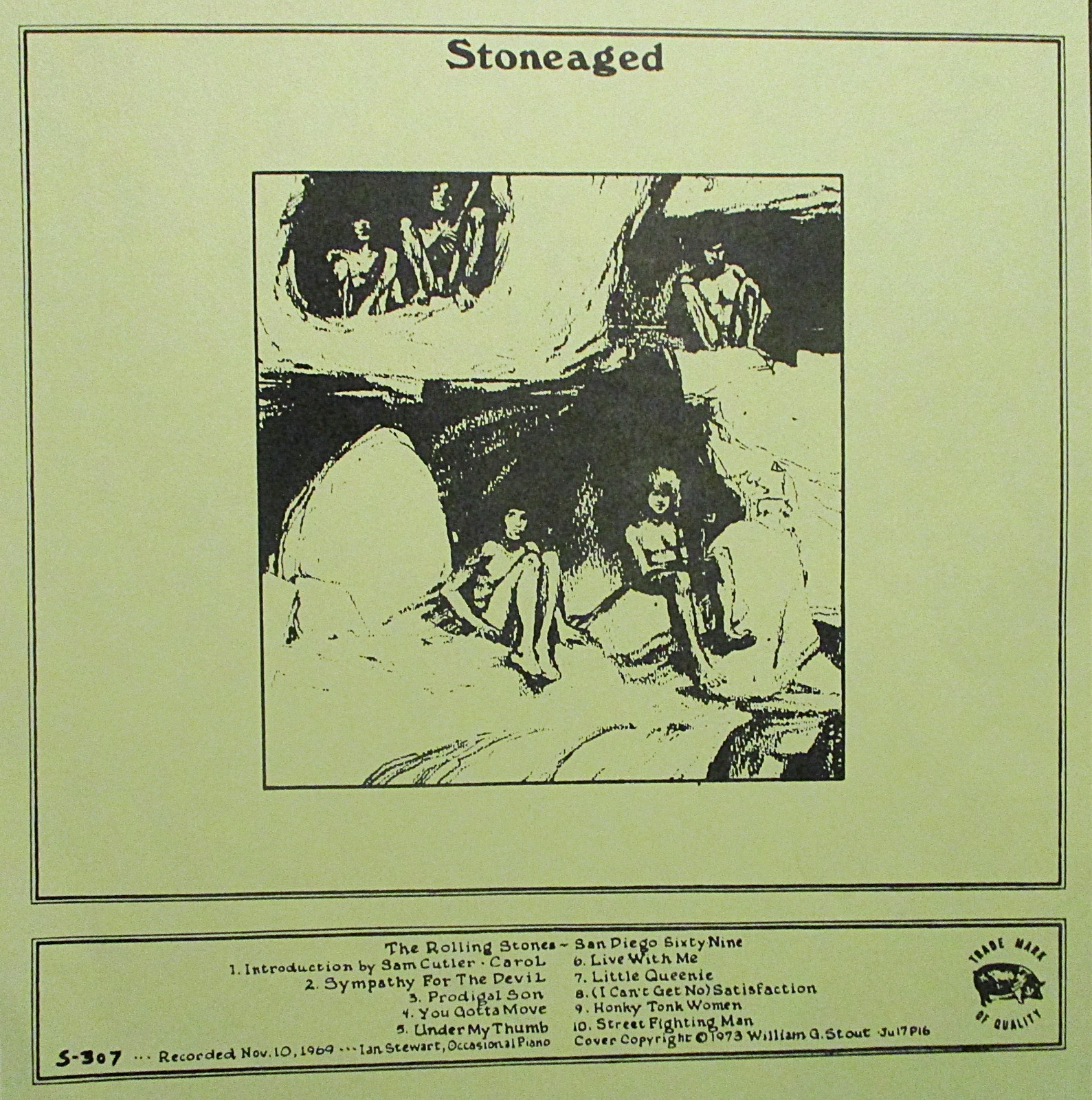
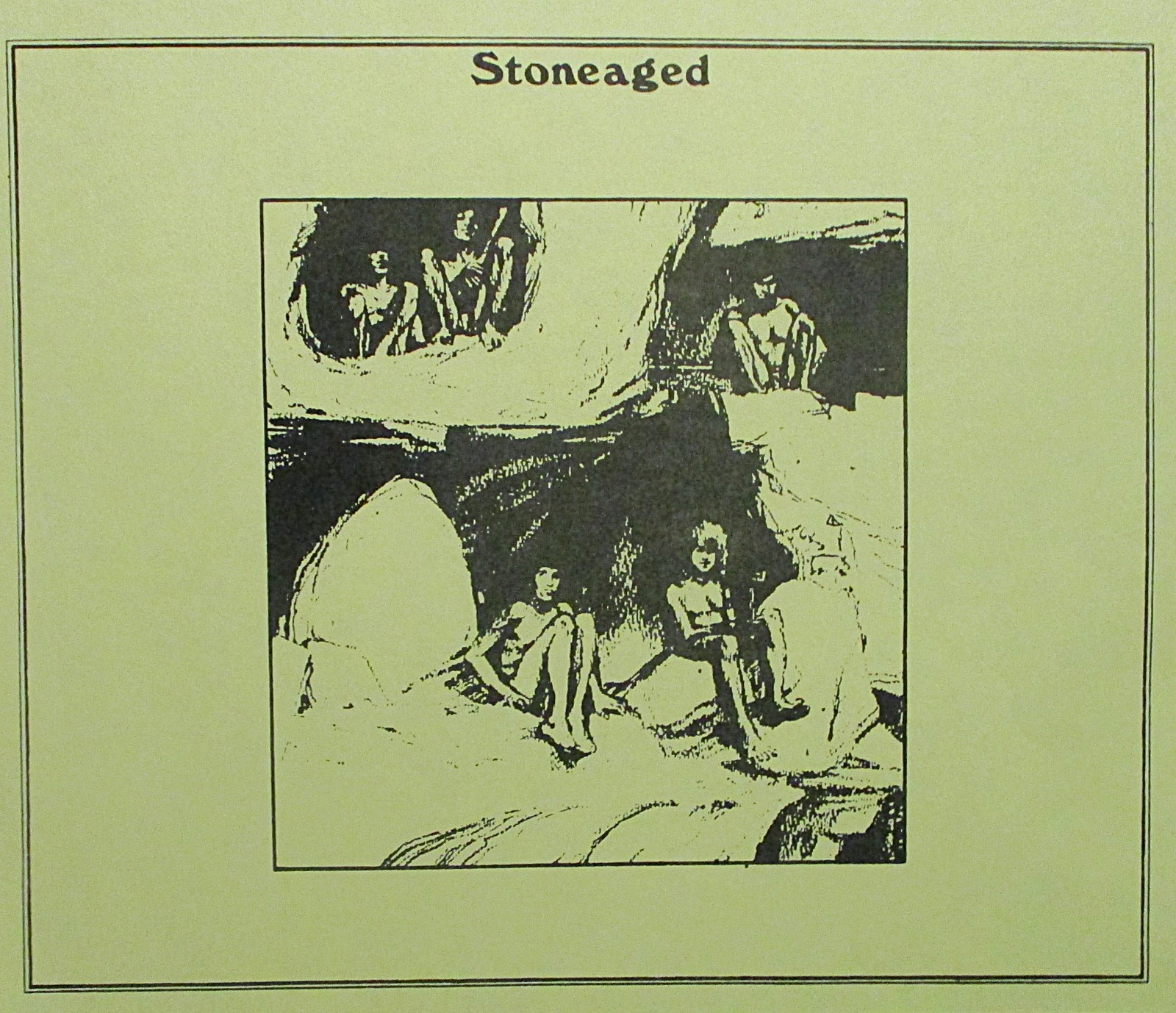
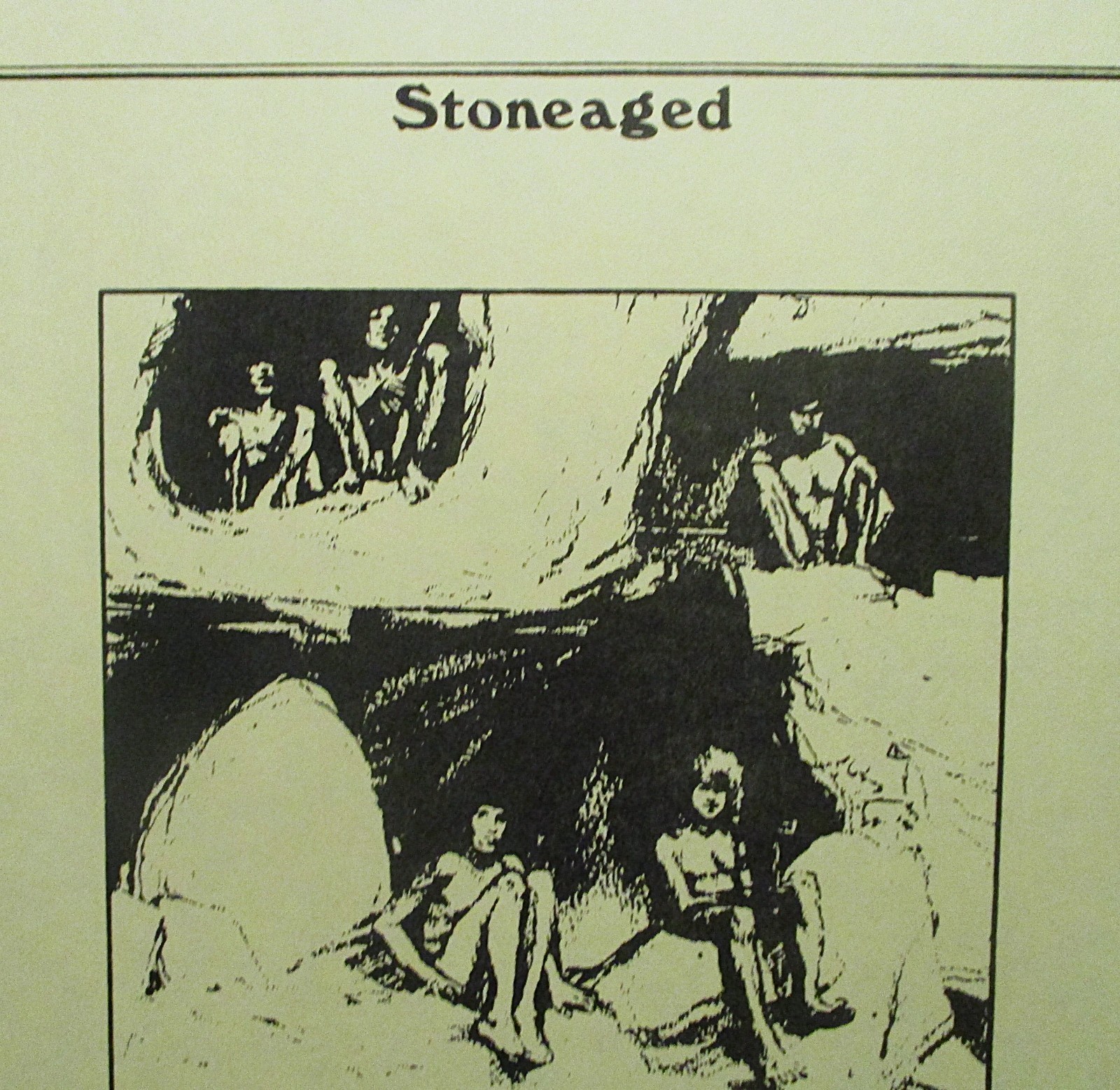
This is a clean, classic, early 'TMOQ' Trade Mark of Quality pressing, an amazing and fantastic sounding audience recording, much better than average for these types of records, and a great early paper slip-sheet cover featuring some of illustrator William Stout's earliest work, with the 5 individual Stones all represented as cavemen.
An excellent recording that belongs in every classic rock or Rolling Stones vinyl collection.
Please read the full description of this album's content, the amazing story behind this album's creation, recording and production, and more details on the record's condition below. ~~~~~~~~~~~~~~~~~~~~~~~~~~~~~
THE STORY BEHIND THE TMOQ LABEL, KEN, DUB, AND CHRIS, AND THE REOCRDING OF THE ROLLING STONES TOUR IN NOVEMBER 1969
The story of the recording of this 'Stoneaged' album, and the story of underground bøøtlegs in general, goes back to the late 60's and a pair of entrepreneurial Californians, Ken Douglas and his good friend "Dub" Taylor who were big music fans living in the Los Angeles area.
Ken's father owned Saturn Records, one of the largest 'one stop' record distributers in LA. In those days the record companies sold in bulk to the one stops, then the one stops sold wholesale to the record stores.
In the summer of 1969 Ken and Dub both worked at Saturn Records, which gave them pretty good knowledge of how records were pressed, distributed, shipped and sold.
Ken and Dub were both well-known and well established in the local LA record business, so it would have been relatively easy for them to get one of their own records pressed and released.
Ken and Dub were both big music fans, record and tape collectors. In those days, most all rare, unusual and unreleased music circulated among collectors in the form of Reel to Reel tapes.
Rare music rarely circulated very far from its source in those days, since few people were dedicated enough and had, or would deal with, reel-to-reel tape recorders.
Ken and Dub changed all that in the summer of 1969. ~~~
In 1966, Dylan released his classic 'Blonde on Blonde' album and was at the peak of fame and success, but then in July 1966, he had a motorcycle accident near his home in Woodstock, New York.
Dylan was suddenly laying low, out of the public eye, and stopped performing and touring for seven years. This led fans to speculate that the crash was staged or used as an excuse to escape the commercial 'rat race' and pressures of fame.
It was well known that Dylan recorded a large body of songs during this period, both by himself, and with members of the Band who lived nearby at the famous 'Big Pink' house in Woodstock.
Although it was known to exist, nobody outside a very small circle had heard any of this music and fans were desperate to hear what Bob was up to.
Ken and Dub had managed to obtain a tape of some of these rare Bob Dylan recordings and in the summer of 1969, they released Bob Dylan's 'Great White Wonder' ('GWW'), a double album featuring various unreleased songs and outtakes spanning from 1961 to the recent, then-unreleased, Basement Tapes.
GWW was the first important popular rock bøøtleg and marked the beginning of a long history of bøøtlegged material by all sorts of bands.
When people heard GWW, they realized that Bob Dylan, rock's greatest songwriter, had two entire albums worth of exceptional songs already recorded, but still in rough form, that were being held back from the public.
Suddenly, this rare material was available to a wide audience thru the magic of vinyl bøøtlegging.
Bøøtlegs quickly fueled their own success. Once people heard what was available, they wondered what else was out there, and went searching for more.
To fill the demand, Ken and Dub pressed and released several more Bob Dylan bøøtlegs, and started their own record label, TMOQ, Trade Mark of Quality, based out of Los Angeles, that would go on to change the underground record industry.
With the profits made by producing Bob Dylan's 'Great White Wonder' and several other Dylan records, Ken and Dub purchased all sorts of toys. Dub spent a good portion of his new found wealth on high end audio gear.
Dub was an audiophile, always spending his profits on better and better audio gear, and always had the best speakers and equipment.
One of Dub's audiophile friends was a guy called Chris. Chris was often hanging out at Dub's place, helping him tweak and set up his latest audio system. Chris liked Bob Dylan, but liked the Rolling Stones much better and was passionate about their music.
When Chris and Dub heard the news that the Rolling Stones were going to tour in the fall of 1969, and that the first few shows were going to be performed nearby, the two friends hatched a plan.
When tickets went on sale, Dub was able to buy great seats to 5 of the opening shows. With tickets secured, Dub went out and purchased a top of the line portable tape deck and one of the best microphones available at the time.
He then proudly announced to his partner Ken that “Chris and I are gonna record the Stones..."
Their plan was to release one or more of the shows as a live bøøtleg.
Ken and Dub had released some successful Dylan bøøtlegs but they had been albums of studio outtakes, and rare unreleased songs, not live recordings, not yet anyhow.
In those days, releasing live stuff was highly unusual. Actually going to a concert, in person, recording a show from the audience, editing it and releasing it as a record was unheard of. It was much more risky dangerous and illegal.
So, determined to capture the opening shows of the band's 1969 tour, Dub and Chris, armed with the latest recording equipment, set out on tour with the Stones.
They managed to record five shows; the Los Angeles, San Diego, Oakland and Phoenix shows. They even bragged that after recording the Phoenix show, they flew back home to LA on the same plane as the band.
The equipment that Dub and Chris used was a German Uher-4000 reel-to-reel tape recorder, the type used by radio and TV journalists, which was small, compact, and easy to carry.
It used small 5-inch reels of tape and could record at slower speed, 7 1/2 inches per second, in order to conserve tape and capture long periods of music.
For a microphone, they used a Sennheiser MKH 805 'shotgun' mic. It was the perfect, ideal, state-of the art, portable system of the time.
After listening to the tapes, they decided that the Stones performance at the late show at the Oakland Coliseum Arena on Sunday, November 9, 1969 was the best of the five, but all of the shows they recorded sounded great.
Those recordings are the source for this 'Stoneaged' 'collector' record, the iconic 'LIVEr Than You'll Ever Be', as well as many other great albums back in the day.
Ken, Dub and Chris then decided to release the Oakland show, giving it the title 'Liver Than You'll Ever Be', one of the first-ever live bøøtleg recordings.
Dub carefully selected, edited and patched together the best parts of the show into the final master tape. It's a masterpiece of rock and roll editing and one of the best Rolling Stones records ever.
The show was long, but not long enough for a double LP, and Dub didn’t want to cram so much music on the disc that it would lose quality, so he carefully chose and rearranged songs to maximize the space available.
Dub was a perfectionist, he wanted this record to sound like you were really there. His goal was to use his expensive audiophile gear, a multi-frequency equalizer, meticulous editing and attention to detail, and his experienced musical ear to make ‘LiveR Than You’ll Ever Be’ the best live LP released by any band, ever. He basically succeeded.
This "Stoneaged' San Diego show was one of those original 5 tapes, and although TMOQ wouldn't release it until 1973, it stands right up there with 'Liver' as one of the best recordings from the 1969 tour.
Both the Rolling Stones 'Liver' and 'Stoneaged' records were produced out of a true love for the band and their music, and were a deliberate dedicated act of capturing and producing a definitive live souvenir of the Rolling Stones 1969 tour, their first American live shows in 3 years.
When you drop the needle down on 'Liver', or 'Stoneaged', you can really hear and appreciate Dub's meticulous attention to detail.
To this day, nobody, not the Rolling Stones themselves, or anybody else, has been able to match those records for their sheer presence and fantastic immersive sound. ~~~~~~~~~~~~~~~~~~
At the beginning of the 1969 tour, the band was clearly a little rough, ragged and rusty, taking them a few shows to find their sound and groove, but by San Diego, the Stones had their sound and set list firmly under control.
To most listeners of 'Stoneaged' it was a complete revelation to hear how great a well-recorded audience recording of a rock show could sound. It had remarkably good sound quality, a nice wide soundstage, and powerful dynamics for a simple audience recording.
The recording on 'Stoneaged' is a perfect audience recording. Yes, it has a slightly imperfect sound, which is never going to match 'official' releases, but it's raw, primal, unpolished, and has fantastic musical depth. It remains one of the most clear, vivid and enjoyable records from that 1969 tour.
This recording perfectly captures and immerses you into the band and their sound. You can clearly hear every lick from Mick and Keith's guitars, the crack & snap of Charlie's drums, the thunder of Bill's bass, and every word and nuance from Mick Jagger's lips.
An amazing, inspired, passionate performance. The Stones are in top form thoughout this show, obviously enjoying themselves and having fun, proving that they were one of the best live rock n roll bands in their day.
This 1969 San Diego show one of the key, important, live performances of the tour and the Mick Taylor-era Rolling Stones. An intimate, excellent sounding, live audience recording, capturing the band at their raunchiest and bluesiest during one of their most heralded tours. It's everything you'd ever want to hear from the Rolling Stones. Quintessential stuff, and absolutely essential for all Stones fans.
"Stoneaged" recorded live in San Diego on November 10th, 1969, and recorded with the same equipment as the legendary "Liver than you'll ever be', is one of the classic, very early, well-known Rolling Stones bøøtlegs from their 1969 U.S. Tour. Although not perfect sound quality, is one of the best unissued, live 'collector' albums by The Rolling Stones and arguably some of the best music they ever recorded
If you have any doubt that the Rolling Stones were "The Greatest Rock'N'Roll Band in the World" in 1969, just give a listen to this album, 'Stoneaged' or it's sister 'LIVEr Than You'll Ever Be', or the official 'Get Your Ya-Ya's Out', or any of the other great recordings from the 1969 U.S. tour. ~~~~~~~~~~~~~~~~~~~~~~~~~~~~~~~~~~~~~~~``
HISTORY OF 'STONEAGED' PRESSINGS
There have been many 'collector' records and CDs capturing this legendary 1969 San Diego show over the years, but this TMOQ version was the first, mastered directly from Dub and Chris' original tapes.
I believe this TMOQ pressing is the 3rd TMOQ variant. I have several different earlier versions in my collection.
The first had catalog number 71078 with a plain rubber-stamped jacket and came on black and other color variations. Mine is on orange splatter vinyl. The 2nd TMOQ release is catalog number 1889 and came on various colored vinyl. Mine is clear blue. These were the first to have the yellow William Stout slip-sheet covers. These were originally released around 1973/1974.
This pressing is the third variant and has catalog number S-307 and is on black vinyl with plain white labels. I believe this pressing is from the late 70's or early 80's. I purchased this copy while still living in NYC, and moved out of the city in 1982, so this was obviously pressed before then.
This album has been repressed many times over the years since, and was also released on CD in the late 80's, but this is a nice early vinyl pressing. The matrix numbers are purposely scratched out, but still reveal that it was pressed from older original TMOQ stampers and metalwork.
This early pressing of 'Stoneaged' sounds absolutely amazing, and is one of the best, rawest, and most iconic Rolling Stones 'collector' records known from those very early days when Ken, Dub, and TMOQ still ruled the market. ~~~~~~~~~~~~~~~~~~~~~~~
Although this record only captures part of the show, Ken and Dub carefully chose the best moments of this San Diego show to put on 'Stoneaged'. The songs include:
Introduction By Sam Cutler Carol Sympathy For The Devil Prodigal Son You Gotta Move Under My Thumb Live With Me Little Queenie (I Can't Get No) Satisfaction Honky Tonk Women Street Fighting Man ~~~~~~~~~~~~~
This show kicks off with tour manager Sam Cutler’s onstage introduction of “Ladies and Gentlemen…the greatest rock’n’roll band in the world…The Rolling Stones!”. By the time they got to San Diego, this wasn't just an arrogant boast, it was a statement of fact, as the band launch into the first Chuck Berry cover of the night, a blistering midtempo version of 'Carol', with Keith displaying his classic rock and roll chops and double-stop riffs, while Mick Taylor lays down some sinewy, fluid, blues lines on his Cherry Red 1961 Gibson Les Paul SG.
Next up is a powerful 'Sympathy for the Devil', still a bit stiff, rough and crunchy this early in the tour, but played much better and much tighter than the previous few nights.
The sinewy Latin feel of the original is abandoned for a more straightforward boogie-rock rhythm as Keith plays his lead lines with intensity, relying on nerves, chemicals, and muscle memory, as he slowly builds the song to its first peak. Mick Taylor then steals the show with some lighter riffs before cutting loose.
Mick T has one of his finest moments of the show with a long, lengthy solo, underpinned by Richards’ unrelenting rhythm, lifting the blues-rocker 'Sympathy for the Devil' to new heights.
The Stones’ tough new sound and attitude are evident right from this album’s opening two cuts. We then move to the show’s short, excellent, bluesy acoustic set.
Keith plays an old 1930s National Style O resonator and a Martin D12-20, a dreadnought-sized 12-string, as he and Mick take to the stools and perform the traditional blues numbers “Prodigal Son” and “You Gotta Move”.
Mick Taylor can be heard in the background, playing excellent slide guitar work on his 1958 Les Paul ’Burst, each note perfectly chosen and articulated, expressing the loss, anguish, and redemption of the song's lyrics.
Mick Jagger's vocals are raw and impassioned.
Keith's lovely, surprisingly clear, arpeggiating guitar work, Taylor's slide, and Mick's vocals set the perfect mood. 'You Gotta Move' is a fantastic example of the raw 'power' of the Stones' music, even in an acoustic setting.
Mick Taylor's simply stellar virtuosity on slide guitar gave the Stones an authentic blues sound on this tour that they hadn't had since the very early Brian Jones era.
Up until this point in the tour so far, the acoustic set was followed by the soft, compact, and to the point rocker, 'I'm Free'. After this San Diego show, it was dropped from the set, as it didn't 'fit', sounding lifeless, dull and lackluster, despite Mick Taylor’s best efforts.
It was last played at this San Diego show, but not on this album, for obvious reasons. It would reappear at the final NYC shows, combined in a medley with 'Under my Thumb'.
On this album, the band do make a nod to their past, playing 'Under My Thumb' in a fun, midtempo, rocking style, that they quickly dispatch with druggy punk attitude.
Then the band move on to some hot, heavy, numbers from the upcoming 'Let it Bleed' album.
They start with an absolutely burning, crackling, and positively spine-chilling version of 'Live with Me'. Keith attacks the song with fury and efficiency, cranking out his signature riffing and lead guitar lines. Mick J is caught slightly off guard, probably by Keith's 'attack', and ad libs with some slightly improvised lyrics.
'Live With Me', Mick Taylor’s original debut with the group, is the song where Taylor's amplifier explodes in the middle of the song on "LIVEr', prompting Jagger to ad-lib “I think we got a problem / I think we got a problem” until it’s fixed. Here on 'Stoneaged', there's no amp issues and the band give a solid, driving performance that goes straight for the jugular.
It's an extraordinary intense version of the band's 'new' song, with Keith and Mick Taylor giving the song an 'edge', trading-off licks, and just blazing away.
Next up, another Chuck Berry classic, 'Little Queenie', a fun, foot-stomping rocker that features some quintessential Keith Richards blues-rock guitar riffs.
It has a blistering, driving, irresistible 'chug' thanks to Jagger's strong vocals, Charlie's rock-solid backbeat, and the band's driving rhythm and crunchy boogie goodness backing Jagger and Keef up. A real treat to hear.
We then go back in time for a rousing version of 'Satisfaction', with Jagger testifying over Keith’s timeless driving riffs, the amazing pulse of rhythm kings Charlie Watts and Bill Wyman, and the ferocious interlocking guitars of Richards and Taylor.
This updated 1969 version of 'Satisfaction' is far more incendiary, sleazy and lustful than the 1965 single version. A solid performance.
Next up the Stones play their most recent hit single, 'Honky Tonk Women', which the crowd clearly appreciates. The band play it slow and deliberate, with swagger and confident energy, while Mick Jagger sings it perfectly, with a playful, drunken, attitude and delivery. Mick Taylor accents the classic tune, adding some amazing lead guitar.
This song, usually featured late in the show, was certainly a standout moment on the band’s 1969 tour.
The 'new' song 'Gimmee Shelter' was played intermittently at the beginning of this 1969 tour, but not in San Diego. It was played on the opening night in Colorado and would be played in Phoenix, the next night, on the 11th, then on the ”Ed Sullivan Show”, then in Florida on November 30th, and finally at Altamont, but wouldn't become a 'regular' song in the Stones setlist unil the 1972 STP tour.
The final track on this album is their usual set closer on the 1969 tour, 'Street Fighting Man', the classic track from 'Beggar's Banquet'.
It's a thunderous, intense, closing track, with its stomping, driving rhythm, and the band play it with angry fury. Jagger is ferocious, both vocally and on the harmonica, and the whole band give it everything they've got for this tremendous closer. ~~~~~~~~~~~~~~~~~
On this 1969 tour, the Rolling Stones were clearly looking forward, not backwards. Only 3 songs from the Stones’ deep back catalog were chosen for their set list. Mostly, the band focused on their latest hit singles, 'Jumpin’ Jack Flash' and 'Honky Tonk Women', cuts from 1968's 'Beggar’s Banquet' and 'new' material from the upcoming 'Let it Bleed' album.
The amazing and interesting thing to me while listening to this album is that these 1969 shows took place just weeks before the release of the classic 'Let it Bleed' album, which wasn't released in the States until November 29, near the the end of the tour.
Throughout the entire tour, the Stones were debuting 'Let it Bleed' material before it was even available in stores. The audience was hearing amazing songs like 'Live with Me', 'Midnight Rambler', 'Gimme Shelter', and the quiet but powerful 'Love in Vain' performed in a live concert setting for the very first time.
It must have been truly amazing seeing them on that short 1969 US tour and hearing these songs for the very first time. ~~~~~~~~~~~~~~~~~~~~~~~~~~~~
THE ROLLING STONES 1969 AMERICAN TOUR
The Rolling Stones 1969 Tour was their first American tour in 3 years, since their last shows, promoting their 'Aftermath' album, finished up in Honolulu Hawaii in July 1966. There was a lot of hype and excitement among fans anxious to see the band, so tickets were in high demand, selling out quickly.
The Rolling Stones 1969 American Tour started on Friday, November 7th with a 'warm-up' gig at Colorado State University’s Moby Gymnasium in Fort Collins.
Once the 'kinks' were worked out, the Stones moved on to Los Angeles.
The two Saturday night, November 8th shows at the Los Angeles Forum were played up in the media and music press as the tour's official 'Opening Night'.
Chris and Dub were there, recording the whole thing.
After Los Angeles, the band played 2 shows at the Coliseum Arena in Oakland on November 9th, the 2nd show being the source of the famous 'LIVE-r Than You'll Ever Be' album, then the next night, a single show, on November 10th 1969, at the San Diego International Sports Center, the source of this famous classic 'Stoneaged' album.
Once a few shows were under their belt, some initial sound issues were resolved, and the band was loose and warmed up, the Rolling Stones 1969 tour commenced in earnest. The fast-paced tour ran for 24 days and covered 17 cities. A true Rock and Roll blitzkrieg.
As shows scheduled along the way sold out, the Stones added second 'matinee' shows, so there were typically 2 shows a day in most cities. The tour generally moved from west to east, starting in L.A. and heading towards NYC, winding up with the final notorious performance at Altamont on December 6th 1969. ~~~
This was the Rolling Stones first American tour since July 1966, the first in 3 years, their first tour with Mick Taylor in the band, and by all accounts, the shows were excellent, mythical, the major rock event of the year, and they soon became part of rock and roll legend.
The shows were rock'n'roll spectacle, with the band performing for the first time to larger audiences in big, sold-out arenas. The shows used an elaborate stage, with cutting edge lighting and set design, all developed by Chip Monck, and a powerful and sophisticated sound system. ~~
The typical setlist for the 1969 American Tour included:
"Jumpin' Jack Flash", "Carol", "Sympathy for the Devil", and "Stray Cat Blues"
followed by a quieter bluesy 'acoustic' set including: "Love in Vain", "Prodigal Son", and "You Gotta Move".
Then they played some 'oldies' like "Under My Thumb" and/or "I'm Free"
Then the Stones finished with a powerful, rocking, closing set that typically included a highly improvised, extended, "Midnight Rambler" Jam, followed by "Live with Me", "Little Queenie", "Satisfaction", "Gimmee Shelter", "Honky Tonk Women", and the usual show closer "Street Fighting Man".
Many Rolling Stones fans and collectors feel that the Mick Taylor-era Stones was the band's pinnacle of creativity and live performance, and this terrific album confirms that. In 1969, with Taylor now firmly in the band, they were rawer, rougher, exciting, and rocking. More intense, more musical, more flexible, yet also way more tighter, than on the previous 1966 'Aftermath' tour .
To help promote the shows and the upcoming 'Let it Bleed' album, the band appeared on The Ed Sullivan TV show on November 23rd. ~~~
About half-way thru the tour, the Stones played a fantastic show right here in Baltimore at the fully packed Civic Center on Wednesday November 26th 1969, the night before Thanksgiving. Many people were off of work for the holiday and the Civic Center was jammed with enthusiastic Stones fans. The Baltimore show was professionally recorded by the Stones and the band's amazing acoustic cover of Robert Johnson’s “Love in Vain” was later used on 'Ya-Ya's'.
The tour was originally planned to finish up in Boston on November 29th, but an additional show was performed at the Palm Beach International Music and Arts Festival on November 30th, as a gift/favor to Ronnie Schneider, one of the major organizers and financial backers of the tour.
The Stones played the final 'offiial' show of the 1969 tour on November 30th, at the local racetrack in Schneider's hometown of West Palm Springs. ~~
London's 'Record Mirror', who were keeping a close eye on the American tour, rightfully claimed "The Rolling Stones prove once again that they are still the best little rock and roll band in the land."
The New York Daily News went a little further and noted that “the Rolling Stones took the fans by storm, preaching male chauvinism, sex, drugs, freedom and violent revolution”. ~~~~~~~~~~~~~~~
After the tour wrapped up, instead of returning home to England, the Stones immediately got to work on their next album, "Sticky Fingers" by heading up to Muscle Shoals Sound Studios in nearby Sheffield, Alabama, hoping to capture some of their newfound fire and tightness on tape.
Muscle Shoals was a smaller and much less glamorous studio than their 'regular' studio, Olympic in London, but it had a special southern American 'sound & feel' that only those 'in the know', like the Stones, knew about and appreciated. Since they were in Florida and so close, they had to check it out.
Over three days, December 2-4, 1969, the Rolling Stones managed to record Mick's 'Brown Sugar', 'Wild Horses' and a rough version of 'You Gotta Move', three terrific new songs that would form the heart and core of their new upcoming album 1971's 'Sticky Fingers'. ~~~~~~~~
While at the studio, with fond memories of Woodstock, a successful tour, and a productive studio session still fresh in their minds, the band formalized their decision to perform a final 'free concert' for American fans the following Saturday, December 6th, in San Francisco. The band flew from Muscle Shoals to San Francisco, on December 5th.
The Stones free concert was initially planned to be a free, fun, festive concert in response to fan's and critic's criticism of the 1969 tour's high ticket prices.
Ticket prices for the Rolling Stones' 1969 shows set new heights, with tickets ranging from $3 to $8.50. A lot for seats in a larger, less-intimate setting, at a time when decent tickets for most 'big name' acts were still typically $4-5.
As a 'thanks' to loyal Rolling Stones fans who couldn't afford the tour's high ticket prices, this free concert was set up for them. San Francisco was chosen since it had the right vibe and spirit for such an event. The band also wanted to return to the West coast, where the tour started out with the band playing slightly 'rough', to show them how much better and tighter the band had become over the last month of touring.
The Stones made a genuine attempt to perform a fun, peaceful, free concert in San Francisco, to reward fans, celebrate the end of the tour, and the spirit of Haight Ashbury, but it didn't work out that way.
Everybody wanted to exploit the recent fame and success of the Rolling Stones, so soon, the shady promoters, marketers, and lawyers were in charge of the event, not the band. After some last minute changes, on December 6, 1969, The Rolling Stones headlined the infamous free concert at the Altamont Speedway in Livermore, California, in front of 300,000 fans.
The concert started out great, with Santana turning in an inspired set. But as the day progressed, Altamont became a dark disaster. The Hell's Angels, unwisely hired by someone as 'security', and paid with large amounts of alcohol, disrupted various group's performances, while the young attendees grew more stoned, upset, and unruly.
By the time the Stones went on, darkness had fallen, and some 5,000 fans were swarming the front of the stage. Jagger, who’d been punched in the face earlier, tried to calm things down and implored the crowd to “just cool out.”
The Stones launched into another song, but as Jagger began singing, another fight broke out. A young man in a lime-green suit, 18-year-old Meredith Hunter, tangled with some Hells Angels, pulled a revolver, and ended up being stabbed to death and murdered right in front of the stage. He was just one of four people who died that day at Altamont.
A lot of upset and unhappy fans, as well as the press, unfairly blamed the Stones for how Altamont and the end of the tour turned out, as well as for the tour's high ticket prices.
The Rolling Stones became scapegoats and Altamont left a dark stain on the Stones that they had a hard time shaking off.
By the time the 1969 tour ended, the Rolling Stones were in rough shape. One of the Stones’ original members, Brian Jones, would be in the grave, Keith was slipping further into hard-drug use, and a cloud of death hung over what should have been a celebration.
The day after Altamont, the Stones couldn't get out of America quick enough.
On December 7th, the group flew back home to England and quickly retreated into the studio in order to try to avoid the bad press and bad reputation that had come in the wake of the 1969 U.S. tour and it's tragic, dark ending at Altamont. ~~~~~~~~~~~~~~~~
The Rolling Stones 1969 American tour established the band as a powerhouse rock and roll act, the greatest rock and roll band in the world, and re-defined what a rock and roll concert should be.
They brought their own P.A. system, amps, stage, lighting and mixing board, even drafting recording engineer Glyn Johns to run the sound and record some of the shows.
The shows were bigger, louder and more spectacular than ever, and set the standard for the future of rock and roll.
The band didn’t trust local promoters, who often pushed inferior local opening acts for the tour, so the Stones chose their own supporting opening acts; Ike & Tina Turner, Terry Reid, and B.B. King (replaced on some dates by Chuck Berry).
Terry “superlungs" Reid had toured the US the previous year, opening for Cream and was with the Rolling Stones to promote his new album, 'Move Over'. B.B. King was promoting his latest half-live, half-studio album 'Live & Well'.
The Ike & Tina Turner Review were an amazing, soulful, R&B act who got the crowds revved up and, by some accounts, occasionally out-performed the Stones. The Stones had to delay going onstage some nights until the crowd 'recovered' from witnessing Ike and Tina's powerful set.
These opening artists were all excellent, and great choices, but the Stones' record company London essentially knew nothing about them and would have chosen much worse bands to open. ~~~~
The Stones' 1969 Tour made the Rolling Stones and the tour's financial manager, Ronnie Schneider, rich. The Stones booked every show themselves, eliminating many middlemen, and ensuring themselves maximum profits.
The 17 date, 24 day, 1969 tour sold over $1 million worth of tickets alone. The Stones 1969 Tour was also one of the first to organize and collect all marketing revenues; tickets, licensing, T-shirts, programs, posters, advertising, as well as other merch and tour related materials, under one very closely watched account.
It changed how rock and roll concerts were organized and presented, and changed how bands financed future tours, allowing some bands to launch massive tours, and ever-greater spectacles, yet still make a good profit.
The Stones 1969 tour planted the idea that Rock'n'Roll could be a very profitable business venture. It completely changed how Rock bands approached tours and marketing, which still continues to the present day.
Shortly after the tour ended, a documentary of the 1969 Tour, 'Gimme Shelter', created by the Maysles brothers, was released in theaters. It's known more for capturing the tragedy and fallout of Altamont than anything else, but it also contained some great footage of the band performing live in NY, Detroit and other cities during the tour.
After the shock of Altamont, the Rolling Stones, and their record label London, wisely wanted to move on, and downplay the negative aspects of the tour.
The Stones had professionally recorded and documented several shows on the tour, but their record label initially gave little thought about releasing a live album from the 1969 U.S. tour.
The release and popular success of 'LIVEr Than You'll Ever Be' changed all that, and likely influenced the Stones to release their own live concert recording.
'Get Yer Ya-Ya's Out!' was released in September 1970, 9 months after the tour ended. It was mostly made up of music from the Madison Square Garden shows near the end of the tour.
It's interesting that two hippies, Ken and Dub, had beaten the corporate record company and got their excellent record of the 1969 tour out first, a month after the concert happened, and what an amazing, great sounding record it was.
I love the “Get your Ya’s Ya’s Out!” record - one of the greatest live albums ever, which captures a perfect snapshot of the 1969 US tour, but that album was 'fake'; cleaned up, corrected, polished, and overdubbed to death, obscuring the real, raw and powerful, sound of the music underneath.
While the recording quality of 'Live’r Than You’ll Ever Be' and 'Stoneaged' are fantastic, for audience recordings, they are obviously not as good sounding as the official Ya-Ya’s, but, they have something that Ya-Ya's doesn't, an authenticity, spontaneity and raw power that Ya-Ya's lacks and a 'you are there' feeling that is, in many ways, preferable.
This album, 'Stoneaged' gives you the chance to hear a rawer, truer, version of the official live 'Get Yer Ya-Ya’s Out!' album, including some songs that didn’t make it on to that release. This album, 'Stoneaged', and it's cousin 'LIVEr', serve as perfect snapshots of the true authentic sound of the Stones 1969 American tour. The clean, clear, excellent, audience recording sound, as well as the attitude, performances, and song selection are incredible.
Most Rolling Stones collectors agree that this album 'Stoneaged' is one of the essential recorded performances of the Mick Taylor era, Rolling Stones. Easily one of the classic, unissued, live 'collector' albums by The Rolling Stones and arguably some of the best music they ever recorded. ~~~~~~~~~~~~~~~~~~~~~~~~~~~~~~~~~~~~~~~~~~
THE ROLLING STONES 'BAND' ON THE 1969 TOUR
The band for the short, intense 1969 American Tour was stripped down to its bare bones essentials; no horns or backing singers, just the 5 band members; Mick Jagger, Keith Richards, Mick Taylor, Bill Wyman, and Charlie Watts.
All that tour needed was just raw grit and swagger, a killer band, and killer riffs. Pure rock ‘n’ roll firepower, with the Stones doing what they did best; delivering pure, dirty, electrifying rock ‘n’ roll that sounded both dangerous and thrilling.
Everything on that tour was designed to draw the audience into the band and the performances, as Mick Jagger; prancing, strutting, leering and preening in front of the crowd, led his bandmates, Keith, Mick, Bill and Charlie Watts, through the set like a ringmaster. On 'Ya Ya's' he jokingly points out that "I think I've busted a button on my trousers, I hope they don't fall down" Jagger was at his youthful demonic peak in 1969. All throughout this show, he's fired up and gives a lot of introductions and audience banter between songs.
By the time of these 1969 U.S. shows, Mick Jagger’s trademark mix of swagger and abandon had already made him rock's definitive frontman. His voice is amazing; powerful and emotional. He never sounded richer or fuller, and never sang better, than what he did during this late 60's time period.
Mick also still sounds as though he truly means what he is singing, and makes an effort to put some life and emotion into the lyrics, as opposed to the flat, often emotionless, shouting, barking and yelping he would do on some future tours.
Here in San Diego in 1969, his vocals are perfect; sneering yet charismatic, menacing yet mellow, hip, flowing, and spot-on. Jagger gives his all at singing on this album, from blues crooning to brutal snarls, and he also manages to play some excellent harp.
Jagger's in a talkative mood throughout this show, introducing songs and bantering with the audience. Keith Richards is also in top form on this live recording. His overall sound and biting riffwork is amazing; fresh and crisp, vibrant and dynamic, with lots of punch.
Keith was reportedly at his most 'elegantly wasted' during this 1969 tour, nothing compared to the legendary stories from Nellcôte, or the drug-fueled 1972 STP tour, but somehow he still holds it together, and plays some amazing riffs, especially during the 2 covers by his hero Chuck Berry; 'Carol' and 'Little Queenie'.
Mick Jagger and Keith are great, as always, but Mick Taylor is easily the standout of this concert. By November 1969, Mick was finally finding his place in the band and building his confidence. Mick Taylor is in top form on this live album with his beautiful, tasteful, inventive and jaw-dropping guitar work.
Mick Taylor was now becoming integrated into the group. His playing is amazing, faithfully capturing the attitude, style, and sound of the 'old' Stones, but also adding his own 'new' distinctive sounds and flavors. His crisp, fluid leads are transcendent, and the tight rhythm/lead guitar interplay between Richards and Taylor is both telepathic and full of dynamics.
Keith Richards and Mick Taylor show why many Stones fans considered this lineup the band's best, as the duo spin and weave their guitar lines together and trade off solos with each other throughout the show, instinctively knowing when to leave space for the other.
Bill Wyman, often overlooked, also really stands out on this live album. He's not credited enough for driving the power behind the Stones. His powerful bass just throbs along in that perfect pocket that's not exactly with Charlie, and not exactly with Keith, yet supports both. Bill Wyman's playing is rock solid and gives these songs an amazing pulse of their own.
Charlie's drumming is great, as it always is. Tight, crisp, driving, and powerful.
As a live band, the Rolling Stones were definitely operating at a very high level during the 1969 tour. On this album, 'Stoneaged', the band are very 'loose but tight', energetic and inspired throughout, and the performances are great.
The whole band is on fire and the setlist is amazing, featuring some very early live versions of songs that would later appear on the upcoming 'Let it Bleed' album. ~~~~~~~~~~~~~~~~~
AMPLIFIER ISSUES ON THE EARLY SHOWS ON THE 1969 TOUR
Right from the first 'warm up' gig at Colorado State, the band, and Keith in particular, were unhappy with the poor live sound.
In retrospect, The Stones' hadn't given a whole lot of thought into getting their sound together and a set list ready before this tour. They meticulously planned the tour schedule, the venues, tickets & merchandizing, but really didn't plan what to play or what equipment to use once they jumped up on Chip Monck's elaborately lit and designed stage.
The band were given brand new, prototype Ampeg amplifiers to use and promote throughout the tour, but the band and their crew were not familiar with them and they weren't 'tested out' before diving into the tour.
The Stones managed to get thru their big 'Opening Night' shows at the L.A. Forum. but were still not happy with the sound they were getting in the larger venues they were playing.
Their sound problems came to a head and literally exploded by the time they got to Oakland. The 2 Oakland Coliseum shows on November 9th were only the Stones' third night of the the tour.
The first show in Oakland, their 4th performance so far, started out a little rough.
They had all this latest, expensive, high tech, Ampeg equipment, and it just went Fffftt! when they tried pushing the power of the Stones music thru it.
During that early show, Keith's amp 'blew' during the intro to “Jumpin’ Jack Flash,” the second song of the show.
The band adjusted, and switched to performing their Acoustic set early, while the sound system was quickly repaired, but problems with Keith and Mick's guitar amps persisted, and the band were still not happy with the sound on that first Oakland show.
The band was using new Ampeg SVT 300-watt amplifiers that were meant to fill the larger venues they were playing and recreate the band's signature distorted and powerful sound, but the amps were new prototypes and not really tested with heavy rock music.
Keith was really annoyed and the sound crew were in a bit of a panic about what to do.
To help with making their shows on the west coast smoother, the Stones had hired some veteran Bay area roadies, techs, and backstage staff, including some members of the Grateful Dead's team, who were well experienced in setting up, tearing down, and moving rock shows from city to city.
Among those hired by the Stones were Veteran Grateful Dead 'roadies' Ramrod and Rex Jackson, who would play a critical role that night.
In-between the early and late Oakland shows, the Grateful Dead's seasoned roadies Ramrod and Rex suggested that they go back to the Dead's headquarters in Novato and get the Dead's 'spare' Fender amps and equipment, already road and battle tested, and tuned by Owsley to perform exceptionally under adverse conditions. Between shows, the team raced across the bay and over two bridges to get the equipment, returning in time to set it up, test it, and fine tune it for the Stones' late show.
The new gear sounded amazing. The first time Keith plugged into Jerry's amp, he couldn't believe the power and clarity. Oswley, Ramrod, and a small team of Deadheads fiddled with it and eventually got it sounding just 'gritty' and 'dirty' enough for Keith's liking.
The Grateful Dead's gear saved the 2nd Oakland show, the next night in San Diego, this recording, and several more early shows, until Ampeg could rush more new amps & speakers to them.
Despite Ampeg's efforts, it was still clear that the Stones' gear was woefully inadequate. Eventually, by Detroit, the Stones got their sound and equipment right, but it took a few days. Tour manager Sam Cutler goes into great detail about this incident in his book.
The excellent sound from the Grateful Dead's gear is part of the reason that the 2nd Oakland show was chosen by Ken and Dub for 'Liver'. The Grateful Dead's sound equipment and the expert taping of the show made the recording outstanding. The same can be said about this San Diego show, recorded the next night, November 10th using the same setup.
Rolling Stones fans rave about how good Liver sounds, but this San Diego show is almost identical, yet 'Stoneaged' doesn't get the respect that Liver does.
As an old 'Deadhead' myself, it always makes me smile to realize that, without Owsley and a few deadheads, 'Liver Than You'll Ever Be' might not have been the amazing recording that got reviewed in Rolling Stone, and changed the history of the bootleg industry. ~~~~~~~~~~~~~~~~~~~~~~~~~~~~~~~~
Rolling Stones 'Stoneaged' is a terrific record. The Stones at their peak; great music, great musicianship, and fantastic songs.
Overall, a great vintage Rolling Stones record and one that belongs in any Rolling Stones or classic Rock vinyl collection.
The sound is fantastic, at least as far as 'collector' records go, the band is absolutely on fire, the energy is positively crackling, the set list is excellent, and the performances are outstanding.
For years, the Stones had been called the World's Greatest Rock'n'Roll Band, but if that designation ever applied, it was here on 'Stoneaged'.
~~~~~~~~~~~~~~~~~~~~~~~~~~~~~~~~~~~
CONDITION: I tried to show good hi-resolution photos of the jacket, labels, sleeve, and vinyl in my pictures.
This is my original early copy of 'Stoneaged' that I purchased 'sealed' nearly 45 years ago. I purchased this copy back in the early 80's, in Greenwich Village, on one of my regular vinyl digs in those days, and have taken great care of it since.
This record is still in the shrink wrap and has been sleeved and stored properly for years, and is still quite nice for an early pressing. ~~
The jacket is a plain white, early style carboard jacket, with 'flip back' upper and lower tabs on the back. A sign of some age.
his album is still in the shrink wrap, and the jacket and paper slip-sheet cover are in fantastic condition. Any 'spots' or 'marks' seen in my photos are on the shrink, not the record.
The 'cover' is a yellow printed slip-sheet paper insert. The insert has a great design with rare, early artwork by William G. Stout, showing the Stones as cavemen. He remembers that he was paid $50 cash for the artwork, by Ken and Dub back in 1973.
This is one of Stout's earliest covers, and his artwork would bet much better and more elaborate as time went on.
The early TMOQ Trade Mark of Qualty 'Farm Pig' stamp is at the bottom right, and the catalog number 'S-307' in the bottom left. ~~
VINYL: The vinyl looks excellent. Clean and bright. This album is pressed on nice, heavy, high quality vinyl and has a nice sound to match. A flawless pressing, which was rare for 'collector' records in the early 80's.
No significant scuffs, scratches, or dings worth mentioning. I'm sure you'll be very happy with it.
I'll call it a conservative VG+, to keep everyone happy, but you can see from my photos how nice it looks, other than being a little 'dusty'.
I haven't messed with this disc or cleaned it, other than my trusty 'DiscWasher' brush, in over 40 years, so it would likely benefit from a good deep cleaning to make it even better looking and better sounding than it already is. I'll leave that up to the winning bidder.
LABELS: This pressing has plain white labels. I almost never write anything on my records, even 45 years ago, but I recognize my own handwriting and must have marked this album with "Side A / Side B" back in the day.
I think it adds 'character' and some unique personal collector history.
Other than that, the labels are clean and bright and the spindle holes are clean and sharp, suggesting infrequent playing and my careful handling over the years.
JACKET: As you can see from my pictures, this still looks very nice for a 45 year old copy. Still in the shrink.
As mentioned, there's a Yellow paper slip cover insert over an early plain white 'flipback' jacket. The yellow paper insert is in excellent condition. Clean, square and bright with sharp corners. One corner is very mildly 'bumped' from shifting around in my collection all these years. The insert is loose and removeable.
As you can see this still looks great and very acceptable. An amazing rare survivor. I tried to show details in my photos.
Very nice, all original, and a real gem. I'm sure you'll be very happy to add it to your collection. It would make a great addition to any Classic Rock or Stones vinyl record collection. ~~~~~~~~~~~~~~~~~~~
** NOTE: I'm selling this rare 'Collector' record "AS IS" and "NO RETURN". It's rare, and as described, and I'm sure you'll be very happy with it. A great, rare, original, circa 1980 TMOQ pressing, and a great sounding copy. ~~~~~~~~~~~~~~~
I’m recently retired and downsizing and letting go some gems and rarities from nearly 50 years of vinyl record collecting.
Keep an eye on my Ebay page, 'jjrbyrne' for more of these great rare collectible albums, EPs and 45 singles.
All records have been carefully evaluated and graded by me. I visually inspect all records under bright light, personally gently clean them with a soft cloth and then, if unsure, play them on a modern high-end turntable and system to get a true picture of condition.
Please look at all the high-resolution pictures I added. They are all my own and are of the actual record being sold. The pictures are part of the description and can show small details, label variations, and condition better than I can put into words.
My grading is fair and honest. I have had over 3,600 happy and satisfied EBay customers over the years, with 100% positive feedback, and I have been buying/selling on EBay for nearly 30 years, so please bid with confidence!
I'm a One-man operation, this is a hobby, not my job. I do this for fun. I do this because I love music, love collecting vinyl and want others to share in that same experience. I take my time listening, researching, grading, listing and packaging. I will NOT sell any record that I personally would not want in my collection.
As you well know, packing and shipping rare records requires special care and attention, therefore, shipping cost within the lower 48 states is $5.00 on this item. If you would like insurance, or anything faster than Media/Economy Mail, please let me know and I can arrange it for you. I’ll work with you to make sure you’re happy!
I will gladly combine multiple records, or other items on my page, and make the shipping much less for you. I don’t inflate the shipping costs; they are what they are. I strive to keep them as low as possible. See my feedback for comments on my quality packing and shipping.
All items are packaged with sturdy cardboard mailers and appropriate padding. I take pride in my packaging and shipping and package all my records as if I were sending them to myself. I treat the records you win as if they were my own, and mail them the same way.
All orders are processed and shipped within 2 business days of receipt. We package and ship our vinyl records with the greatest care, using proper packaging to ensure that your rare and collectible vinyl records arrive in pristine condition.
Payments can be made by any of the multiple options that Ebay offers.
I will be happy to exchange feedback with anyone I complete a transaction with.
THANK YOU for looking and reading if you got this far. I know I rambled on a bit, but can't help it. I have a passion for records, especially the Rolling Stones. I hope this listing was entertaining and informative. -- JOHN
price rating