'ROLLING STONE' RECORD GUIDES SET OF 3 1979-1983 CLEAN CLASSIC & ESSENTIAL
$
20
Favourite Auctions
To save auctions to your favourites, please login
If you don't have an account, please register
Description
'ROLLING STONE' RECORD GUIDES ~ SET OF 3 1979-1983 ~ CLEAN CLASSIC & ESSENTIAL!
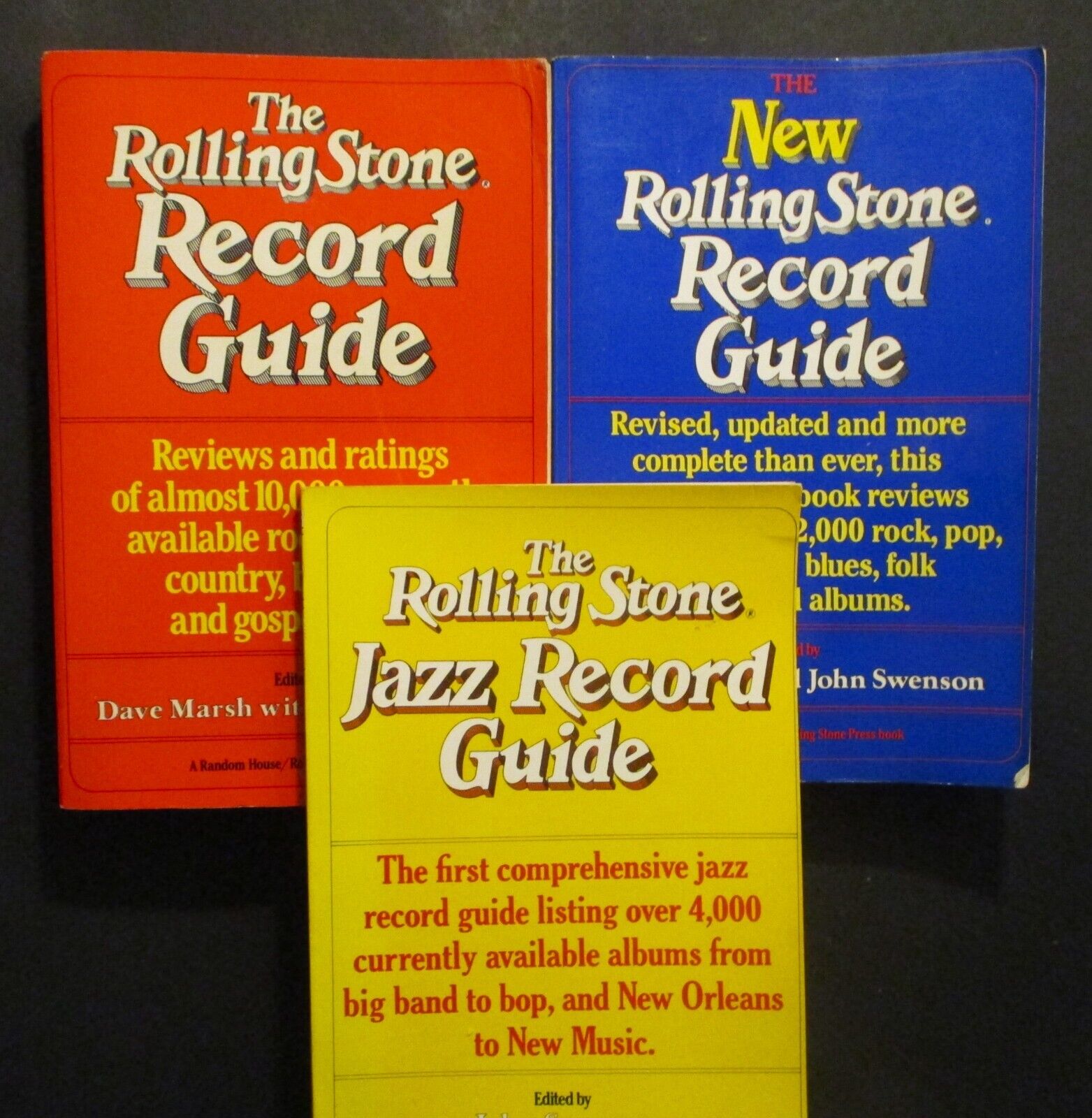
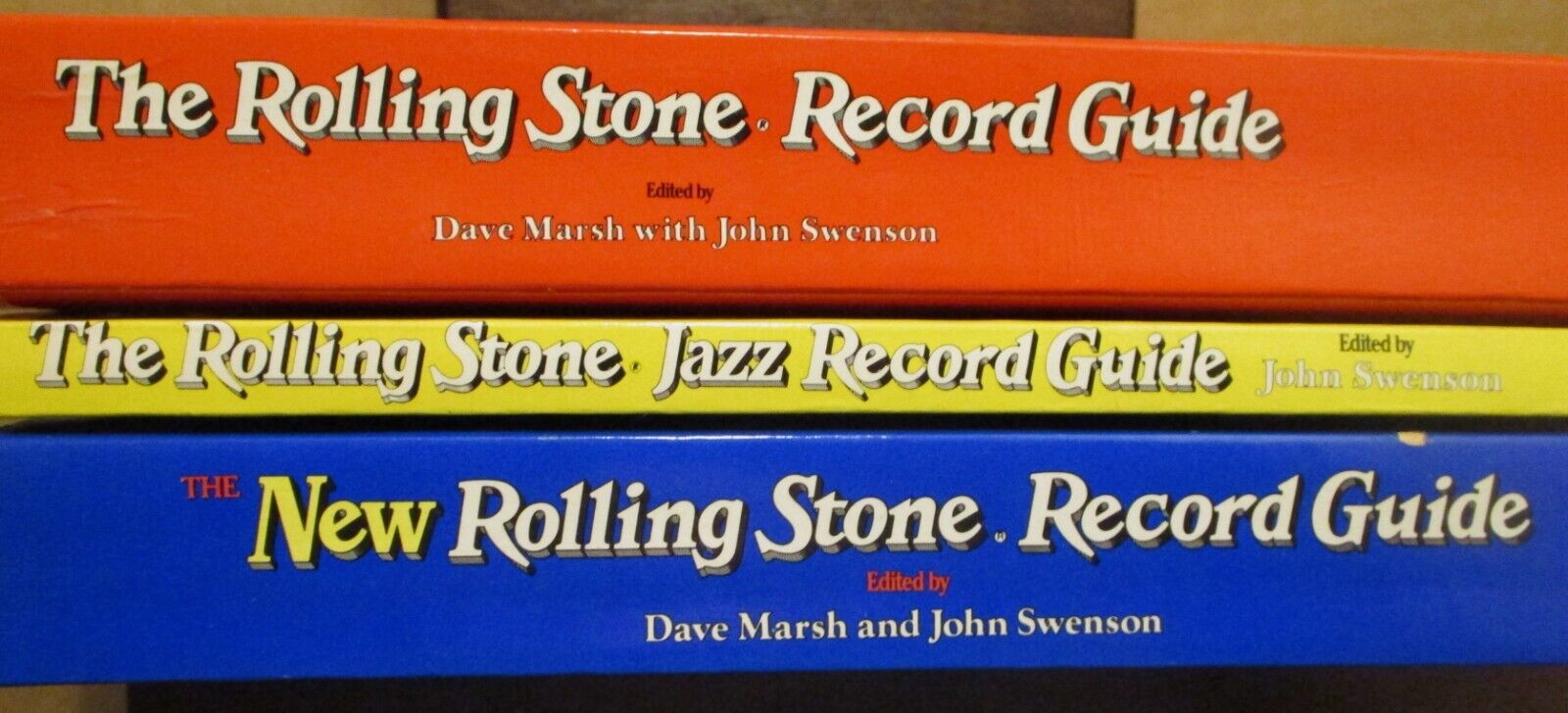
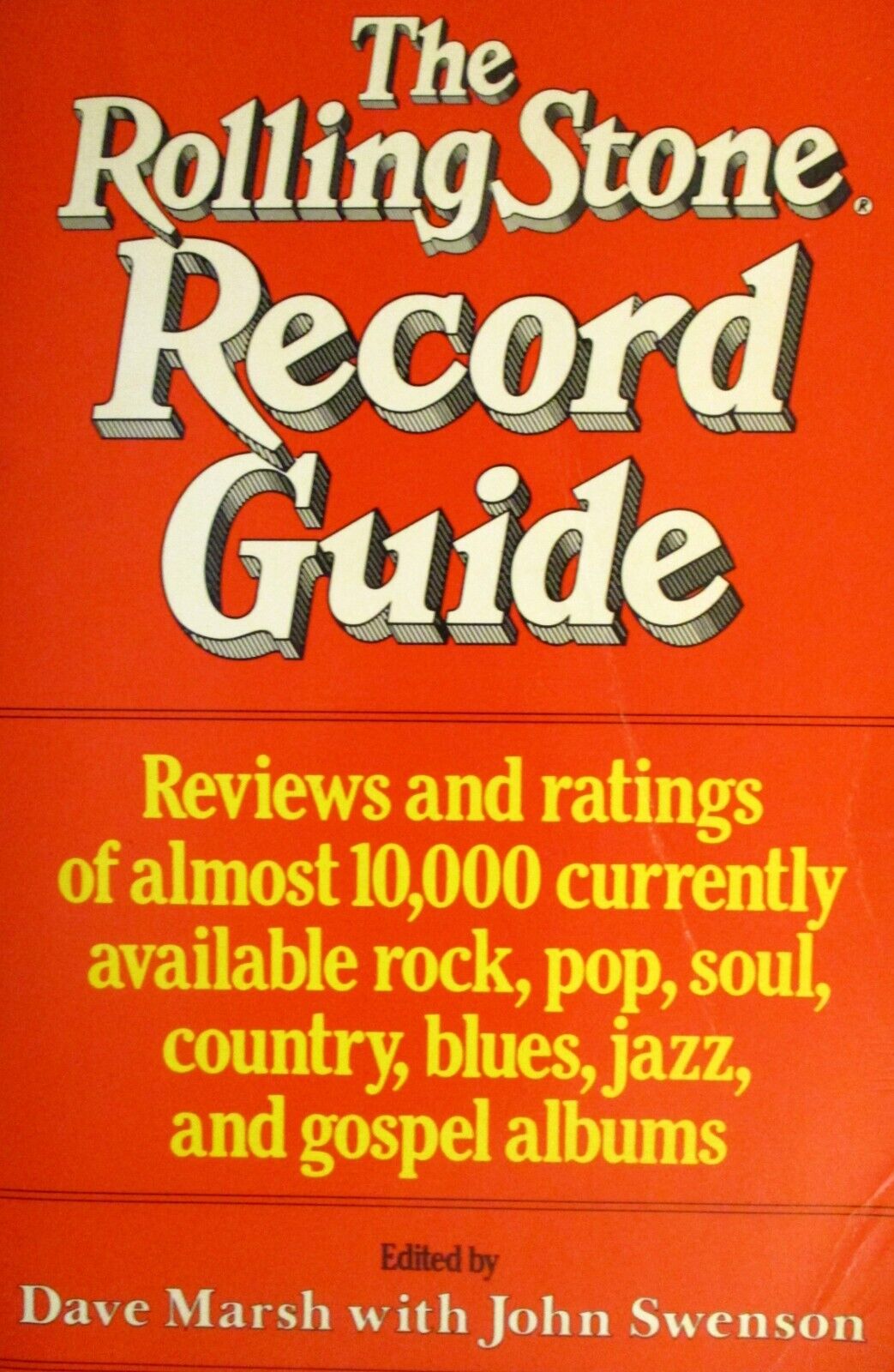
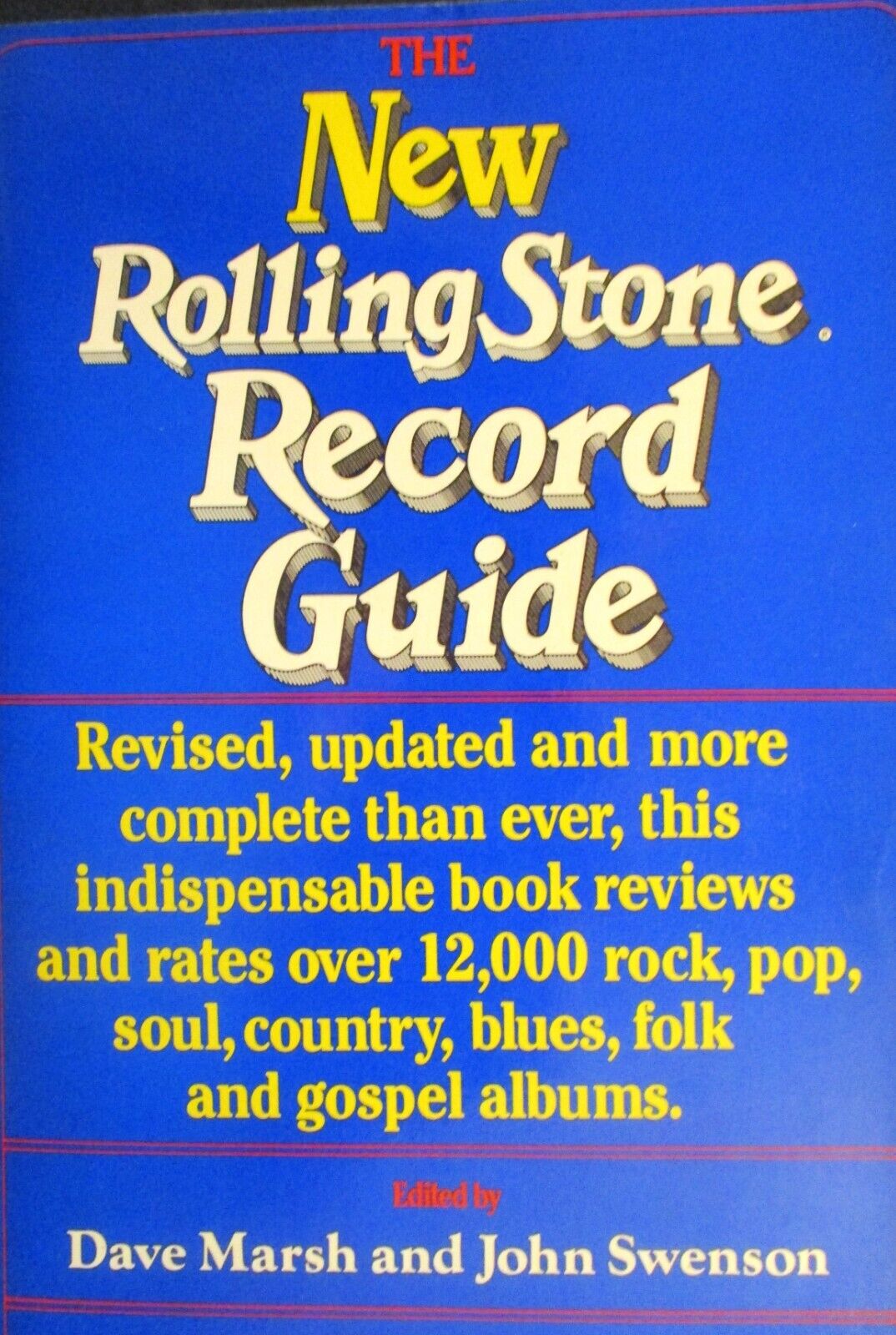
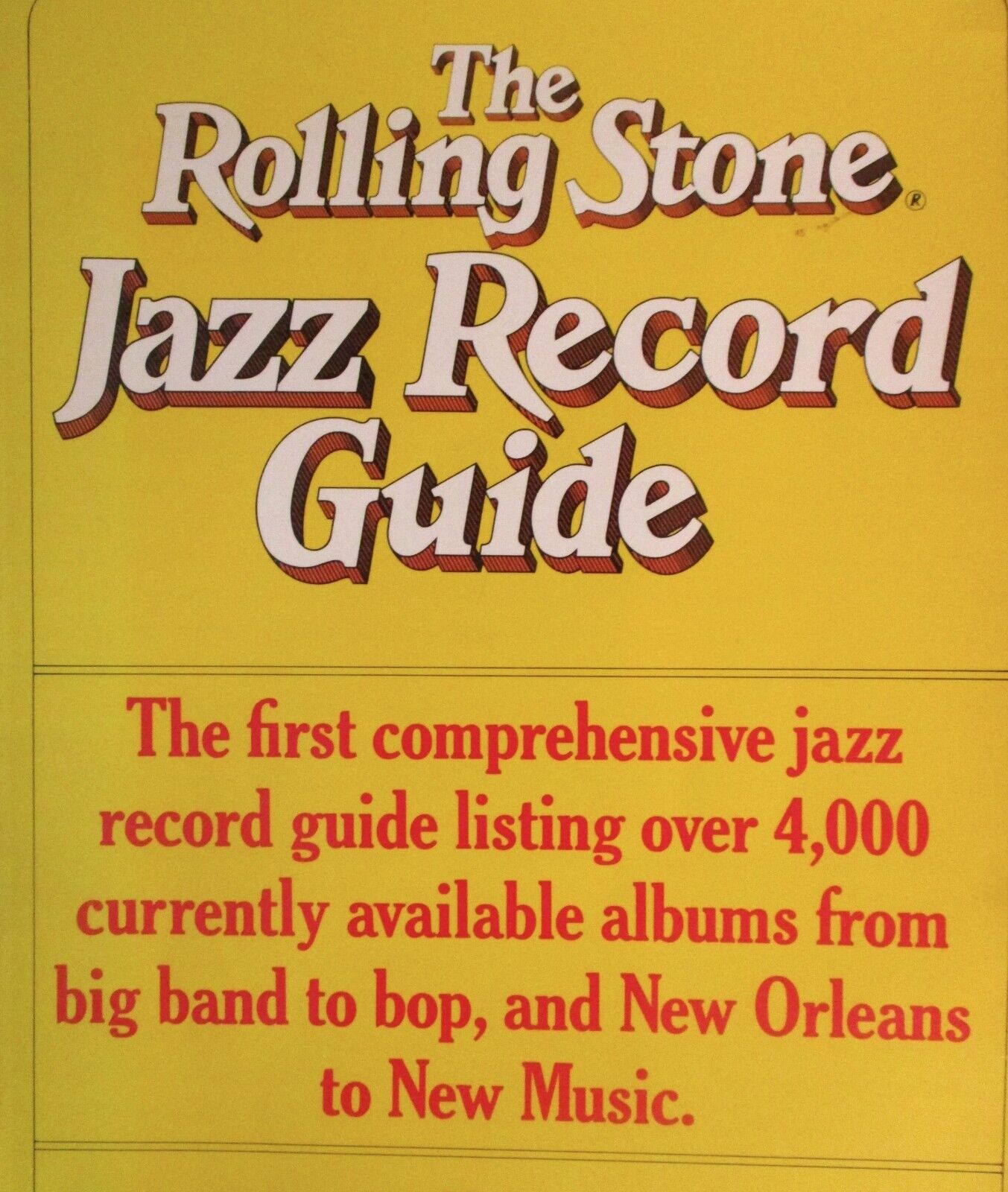
THE ROLLING STONE RECORD GUIDE (NOVEMBER 1979) THE NEW ROLLING STONE RECORD GUIDE( OCTOBER 1983) THE ROLLING STONE JAZZ GUIDE (1985) AUTHORS/EDITORS: DAVE MARSH & JOHN SWENSON PUBLISHER: RANDOM HOUSE BOOKS/ROLLING STONE PRESS ~ NEW YORK
This week on Ebay we are offering up this beautiful, clean, complete set of the classic Rolling Stone Record Guides from the late 70's and early 80's.
This rare set includes the original 1979 'Red' guide, the 1983 'Blue' guide and the relatively rare 'Yellow' Jazz guide from 1985.
All 3 books are clean, bright, tight, and still in amazing condition. No writing, marks, checks, smudges, names, or any other signs of previous ownership.
You'll likely never find a nicer set of these rare, old, excellent, and essential record guides.
These are the 'classic' original reference books that many of us 'Old-school' vinyl collectors still fondly remember today.
I used these record guides 'intensely' back in the day. My original copies are full of hand-written notes and comments scrawled in the margins, underlining, faded yellow high-lighting, and lots of checkmarks. The pages are smudged, creased, folded and dog-eared. The bindings have been reinforced with tape. Twice.
They are well-used, battered, and falling apart, but I'll never part with them. I've had them over 40 years, used them regularly, and they are an intrinsic part of my record collection.
I realized many years ago that I would eventually 'destroy' my original copies from use, and that I better hunt down clean 'back-up' copies.
I've had these clean, spotless 'spare' copies sitting on my music room bookshelves for decades, never used them, and I thought that someone would like them for their own collection and to help with their own record album hunting.
Finding clean, unmarked copies of these record guides today is almost impossible. Almost every copy on EBay, and elsewhere, have at least some marks, writing or signs of prior ownership. These books were typically devoured; studied, read, and used heavily by their owners.
These 3 books I'm listing are all clean, bright and unmarked. They are all very clean 'back-up' copies that I found decades ago and safely put away for future use.
At the time, I couldn't foresee the rise of the internet and all the online references and tools that we have today for researching albums and new music.
As I said, it's almost impossible to find old used copies of these books that aren't all marked up. Most copies are well-used and abused, but these are beautiful clean copies. The covers and spines are clean.
The bindings are tight, square and strong, and the internal pages of all 3 of these books are clean and bright.
A nice rare, clean 'set' of all 3 original books that would look great on display in your music room.
I still have my original well-worn copies of these 3 books, but thought I'd pass my clean 'back-up' copies on to the next generation of record collectors.
~~~~~~~~~~~~~~~~~~~~~~~~~~~~ To younger collectors and people who weren't actively record collecting in the 70's, it's difficult to explain just how important, essential and indispensable these books were back in the day, especially the first 'Red' book from 1979.
There was nothing else like it at the time. The true value of these guides is that they reviewed and rated thousands of older obscure records that were hard to find, and often unknown to the average music lover and record collector.
They opened up a whole new world to music lovers and record collectors that many never knew existed.
~~~~~~~~~~~~~~~~~~~~~~~~~~~~~~~~~~~~ These Rolling Stone guides turned me on to so many albums, and so much great music that I would have never been exposed to, or even aware of, otherwise. Many of those albums are still favorites in my collection to this day.
These are all great references for any vinyl addict who wants to broaden their horizon and expand their collection.
The original Red version is one of the best record guides I've ever seen, and a fantastic resource to build a great record collection. You will find many great obscure records listed here that aren't often discussed, that other collectors rarely mention, but are excellent albums that belong in any vinyl collection.
This book turned me on to artists like Randy Newman, Merle Haggard, The Meters, Little Feat, and Townes Van Zandt as a teen, who I love today, but likely wouldn't have discovered until years later, if at all, without direction from this guide. I also purchased "Sweetheart of the Rodeo" based on it's five star rating and fell in love with Gram Parsons early on.
There's so many other examples of great records in my collection that these Rolling Stone Record Guides are directly responsible for.
This original 'Red' record guide totally revolutionized and changed the record collecting world when it was first released in 1979.
~~~~~~~~~~~~~~~~~~~~~~~~~~~~~~~~~~~~~~~~~~~~~~ Those of you who weren't born yet, or are too young to remember, don't realize just how 'different' things were in those days for music fans and record collectors. There weren't a whole lot of resources for Record Collectors out there in the mid-70's, so it's hard to explain just how important these books were to us crazy record collectors and our insatiable quest for vinyl and knowledge.
Back then, much of our information about obscure records came by 'word of mouth' from other collectors, a hip record shop owner, a 'cool' uncle, a 'friend' of a friend, or from a record show, which were rare in those days. Most information was absorbed from hanging out in record shops, listening, reading album jackets & liner notes, and asking questions.
Before this Rolling Stone record guide came out, all we had for reference to find obscure 'current' records were the Schwann catalogs and the Phonolog sheets that, if you were lucky, your record store had, and kept up to date.
Of course, any serious Rock music fan and record collector had a copy of Lillian Roxon's 'Rock Encyclopedia', from 1971, which listed many albums and singles by hundreds of obscure rock bands.
As a New York City kid, I read Robert Christgau's excellent music & record column in the Village Voice every week, but his first fantastic record guide didn't come out until around 1980.
Warren Peace's excellent 'Peace Record Guide' book came out in 1978 and it listed many rare rock records, their values, and documented many obscure bootlegs. It was eye opening to say the least.
Jeff Tamarkin's 'Goldmine' record collector magazine came out around 1974 and it was a fantastic way to learn about bands, their discographies, and foreign releases. The many ads were a great resource for learning about other collectors in your area. It was printed with crappy ink on newsprint paper and your hands would be totally black after devouring every issue.
If you had good connections, you might have had access to mimeographed copies of New York's own 'Trouser Press' or UK copies of the '(new) Musical Express', which had great rock record reviews before they both turned 'Punk' in the late 70's.
I spent many hours at my local county library searching thru old issues of Billboard magazine on microfiche, looking for news about old obscure records.
One must remember, this was all in the pre-computer, pre-internet days.
Back in the 70's, there wasn't any "sampling" of music. You couldn't hear what a record actually sounded like unless you were lucky enough to have a collector friend who had a copy, or the local record shop owner was nice enough to play a copy while you shopped. Sometimes you'd catch a snippet of something on late night FM radio that caught your ear, and you spent weeks, if not months, hunting it down.
In those days we didn't care about things like Pressings, Matrix numbers, and what pressing plant a record was made at, or who mastered it. ANY copy of a rare obscure record was good enough for us back then.
It was a different world.
Believe it or not, there once was a time when Rolling Stone had their finger on the pulse of the rock music scene and their record reviews were important and mattered.
In the 60's and early 70's, Rolling Stone was one of the few publications that gave a serious, critical, 'insider' journalistic voice to the emergence of Rock music and Rock culture. Their writers and critics understood how important rock music had become and their opinions mattered. They recruited the best writers from smaller music magazines, including Paul Nelson from Sing Out!, and Dave Marsh from Creem, and their record reviews were passionate, intelligent, in-depth reviews, not just short snippets.
Rolling Stone record reviews were read by thousands and they could 'make or break' a new artist or new album.
Record collectors, like myself and many others, read every issue searching for great records to add to our collections and also learning what records to avoid.
In the early to mid 70's, Rolling Stone published several paperback books compiling many of their record reviews, and we collectors used those books to guide our purchases. I read all the Rolling Stone record reviews in the magazine every 2 weeks, and in those paperbacks, and soaked up every word.
Magazines like Rolling Stone, Creem, Circus, and Crawdaddy made it easy to find reviews of 'new' records, but it was hard to find any information about older releases or deleted records, so when this comprehensive Record Guide was announced in 1979, we couldn't wait to get our hands on a copy.
It was released in November 1979 and I got my first copy for Christmas that year. I was blown away. Like many other collectors, I devoured it, reading it over and over, and memorizing the sections on my favorite artists. It became our record collecting 'Bible'.
That 'Red' Rolling Stone guide changed music listening and record collecting in profound ways. It introduced people to new artists, new bands, and new records that we wouldn't have known about otherwise.
Before the internet, these Rolling Stone guides were invaluable and devoured by many collectors, including myself. There were few other sources of information like this out there at the time.
Now in the Internet age, you can 'google' any record, stream anything you want to hear on Spotify, sample records, read a zillion different online reviews, read discussion boards talking about releases and pressings, and purchase most any record in existence with the push of a button. Now with Ebay and Discogs, every record you can imagine is available with just a 'click'.
Back in the 70's, before this Rolling Stone Record Guide, things were very very different.
~~~~~~~~~~~~~~~~~~~~~~~~~~~~~~~~~~~~~~ DAVE MARSH AND THE CRITICS WHO WROTE THESE BOOKS
Both the Red and Blue Rolling Stone guides were edited by Dave Marsh and John Swenson.
Marsh was a music writer and rock critic who had worked for both Creem and Rolling Stone. Swenson was a music writer and rock critic who had worked for Crawdaddy, Circus, and The Village Voice. Swenson had a slightly different writing style than Marsh, and had vastly different musical tastes, including a strong appreciation for Jazz.
Dave Marsh wrote a large majority of the reviews in the Red guide, but it also included contributions from many other music critics.
The original Red cover Rolling Stone Record Guide had it's own team of 34 reviewers, mostly from the staff of the magazine, but also a few noted independent writers and critics.
The professional reviews in these books were new, fresh, and commissioned specifically for the book. They weren't just reprints of previous record reviews from Rolling Stone magazine.
Both Marsh and Rolling Stone received a lot of negative feedback about Marsh's bias in the Red book, so when the 'new' Blue edition was written, Marsh laid back somewhat and let his team of 52 music writers and critics contribute most of the reviews.
Marsh and Swenson still had final editorial say, but the Blue book had much better reviews, much more variety, and many different viewpoints. The reviewers of the Blue book had a much better understanding of the groups and artists they wrote about.
Many albums got new, updated and revised reviews in the Blue guide, compared to the Marsh-heavy reviews in the Red guide.
Many of the reviews in the Blue book are more essay-like and journalistic, give context and background about the artist, and often explaining why the records get the ratings they do. They can be quite informative and educational. The reviewer's obvious passion for the music is palpable, and can be quite contagious.
~~~~~ In 1979, Dave Marsh was one of the top rock critics of the time, whose opinions mattered. He was right up there with Robert Christgau, Paul Williams, Lester Bangs, Greil Marcus, Jon Landau and many others.
Marsh knew quite a lot about all types of modern music. To his credit, Marsh was always a champion of African-American musical forms, especially Blues, Soul, Funk and R&B. He was one of the first white music critics to champion rap and hip-hop, which was just emerging when the first Red guide was written.
When writing these books, Jan Wenner, Dave Marsh, and the 'bosses' of Rolling Stone were determined to protect and glorify the traditional musical idols of the Baby Boomer generation, who were the magazines original supporters and made up the bulk of Rolling Stone subscribers.
Their favorite rock artists included The Beatles, Rolling Stones, Neil Young, The Byrds, Bob Dylan, The Band, Buffalo Springfield, Bob Seger, Bruce Springsteen, and Elvis. (Elvis got 13 five-star records!)
They adored the Soul of Stevie Wonder, Marvin Gaye, Al Green, Aretha Franklin, and Motown.
They liked the traditional singer-songwriters: James Taylor, Paul Simon, Jackson Browne, Elton John, Carole King and Joni Mitchell.
These artists could do no wrong, and their albums automatically got high ratings.
Marsh also loved the early British Invasion bands and had a deep respect for the original 60's Psych and Underground bands. The Velvet Underground & the original "Nuggets" compilation get his highest admiration.
~~~ Dave Marsh was very stubborn and had strong opinions about what constituted 'great' Rock music.
Marsh and his colleagues weren't afraid to rip apart artists that they didn't like, or to drool over those that they did.
He wasn't afraid to state his own opinion, and he wasn't afraid to strongly criticize bands that were considered 'untouchable' by most other writers and critics at the time.
Marsh had his own personal 'untouchable' favorite artists. For example, Marsh strongly believed that Bruce Springsteen was the first, best, and most important white American Rock Star since Elvis Presley.
Marsh seems to have loathed Heavy Metal and Prog Rock bands. He had his tastes firmly anchored in 'classic' rock and the arena rock dinosaurs of the late 70's. He had strong prejudices as to what a "rock star" should be and he was very cautious to praise and embrace many Punk and New Wave artists.
Certain artists and band's records were automatically dismissed, not by the quality of their records, songwriting or musicianship, but just by the style of music they played. AC/DC and Black Sabbath are prime examples. They got low ratings in the Red guide. To get high ratings, the music had to pass his own tough standards.
~~~ This book was notable at the time for it's sometimes crude, brutal, provocative, "in your face" style of many of its reviews.
Dave Marsh had a tendency to be so self-righteously 'smug' in his reviews, that he irritated and annoyed more than a few readers. Despite that, some of his reviews of artists he can't stand are hilarious and timeless.
Marsh had attitude and "teeth". He was willing to put an artist's entire recorded catalog on the line, favorably or unfavorably, and wasn't afraid to upset many readers and fans of that artist by doing so. It was sometimes shocking, sometimes hilarious, but always entertaining.
Marsh was very opinionated and not always right, but what is "right" when it comes to music criticism? Everybody has their own opinion. We all have different tastes, likes and dislikes, and any music fan reading these books will find much to disagree with. as well as much that they do agree with.
Sometimes Marsh is completely off track, and you just have to ignore and overlook some of his questionable reviews. You have to take all these reviews, especially Marsh's, with a grain of salt.
~~ There were many short, one sentence, even one word, reviews that were cruel, biting and harsh, but often accurate and hilarious to read, even today.
Dave Marsh pretty much invented the short, one-line, biting, snarky record review.
~~ When the Blue book came out, many of Rolling Stone's favorite artists and records were still revered, on a pedestal, and untouchable, but many other artists and records got totally revised and re-evaluated, resulting in some interesting, refreshing takes.
Most of the critics often favored commercial acts over anything more abstract, progressive or 'artsy'. Some reviewers were shallowly dismissive of anything they didn't "get."
Some reviewers overly praised hot, new 'flavor-of-the-month' artists that ended up just being 'one-hit wonders' and going nowhere artistically or commercially after the Blue book was published.
Many of the reviewers seemed to like American pop/rock from the 60's and early 70s, their comfort zone, and were obviously struggling to keep up with the changing music scene and acknowledge & accept many of the great New Wave bands that came along in the late 70's.
~~~~~~~~~ I find it very informative and entertaining to read critic's reviews of albums that I own and know very well. Some reviews I totally disagree with, others are right on the money.
The writing is always witty, often humorous, and sometimes laugh-out-loud funny.
Of course, you will likely have differences of opinion with some of these reviews. That's the nature of reviewing music. Each person hears it differently and interprets it differently. That's the beauty of it all.
~~~~~~~~~ In those days, rock critics were NOT politically correct, and weren’t sensitive about hurting artist's feelings. They blurted out their opinions, good or bad, and stood by them. Their reviews ranged from insightful, to hilarious, to stupidly callous.
Taken as a whole, these reviews are generally excellent, and help inform you, direct you, and educate you. These books should be taken as entertainment and cultural history, not the definitive final statement or verdict on any particular artist or album.
You will likely be annoyed and disagree with some of the reviews, and be totally amazed by how accurate others are. Some reviews are so 'off' that they make you wonder if the person rating it actually listened to the record, or just made the whole thing up.
The Blue book, with it's many reviews by 'professional' reviewers taught me that the big-name critics weren’t always right.
~~ Looking back and flipping thru these books today, it's fun to see so many obscure groups, and odd albums, that I never knew existed back then, and still, with 45 years of record collecting experience, there's many records listed in these books that I still have never seen or heard. The range and variety is mind blowing.
These books are a real musical and historical deep dive. A fantastic, reliable, honest source of opinion and cultural history.
The reviews are meant to inform you, make you curious, and encourage you to explore outside your comfort zone. To help you discover your own tastes in music.
~~~ What makes these books so excellent are the incisive, witty and often biting commentary and critical analysis of the albums reviewed. Whether you agree with the reviews or not, they are honest, intelligent, informative and witty.
The reviews are varied, some horribly wrong, some amazingly accurate, but they all needed to be taken with an open mind, a grain of salt, and a bit of caution.
Nobody really took these guide books too seriously, but we all loved them and used them to build and guide our collections.
Do they get everything right? Not even close. They weren't perfect books, but they were fantastic. The Red guide was the only book like it at the time, and there was nothing else even close.
~~~~~~~~~~~~~~~~~~~~~~~~~~~~~~~~~~~~~~~~~~~~~~~~~~~~ Now that 40 years have passed, it's fun to revisit these books and see what critics thought at the time of the music of the sixties thru early eighties, and how that music, and those opinions, have changed over time.
Obviously people's musical tastes change over time and even the critics changed their opinions with the passage of time.
It's interesting to see how the opinions of certain records, artists, and even whole genres of music, had changed and evolved, just over the course of a few years, between the Red and Blue editions of this book.
In the Red guide, Corporate Rock Bands and Singer-Songwriters were still seen as staples of the music scene, Disco was gaining some recognition and acceptance, Punk was seen as an unwelcome intrusion into 'real' music, as was early Rap and Hip Hop. New Wave music was still viewed with caution and skepticism. Prog Rock bands were still seen as innovative, artful and important.
By the time the Blue guide came out, just 4 years later, New Wave and Electronic bands were king, Singer-Songwriters, with rare exceptions, were seen as uncool, Disco was dead, and Punk and Metal had made significant impact on popular music. Corporate Rock and Prog Rock were seen as Dinosaurs and on their way to extinction.
As someone who's fascinated by rock music history, not just the music itself, it's interesting to me to see how the critics, and the public's, perspective on music changes between these 2 guides.
Many people point out that both the Doors and Lou Reed were treated like Rock Royalty in the Red guide, but objectively and honestly re-evaluated in the Blue.
Many of the late 60's Bay Area 'Hippie' bands, that I'm a big fan of, were hailed as excellent and important in the Red guide but were either completely ignored or bashed in the Blue guide. The Grateful Dead, in particular, take a beating in the Blue book.
Most Prog bands, Yes, Genesis, ELP, got much better reviews in the Red guide than they did in the Blue one, reflecting a general popular decline of Prog music in the mid-80's.
As a New York teen in the late 70's, I thought Richard Hell's “Blank Generation", Television's "Marquee Moon" and Blondie's first album were terrific, but in the Red guide, Dave Marsh isn't impressed. By the Blue guide they have become "essential to any modern music collection".
Time has been kind to some artists and unkind to others.
~~ Since these guides were published, some bands have gone on to develop more of a Cult status among fans and collectors and it's interesting to see how these same bands and artists were often dissed back in the day.
One of the best examples would be Black Sabbath, who many consider an excellent, early, UK heavy metal band. Many of their early albums are considered 'essential' in collections today, but ALL their albums got 1 Star reviews and their music was called a "Murky Drone" and "a quaint bore" in these guides.
Some artists are far more revered today, at least by some collectors, then they were while they were still around back in the early 80's. They have 'aged' well, like fine wines or cheeses.
Bands like The Cure, The Replacements, and Motorhead, all hailed as important bands today, were deemed almost unlistenable back when these guides were published.
~~~ The 'new' Blue guide from 1983 offered a more revisionist slant to rock music's history and there was a general re-evaluation of many different artist's albums. It's interesting to see how many albums had their rating revised from the first edition to the second. Some went down (The Doors, Yes) while others skyrocketed (Little Feat).
~~~~~~~~~~~~~~~~~~~~~~~~~~~~~~~~~~~~~~~~~~~~~~~ These fantastic books were exactly what the title describes: "Reviews and Ratings of Almost 10,000 Currently Available Rock, Pop, Soul, Country, Blues, Jazz, and Gospel Albums".
They are each packed with over 600 pages of excellent record reviews.
If your musical tastes tend to include bands and artists from the 'Golden' years of the 60's, 70's and early 80's, then these books are essential to building your collection and discovering new artists. They are a fantastic way to read about the artists you love and discover similar and related music that you might have missed.
Both are really 'essential,' great resources, and make a great pair of reference books.
~~~~~~~~~~~~~~~~~~~~ The original 'Red' guide was an ambitious attempt by the editors of Rolling Stone to document and review every Rock and 'Popular' record album that was available and still in print at the time, 1979. Nearly 10,000 of them!
The editors of this guide were trying to build a working canon of everything that was currently available, as well as a list of the very best 5-star records across all different genres.
In the intro, the authors say that they used the Schwann Guide and the Phonolog index pages as their source and inspiration for building a guide to, as the cover says, "Reviews and Ratings of Almost 10,000 Currently Available Rock, Pop, Soul, Country, Blues, Jazz, and Gospel Albums".
When they started the project, they chose to avoid reviewing most of the traditional pop performers of the 50s and 60s, artists like Tony Bennett, Perry Como and Bing, as they were a dying breed, and not of much interest to the typical Rolling Stone reader at the time. Marsh did like Frank Sinatra and Nat King Cole, and there's nice sections on those 2 artists.
They also avoided listing many of the Rock artists of the 50's and early 60's, unless they were still actively making music. Many of those records were older, out of print and hard to find, so it didn't make a whole lot of sense to review them. Record albums, as a unified, complete, artistic statement really didn't start happening until 1965 or so, so that's where this book picks up.
The authors were much more focused on listing what records were currently available in the Record shops at the time, 1979, so that collectors could build a remarkable collection.
This book was a real labor of love and there was nothing like it at the time, and likely will never be anything like it ever published again.
A project like this would be impossible to take on today, with all the independent record labels and the wide range of musical genres that currently exist in music today.
~~~~~~~~~~~~~~~~~~ The Red book came out in the fall of 1979, just as the classic-rock era was winding down.
Disco had pretty much run it's course, although dance music was still strong. Punk had been around a few years, but was still trying to get more accepted. New Wave music was the latest emerging trend in the rock scene and on the radio. Hip Hop and Rap were just starting to appear in 1979.
So, the Red guide has some record reviews of albums in these emerging styles, but it's rather lacking in these areas.
The 'benefit' of the Blue guide is that it adds lots of new music released since 1979 and does an excellent job of collecting and adding reviews for many Punk, New Wave, and Heavy Rock bands that emerged since the Red book was published in 1979.
The Blue book also contains a lot more coverage of popular Reggae and Ska artists, as well as a better, but limited, representation of World music.
The Blue guide was released in the Fall of 1983 and is mostly 'current' up through the summer of 1983.
~~~~~~~~~~~~~~~~~~~~~~~~~~~~~~~~~~~~~~~ All 3 of these guides use a five star rating system that ranges from 5 Stars: 'Indispensable': 'a record that must be included in any comprehensive collection', to 1 Star: 'Poor'.
There was also a no-star or 'bullet' rating, represented by a solitary square, ◼, reserved for the worst of the worst, albums which they felt aren't even worthy of existing.
~~~~~~~~~~~~~~~~~~~~~~~~~~~~~~~~~~~~~~~~~~~~~~~~ The Red First Edition guide contained black and white photographs of the 5-Star album covers, conveniently spread throughout it's pages, so you could learn what they looked like and keep your eye out for them.
At the back of the Red guide is a convenient listing of all the 5-star records, which makes a quick handy reference and checklist.
The Blue guide did not have any pictures.
~~~~~~~~~~~~~~~~~~~~~~~~~~~~~~~~~~~ The Red book gave full catalog numbers for all the records it reviewed while the Blue guide only gave the label that the record was pressed on, but still helpful. These guides really made the record buyer a better consumer back then.
~~~~~~~~~~~~~~~~~~~~~~~~~~~~~~~~~~~~~~~~~~~~~~~~~ By the mid to late 70's I was a huge music fan and had already built up a large record collection. I was pretty full of myself, a cocky New York City kid, and thought I was pretty well educated in Rock music; it's roots in the blues, it's early originators and masters, and the influences of the British Invasion, but this book made me realize just how little I really knew. It really opened my eyes to all the other great music that was out there at the time.
I can't overestimate how much that Red first edition influenced my taste in music and helped me discover albums that I had never heard of before.
These books helped identify the albums that were essential for a well-rounded collection and had a major influence on my record album purchasing back in the early 80's.
These guides cover so many albums that are now long out of print that are worth searching for, and sometimes the search is half the fun and part of the reason we collect.
These guides also saved me a lot of money by steering me away from lower rated albums, although there's many low rated albums listed that i actually think are great.
~~~ I've revisited these books many times over the years, and the more you know and learn about music and artists, the more you can get out of these books and enjoy them. They never grow old and you always learn something new from them.
If you like music but don't collect records, these books are still very entertaining to read just on their own due to the excellent journalistic writing and often humorous reviews. Highly recommended.
~~~~~~~~~~~~~~~~~~~~~~~~~~~ The third book in this lot is a clean copy of the rare Rolling Stone Jazz Record Guide from 1985.
The Red book has a pretty excellent Jazz section, but it's limited. By the time the Blue book was released, 1983, Rolling Stone decided to compile all of the Jazz albums into a separate volume.
For some reason, this Jazz book remains rather rare, in fact many record collectors who are well aware of the Red and Blue books, had no idea the Yellow Jazz book even existed. I don't think it was advertised and 'pushed' as much as the other books at the time.
John Swenson, who was involved with both the Red and Blue Record guides, but also a huge Jazz fan and collector, was put in charge of editing this 220 page book which is packed with over 4,000 excellent Jazz record reviews.
It includes many reviews written by Swenson, but enlists 16 other music critics to present a fair, unbiased review of thousands of Jazz albums in all sorts of Jazz styles; BeBop, Hard Bop, Free Jazz, Fusion, Swing, and even some limited Big band.
The authors loved John Coltrane. 22 of his albums achieve a 5-star rating!
I grew up in New York City and was exposed to a lot of Jazz as a teen and was aware of Miles, Monk, Coltrane and Parker, but this Jazz guide helped turn me on to artists like Eric Dolphy, Freddie Hubbard, Sonny Rollins, and Sun Ra and really expanded my Jazz collection. This jazz guide also helped me pay for my collection years later, since I picked up a lot of their 4 and 5-star Jazz albums back in the early 80's when they were still cheap and available, and sold some of them later on to fund my vinyl addiction.
Like the other 2 books, it's in clean, bright, white and tight condition. No marks or writing. A beauty.
~~~~~~~~~~~~~~~~~~~~~~~~~~~~~~~~~~ One of the fantastic things about this Red guide is that it's great for helping build a diverse collection of different genres. It's not just Rock records.
The Red book is divided into several individual sections by musical genre.
Rock, Pop, Soul and Country are grouped together in the main body of the book. Jazz, Blues, and Gospel had their own sections, and Soundtracks, Original Cast recordings, Anthologies & Collections and Comedy/Spoken word are jumbled together in another section.
These guides have helped me assemble an excellent collection of not only rock records, but key Country, Blues, R&B and Soundtrack albums as well.
The 'New' Rolling Stone Record Guide, the Blue book, was an 1983 update of 1979's The Rolling Stone Record Guide, the Red book.
The Blue book didn't have separate sections for different Genres, all the reviews were combined into one big central section.
For the Blue book, a few of the reviews were carried over from the Red book, but most entries are totally new or newly revised.
The Blue book is also over 600 pages long, but to make room for all the new reviews, many artists and bands featured in the Red book were omitted.
The Blue book contains an Index of artists who were included in the Red first edition, but were not included in the second edition. Most of these artists had completely disappeared from the scene by 1983, or the bulk of their albums were out of print and hard to find, so it wasn't very useful to review them.
The Blue book does include reviews for many albums that had been recently deleted, taken out of print, but that collectors still might run across. They are marked with a pilcrow mark (¶) to indicate that the specific album is out of print.
At the time, that was a great help in recognizing what albums to grab up, while they were still available, before they disappeared, possibly forever. The re-issue market in those days was much more limited than it is today.
~~~~~~~~~~~~~~~~~~~~~~~~~~~~~~~~~~~~~~~~~~~~~~ I know that I've rambled on and on about these great Record guides, but let me finish up by giving a few brief examples of some of Dave Marsh's harsh reviews.
Some people felt that Dave Marsh was a little opinionated and mean, but I must admit that some of his ◼ ('worthless') ratings were spot on.
Marsh's notorious review of Donny & Marie Osmond records is a real hoot. They all get his infamous 'bullet' rating and are called "Wretched excess, accent on Wretched" (see pictures)
Yes, Marsh could be harsh and crude, but sometimes he hit the nail on the head.
For example, he called Kate Bush's 'The Kick Inside' "Not exactly New Wave, not exactly art-rock. Sort of like the consequence of mating Patti Smith with a Hoover vacuum cleaner."
Reviewing The Captain and Tennille, he says "Toni Tennille looks like a toothpaste-commercial reject, and acts the part."
In the Red guide he called Abba's music "forgettable", but they get slightly better treatment in the Blue guide.
Even Bob Dylan doesn't avoid the dreaded 'Box' rating. Bob's 1973 anthology 'Dylan' got no love from Dave Marsh. ( ◼ “a wise person would pass this up...")
In the Red guide, Dave Marsh gave all of Black Sabbath’s first few albums a low rating. Black Sabbath's "Paranoid" and "Master of Reality" only got 1 star in the original Red guide, which certainly says more about Dave Marsh's tastes than the music itself.
The Red guide also gave worthless ratings for AC/DC's first few albums, but the Blue guide sees them in much better light.
I'm sure that somewhere on-line there is a compilation of some 'nuggets' from all of Marsh's 1-star and no-star reviews. It would make fascinating and interesting reading.
Today, I'm a huge vintage Rolling Stones collector and I can attribute a big part of that to the Red guide giving both "Now!" and "Aftermath" 5-stars back in the day. That made me check those specific albums out, and I've been a big fan ever since. The Red guide unfortunately had no love for "Exile on Main Street", which is considered a classic, essential masterpiece today.
Pitchfork called David Bowie's 1977 album 'Low' the best album of the 1970's, but Marsh only gives it 3 stars.
There were several albums that received a One-star or Bullet rating that I actually think are decent albums and didn't deserve such a low rating.
For example, Steely Dan's great 'Gaucho' album only received 1 star. It was relatively new at the time and hadn't had time to 'mature' and develop into the classic it's seen as today.
There's also some 5-star winners that I'm not too fond of and wouldn't have rated them that high. For example, the Beatles catalog gets vastly different ratings between the Red and Blue guides.
In the Red guide, 'Something New' gets 5 stars, but 'Sgt. Pepper' only gets 4.
'Something New' was their first album released after the 'Hard Days Night' movie and truly represented a new sound and new direction for the band. It was also the first full Stereo album by the Beatles and sounded totally amazing for 1964, but better than Sgt. Peppers??
Anyhow, as I said, these reviews need to be taken with caution and a grain of salt.
In summary, a beautiful, clean set of all 3 of the classic Rolling Stone Record Guides from the late 70's and early 80's.
Fantastic books that, since the vinyl revival, are becoming very hard to find in good clean condition. Highly recommended, and I would say 'Essential', books for anyone interested in collecting vinyl records.
~~~~~~~~~~~~~~~~~~~~~~~~~~~~~~~~~~ These books are very dense and heavy, like small bricks, therefore, shipping cost within the lower 48 states is $6.50 for these 3 books.
If you would like insurance, or anything faster than Economy/Media Mail, please let me know and I can arrange it for you. I’ll work with you to make sure you’re happy!
I'm a 0ne-man operation, this is a hobby, not my job. I do this for fun. I do this because I love collecting and want others to share in that same experience. I take my time researching, grading, listing and packaging. I will NOT sell any items that I personally would not want in my collection.
My descriptions and grading are fair and honest and I will ALWAYS refund you for anything you’re not happy with. I have had over 3,500 happy and satisfied EBay customers, with 100% positive feedback, over the years and I have been buying/selling on ebay for over 25 years, so please bid with confidence!
All orders are processed and shipped within 2 business days of receipt. We package and ship our items with the greatest care, using the proper packaging to ensure that your rare and collectible treasures arrive in pristine condition.
Payments can be made by any of the options EBay offers.
I will be happy to exchange feedback with anyone I complete a transaction with.
THANK YOU for looking and reading if you got this far. -- JOHN
price rating