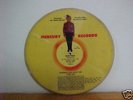
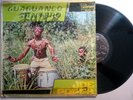
PIJUAN & HIS SEXTET"EN EL TRADEWINDS" BORINQUEN#1039
$
132


Favourite Auctions
To save auctions to your favourites, please login
If you don't have an account, please register
Description
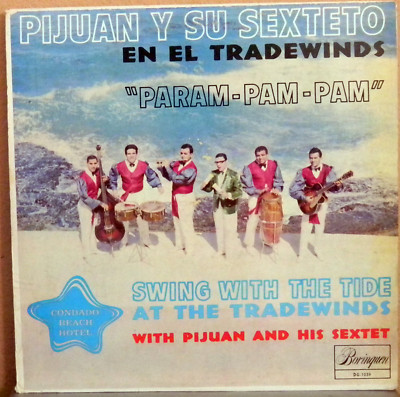
TITLE :"SWING WITH THE TIDE AT THE TRADEWINDS" (PIJUAN EN EL "TRADEWINDS")
ARTIST :PIJUAN AND HIS SEXTET
LABEL & RECORD #: BORINQUEN #1039 (1966)
VINYL CONDITION: HEAR SOUNDS CLIPS INCLUDED: TRACKS ARE FROM VG+ (A FEW ONLY...1 OR 2 MINIMAL CLICKS ONLY)) TO VG+++
LABELS CONDITIONS: SEE SCAN : NM
COVER CONDITION: SEE SCAN : VG++ ONLY LIGHTLY BUMPED CORNERS, MINIMAL "AGE" WEAR...NO SPLITS, NO EDGE WEAR
REMARKS: A "BRIEF" HISTORY OF ONE GUY THAT LET US DANCED TO THE BOOGALOO, SALSA, MERENGUE, ETC....A COMPLETE MUSIC MASTER.....PIJUAN ("PUERTO RICO'S JOE CUBA")...wOW THOSE NIGHTS AT THE TRADEWINDS (CONDADO BEACH HOTEL)!!1
WEB INTERVIEW: (IN RED COLOR THE PERSONNEL IN THIS LP PLUS OTHER GUESTS!!)
El Sexteto de Pijuán fue una agrupación a la cual se le recuerda con un emotivo significado en países como Colombia, Venezuela, Panamá, Perú y la isla de Curazao; muchos de sus álbumes fueron éxitos rotundos en los baile de la Feria de Cali y los Carnavales de Barranquilla, Caracas y Panamá. La radio de Latinoamérica muy al tanto de la ebullición musical de los años '70s, no tardó en descubrir en Pijuán y su sexteto, una propuesta para escucharla con mucho detenimiento y al final, disfrutarla. En efecto, toda una generación bailó sus boogaloo, sus shing – a- ling y su salsa sabrosa. Le escuchamos éxitos tan inolvidable como “Descarga de Pijuán”, “Que bueno el Boogaloo”, “Shake it, don’t break it”, “A bañar el Caballo”, “Macondo”, “La Piragua”, “La Maestranza”, “La Danza del Choferito” y muchos otros.
“Así ha sido mi vida, ya a mis 18 años fundé una agrupación musical con varios de mis compañeros de estudios”, nos refirió Pijuán; luego ingresó en el cuarteto del maestro Humberto Morales, posteriormente funda su sexteto, luego participa en la creación del primer programa de televisión en Puerto Rico dedicado a la salsa: "La Factoría de La Salsa", participó en la creación de la agrupación Melón All Stars, y el sello del mismo nombre. Con todo éste inmenso personaje y el mundo que creo a través de toda su vida, dialogamos y aquí amigo lector, está su historia.
Israel Sánchez-Coll (ISC): Señor Pijuán, coméntenos ¿Cómo se gesto su sexteto?
Pedro Piñero González (Pijuán): Comenzamos allá para el año 1966 en el hotel Condado Beach. Este hotel está cerrado hoy día, pero lo están restaurando para una posible reapertura el año entrante, (2004). Para el año 1966, funcionaba dentro de ese hotel una barrita o “Lounge” que tenía vista al mar, esa barrita se llamaba “El Tradewinds Bar”, y allí fui a trabajar con un contrato para tan sólo 4 músicos. Enseguida me di cuenta que, para poder lograr un sonido o timbre indentificativo y además tuviésemos fuerza rítmica, necesitaría agregar 2 músicos. Seis era el número perfecto con el que entendía se podía lograr el objetivo. Me di la tarea de convencer al gerente del hotel para que me asignara el presupuesto necesario y así poder costear los 2 músicos adicionales de nuestra propuesta. El argumento que utilicé fue el de garantizarle al hotel música continua y sin interrupciones durante toda la noche. Me dieron el visto bueno, y así empezamos el experimento.
Iniciábamos nuestras presentaciones cada noche con el primer set de 6 músicos en tarima. Luego se bajaban 2, quedando los 4 restantes a cargo de ese segundo set. Para el tercer set, se hacía un pequeño receso general de 15 minutos y entonces subíamos los seis a la tarima para el cuarto y último set con el sexteto en propiedad.
En sus comienzos un quinteto, cerca de 1965
Ismael Cortito, bajo; Reynaldo Santiago, timbales; Pijuán, maracas;
Paquito Álvarez, tumbadora y Ramón Rivera, trompeta.
ISC: ¿Quiénes integraron el sexteto a sus comienzos?
Pijuán: Batista, e Israel “Cortito” Corcino estuvieron al principio en el bajo. “Cortito” estuvo en las grabaciones de los dos primeros discos sencillos. Después, entró Héctor “Cuco” Rivera en el bajo, pero también “doblaba” en la guitarra eléctrica y el saxofón. Reinaldo Santiago estaba en el timbal, Paquito Álvarez era el cantante, y a la vez tocaba conga y percusión menor. Paquito venía de las orquestas de Mario Ortiz y la de Johnny “El Bravo” López. Finalmente estaba yo en el piano, en el órgano, la lyra, la melódica y escribiendo los arreglos.
No obstante, pasaron muchos otros destacadísimos músicos que enriquecieron el producto musical que nuestro sexteto ofrecía, la lista es larga y algunos de estos músicos son: Ramón “Tato” Rivera (†), trompeta y bajo; Pepito Maldonado guitarra, vocales y percusión menor; Joe Canoura, saxofón alto y tenor además de la flauta —él venía de la orquesta de Ray Barretto—; Jesús Caunedo (†) saxofón alto y flauta, —Caunedo venía de la orquesta de Tito Puente y la banda gigante de Julio Gutiérrez—; Joaquín “Tato” Colón, bongo, timbales y batería —él había estado con el cuarteto de Manuel Jiménez “La pulguita” y con la orquesta de Cesar Concepción—; Willy “Chua” Segura, conga, —quien venía de la Orquesta Siboney y la de Pepito Torres—; Freddy Miranda, saxofón alto y flauta —ahora esta con el Gran Combo de Puerto Rico—; Pedro Chiclana, saxofón y flauta, —estuvo con la orquesta del maestro Joe Quijano—; Joaquín Rosa, congas; Tino Labour (†), saxofón alto y flauta; Miguel Rodríguez, saxofón alto y tenor además de la flauta, —cuando entró a nuestro grupo estaba recién salido del Apollo Sound—; Horacio Blanc, guitarra —venía de Argentina y había estado allá con los Cinco Latinos—; Milito Cruz, guitarra; Raffi Carrión, bajo; Kike Talabera, batería —Kike fue el Director musical de José Luis Rodríguez “El Puma”, hoy tiene su propia agrupación en Puerto Rico—; Pito Sepúlveda, trompeta, flouglehorn, trombón y vocalista —también estaba recién salido de la Orquesta Siboney, de Pepito Torres, donde había permanecido 20 años. Herminio Diaz, Saxofon Alto-Flauta y coros, y al día de hoy, con un Doctorado en Música y trabajando como catedrático de una Universidad en los Estados Unidos, Neftali Piñeyro-Guitarra eléctrica, —recien salido de El Sexteto La Playa. Louie García tocaba el bajo, y hoy esta considerado como uno de los más destacados arreglistas de salsa. También estuvo Wilson Vélez en el bajo y los coros.
Los cantantes que tuvimos fueron: Paquito Álvarez, Johnny “Belleza” González (†), Tony Guayama, Aníbal Hernández y Sammy Aguirre. Otros cantantes estuvieron con nosotros en el cabaret, pero no intervinieron en las grabaciones, ellos fueron: Héctor Negrón, Valdo Díaz, Chico Rivera —quien había alcanzado muchísima popularidad como el cantante estelar de la Orquesta Panamericana en sus momentos cumbres. Para principios de los años 60 estuvo una temporada, cerca de nueve meses, con nosotros. Chali Hernández —el hijo del maestro Rafael Hernández—, Esteban Rivera, Pedro Sanz y Eduard Delgado.
ISC: ¿Cuál era el ambiente musical de Puerto Rico para 1966?, ¿Qué orquestas compartían con usted? ¿Su sexteto tocaba con regularidad en un mismo sitio o en varios?
Pijuán: Bueno, realmente el sexteto hizo una carrera presentándose siempre en los clubes o ‘lounges” de los hoteles de Puerto Rico. Estábamos fijos en la misma tarima las noches por semana. En las tarimas de los clubes de los hoteles, fue que nos “descubrieron” los ejecutivos disqueros y los directores de programación de las cadenas televisivas de nuestro país. Fueron más de 25 años de labor interrumpida de Pijuán y su Sexteto, tanto en hoteles como en la televisión local. Tuve mí propio espacio en la televisión, el cual colocamos el nombre de “Fiesta Fiat con Pijuán y su Sexteto” en Telemundo ó Canal 2, y el Show de Pijuán, en Wapa Televisión ó Canal 4, ambas cadenas eran las principales en la televisión en Puerto Rico.
En cuanto a fiestas privadas, aún cuando los discos estaban súper pegados en la radio nacional, y con el empuje o refuerzo que nos brindaba el tener presencia semanal televisiva, nuestro itinerario de trabajo era en los hoteles, éste segmento nos comprometía 6 noches por semanas. Por eso, diríamos que las presentaciones en fiestas privadas se limitaron a aquellos que se efectuaran durante las horas del día y aceptando contratos nocturnos sólo en la noche libre del hotel.
Debería aquí agregar, que para esos años 1965 – 1966, la actividad artística, musical y la vida nocturna en Puerto Rico era una de muchísimo movimiento. Cuando ocurrió el bloqueo o cierre económico a Cuba como destino obligado del turismo, éste ayudó grandemente a incrementar nuestra industria de hoteles y entretenimiento. Puerto Rico era una fuente inagotable de trabajo para los músicos, los hoteles competían entre sí para ofrecer el mejor entretenimiento. Productores de espectáculos y de la televisión de Cuba se exiliaron en Puerto Rico, y aquí montaron sus negocios. El más destacado de ellos fue Gaspar Pumarejo.
Los artistas que se presentaban en La Vegas – Nevada, y solían también presentar sus show en La Habana, ahora venían a Puerto Rico. Los hoteles tenían todo un “Super Club” en donde se cenaba, se veía el show y se bailaba. Para acompañar o respaldar el show artístico había una gran orquesta de planta, en cada hotel. Trabajábamos cerca de 40 músicos todo el año, en otras palabras, no escaseaba el trabajo. Esta bonanza atrajo músicos de todas partes, en efecto, cubanos, dominicanos, colombianos, venezolanos, españoles, argentinos entre otros. Mientras tanto, en la calle, los éxitos más grande que se difundían en la radio y estaban generando buenos niveles de venta, los obtenía el Gran Combo, Johnny “El Bravo” López, la Orquesta Panamericana y la Orquesta de Mario Ortiz, ahí fue que irrumpimos nosotros como un nuevo ofrecimiento tropical, frente a la fuerza que había empezado a tomar la entrada de la Nueva Ola en nuestro País.
ISC: ¿Era el único sexteto de ese estilo que había en Puerto Rico, o habían otros sextetos?
Pijuán: El mío era el único en ese momento.
ISC: ¿La idea de crear su sexteto fue a raíz de la experiencia exitosa de Joe Cuba en NYC, o fue por otra razón en particular?
Pijuán: No hay duda de que el éxito de Joe Cuba me sirvió de estimulo para armar un conjunto, que aunque pequeño en el número de sus integrantes, aún así podría hacer bailar sabroso a su público. Si Joe Cuba lo logró, yo también podría lograrlo. Pero la razón principal es que entendí que si los integrantes eran versátiles —esto es que podíamos tocar más de un instrumento— se podía entonces lograr imprimir el sabor necesario para establecer la cadencia y el afinque rítmico que te incita y te invita a mover los pies. Ya establecido el entronque rítmico, solo faltaba agregarle una sonoridad específica, y eso lo logramos mediante el dúo de saxofón alto y guitarra eléctrica.
TRACKS SIDE A"
1- Param Pam Pam
2- Para Gozar Borinquen
3- Entrega Total
4- El Mundo
5- Eres Todo Para Mi
6- Descarga de Pijuan
TRACKS SIDE B:
1- Se Que Te Perdi
2- Cha Cha Blues
3- Tic Toc
4- El Preso
5- El Floron
6- La Llave a la Cerradura
PERSONNEL:
Herminio Diaz: saxofon y flauta
Paquito Alvarez: vocales y congas
Reynaldo Santiago: timbales
Neftali Piñeiro: guitarra
Hector Rivera: bajo
WEB REMARKS: BORINQUEN RECORDS (BASED IN SAN JUAN, PR) RECORDED LA SELECTA ORQUESTA, NACHO ZANABRIA, ORQUESTA FELIX DEL ROSARIO, LISSETTE, ETC
SHIPPING CHARGES........FOR GATEFOLDS With 2 Lps ADD S&H FOR 2
ITALY CUSTOMERS:
ITALY……. ADD $11 FOR REGISTRATION!!! No exceptions! Sorry, I’m following Other Dealers Suggestions Regarding Problems With the Delivery/Handling of Items…I personally had 2 of 4 problems, Mexico was the Other) in ten years (Thousands Of Records Sold) in the business!!!
(Gli acquirenti italiani sono tenuti ad aggiungere 11 dollari per la spedizione registrata. Non si fanno eccezioni)
POSTAL RATES & WEIGHTS - LPs
LBS.
0.82
1.4
1.9
2.6
3
# of LPs
1
2
3
4
5
USA MEDIA $4.00 $4.00 $4.00 $4.25 $4.50 USA PRIORITY $6.50 $9.50 $9.50 $11.50 $11.50 EUROPE $14.00 $16.00 $19.00 $24.00 $26.00 ASIA $14.00 $16.00 $19.00 $24.00 $26.00 SOUTH AMERICA $11.50 $15.00 $18.50 $23.50 $27.00 CENTRAL AMERICA $11.50 $15.00 $18.50 $23.50 $27.00 CARIBBEAN $11.50 $15.00 $18.50 $23.50 $27.00 MEXICO $10.00 $13.50 $16.00 $20.75 $22.00 CANADA $6.25 $8.25 $10.25 $13.00 $14.00
* We offer a money back + shipping costs guarantee on our records (unless otherwise noted) if you feel the LP was not graded properly We Must Be Notified Of Any Discrepancy in 2 Days after received. . We will issue a full refund upon its return, once our mistake has been verified. Record Must Be Returned in 3 Days…Foreign in 7 Days….We have available the insurance option…
WE USE STURDY CARDBOARD MADE BY BAGS UNLIMITED IN ORDER TO TO PROTECT YOUR RECORDS FOR ANY MISHANDLING/DAMAGE WHILE IN-TRANSIT
Record Grading: Standard guidelines for grading records comes down to a subjective judgment that may vary from person to person. We grade records and LP covers visually AND (when possible) play-tested. We make every effort to give full disclosure (remember that the LP has at least 12 tracks and the grading may vary between each other) and your satisfaction is guaranteed. Don't assume that our vinyl determination of "Very Good+" is the same as yours!
MM RECORDS: are shiny, with no visible defects. They might have some minor superficial (“Paper”) scuff but they should play without any noise. Writing, stickers or other markings cannot appear on the label, nor can any “spindle marks” from someone trying to blindly put the record on the turntable. Major factory defects also must not be present; a record and label obviously pressed off center is not Near Mint. If played, it will do so with no surface noise. (NM records don’t have to be “never played”; a record used on an excellent turntable can remain NM after many plays if the disc is properly cared for.)
NM COVERS: have no creases, ring wear or seam splits of any kind.
NM PICTURES SLEEVES: should look as if they never housed a record. This is a great reason to remove your 45s from their picture sleeves and keep them separate. Just keeping the 45 inside the sleeve will cause damage than can reduce the grade of the sleeve.
VG++ (Excellent) RECORDS: Barely noticeable play wear and background noise. May have surface scuffs and/or superficial marks, which will be inaudible or indiscernible from the background, no scratches. Very nice, no flaws noted.
VG++ COVERS: Artwork is still as close to perfect as can be. Some impression to the cover (minor outer ring wear) but no ink wear! Some slight creases to the corners, but not wrinkled and obtrusive to the eye. The corners can show white (where the artwork pasted slick was) meaning, slight wear. No seam splits or writing on the cover or taped repairs can make this grade.
VG+ RECORDS: may show some slight signs of wear, including light scuffs or very light scratches that do not affect the listening experience. Slight warps that do not affect the sound are OK. Minor signs of handling are OK, too, such as telltale marks around the center hole, but repeated playing has not misshapen the hole. There may be some very light ring wear or discoloration, but it should be barely noticeable
.VG+ COVERS: should have only minor wear. A VG+ cover might have some very minor seam wear or a split (less than one inch long) at the bottom, the most vulnerable location. Also, a VG+ cover may have some defacing, such as a cut-out marking. Covers with cut-out markings can never be considered Near Mint Unless Tiny/Small (EG: Tiny DH).
VG+ PICTURE SLEEVES: might show some very light creasing where it is obvious that a record once resided (or still does reside). A VG+ picture sleeve might have some very minor seam wear or a split (less than one inch long) at the bottom, the sleeve’s most vulnerable location.
VG RECORDS: have more obvious flaws than their counterparts in better shape. They lack most of the original gloss found on factory-fresh records. Groove wear is evident on sight, as are light scratches deep enough to feel with a fingernail. When played, a VG record has surface noise, and some scratches may be audible, especially in soft passages and during a song’s intro and ending. But the noise will not overpower the music otherwise. Minor writing, tape, or a sticker can detract from the label. Many collectors who have jukeboxes will use VG records in them and not think twice. They remain a fine listening experience, just not the same as if it were in better shape.
VG COVERS and PICTURE SLEEVES: will have many signs of human handling. Ring wear in the middle or along the edges of the cover where the edge of a record would reside, is obvious, though not overwhelming. Some more creases might be visible. Seam splitting will be more obvious; it may appear on all three sides, though it won’t be obvious upon looking. Someone might have written or stamped a price tag on it, too.
RECORDS GRADED VG OR BELOW WILL BE "SOLD AS IS"
(We Will Try To Grade Them As Accurately As Possible!)
TERMS & CONDITIONS
- You bid to win
- I am Honest & Fair and expect you to act in the same manner
- If you change your mind after the auction - I will still be charged by ebay for re-listing the item & for the final auction fee - so will need to file an unpaid item dispute to ensure that I am reimbursed by Ebay - I do not do it as some kind of revenge! so please understand my predicament
- Please ask any questions PRIOR to placing a bid
- Payment within 5 days
- my postage & packaging rates are fair & dispatch will be prompt
- Please leave feedback when your item arrives - then I know that you have received it and I can leave feedback for you
- If you are unhappy in any way please contact me first! Prior to using Negative feedback as we may have been able to reach a resolution that makes both of us happy!
- NEGATIVE FEEDBACK will always be left for timewasters
- Items are listed as accuretly as possible & any faults observed will be brought to your attention in the listing
- Lets make Ebaying a fair & honest way of buying & selling Reasonably products online!