NUNO CANAVARRO PLUX QUBA LP Jim O'Rourke Drag City
$
32


$ 32
Sold For
Feb 14, 2010
Sold Date
Feb 7, 2010
Start Date
$ 25
Start price
3
Number Of Bids
Canada
Country Of Seller
eBay
Auctioned at
Favourite Auctions
To save auctions to your favourites, please login
If you don't have an account, please register
Description
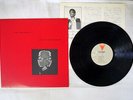
This auction is for Nuno Canavarro's "Plux Quba" LP. Issued by Moikai in 1998. Cover is VG+/VG++. A little storage wear. Please see photo. The LP grades as VG++. See my other auctions for more rarities.
Shipping is $8.50 to the US and $10.00 in Canada. International buyers will pay $17.00 for airmail. Shipping is actual cost of postage and mailer. See my other auctions. Happily combine multiple winners. I use brand new mailers. Seller is not responsible for items lost or damaged in the mail.
A Lengthy Review:Jim O'Rourke introduced his Moikai label, successor to the reissue-dedicated Dexter's Cigar, with this welcome unearthing, a pre-electronic sonic kaleidoscope created by Portugese outsider hero Nuno Canavarro.
More than being just another album of twelve-tone toy symphonics sketched with mini-MOOG, guitar and other unspecified instrumentation, Plux Quba was an unwitting harbinger of the "now sound" (circa 1999). Canavarro's curiously futurist vocabulary of sonic chirps and stutters, though wrought through lo-tech tapework, helped to lay the invisible groundwork for the maverick digital musics that later emerged from all corners of the globe, particularly Cologne, Aachen, and Frankfurt.
Consider that Frank Dommert, veteran of Cologne's formative Ehrfolg, Gefriem and Entenpfuhl labels, and a member of the triumvirate behind the a-Musik shop and label, was clued in enough to be spinning Plux Quba, released on Portugal's tiny Ama Romanta label in 1988, in his DJ sets as far back as '97. Keep this in mind if you've fallen for the sounds of Cologne's most prominent players (particularly any project involving Dommert's friend Jan St. Werner) - or if you have followed the various stylistic paths of Christoph Heemann (HNAS), who introduced many of Cologne's finest (and O'Rourke, whose first album was released by Entenpfuhl) to the uncommon delights of Plux Quba. The garbled sound packets of Microstoria and Oval, those distinctively Cubist jumbles of naive melody and minimalist electronics, have their obvious roots here - just try to tell Canavarro's "Wolfie" from the work of either in a blind test.
What I find even more interesting is that Plux Quba is an album as heavily influenced, most obviously by the half-swallowed speech loops of Robert Ashley's 1978 masterpiece, Automatic Writing, as it has been influential in its own right. Hear "Wask," before it bursts into full glass-flower bloom with valances of pizzicato harp-tones, for incontrovertible evidence of Canavarro's affection for Astley. Automatic Writing was also a crucial influence on The Hafler Trio and Steven Stapleton. . . who released HNAS' Melchior on his United Dairies label and kept company with Heemann, Dommert and such Cologne background-players as C-Schulz and Christoph Kahse . . . who all participated in Kontakta, the occasional improvisational ensemble which featured Marcus Schmickler and a-Musik founder Georg Odijk, key players in the nascent experimental and improv scenes we've come to associate with Cologne,
So much more than an enjoyable-but-disposable reissue, Plux Quba supplies an essential missing link in a system of label/artist rhizomes which has grown more tangled with each day. I now hear aesthetic kinship with the delicate and unabashedly pretty Minamo (JP), Mountains (USA) and Tape (SWE), the latter of whom have had production guidance from Schmickler. I'm willing to bet that none of these musicians would deny familiarity with and great fondness for Plux Quba.
Even when approached outside of historical context, Plux Quba is something special. Appreciation of music as unique as the captivating "Crimine," with its tinkling toy instrumentation and heavenly thrushvox pipings - think Richard Youngs meets His Name Is Alive? - doesn't require an otaku's trainspotterly fascination with all things German. The album is just a treat, from beginning to end, abounding in heartwarming melodies and moments as indescribable as "O Fundo Escuro De Alsee," which sounds like it was recorded within a sealed Leyden jar full of thunderclouds and a barbershop quartet of mayflies. The closing "Ultramarina" suite is dazzlingly polyhedric, accomodating voices, tiny arrhythmic beats, the bellowy sighs of a Viennese accordion and silvery acoustic shimmers within what are definitely non-Euclidean geometries. Music like this should appeal to any lover of the strange and beautiful. Particularly to anyone fond of prolific Catalonian avant-prankster, Pascal Comelade. . . who often records with Jac Berrocal . . . whose #1 fan may be Steven Stapleton. . . who virtually covered "Automatic Writing" himself on the A Missing Sense LP. . .
Or take into account that both Comelade and Berrocal have worked with Can's genius percussionist Jaki Liebezeit, who could alone perpetuate a Cologne timeline as long as the world is round!
But what is to be gained from such restatement of the obvious? End of history lesson. Plux Quba is an important record, one which happens also to be a delightful one. Isn't that more than enough of a reason to familiarize yourself with Canavarro?
price rating