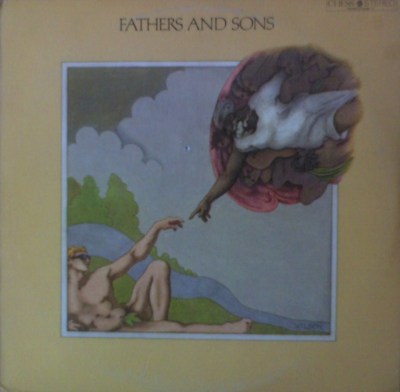
Muddy Waters: Fathers & Sons-Sealed 1974 Chess Record
$
30


Favourite Auctions
To save auctions to your favourites, please login
If you don't have an account, please register
Description
Sealed 1974 Two Record Reissue of Classic 1969 Chess Release by Bandleader/Composer/Slide Guitarist/Pioneering Blues Vocalist McKinley Morganfield AKA Muddy Waters Entitled Fathers and Sons, Album Supervision by Marshall Chess, Produced by Norman Dayron, Engineered by Ron Malo or Reice Hamel, Record One Recorded at Ter-Mar Studios in Chicago, Illinois from April 21-23 of 1969, Record Two Recorded Live in Concert at the Super Cosmic Joy-Scott Jamboree in Chicago on April 24 of 1969 - "A postwar Chicago blues scene without the magnificent contributions of Muddy Waters is absolutely unimaginable. From the late '40s on, he eloquently defined the city's aggressive, swaggering, Delta-rooted sound with his declamatory vocals and piercing slide guitar attack. When he passed away in 1983, the Windy City would never quite recover. Like many of his contemporaries on the Chicago circuit, Waters was a product of the fertile Mississippi Delta. Born McKinley Morganfield in Rolling Fork, he grew up in nearby Clarksdale on Stovall's Plantation. His idol was the powerful Son House, a Delta patriarch whose flailing slide work and intimidating intensity Waters would emulate in his own fashion. Musicologist Alan Lomax traveled through Stovall's in August of 1941 under the auspices of the Library of Congress, in search of new talent for purposes of field recording. With the discovery of Morganfield, Lomax must have immediately known he'd stumbled across someone very special. Setting up his portable recording rig in the Delta bluesman's house,Lomax captured for Library of Congress posterity Waters' mesmerizing rendition of "I Be's Troubled," which became his first big seller when he recut it a few years later for the Chess brothers' Aristocrat logo as "I Can't Be Satisfied." Lomax returned the next summer to record his bottleneck-wielding find more extensively, also cutting sides by the Son Simms Four (a string band that Waters belonged to). Waters was renowned for his blues-playing prowess across the Delta, but that was about it until 1943, when he left for the bright lights of Chicago. A tiff with "the bossman" apparently also had a little something to do with his relocation plans. By the mid-'40s, Waters' slide skills were becoming a recognized entity on Chicago's south side, where he shared a stage or two with pianists Sunnyland Slimand Eddie Boyd and guitarist Blue Smitty. Producer Lester Melrose, who still had the local recording scene pretty much sewn up in 1946, accompanied Waters into the studio to wax a date for Columbia, but the urban nature of the sides didn't electrify anyone in the label's hierarchy and remained unissued for decades. Sunnyland Slim played a large role in launching the career of Muddy Waters. The pianist invited him to provide accompaniment for his 1947 Aristocrat session that would produce "Johnson Machine Gun." One obstacle remained beforehand: Waters had a day gig delivering Venetian blinds. But he wasn't about to let such a golden opportunity slip through his talented fingers. He informed his boss that a fictitious cousin had been murdered in an alley, so he needed a little time off to take care of business. When Sunnyland had finished that auspicious day, Waters sang a pair of numbers, "Little Anna Mae" and "Gypsy Woman," that would become his own Aristocrat debut 78. They were rawer than the Columbia stuff, but not as inexorably down-home as "I Can't Be Satisfied" and its flip, "I Feel Like Going Home" (the latter was his first national R&B hit in 1948). With Big Crawford slapping the bass behind Waters' gruff growl and slashing slide, "I Can't Be Satisfied" was such a local sensation that even Muddy Waters himself had a hard time buying a copy down on Maxwell Street. He assembled a band that was so tight and vicious on-stage that they were informally known as "the Headhunters"; they'd come into a bar where a band was playing, ask to sit in, and then "cut the heads" of their competitors with their superior musicianship. Little Walter, of course, would single-handily revolutionize the role of the harmonica within the Chicago blues hierarchy; Jimmy Rogers was an utterly dependable second guitarist; and Baby Face Leroy Fostercould play both drums and guitar. On top of their instrumental skills, all four men could sing powerfully. 1951 found Waters climbing the R&B charts no less than four times, beginning with "Louisiana Blues," and continuing through "Long Distance Call," "Honey Bee," and "Still a Fool." Although it didn't chart, his 1950 classic "Rollin' Stone" provided a certain young British combo with a rather enduring name. Leonard Chess himself provided the incredibly unsubtle bass-drum bombs on Waters' 1952 smash "She Moves Me." "Mad Love," his only chart bow in 1953, is noteworthy as the first hit to feature the rolling piano of Otis Spann, who would anchor theWaters aggregation for the next 16 years. By this time, Foster was long gone from the band, but Rogers remained, and Chess insisted that Walter -- by then a popular act in his own right -- make nearly every Waters session into 1958 (why break up a winning combination?). There was one downside to having such a peerless band; as the ensemble work got tighter and more urbanized, Waters' trademark slide guitar was largely absent on many of his Chess waxings. Willie Dixon was playing an increasingly important role in Muddy Waters' success. In addition to slapping his upright bass on Waters' platters, the burly Dixon was writing one future bedrock standard after another for him: "I'm Your Hoochie Coochie Man," "Just Make Love to Me," and "I'm Ready," seminal performances all, and each blasted to the uppermost reaches of the R&B lists in 1954. When labelmate Bo Diddley borrowed Waters' swaggering beat for his strutting "I'm a Man" in 1955, Waters turned around and did him tit for tat by reworking the tune ever so slightly as "Mannish Boy" and enjoying his own hit. "Sugar Sweet," a pile-driving rocker with Spann's 88s anchoring the proceedings, also did well that year. 1956 brought three more R&B smashes: "Trouble No More," "Forty Days & Forty Nights," and "Don't Go No Farther." But rock & roll was quickly blunting the momentum of veteran blues aces like Waters; Chesswas growing more attuned to the modern sounds of Chuck Berry, Bo Diddley, the Moonglows, and the Flamingos. Ironically, it was Muddy Waters who had sent Berry to Chess in the first place. After that, there was only one more chart item, 1958's typically uncompromising (and metaphorically loaded) "Close to You." ButWaters' Chess output was still of uniformly stellar quality, boasting gems like "Walking Thru the Park" (as close as he was likely to come to mining a rock & roll groove) and "She's Nineteen Years Old," among the first sides to feature James Cotton's harp instead ofWalter's, in 1958. That was also the year that Muddy Waters and Spann made their first sojourn to England, where his electrified guitar horrified sedate Britishers accustomed to the folksy homilies of Big Bill Broonzy. Perhaps chagrined by the response, Waters paid tribute to Broonzy with a solid LP of his material in 1959. Cotton was apparently the bandmember who first turned Muddy on to "Got My Mojo Working," originally cut by Ann Cole in New York.Waters' 1956 cover was pleasing enough but went nowhere on the charts. But when the band launched into a supercharged version of the same tune at the 1960 Newport Jazz Festival, Cotton and Spannput an entirely new groove to it, making it an instant classic (fortuitously, Chess was on hand to capture the festivities on tape). As the 1960s dawned, Muddy Waters' Chess sides were sounding a trifle tired. Oh, the novelty thumper "Tiger in Your Tank" packed a reasonably high-octane wallop, but his adaptation of Junior Wells' "Messin' with the Kid" (as "Messin' with the Man") and a less-than-timely "Muddy Waters Twist" were a long way removed indeed from the mesmerizing Delta sizzle that Waters had purveyed a decade earlier. Overdubbing his vocal over an instrumental track by guitarist Earl Hooker, Waters laid down an uncompromising "You Shook Me" in 1962 that was a step in the right direction. Drummer Casey Jones supplied some intriguing percussive effects on another 1962 workout, "You Need Love," which Led Zeppelin liked so much that they purloined it as their own creation later on. In the wake of the folk-blues boom, Waters reverted to an acoustic format for a fine 1964 LP, Folk Singer, that found him receiving superb backing from guitarist Buddy Guy, Dixon on bass, and drummer Clifton James. In October, he ventured overseas again as part of the Lippmann- and Rau-promoted American Folk Blues Festival, sharing the bill with Sonny Boy Williamson, Memphis Slim,Big Joe Williams, and Lonnie Johnson. The personnel of the Waters band was much more fluid during the 1960s, but he always whipped them into first-rate shape. Guitarists Pee Wee Madison, Luther "Snake Boy" Johnson, and Sammy Lawhorn; harpists Mojo Buford and George Smith; bassists Jimmy Lee Morris and Calvin "Fuzz" Jones; and drummers Francis Clay and Willie "Big Eyes" Smith (along with Spann, of course) all passed through the ranks. In 1964, Waters cut a two-sided gem for Chess, "The Same Thing"/"You Can't Lose What You Never Had," that boasted a distinct 1950s feel in its sparse, reflexive approach. Most of his subsequent Chess catalog, though, is fairly forgettable. Worst of all were two horrific attempts to make him a psychedelic icon. 1968'sElectric Mud forced Waters to ape his pupils via an unintentionally hilarious cover of the Stones' "Let's Spend the Night Together." After the Rain was no improvement the following year. Partially salvaging this barren period in his discography was the Fathers and Sons project, also done in 1969 for Chess, which pairedMuddy Waters and Spann with local youngbloods Paul Butterfield andMike Bloomfield in a multi-generational celebration of legitimate Chicago blues. After a period of steady touring worldwide but little standout recording activity, Waters' studio fortunes were resuscitated by another of his legion of disciples, guitarist Johnny Winter. Signed to Blue Sky, a Columbia subsidiary, Waters found himself during the making of the first LP, Hard Again; backed by pianist Pinetop Perkins, drummer Willie Smith, and guitarist Bob Margolin from his touring band, Cotton on harp, and Winter's slam-bang guitar,Waters roared like a lion who had just awoken from a long nap. Three subsequent Blue Sky albums continued the heartwarming back-to-the-basics campaign. In 1980, his entire combo split to formthe Legendary Blues Band; needless to note, he didn't have much trouble assembling another one (new members included pianistLovie Lee, guitarist John Primer, and harpist Mojo Buford). By the time of his death in 1983, Waters' exalted place in the history of blues (and 20th century popular music, for that matter) was eternally assured. The Chicago blues genre that he turned upside down during the years following World War II would never recover." - "Put blues legends Muddy Waters and Otis Spann together in a recording studio with young upstarts such as Paul Butterfield, Mike Bloomfield, Buddy Miles, amongst others, and hope that the magic will flow. On Fathers and Sons it does, and then some. Originally a two-record set now pared down to one CD, Fathers and Sons displays the love that these musicians shared for the blues and the care they put into getting that feeling down on tape. Standout cuts include "Can't Lose What You Ain't Never Had," "I'm Ready," and "Standing 'Round Cryin'," which Eric Clapton covered in 1994. The live concert is loose and funky with everyone getting in their licks, especially Muddy Waters, who shines throughout. A fine touchstone for anyone looking into Chicago blues and generally good music." - Extraordinary Personnel for the Sextet Features Legendary Composer Muddy Waters on Guitar and Vocals, the Great Otis Spann on Piano, Paul Butterfield on Harmonica, the Brilliant Michael Bloomfield on Guitar, Sam Lay on Drums & the Talented Donald "Duck" Dunn on Bass Guitar! - Additional Musicians Are Buddy Miles on Drums, Phil Upchurch on Bass Guitar, Paul Asbell on Rhythm Guitar and Jeff Carp on Chromatic Harmonica - Selections on Record One Are Original Muddy Waters Compositions All Aboard, Mean Disposition, Blow Wind Blow, Can't Lose what You Ain't Never Had, Walkin' Thru the Park, Forty Days and Forty Nights, Standin 'Round Crying, the Willie Dixon Standard I'm Ready, Eddie Boyd's Twenty Four Hours & the Muddy Waters Penned Sugar Sweet - Tracks for Record Two Are Original Muddy Waters Compositions Long Distance Call, Baby Please Don't Go, Honey Bee, the Willie Dixon Classic The Same Thing and the Preston Foster Standard Got My Mojo Working(Part 1), Got My Mojo Working(Part 2) - Sealed Copy, Stereo Recording, Promotional Cutout, Product Code 2CH-50033 - California Residents Add 9.75% Sales Tax - International S & H Extra -
price rating