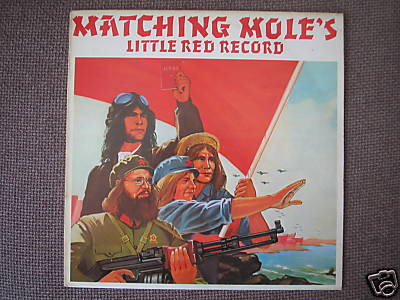
MATCHING MOLE'S "LITTLE RED RECORD" CBS 65260 RARE M/M
£
47
$
62


Favourite Auctions
To save auctions to your favourites, please login
If you don't have an account, please register
Description
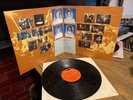
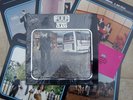
You are bidding on the MATCHING MOLE'S LP "LITTLE RED RECORD" (CBS 65260) UK 1 st PRESS (1972) 12" LP.
Condition: MINT
Vinyl: MINT
Track Listings
1. Starting in the Middle of the Day, We Can rink Our Politics Away (2:31)
2. Marchides (8:25)
3. Nan True's Hole (3:36)
4. Righteous Rhumba (2:50)
5. Brandy as in Benj (4:24)
6. Gloria Gloom (8:06)
7. God Song (2:59)
8. Flora Fidgit (3:26)
9. Smoke Signal (6:37)
Total Time: 42:56
Line-up / Musicians
- Dave McRae / grand piano, electric piano, Hammond organ
- Robert Wyatt / drums, mouth
- Phil Miller / guitars
- Bill MaCormick / bass
GUEST:
- Brian Eno / synthesizer
Matching Mole was a UK progressive rock band from the Canterbury scene best known for the song "O Caroline". Robert Wyatt formed the band in October 1971 after he left Soft Machine and recorded his first solo album The End of an Ear. He continued his role on vocals and drums and was joined by David Sinclair, of Caravan, on organ and piano, Phil Miller on guitar and Bill MacCormick, formerly of Quiet Sun, on bass. The name is a pun on Machine Molle, the French translation of the name of Wyatt's previous group Soft Machine.
Their first, eponymous album was released in April 1972, the bulk of which was composed by Wyatt himself, with the exception of the lush mellotron-laced "O Caroline" (a Dave Sinclair composition with lyrics by Wyatt about his recent breakup with girlfriend Caroline Coon) and Phil Miller's "Part Of The Dance". For their second album, Matching Mole's Little Red Record, released in November 1972 and produced by Robert Fripp, Sinclair was replaced by New Zealand-born keyboard player and composer Dave MacRae who had already played a guest role on the first album. This album was more of a team effort, with Wyatt concentrating on lyrics and vocal melodies and leaving the composing to his bandmates.
Matching Mole disbanded in late September 1972 immediately upon completion of a European tour supporting Soft Machine, with Sinclair and Miller going on to form the more successful Hatfield and the North. A new lineup - consisting of Wyatt, MacCormick, ex-Curved Air keyboardist Francis Monkman and jazz saxophonist Gary Windo - was due to record a third album in 1973, but this was cancelled when Wyatt fell from a window and was paralysed from the waist down and was therefore unable to continue drumming.
Little Red Record:-
Less than seven months after recording their debut album, having toured constantly recording a few radio sessions throughout Europe, MM entered the studios in July 72 for their second (and last, but they weren’t aware of it) album that was produced by Robert Fripp. Armed with an highjacked Chinese propaganda poster, the sleeve (and the album title) leaves little doubt as to their political aspirations, although I suspect that this was probably not shared by everyone in the group, because the ambiance within the group quickly became detestable and two months after its release, the group over, even if the explanation was about gigs not being paid and bankruptcy. So with Sinclair gone just after the debut’s release, McRae is alone on keys, but the major difference with their first is Wyatt’s songwriting that had filled almost all of the album, was reduced to absolutely none in LRR, if you’ll except the lyrics and other vocals, but these holds a big part of creativity.
Starting on one of the most surprising track that Wyatt ever recorded, Drink Our Politics Away is a strange semi-operatic over some McRae keyboards and Eno synth layer. Directly and abruptly segueing into Marchides (much the same way Signed Curtain had given in to Part Of The Dance on their previous album), the group takes its vengeance with a wild and torrid 100MPH jazz-rock that veers a bit dissonant in its middle section, before coming back more relaxed. Some exceptionally inventive drumming from Wyatt on this track that had received much previous rehearsal since it was concert standard, but everyone contributes greatly. Again segueing straight into Nan’s True Hole, Robert develops some very strange gossipy vocals with him, wifie Alfie and friendly model Julie just yapping away over Wyatt’s jaw-dropping drumming and a Frippian guitar solo, courtesy of …. Phil Miller; the whole thing falling into Righteous Rhumba without really noticing much a change. Closing on the wild Brandy for Benj (a roadie), with McRae on a rare organ part at the start and Miller’s brilliant solo.
Being shutout throughout the first half of the album, McCormick scores Gloria’s Gloom as the flipside opens with the second centrepiece, which starts nightmarishly percussive and hauntingly spooky with Eno’s VCS-3 deranging many listeners and remaining dissonant through a few minutes, until chattering gossipy vocals take the track slowly into the middle section where Wyatt singing his heart out until Eno’s Martenot-like synth layers take us back to earth. After the popish God Song (sticking out like a sore thumb), Flora Fidgit (Frigid Flora? Yashure?? ;-)) where McRae’s el piano steals the show. The closing Smoke Signal is the third highlight, a slow developing ambient cosmic piece with Wyatt’s astounding drumming, and slowly dying in death throes
The LP is an original pressing, number CBS 65260, 1972 CBS STEREO, AND IS IN MINT CONDITION!!!
Delivery:-
UK - Royal Mail Special Delivery™ Next Day
Guaranteed delivery next day and get up to £500 automatic compensation cover for loss or damage
North America and Western Europe- Royal Mail Airmail
Aims to deliver within three working days for packages, with compensation cover in the event of loss or damage
price rating