MARCEL DUCHAMP+JOHN CAGE LP STOCKHAUSEN-WERGO-BERIO-NWW
$
62


Favourite Auctions
To save auctions to your favourites, please login
If you don't have an account, please register
Description
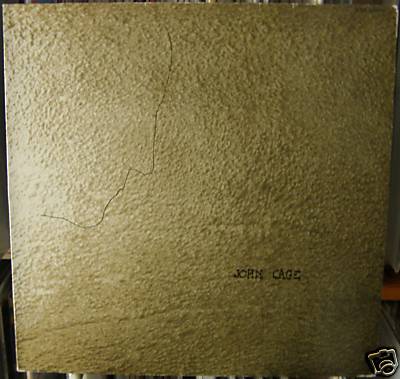
JOHN CAGE / MARCEL DUCHAMP
Live(w/Music for Marcel Duchamp) LP
- Original(& only) Edition
- Label :Wergo 60074 / Germany
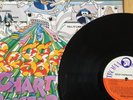
- Condition :ex-/mint-(cover/vinyl)
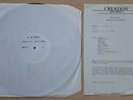
- with original booklet
See Broken Music book, page 111. Released in the 70's on the legendary german Wergo label(Folke Rabe, Herbert Eimert, Josef-Anton Riedl, Giacinto Scelsi, Dieter Schnebel, Gyorgy Ligeti, Luciani Berio and more)!! Comes together with 12" booklet with texts, photos and patterns. Some of the most ground-breaking experimental musics of Cage lie inside this record. The pieces are "Music for marcel Duchamp", "Song Books I-II", "Words III" and last "Sonata XIII for prepared piano". One should see the connections with futurist and dadaist movements evolving a long time these compositions: mainly Luigi and Antonio Russolo, Filippo Tommaso Marinetti, Luigi Grandi, but also Tristan Tzara, Jean Cocteau, Marcel Janco, Richard Huelsenbeck and Wyndham Lewis, Marcel Duchamp.
John Milton Cage Jr. was a pioneer of chance music, electronic music and non-standard use of musical instruments, Cage was one of the leading figures of the post-war avant-garde and, in the opinion of many, the most influential American composer of the 20th century. He was also instrumental in the development of modern dance, mostly through his association with choreographer Merce Cunningham, who was also Cage's romantic partner for the most part of the latter's life. Cage is perhaps best known for his 1952 composition 4?33?, the three movements of which are performed without a single note being played. A performance of 4?33? can be perceived as including the sounds of the environment that the listeners hear while it is performed, rather than merely as four minutes and thirty three seconds of silence and has become one of the most controversial compositions of the century. Another famous creation of Cage's is the prepared piano (a piano with its sound altered by placing various objects in the strings), for which he wrote numerous dance-related works and a few concert pieces, the most well-known of which is Sonatas and Interludes (1946–48).
His teachers included Henry Cowell (1933) and Arnold Schoenberg (1933–35), both known for their radical innovations in music, but Cage's major influences lay in various Eastern cultures. Through his studies of Indian philosophy and Zen Buddhism in the late 1940s, Cage came to the idea of chance-controlled music, which he started composing in 1951. The I Ching, an ancient Chinese classic text on chance events, became Cage's standard composition tool for the rest of his life. In a 1957 lecture, Experimental Music, he described music as "a purposeless play" which is "an affirmation of life – not an attempt to bring order out of chaos nor to suggest improvements in creation, but simply a way of waking up to the very life we're living". Cage collaborated with David Tudor, Robert Rauschenberg, and Charles Olson at Black Mountain College where a performance took place amongst the audience. "Happenings", as set forth by Cage, are theatrical events that abandoned the traditional concept of stage-audience and occur without a sense of definite duration; instead, they are left to chance. They have a minimal script, with no plot. In fact, a "Happening" is so-named because it occurs in the present, attempting to arrest the concept of passing time. Cage believed that theater was the closest route to integrating art and (real) life. The term "Happenings" was coined by Allan Kaprow, one of his students, who was to define it as a genre in the late fifties. In following these developments Cage was strongly influenced by Antonin Artaud’s seminal treatise The Theatre and Its Double, and the “Happenings” of this period can be viewed a forerunner to the ensuing Fluxus movement. In October of 1960, Mary Baumeister's Cologne studio hosted a joint concert by Cage and the video artist Nam June Paik, who in the course of his 'Etude for Piano' cut off Cage's tie and then washed his co-performer’s hair with shampoo.
Highly recommended!! Maybe your rare chance to grab a copy of this baby!!
A very important artist record, ages ahead of its' time, like those that you can find inside the Broken Music book, which features the records of Joseph Beuys, Nam June Paik, Yoshi Wada and Kurt Schwitters, Jean Dubuffet and of course Yoko Ono & Walter Marchetti. The music reminds quite a lot the experimental scene of the 70's from musique concrete and the aesthetics of electronic music(in some moments you have the impression that some kind of collages are created!), like Pierre Schaeffer, Detoni, Andre Almuro, Alvin Lucier and Alvin Curran and of course Parmegiani, Christian Clozier and Stockhausen and Pierre Henry, Xenakis, Richard Maxfield or Jean Schwarz and Robert Ashley.
Vinyl lies in mint- condition(like new!) no marks or any other flaw whatsoever, while the cover lies in ex- condition, its' only flaw being some medium storage wear!! Impossible to find a copy today!!
Shiping 7$ airmail in Europe / 10$ for the rest of the world! For registered rates, please ask. Payment by paypal, bank transfer, postal IMO.
Watch also for some more similar vinyls at my other items !
Pay me securely with your Visa or MasterCard through PayPal!
price rating