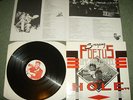
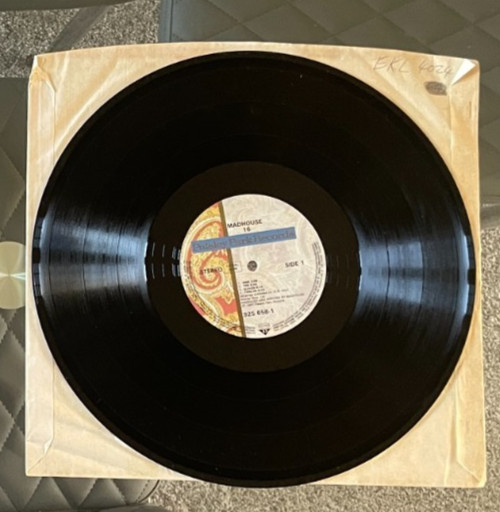
MADHOUSE - 16 Vinyl LP OFFERS ACCEPTED
£
29
$
38




Favourite Auctions
To save auctions to your favourites, please login
If you don't have an account, please register
Description
AI SAYS:
Because this copy features the R/S Alsdorf stamp, it confirms it was manufactured at Warner’s premier European pressing plant in Germany. Vinyl enthusiasts highly value these 1980s Alsdorf pressings because they were struck from early-generation master tapes sent directly from the US, offering clean, punchy bass lines and dynamic ranges that are noticeably sharper than later digital reissues.
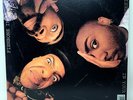
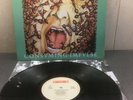
MADHOUSE – 16 (1987)
Madhouse – 16 (New Directions in Garage Music) is a particularly interesting record for Prince collectors, because Madhouse was essentially a Prince-created instrumental jazz-funk project.
- Artist: Madhouse
- Album: 16
- Label: Paisley Park / Warner Bros.
- Catalogue number: 9 25658-1 (US pressings also show 1-25658)
- Released: 18 November 1987
- Format: 12" stereo LP, 33⅓ rpm
- Genre: Jazz-funk / fusion / Minneapolis Sound
- Tracks: 8 — Nine, Ten, Eleven, Twelve, Thirteen, Fourteen, Fifteen, Sixteen
The Prince connection
This is where the record becomes much more collectible. Prince was heavily involved in 16, playing most of the instruments on the album. Eric Leeds provided the prominent saxophone/flute parts, while musicians including Levi Seacer Jr., Dr. Fink and Sheila E. were involved in the project.
The album was recorded largely at the newly opened Paisley Park Studios, making it an important part of Prince's late-1980s musical output.
Madhouse – 16 is the second and final officially released studio album by Madhouse, the instrumental jazz-funk project created by Prince. It was released on 18 November 1987 through Paisley Park Records, with distribution by Warner Bros. Records. The album followed 8, which had appeared earlier in 1987, and continued Madhouse's unusual concept of giving every track a numerical title.
The LP is particularly interesting because, although Madhouse was presented as a separate band, Prince was the central creative force behind the project. He played a large number of the instruments and produced the record, while saxophonist Eric Leeds was an especially important collaborator, supplying tenor and baritone saxophone and flute. The expanded 16 lineup also included Sheila E. on drums, Levi Seacer Jr. on bass and Dr. Fink on keyboards. The album credits also list a drummer called John Lewis, although the story surrounding that name has contributed to the mysterious character of Madhouse.
Musically, 16 is a lively mixture of jazz, funk, fusion and Prince's distinctive electronic sound. Unlike a conventional Prince album, there are no vocals or traditional song titles. The eight tracks are simply called Nine, Ten, Eleven, Twelve, Thirteen, Fourteen, Fifteen and Sixteen, continuing the numbering from the first Madhouse album 8. The album has a running time of approximately 36 minutes and 42 seconds.
The recording was made largely at Paisley Park Studios in Chanhassen, Minnesota, which had only recently become operational. One track, "Nine," had been recorded earlier at Prince's Galpin Boulevard home studio. The other material was recorded during sessions in the summer of 1987, making 16 one of the earliest projects to emerge from the newly established Paisley Park recording environment
Two singles were taken from the album: "10 (The Perfect 10)", backed with Ten and ½, and "13", backed with Four. Promotional films were made for both singles, using a stylish 1920s gangster/Bonnie-and-Clyde-inspired theme. This fitted the mysterious image that surrounded Madhouse and helped distinguish the project from Prince's regular solo work.
For a vinyl collector, an original 1987 Madhouse – 16 LP is an interesting Prince-related record because it represents one of his more experimental side projects. Original vinyl copies are considerably more interesting to collectors than the ordinary Prince catalogue albums because 8 and 16 were relatively obscure releases and have developed a strong following among Prince and jazz-funk collectors. The condition of the vinyl, sleeve, original inner sleeve and especially the correct first-pressing label/catalogue details can make a significant difference to its value.
The album is also historically important because Madhouse was effectively a way for Prince to explore his fascination with jazz and instrumental funk without making it a conventional Prince record. Eric Leeds' saxophone gives the music much of its jazz character, while Prince's rhythm playing and production provide the unmistakable Paisley Park funk atmosphere. Prince's official discography describes 16 as having been built from jams involving Prince, Leeds, Sheila E. and Levi Seacer Jr., with additional layers added by the expanded group.
Basic LP details: Madhouse – 16; released 18 November 1987; Paisley Park Records; instrumental jazz/funk/fusion; produced by Prince (credited as Madhouse); approximately 36:42 running time; eight tracks numbered 9–16. The original album is a particularly worthwhile item for anyone collecting Prince-related vinyl, Paisley Park releases or 1980s jazz-funk.
Prince Vault
All my VINYL is described as Used/Pre Owned. Items have been visually graded as best as I can but my grading may differ from your opinion/expertise or grading system. I use the recommended grading system. I will give the album a play through before sending, unless it is a MINT item.
I list the in the description above, the condition of the artwork/sleeve and the disc/media. Photos of cover and disc are for your use to determine condition.
My items are inspected before departure and nothing leaves unless I am happy with it.
I will endeavour to post as soon as possible after I receive the order and I will remain in contact with you throughout the process so that you know when the order is on the way.
It will also come in a protective plastic sleeve and the album itself will be in an inner sleeve designed to protect the vinyl. All items will be packed in protective envelopes for the journey.
I hope you enjoy your purchase. Once again thanks for your custom.
THE VINYL: (The industry standard rating scale)
Mint (M): An absolutely perfect, flawless record. Often unplayed and usually still sealed.
Near Mint (NM): The highest standard for open records. The vinyl looks pristine with minimal to no visual wear; audio is crisp and flawless.
Very Good Plus (VG+) / Excellent (E): A highly playable record with only minor signs of use. You may see very light scuffs, but playback remains highly enjoyable with only faint background noise.
Very Good (VG): Clearly played with noticeable surface wear or light scratches. Expect some surface noise or ticks, but the record will still play without skipping.
Good (G) / Good Plus (G+): Major visual scuffs and wear. The record plays through without skipping but has continuous surface noise and pops
.
Poor (P) / Fair (F): Substantial scratches, warps, or cracks. The record may skip constantly or be unplayable; recommended only for collectors for completionist purposes
THE SLEEVE:
Mint (M): Absolutely perfect. No ring wear, creases, seam splits, or indentations. This grade usually only applies to brand-new or still-sealed records.
Near Mint (NM): The jacket is almost perfect. It may have been opened, but there are almost no visible flaws.
Very Good Plus (VG+): Shows minor wear. May have slight corner dings, very light ring wear, or minor creases. There are no major seam splits. but the art remains highly presentable.
Very Good (VG): Noticeable handling. May have obvious ring wear, creasing, or minor seam splitting (up to a few inches on one edge). Writing, sticker residue, or cut-out marks are common in this grade.
Good (G) / Good Plus (G+): Significant wear. Heavy ring wear, seam splits along most edges, fading, and water damage may be present.
Poor (P) / Fair (F): Heavily damaged. The sleeve may be torn, heavily water-damaged, or held together with tape.
price rating