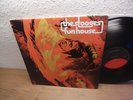
Lp IGGY POP TEST PRESSING
$
60


Favourite Auctions
To save auctions to your favourites, please login
If you don't have an account, please register
Description
~RECORDELITE~
AUTHENTIC RARE LP AUCTIONS~
One of the Absolute Rarest auctions of Punk Music vinyl you will come across
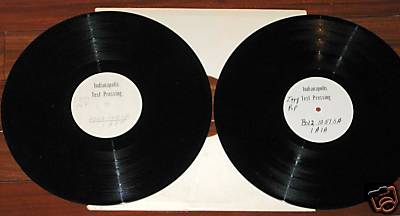
This is the Original 1986 Double Album TEST PRESSING Lp
IGGY POP
“IGGY POP”
Authentic,not a reissue or bootleg
His Only release Ever on PAIR Records!!!!!
PAIR PDL2 1051
It is a spectacular compilation of all his RCA material from 1977-1984
These Original 2 Lp TEST PRESSING Vinyl Records are in NEAR MINT to MINT condition~Unplayed!!
Test Pressings like this were sent to the artist/producer for APPROVAL OR REJECTION before stock copies would be manufactured and sent out to the buying public.
In all my years of collecting/selling records I have never come across any IGGY POP Test pressings!!
Here you will find Audiophile Virgin Sound Fidelity.
This amazing Pressing also comes in the absolute Original PAIR RECORDS Plain White Generic Test Press Cover.
Here listed below in red are the Matrix Numbers embedded in the Trail-Off area (Dead Wax) of the disc to verify Ultimate Authenticity
disc ONE: side 1/2 "PDL 2 1051 5A-1 JS KENDUN"/PDL 2 1051 5B-1 JS KENDUN"
disc TWO: side 1/2 "PDL 2 1051 5C-1 JS KENDUN"/"PDL 2 1051 5D-1 JS KENDUN"
Tracklisting:
A1 Tell Me A Story
A2 New Values
A3 Girls
A4 The Endless Sea
B1 Five Foot One
B2 Don't Look Down
B3 I'm Bored
B4 How Do Ya Fix A Broken Part
C1 Angel
C2 Curiosity
C3 African Man
C4 Billy Is A Runaway
D1 Get Up And Get Out
D2 I Snub You
D3 Eggs On Plate
D4 Sincerity
ALL RECORDS WERE VISUALLY TESTED UNLESS SPECIFIED
Most serious Record Collectors consider this the absolute Holy Grail of Album Pressings due to the Clean Original Fidelity Excellence (DEPTH AND DETAIL) of the record. Please Enjoy this piece of PUNK ROCK Music history & the amazing talent of IGGY POP .
(see Very Special Historic notes in red below for your enjoyment).
Bid with confidence. See seller's feedback and other Rare Lp Auctions.
Prompt careful shipping in a special sturdy Lp mailer with additional cardboard inserts for extra protection.
Insurance will be strongly recommended.
Please email for international. Thanks!!!
There's a reason why many consider Iggy Pop the godfather of punk — every single punk band of the past and present has either knowingly or unknowingly borrowed a thing or two from Pop and his late-'60s/early-'70s band, the Stooges. Born on April 21, 1947, in Muskegon, MI, James Newell Osterberg was raised by his parents (his father was an English teacher) in a trailer park close to Ann Arbor, in nearby Ypsilanti. Intrigued by rock & roll (as well as such non-musical, monotonous, and mechanical sounds as his father's electric razor and the local automobile assembly plants in Detroit), Osterberg began playing drums and formed his first band, the Iguanas, in the early '60s. Via the Rolling Stones, Osterberg discovered the blues, forming a similarly styled outfit, called the Prime Movers, upon graduating from high school in 1965. When a brief stint at the University of Michigan didn't work out, Osterberg moved to Chicago, playing drums alongside bluesmen. But his true love was still rock & roll and shortly after returning to Ann Arbor, Osterberg decided to form a rock band, but this time, he would leave the drums behind and be the frontman (inspired by the Velvet Underground's Lou Reed and the Doors' Jim Morrison). He tried to find the right musicians who shared his same musical vision: to create a band whose music would be primordial, sexually charged, aggressive, and repetitive (using his early electric razor/car plant memories for reference). In 1967, he hooked up with an old acquaintance from his high school days, guitarist Ron Asheton, who also brought along his drummer brother Scott and bassist Dave Alexander, forming the Psychedelic Stooges. Although it would take a while for their sound to gel — they experimented with such non-traditional instruments as empty oil drums, vacuums, and other objects before retuning to their respective instruments — the group fit in perfectly with such other high-energy Detroit bands as the MC5, becoming a local attraction. It was around this time that the group shortened their name to the Stooges, and Osterberg changed his stage name to Iggy Pop. With the name change, Pop became a man possessed on-stage — going into the crowd nightly to confront members of the audience and working himself into such a frenzy that he would be bleeding by the end of the night from various nicks and scratches. Elektra Records signed the quartet in 1968, issuing their self-titled debut a year later and a follow-up, Fun House, in 1970. Although both records sold poorly upon release, both have become rock classics and can be pointed to as the official beginning of what would become known as punk rock. The group was dropped from their record company in 1971 due to the public's disinterest and the group's growing addictions to hard drugs (and additionally in Pop's case, continuous death-defying acts), leading to the group's breakup the same year. But Stooges fan David Bowie tracked down Pop and convinced the newly clean and sober singer to restart his career. Pop enlisted guitarist James Williamson (who was briefly a second guitarist for the Stooges before their breakup) and, after the pair signed to Bowie's Mainman management company and relocated to England, eventually reunited with the Asheton brothers (with Ron moving from the six-string to the bass). Signed by Columbia Records and hoping to follow in Bowie's footsteps toward a major commercial breakthrough, the Stooges penned another punk classic, the brutally explosive Raw Power. Pop's plan for the Stooges' third release overall would be to create a record that would be so over the top sonically that it would actually hurt you when it poured out of the speakers. Although it may not have been that extreme, it came pretty close (with Bowie signed on as the producer), but yet again, the album sank without a trace. By 1974, Pop and most of the Stooges were strung out again on drugs, and with their star fading, the band called it quits for a second (and final) time. After spending a brief spell homeless on the streets of Hollywood (during which time there was an unsuccessful attempt to form a band with Pop and former Doors keyboardist Ray Manzarek), Pop checked himself into the Neuropsychiatric Institute in Los Angeles. During his stay at the hospital, Pop made an attempt at writing and recording some new tunes with Williamson, but when no labels expressed interest, Pop and Williamson went their separate ways as well. (Completed demos of the sessions would surface on the Kill City release in 1977. During his hospital stay, another old friend came to visit him: David Bowie. Bowie (whose career was still in high gear) offered to take Pop on the road with him during his tour in support of Station to Station. The pair got along so well that they both moved to Berlin in late 1976, during which time Bowie helped Pop secure a solo record deal with RCA. Bowie was interested in European electronic rock (Kraftwerk, Can, etc.) and admitted later that he used Pop as a musical guinea pig on such releases as The Idiot and Lust for Life (both issued in 1977 and produced/co-written by Bowie). Both albums sold better than his previous efforts with the Stooges (especially in the U.K., where Pop was looked upon as an icon by the burgeoning punk rock movement) as Bowie joined Pop on his world tour as a keyboardist. Shortly thereafter, a surprisingly muddy sounding live album was culled from Pop's most recent tour, titled TV Eye (1977 Live). It was also around this time that Pop severed his ties with Bowie, striking out on his own. Signing on with another new label (Arista), Pop reunited once more with James Williamson for 1979's New Values, an album that touched off a string of releases that were for the most part inconsistent and musically confused (it appeared as though Pop was trying to reinvent himself as a new waver): 1980's Soldier, 1981's Party, and 1982's Zombie Birdhouse. Also in 1982, Pop penned his autobiography, I Need More, a fascinating book of rock & roll excess that chronicled his early years straight up to the then-present day. But around this time, Pop began succumbing to his vices once again and he soon stepped out of the spotlight for a long stretch to sort his life out, during which time Bowie scored a massive hit with a remake of the Pop/Bowie nugget "China Girl" (recorded earlier on Pop's The Idiot). It wouldn't be until 1986 that Pop would resurface again, signing with A&M and issuing the Bowie-produced Blah Blah Blah, which featured his first U.S. hit single (albeit a moderate one), a cover of "Real Wild Child." 1988's Instinct saw Pop try his hand at hard rock/heavy metal, joined by ex-Sex Pistols guitarist Steve Jones, but it wasn't until 1990's Brick by Brick (his first album for Virgin) that Pop fully regained his musical strength and focus, resulting in his first U.S. gold-certified album and Top 20 hit single, "Candy," a surprisingly tuneful duet with the B-52's' Kate Pierson. Just as in the mid-'70s when Pop was looked up to by a slew of up-and-coming punk bands, history repeated itself in the early '90s with the emergence of such Stooges disciples from Seattle (Nirvana, Mudhoney, Soundgarden, etc.). Around the same time, a wide variety of bands covered Pop and/or Stooges tracks — Slayer, Duran Duran, Guns N' Roses, R.E.M., and Tom Jones
price rating