LP-ROY PORTER- CHELAN=2501-JESSICA (RARE)
$
900


Favourite Auctions
To save auctions to your favourites, please login
If you don't have an account, please register
Description
"OLDSKOOLRECORDS"
"45's, 78's, lp's"
JAZZ, BLUES. R & B,DEW-WOP, SOUL, AND ROCK
?
''TAKE A WALK DOWN MEMORY LANE WITH ME"
?
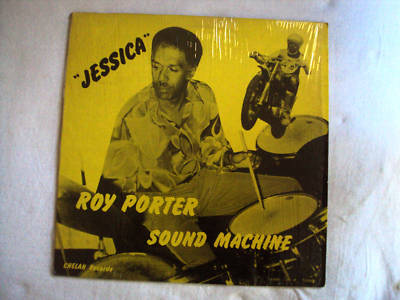
ARTIST: ROY PORTER
LABEL: CHELAN 2501 (RARE)
TITLE JESSICA
SIDE A: TO MANY TO LIST
SIDE B: TO MANY TO LIST
GRADE: VG+ TO MINT MINUS ( HAS BEEN PLAY GRADED AT 9.5 OUT OF 10)
PLEASE READ BEFORE YOU BID
GRADING IS VISUAL ONLY UNLESS OTHER WISE STATED
'NOTE GRADING FOR 45'S, 78'S AND LP'S
?
?
MINT-sealed or may have been played,but with no evidence of deterioration-M-a very clean , near mint except for slight superficieal scuffs -VG+well care for but less than perfect,may haves slight scuffs or lite scratches,but primarily clean-VG-has been played,many of defects found in the VG +copy are more pronounced, may be with lite sound noise-G-a well worn record, still playable,but audible distractions and "graying" or groove wear-P-will not list, unless a very rare or hard to fine copy
"PLEASE READ BEFORE YOU BID"
A combination of circumstance, inclination and ability conspired to ensure that even if Roy Porter did not go on to fulfil the full promise of his early years in music, he would be remembered for his historic contribution to the development of bebop, in the shape of his contributions to Charlie Parker's famous (and, in one case, infamous) recordings for Dial Records in Los Angeles in 1946.
Porter was born in a small mining town, but moved to Colorado Springs with his mother at the age of 8, following the death of his father. He was brought up there, and subsequently attended Wiley College in Texas, where the trumpeter Kenny Dorham was one of his fellow students.
His early influences on drums were the swing era giants Gene Krupa and Chick Webb, and he began playing in rhythm and blues bands as a teenager. He moved to Los Angeles in 1944, where he played with guitarist Teddy Bunn's Spirits of Rhythm band, before linking up with the modernist quintet led by trumpeter Howard McGhee in 1945.
Bebop was just coming to fruition as a form at that time, and Porter was an enthusiastic convert to the new ways. His opportunity to link up with Charlie Parker arrived when Dizzy Gillespie brought a quintet from New York to play a famous residence at Billy Berg's club in Hollywood, which featured the saxophonist. Parker remained in Los Angeles after the trumpeter and his colleagues returned home, and began a series of recordings for the small independent record label run by record producer, Ross Russell, who also became the saxophonist's biographer.
Genuine bebop drummers were in short supply on the West Coast, and Porter was an obvious choice for the first session on 28 March, 1946, which yielded historic takes of "Ornithology", "A Night in Tunisia", "Yardbird Suite" and "Moose The Mooche". Porter was again the drummer at the ill-fated second session on 29 July, 1946, when Parker, barely able to hold his horn, faltered painfully through a notorious version of "Loverman" and two other even more fraught tunes, in what was the immediate prelude to his being committed to Camarillo State Hospital.
Parker eventually returned to New York, while Porter continued to work with McGhee until 1947, and then with two more of the leading bebop musicians on the west coast, Teddy Edwards and Dexter Gordon (including a stint with the tenor saxophonist in New York). He was a regular on the highly active after hours scene on Los Angeles's Central Avenue in the mid-40s, and in 1948 put together a highly ambitious modernist big band which included several emerging jazz greats in waiting, notably Chet Baker, Art Farmer, and Eric Dolphy, as well as Teddy Edwards, Jimmy Knepper, Herb Geller, and Harold Land.
The economics of running such a band eventually defeated the project, and the master tapes of some of the already limited number of recordings which it made were destroyed in a fire, adding to the bitter disappointment for the drummer.
He played for a time on the San Francisco jazz scene with the likes of Hampton Hawes and Sonny Criss. In the 1950s, he was featured in more commercial settings with rhythm and blues bandleaders Earl Bostic and Louis Jordan, and the Latin band of Perez Prado. Much of the 1960s were spent in commercial session work and the occasional venture into pop songwriting, although he did lead a fine jazz band as well, which at one point featured Joe Sample, later to find fame with The Jazz Crusaders, on piano.
He retired from performing in 1978 on health grounds, but continued to give workshops, and ran a publishing company for a time. He also wrote a frank autobiography which charted his life in jazz and his heroin addiction in often graphic detail.
?
POLICY'S
i'am not responsible for any item not insured, or for it"s delivery time after mailing, as i have no control at that point
SHIPPING
USA
MEDIA MAIL- $4.00- PRORITY $9.00
INTERNATIONAL SHIPPING
BASED ON THE COUNTRY TO BE SHIPPED
(FOR TRACKING, PLEASE ADD $11.50)
REFUND OFFERED, WITH THE RETURN OF ITEM,LESS SHIPPING COST
QUESTIONS? PLEASE EMAIL ME AT OLDSKOOLRECORDS@SBCGLOBAL.NET
THANKS, AND PLEASE CHECK OUT MY OTHER ITEMS