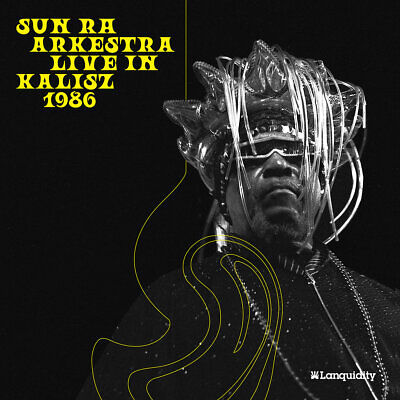
LP Sun Ra - Live In Kalisz 1986
unknown
150
$
0


Favourite Auctions
To save auctions to your favourites, please login
If you don't have an account, please register
Description
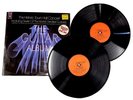
Sun Ra - Live In Kalisz 1986
label: Lanquidity, 2019
media: vinyl, format: 2x12"LP, number of discs: 2
black 180 gramm, singlefold
download code: no data
cat. no: LQ009
time:
NEW, UNPLAYED
jazz/impro
https://soundcloud.com/musicamacondo/premiere-sun-ra-yeah-man-live-in-kalisz-1986
https://soundcloud.com/musicismysanctuary/children-of-the-sun
A) 1. Infinity Drum Intro/ Discipline 27-11" 2. Children Of The Sun B) 1. Improvised I 2. Yeah Man 3. Improvised II C) 1. Untitled Blues 2. It'll Never Be The Same D) 1. Prelude To A Kiss 2. Mack The Knife 3. Outro
Lanquidity Records proudly presents:
SUN RA ARKESTRA - LIVE IN KALISZ (POLAND) 1986
It was one of the most peculiar landings of the Sun Ra Arkestra.
Time: 7 December 1986, Polish People’s Republic, still separated from the West by the Iron Curtain. It's a grey and poor twilight of a real socialism era. In three years the Eastern Bloc would collapse, but what still occupies the minds of Poles now is mostly the martial law imposed by the Pro-Moscow regime in 1981, when the country wanted to free itself from the influence of the Soviet Union.
Place: Kalisz, one of the oldest Polish cities dating back to the 10th century, historically connected with the first kings of Poland, grew into a multinational centre with time as not only the Czech Brethren escaping the Habsburg monarchy found refuge here, but also prominent rabbis known across Europe used to operate and expound in the local Jewish community. In the 20th century, Kalisz became a provincial city and its presence in the cultural life of Poland was most significantly marked with the International Jazz Piano Festival. It was during the 13th edition of the festival that Sun Ra Arkestra performed.
What turned out to be most memorable for the concert-goers was the closing procession of musicians who left the stage to walk around the audience, circle the venue, and return. Researchers of the Sun Ra mysticism recognized such gestures as rituals of passage corresponding to the cosmic cycles of death and resurrection. From a European perspective, Sun Ra's work turns out to be a dream come true for Wagner and Stockhausen. His music brought the myth to life. The myth connecting the past with the future – above the unfavourable present – which created a sphere of freedom. However, Ra used to say that it was not freedom that was at stake here, but precision and discipline.
Ra the Myth Maker was an intransigent radical. He perceived the blackness of his race as corresponding to the blackness of space, and thus declared that the Black Community was destined to migrate into space. He would proclaim the Black Myth, which was a manifesto of alienation from the dominant culture of the West, breaking with its order of time, space and values. And so, Ra became the most prominent pioneer of Afro-Futurism, a movement that rewrites history in order to re-incorporate the marginalized race into it.
He was born as Herman Blount in 1914 in Birmingham, Alabama in the South of the United States where racial segregation was still drastic. When he would play in hotels, though already a renowned musician, he had to use the doors and elevators meant for the staff. In 1942, after he refused military service, he spent five weeks in prison, and then six months performing public works, from where he was sent away because of a hernia. In 1952, at the age of 38, he got a passport with a new name taken from the Egyptian sun god: Le Sony’r Ra.
He proclaimed that he was not a human, but a spiritual being, and that he had come to Earth from Saturn. He claimed that he had experienced “transmolecularization” as a result of which he was transferred to space, where he learnt the truth about his nature and the world in which he lived. “This planet is like a train station.” He would spread the good word: we are immortal citizens of the infinite universe. And the good word would be spread by an experimental jazz big band Sun Ra Arkestra organized like a religious association. When asked about his inhuman condition, he used to answer without emotion, in a sort of trickster way, that even though he might be nobody here, he is Ra in another existential dimension.
At the same time, the Arkestra has become a social microorganism, a cosmic ark and a scientific laboratory. It’s been around under various names since 1951 and has been operating continuously, despite the death of Ra in 1993, to this day. It’s touched upon an unlimited range of styles, from tribal rhythms and hymnic chants, through archaic forms of jazz and rhythm & blues, swing, exotica and hard bop, to free improvisation, protopsychodelia and electronic noise. Some pastiche, yet essential quotations from popular and classical music, African polyrhythms, eastern modalities and atonality of the 20th-century western avant-garde found a common denominator here.
From the artistic perspective, the Black Myth brought a release of possibilities beyond all divisions. But Ra had yet another viewpoint at the myth. “I'm interested in happiness for people, which is just a myth, because they're not happy. I would say that the synonym for myth is happiness,” he said. I recall these words looking at an old coverage that appeared after the Arkestra concert in Kalisz: “The entire musical and scene-setting, however, seems of little importance in the face of the mysterious energy that emanates from Sun Ra. When he looks from the stage at his Arkestra or the people gathered in the theatre, he is the personification of Goodness and Love.”
Let these words be proof that Afro-Futurism is not Sun Ra’s only domain. I like to think that by giving a concert in Kalisz, on the outskirts of the communist Eastern Bloc, Sun Ra Arkestra gave a black impulse for a change that contributed to the system’s collapse.
credits
releases October 26, 2019
Danny Ray Thompson (bassoon, sax)
Laurdine Kenneth "Pat" Patrick (baritone saxophone, alto saxophone, and Fender bass)
Marshall Belford Allen (alto sax)
Tyler Mitchell ( Bass )
Ronald Wilson ( Tenor Sax )
John Gilmore ( Tenor Sax, Clarinet )
James Jacson ( Bassoon, Ancient Egyptian Infinity Drums )
Leroy Taylor ( Alto Sax, Alto & Bass Clarinet )
Tyrone Hill ( Trombone )
Earl "Buster" Smith ( Drums )
Carl LeBlanc ( Guitar )
Sun Ra ( Piano, Synthesizer )
To było jedno z najosobliwszych lądowań Sun Ra Arkestra.
Czas: 7 grudnia 1986, Polska Rzeczpospolita Ludowa, wciąż oddzielona od Zachodu żelazną kurtyną. To szary i biedny schyłek realnego socjalizmu. Trzy lata później rozpadanie się Blok Wschodni, póki co, w Polsce pamięta się raczej o stanie wojennym wprowadzonym przez promoskiewski reżim w 1981 roku, gdy kraj chciał wyzwolić się spod wpływów Związku Radzieckiego.
Miejsce: Kalisz, jedno z najstarszych polskich miast, sięgające korzeniami X wieku i powiązane z pierwszymi królami Polski, z czasem rozrosło się w wielonarodowy ośrodek, znaleźli tu schronienie uciekający z monarchii Habsburgów, Bracia Czescy, w tamtejszejgminie żydowskiej działali słynni na całą Europę rabini. W wieku XX Kalisz stał się miastem prowincjonalnym, a swą obecność w życiu kulturalnym Polski najsilniej zaznaczał za sprawą Międzynarodowego Festiwalu Pianistów Jazzowych. Podczas XIII edycji festiwalu zagrała Sun Ra Arkestra.
Uczestnikom koncertu najbardziej zapadła w pamięć wieńcząca koncert procesja muzyków, którzy opuścili scenę, by przejść wokół widowni, okrążyć ją i wrócić. Badacze mistyki Sun Ra rozpoznawali w takich gestach rytuały przejścia przynależne do kosmicznych cykli obumierania i zmartwychwstania. Z europejskiej perspektywy działo Sun Ra okazuje się spełnieniem marzeń Wagnera i Stockhausena. Dzięki jego muzyce ożywał mit. Mit łączący -ponad niesprzyjającą teraźniejszością -przeszłość z przyszłością stwarzał sferę wolności. Choć Ra powtarzał, że nie o wolność tu chodzi, lecz o precyzję i dyscyplinę.Ra-mitotwórca był nieprzejednanym radykałem. Czerń swej rasy odnosił do czerni kosmosu i ogłosił, że przeznaczeniem czarnej społeczności jest migracja w kosmos. Proklamował Czarny Mit, który był manifestem obcości wobec dominującej kultury Zachodu, zrywającym z jej porządkiem czasu, przestrzeni i wartości. W ten sposób Ra stał się najważniejszym pionierem Afrofuturyzmu, ruchu, który przepisuje historię, aby wpisać wnią na nowo zmarginalizowaną rasę. Urodził się jako Herman Blount w 1914 roku w Birmingham w stanie Alabama, na Południu Stanów, gdzie wciąż obowiązywała drastyczna segregacja rasowa. Gdy, już jako uznany muzyk, grywał w hotelach, musiał korzystać z drzwi i windy dla służby. W 1942 roku, gdy odmówił służby wojskowej, spędził pięć tygodni w więzieniu, a potem pół roku na robotach publicznych, skąd odesłano go, kiedy dostał przepukliny. W 1952 roku, mając 38 lat wyrobił sobie paszport na nowe nazwisko,zaczerpnięte od egipskiego boga słońca: Le Sony Ra. Ogłosił, iż nie jest człowiekiem, lecz istotą duchową, a na Ziemię przybył z Saturna. Twierdził, że ma za sobą doświadczenia „transmolekulizacji”, w wyniku których został przeniesiony w kosmos, gdzie poznał prawdę o swej naturze i o świecie, w którym przyszło mu żyć. Ta planeta jest jak stacja kolejowa. Przynosił radosną nowinę: jesteśmy nieśmiertelnymi obywatelami nieskończonego wszechświata. Jej tubą stał się zorganizowany niczym religijne stowarzyszenie, eksperymentujący jazzowy bigband Sun Ra Arkestra. Pytany o swą nieludzką kondycję, odpowiadał bez emocji, w najlepszym stylu trickstera, iż na tym poziomie egzystencji może być nikim, ale na innym jest Ra.Arkestra stała się równocześnie społecznym mikroorganizmem, kosmiczną arką i laboratorium naukowym. Istnieje, pod różnymi nazwami, od 1951 roku i działa nieprzerwanie, pomimo śmierci Ra w 1993 roku, do dziś. przebiegała nieograniczony wachlarz stylistyczny. Od plemiennych rytmów i hymnicznych zaśpiewów, poprzez archaiczne formy jazzu i rhythm & bluesa, swing, exotica i hard bop, po swobodne improwizacje, protopsychodelię i elektroniczny hałas. Tyleż esencjonalne, co pastiszowe cytaty z muzyki popularnej i klasycznej, afrykańskie polirytmie, wschodnie modalności i atonalność XX –wiecznej zachodniej awangardy znajdowały tu wspólny mianownik. W wymiarze artystycznym Czarny Mit przynosił uwolnienie możliwości ponad wszelkimi podziałami. Ale Ra miał jeszcze inne spojrzenie na mit. „I’m interested inhappiness for people, which is just a myth, because they’re not happy. I would say that the synonym for myth is happiness”, mówił. Te słowa przypominają się, gdy patrzę na starą recenzję, która ukazała się po koncercie Arkestry w Kaliszu: „Cała muzyczno-sceniczna oprawa wydaje się jednak mało istotna wobec tajemniczej siły jaka bije od Sun Ra. Kiedy spogląda ze sceny na swoją Arkestrę czy zgromadzonych w teatrze ludzi, jest uosobieniem Dobra i Miłości.”Niech te słowa będą dowodem na to, że Sun Ra przynależy nie tylko do Afrofuturyzmu. Lubię myśleć, że Sun Ra Arkestra grając w Kaliszu, na rubieżach komunistycznego Bloku Wschodniego, dała czarny impuls przemiany, który przyczynił się do jego krachu.
Danny Ray Thompson (bassoon, sax)
Laurdine Kenneth "Pat" Patrick (baritone saxophone, alto saxophone & Fender bass)
Marshall Belford Allen (alto sax)
Tyler Mitchell (Bass)
Ronald Wilson (Tenor Sax)
John Gilmore (Tenor Sax, Clarinet)
James Jacson (Bassoon,Ancient Egyptian Infinity Drums)
Leroy Taylor (Alto Sax, Alto & Bass Clarinet)
Tyrone Hill (Trombone)
Earl "Buster" Smith (Drums)
Carl LeBlanc (Guitar)
Sun Ra (Piano, Synthesizer)
A&R: Adrian Magrys & Mateusz Surma
Zdjęcia: Roman Kozlowski
Mastering: Marcin Cichy (PlugAudio)
Edycja i Korekta: Joanna Tabor
Tłumaczenie: Magda Marcinkowska
Projekt Okładki: Jacek Walesiak (UVMW)
You're buying from official distributor and support the releaser and the artist!
Our store keeps dispatch every day by registered, trackable, prioritaire air mail only.
Solid packaging in sturdy boxes (vinyls in special double sturdy boxes)
Feel free to contact us if you looking for music released in Poland
price rating