"LOTHAR & THE HAND PEOPLE - PRESENTING.." RARE 1968 FIRST LP NICE COPY PSYCH
$
22
Favourite Auctions
To save auctions to your favourites, please login
If you don't have an account, please register
Description
LOTHAR AND THE HAND PEOPLE
PRESENTING… LOTHAR AND THE HAND PEOPLE
LABEL: CAPITOL
RELEASED: 1968
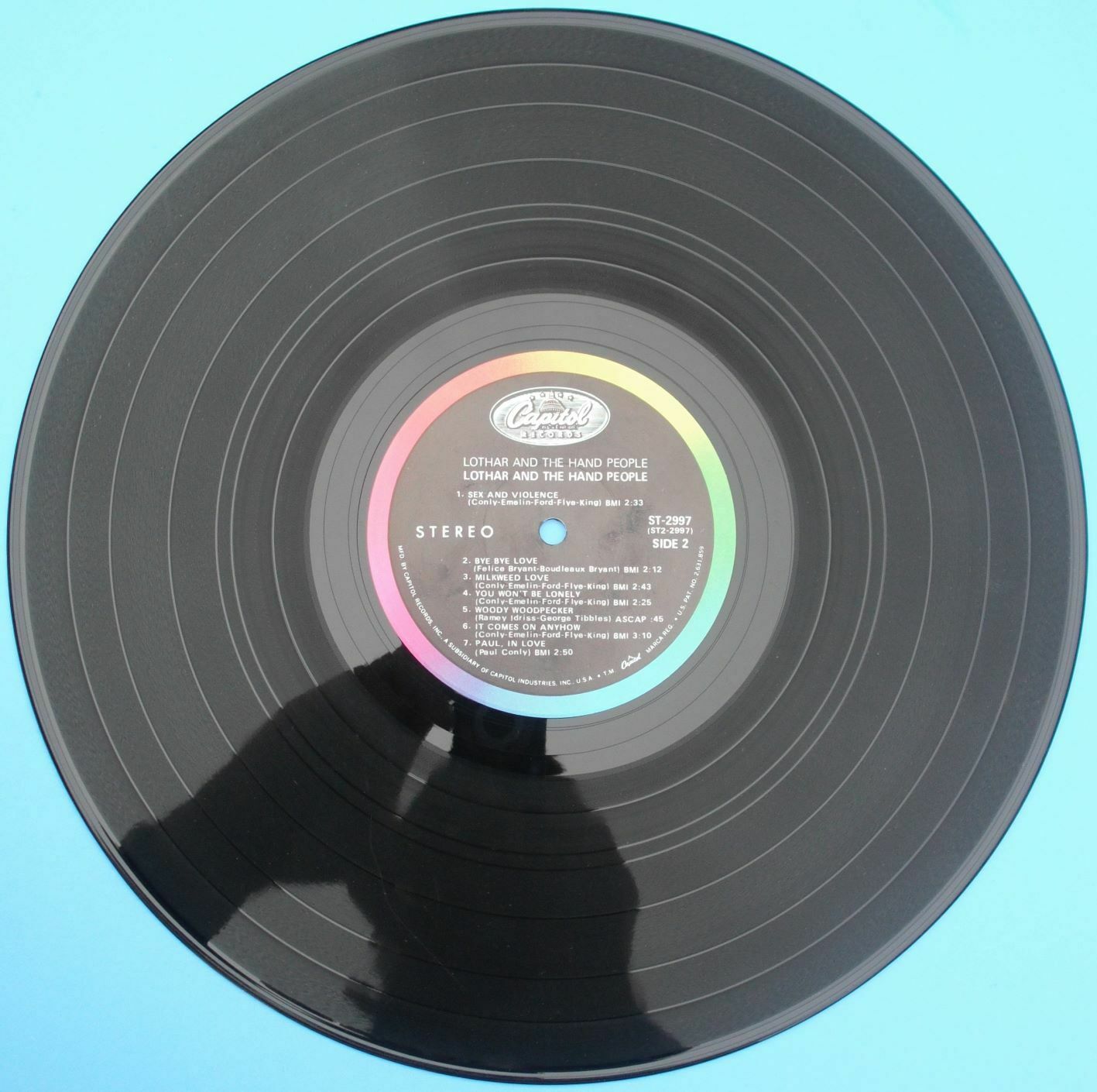
CONDITION: VINYL EX- to EX ***** COVER VG+
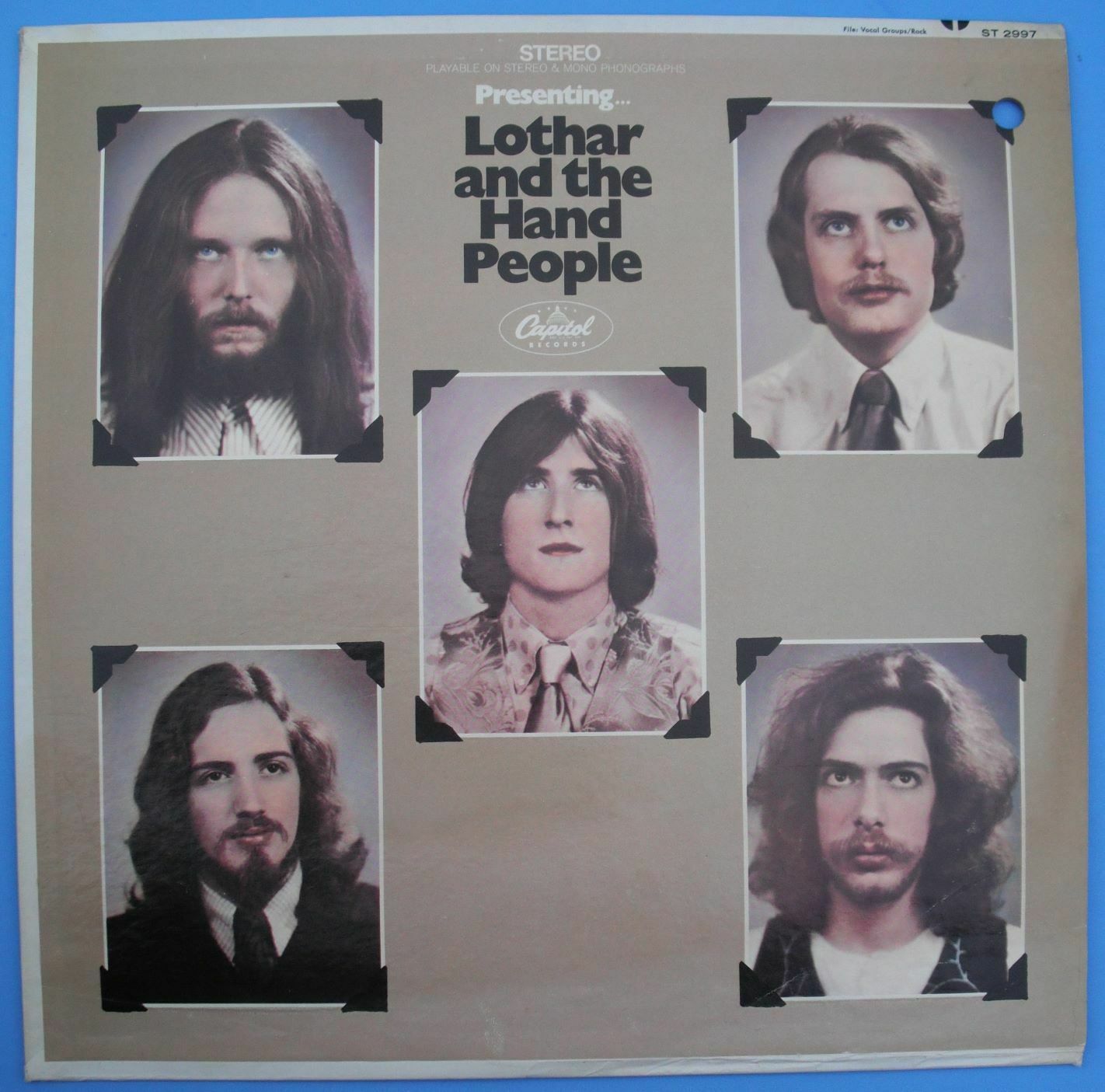
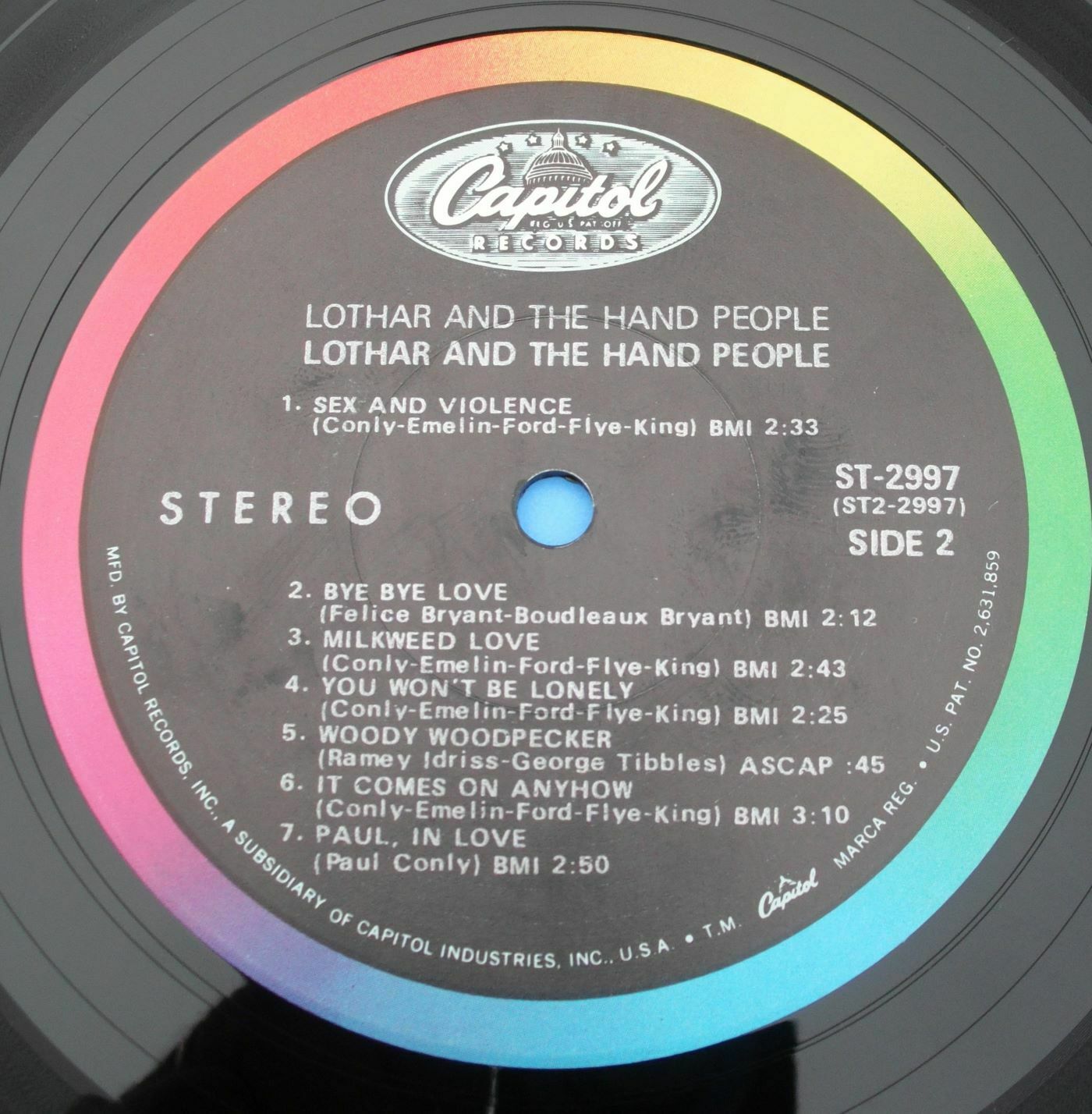
You are bidding on an original 1968 copy of Lothar and the Hand People’s first album, ‘Presenting..’ on the original Capitol rainbow label.
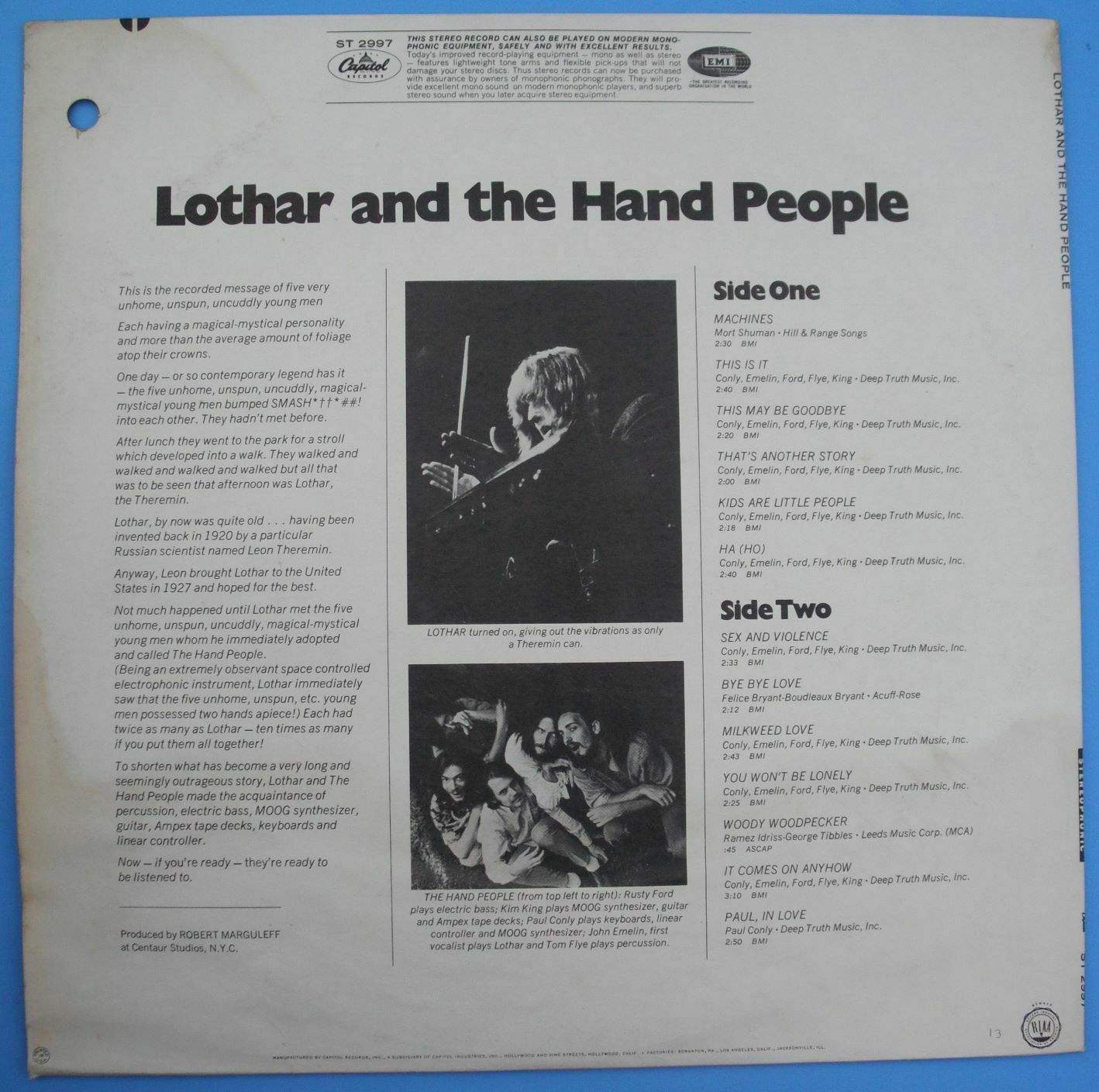
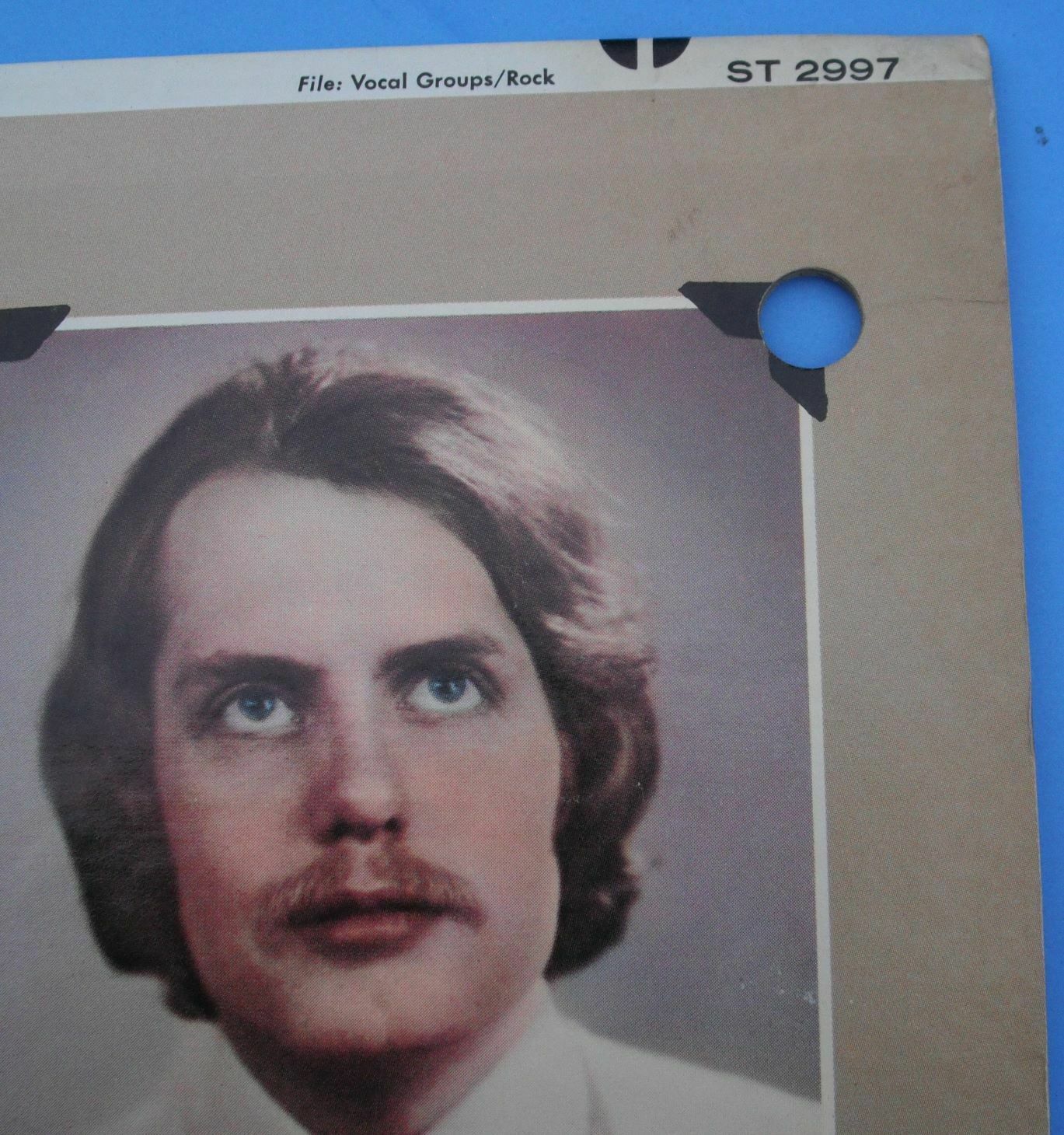
The vinyl is very nice (EX- to EX) but the cover has some water damage as can be seen in the photos. The tan front cover hides the damage well and it displays quite nice. The white back cover shows some discoloration, but not too bad. I’ve had this on my display ‘wall’ of 12-inch record sleeves for as long as I can remember. Was definitely in my collection during a big move in 1975 and probably long before that. Original owner. The jacket has a clean punch hole in the top right. I think I won this down the Jersey Shore Boardwalk in the early 1970s when they gave away records as prizes. Hard to find original pressing from 1968.
*************
Lothar and the Hand People were a curiously tweaked psychedelic-pop act that released several singles and 2 LPs before quietly disappearing from the scene. Their 45s and LPs have managed to acquire a small cult following over the years. Original first pressings from 1968 are very hard to find and this is a nice one.
Lothar wasn’t a crazed band of hippies dedicated to wild flights of electronic exploration, as the legend, the hype and the album cover would suggest. They were more of an adventurous, Beatles influenced, pop, country-tinged band with moments of satire, humor and occasional blasts of Psychedelia and insanity. An experimental psych band known for their spacey music and pioneering use of the theremin and Moog modular synthesizer.
The Hand People were very influential to other current bands as well as later generations of psychedelic music to come. They were among the first rockers to tour and record using synthesizers and a theremin, thereby inspiring the generations of electronic music-makers who immediately followed them.
Playing eccentric satirical pop, good-time folk-rock, and experimental psychedelia, their material wasn't nearly strong enough to elevate them to the rank of innovators, but they were very popular live.
*****************
One of the weirder psychedelic groups of the late '60s, the New York-based Lothar & the Hand People took special pride in augmenting many of their tunes with the Moog and a Theremin.
The Theremin was an early electronic instrument patented in the 1920s and named after its inventor. It’s a musical instrument of sorts but is never touched by the player. It generates odd sonic atmospheres and creates standing audio waves that are ‘manipulated’ by moving ones hands and body around the vicinity of the device.
The Theremin’s unique sound has turned up on record over the years, most famously on The Beach Boys hit “Good Vibrations.” It has also found its way into movie soundtracks, especially horror films.
I can imagine that a late sixties Psych and rock band like ‘Lothar’ that used a theremin and Moog synthesizers in concert must have blown people away back in the day. Add a little recreational substance and it must have been truly mind-expanding.
***************************
'Presenting... Lothar and the Hand People' is the 1968 debut album from the natives of Denver, Colorado and consists of tunes that have a subtle country rock vibe going down at times as well as Beatles influenced pop and psychedelia. They sound similar to the Loving Spoonful, another New York based group that they had opened for and were influenced by.
This is a creative and versatile record, one of the most overlooked of the psychedelic 60s.
Beginning with the album jacket, you realize that the eyes on all of the band members have been photographed on purpose so that they appear rather ill at ease, relentlessly feeling as if they’re seeing something above you and behind you, like a spaceship.
That should be your first clue to the weirdness of this band who formed in Denver back in 1965, and slowly worked their way to New York City with their trusty Theremin and Moog in tow.
San Francisco was the accepted home of Psych and weird rock at the time. Some strange psychedelic things were coming out of Texas and L.A. as well, but New York always had the reputation of being more gritty and experimental (think Velvet Underground). Lothar’s sales suffered slightly because of being from New York.
This is an original copy of their debut album on the Columbia label.
While it misses the status of masterpiece by a very slim margin, it does provide a highly enjoyable ride as it details the depth of the often unjustly dismissed late 1960s East Coast Psych scene. Since this album was originally released in 1968, Lothar has become a cult fave.
************************
Album opener ‘Machines’ starts things off well. A cover of a Mort Shuman composition most notable for its 1966 recording by Manfred Mann. The song by Lothar retains much from the UK outfit’s version but replaces Manfred Mann’s use of horns with their electronic devices, and in so doing the Hand People seem to be offering a sardonic commentary on Shuman’s rather alarmist warning over technology run amok.
Initially, the tune’s mimicry of assembly line robotics makes it seem odd, but once it gets going, it actually becomes fairly danceable. This mating of Captain Beefheart clanging and synth experimentation was named one of the 100 finest psychedelic-rock songs ever in a list published by Mojo in 1997.
After “Machines,” “This is It” is more pop-like. The track’s country-tinged guitar solo really tilts toward the goodtime vibes of the Lovin’ Spoonful.
“This May Be Goodbye” explores a different direction, taking a standard pop sensibility and warping it through strangely emphatic vocals singing lyrics of acid-trip poetics (“the stars are not afraid to look like fireflies”) as the band’s playing gets rather heated and all sorts of electronic zest spikes an already intoxicating punchbowl. “This May Be Goodbye,” shows some of their Beatles influences bridging pop and experimentation.
“Kids Are Little People” really amplifies these guys’ brainy side, though it satirizes the counterculture they are supposed to be part of.
This is the song that brings the Theremin into sharpest focus. Elsewhere on the LP the apparatus mainly serves as an aural sprinkling that mostly surfaces in between selections, but here Emelin actually solos on the instrument and the results are warmly organic.
Songs on this album reflect the groups UK-leaning pop traits of groups like the Beatles, instead of the prevailing American rock ideals that were rooted in blues, folk, and more aggressively psychedelic visions.
Even when they are boldly “out there,” the Hand People essentially retain ties to strong melody. Such it is with “Ha (Ho),” another track that reinforces their Beatles influence. It sounds like it came straight off the Sgt. Pepper LP.
B-Side opener “Sex and Violence” is also the album’s most intensely wacked-out moment. A tough rock groove in which they chant the song’s title in unison and Emelin sings in a strange tone.
Next is a cover of The Everly Brothers “Bye Bye Love” that simultaneously plays it straight and adds a strain of peculiarity through its technological veneer. This is the track that caused early reviewers to say that the group played “electronic country” music.
“Milkweed Love” goes heavy on the Moog in what feels like a loose, woozy spacey number. The synth is reminiscent of a fiddle and sounds ahead of its time.
The band move in a more traditional direction on the rocker ‘You Won’t Be Lonely.’ It combines some garage rock spunk with strength in songwriting that’s not that far from Arthur Lee’s early work with Love.
Then, out of nowhere, comes a 47-second-long cover of the "Woody Woodpecker" cartoon theme that seems to have been cut under the influence of massive amounts of something.
‘It Comes On Anyhow,’ features tidy electronic noises of the musique-concrete variety, with someone constantly repeating the phrase "It Doesn't Matter," and Buddhist monks chanting "Ohm." It brims with unexpected experimentation.
The disc quietly closes out with the fragile floating synthesizer of “Paul, In Love,” a Moog doodle à la Dick Hyman in his "Minotaur" phase.
Overall, the Moog and Theremin glide surreptitiously throughout most of these tracks. In fact I can’t think of any other band around during this time that was able to weld such esoteric electronica to the standard live band format so convincingly. They incorporated electronics into their sound well and were one of the first bands to tour with full electronics, Moog and a theremin.
There's none of that 'hey look at me I've got a Moog and I'm gonna make lotsa craaazy sounds' approach to the music. Several bands had Moogs at the time, most didn’t know how to utilize them, Lothar did.
****************
After arriving on the east coast from Denver, they hung around the fringes of the whole hippie scene in NYC and had several brushes with fame, the closest was with Jimi Hendrix and the Hand People sharing the same bill.
Since they were both in the weird NYC club scene around 1966, Jimi and Kim King became buddies, jamming guitar together on a regular basis and earning a reputation that caught the attention of Chas Chandler of the Animals, an early rock entrepreneur.
Chandler had arranged to catch Lothar and Hendrix one evening, but he arrived at the Village club, The Nite Owl, just as the Hand People's first set was ending. He wanted to see BOTH Lothar and Jimi. But, Jimi then started his set and Chas, blown away, left to start his plans to take Jimi back to England with him and be his manager. Lothar was left behind. Jimi became a psychedelic guitar god and went on to international acclaim. Lothar continued to grind out spacey electronic psychedelic music in the clubs of New York.
Comically, Dick Clark played the Lothar song "Machines" during the rate-a-record segment of an American Bandstand episode and, the two teens who critiqued the tune hated it, with one asking Clark what was the lowest score she could give.
Lothar wasn’t meant for everybody. The group fell short commercially and earned relatively few critical plaudits during its heyday, but has lingered on the fringes of memory far longer than other acts of its age.
Formed in Denver back in 1965, the group lasted for just a few years. During that span the band released just two albums and a handful of singles. Despite its small output, the band’s legend and mystique are still strong.
*********************
The story of Lothar and the Hand People is a strange one.
John Emelin, who was born in Mamaroneck, Long Island, got involved in the folk-music scene in New York. He moved to Colorado to attend the University of Denver and formed a Folk Jug band. A trip with Richard Willis, his roommate, to see the Rolling Stones in Chicago turned him on to the joys of electronic Rock and Roll.
Back in Denver, the pair decided to put together a rock band of their own, recruiting fellow U.D. students bassist Rusty Ford and drummer Tom Flye, later adding guitarist Kim King, then a fixture at the Denver Folklore Center.
Willis, in classic hippie fashion, came up with the band's name while he was cat napping; he had a dream in which an enslaved race called the Hand People were saved by a hero named Lothar. When he told this story to the band, the name stuck and they realized that the theremin owned by Emelin was actually the group's hero and namesake, ‘Lothar’.
The Hand People were popular on campus and started to make their mark on the Denver music community. The band then convinced Emelin to play his theremin live for the first time, and the eerie, quavering tone of the device became the Hand People's aural signature in concert.
The group decided that they would get more recognition by moving to the coast. Some band members had New York connections, so they ended up in New York City.
They got steady work at Trude Heller's, a rock club. They eventually shifted over to the Nite Owl Cafe, a Greenwich Village spot that brought them into contact with a slew of up-and-coming NYC musicians.
***********************
Due to the fact that this band had a Moog AND a Theremin, and for the strange sounds they created, they almost had their pick of labels who were all looking to cash in on the new, freaky rock sound. Many companies were interested in signing the group to their label.
The Beatles were a big influence and it’s no surprise that the band chose to be on Capitol, after turning down lucrative bids from Atlantic, Columbia and Elektra. Elektra instead put their dollars and efforts towards another new group with an odd sound, The Doors.
Their first Capitol single, "L-O-V-E (Ask For it By Name)," produced by Dick Weissman, another longtime Denver music type, was a charmingly eccentric ditty that included a "talking" theremin. It wasn’t a big hit.
Subsequent 45s such as "Comic Strip" and "Let the Boy Pretend" also weren’t big sellers and are valuable collectors items today.
Eventually, Capitol gave them a big budget to cut their first album.
For producer, they chose a complete novice, Robert Margouleff, mainly because he had access to the country's largest Moog synthesizer and a roomy studio for all their electronic gear. Margouleff was friends with fellow New Yorker Robert Moog and was very knowledgeable about early MOOG electronics and their use in music. He did early soundtrack work for the Star Trek TV series.
After Lothar, Margouleff went on to an impressive career, overseeing timeless albums such as Talking Book and Innervisions for Stevie Wonder, an early user of the MOOG and synthesizers. He was also known for making Tonto’s Expanding Head Band’s album Zero Time.
************************
Ultimately, the band broke up and its members went their own way.
Drummer Flye became an engineer whose credits include the original Woodstock album and discs by the Grateful Dead.
Bassist Ford earned his keep as a New York-based producer of television commercials.
Guitarist King, who helped Hendrix build his Electric Ladyland studio, is now a busy Webmaster, but still plays occaisionally in New York.
Conly, meanwhile, put together the music for a play by Sam Shepard and set up a computer music lab at Harvard.
******************
******************
I’m retired and downsizing and letting go some gems from nearly 50 years of record collecting. Check out the many other fantastic 45s and 33s on my page!
Shipping cost within the lower 48 states is $5.00 (five) via USPS media mail. Shipping costs are ridiculously pricey these days. I will be glad to ship international for whatever the exact cost to do so is. We can talk after the auction is over and work out the details. I do NOT gouge on my shipping charges. It costs what it costs.
If you would like insurance, or anything faster than media mail,(Priority mail, First class), please let me know and I can arrange it for you. I’ll work with you to make sure you’re happy!
All LP's come with generic white paper inner sleeves and simple poly-bags, unless otherwise noted or pictured. I do try to match up proper, appropriate generic company sleeves with my 45’s and LP's and I’ll gladly include them if I have them.
All items are packaged with sturdy cardboard mailers and filler pads. I take pride in my packaging and shipping and pack my records as if I were sending them to myself. I refuse to use cheap flimsy packaging material when sending my records. I treat them as if they were my own and mail them the same way.
All records have been cleaned and played by me. I visually inspect all records under bright light, personally clean them and then play them on a modern high-end turntable to get a true picture of condition. I'm a 0ne-man operation, this is a hobby, not my job. I do this for fun. I do this because I love music, love collecting vinyl and want others to share in that same experience. I take my time listening, researching, grading, listing and packaging. I will NOT sell any record that I personally would not want in my collection.
I’ve been told by other vinyl collecting friends that I under-grade the condition of my records. I see no harm in that. If that VG+ record comes and it’s nicer that you thought, great! We’ve all been burned by that EX- record purchase only to get it and it looks like it was cleaned with sandpaper and played with a rusty nail. My goal is to avoid that ever happening to me or you ever again. My grading is fair and honest and I will ALWAYS refund you for anything you’re not happy with. I have had nearly 3,000 happy and satisfied EBay customers over the years and I have been buying/selling on ebay for over 15 years, so please bid with confidence!
All orders are processed and shipped within 2 business days of receipt. We package and ship our vinyl records with the greatest care, using extra-thick packaging to ensure that your rare and collectible vinyl records arrive in pristine condition.
Payments are preferred by PAYPAL which is fastest & easiest
I will be happy to exchange feedback with anyone I complete a transaction with. If you would like to get feedback, I ask that you let me know we've completed the transaction by leaving feedback for me after you receive your item, at which time I will do the same for you!
price rating






![CHOICE OF ANY [10] 78 Records - listed in description - JAZZ, COUNTRY, R&B POP](https://www.popsike.com/php/thumbnail.php?url=https://www.popsike.pics/pix/20181218/254030172883.jpg)
![CHOICE OF ANY [10] 78 Records - listed in description - JAZZ, COUNTRY, R&B POP](https://www.popsike.com/php/thumbnail.php?url=https://www.popsike.pics/pix/20190110/254061647765.jpg)
![CHOICE OF ANY [10] 78 Records - listed in description - JAZZ, COUNTRY, R&B POP](https://www.popsike.com/php/thumbnail.php?url=https://www.popsike.pics/pix/20190114/254071979181.jpg)