LED ZEPPELIN - LIVECONCERTS AT THE BBC 69 & 71: 2LP SET
£
30
$
40


Favourite Auctions
To save auctions to your favourites, please login
If you don't have an account, please register
Description
+ + + + + +
+ + + + JUST TO LET YOU KNOW....... + + + +
+ + + + MANY ITEMS SIMILAR TO THOSE CURRENTLY SOLD ON PLAINSLADY'S SITE ARE + + + +
+ + + + NOW BEING SOLD ON PLAINSFELLER - SAME QUALITY & SERVICE - SO PLEASE + + + +
+ + + + MAKE A NOTE OF THE NEW NAME AND CHECK IT OUT IN THE NEAR FUTURE + + + +
+ + + + + +
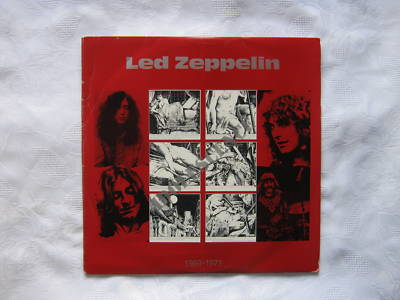
LED ZEPPELIN - LIVE CONCERTS AT THE BBC, 1969 & 1971 "IDOLESSCENCE"
Near mint/Ex 2-LP set
Double vinyl album, Volllsung (VSLL2L23), released in 1984, stereo and manufactured in the U.S.A.. Matrix Nos: VS 11 A/B/C/D.
An important part of manager Peter Grant’s strategy to get the right kind of exposure in the UK for his then new band, Led Zeppelin, was to cultivate a positive relationship with BBC Radio, and on the 3rd of March 1969, the group played an exploratory session for the Top Gear programme, with the material broadcast nearly three weeks later.
The response was very favourable and so in June, the group undertook a series of three follow-up sessions at various of the BBC’s London venues - on the 15th, 16th and 24th, for “Symonds On Sunday”, “Chris Grant’s Tasty Pop Sundae” and (again) “Top Gear” respectively - and then, very heartened by the strength of those sessions, took a decision at very short notice to play a full concert in front of a live audience for the BBC’s Rock Hour.
This took place on the 27th of June at London’s Playhouse Theatre (some Zeppelin fan sources have named the venue as the Royal Shaw Theatre, but though researching this name has identified a Shaw Theatre in the King’s Cross area that existed in 1969, it hasn’t brought forth either any link with the BBC or an alternative London location of that name) and the group played for getting on for an hour, featuring at least 6 songs which were presented to reproduce their regular stage-show of the time.
Introduced by the DJ Alan Black, they kick-off with a thunderous Communication Breakdown which sees the band readily demonstrating their enjoyment of live playing as Robert Plant happily ad-libs on the vocals and Jimmy Page reels off a super guitar break. And then, seemingly without a break in the tempo, they segue into their arrangement of Willie Dixon’s I Can’t Quit You Baby, with the solid but sensitive rhythm line from John Paul Jones and John Bonham underpinning further customised performances from Page and Plant.
At this point the pace briefly drops for the slow, atmospheric guitar and drums introduction to their epic Dazed And Confused, a number which typifies the band’s stage approach of rarely, if ever, playing a song the same way more than once. In particular, as it unfolds, it also says more than words could ever say about the group’s character and personality, being at various points moody, frenziedly powerful, eerie, languid, passionate, imaginative and even care-free: quite literally tight but loose as the music constantly seems to be running away with itself, only to be hauled back again and again. Incorporating Page’s violin bow segment with its unique sounds, this is a stunning performance which brings a close to side one of this two-record set, and though running time was clearly a consideration for the song selections, it’s something of a mystery that this track was omitted from the 1997 BBC Sessions set.
Next up is a real treat for Zep fans as Page takes the spotlight seated for the acoustic White Summer and in the ensuing 8+ minutes shows just why his guitarwork is rated as highly as it is. Here is a master at work, not just demonstrating superb fingerboard dexterity but also a blend of styles that firmly underpin the band’s assertion that the heavier blues-rock they play is only one facet of their music. Throughout, there is an almost reverential silence, broken only by the slightest buzz of recognition when the guitarist goes into the Black Mountain Side section but the moment he finishes, there erupts a tumultuous response from the wrapt audience.
However, the pause for the crowd’s admiration is brief as compere Black's voice-over introduces another Dixon song, You Shook Me, and the piercing guitar intro is underway, followed quickly by Plant’s opening vocals.
This is another song which says so much about Led Zeppelin and its musical character, and the way it ranges from the exceptionally intense to the almost gentle, with not only guitar and Jones’ keyboards, but also Plant’s harmonica contributing substantially to a veritable kaleidoscope of sound along, of course, with the vocals which duet with the guitar for the number’s closing section. And throughout this, there is yet more intelligent drumming from Bonham, whose intuition for when to mute or hold back is every bit as important as his more-acknowledged ability to hit the skins with ferocious power. Again, a magnificent performance from a band with supreme and justified confidence in their ability to play and entertain.
The show closes with their then usual finale, How Many More Times, and it has to be said that if there is any disappointment with this Playhouse set, then it is that this final number is faded out early - during the quiet mid-section, so the listener doesn’t get to hear the final section which includes both the excerpt from The Hunter and the song’s regular closing. That said, it’s good to hear Plant introducing the band, and the delivery of the song is, needless to say, noticeably different to, not to mention, more frenzied than the studio version.
The second album in this 2-record set also covers a BBC concert session, this time featuring 6 selections from Zeppelin’s second BBC Rock Hour concert, again performed in London, but at the Paris Theatre on the 1st April 1971 at which time the group had released three albums, with their untitled fourth set still some eight months away from release.
On this version, the music is that originally broadcast on 4th April 1971, but comes from a second broadcasting made as part of the Best Of the BBC Rock Hour series put out in the 1980s, with veteran DJ Brian Matthew doing the introduction/closing comments.
By early 1971, the band’s concerts had moved on from opening with Communication Breakdown/I Can’t Quit You Baby and, instead they were using Immigrant Song followed by Heartbreaker and that’s the way(!) side 3 of this set starts.
Though a similar kind of song, Immigrant has different dynamics (to Communication) and while there is little, if any, vocal ad-libbing and Page’s main guitar break doesn’t quite have the same rawness, the rhythm line really pounds along and overall it works every bit as well to both get the show rolling and set things up for Heartbreaker whose solidly rock riff is very much a kindred spirit that clearly marks a hardening of the band’s sound. Nevertheless, the musical “light and shade” - albeit of different textures - is still there, principally in the phrasing and time changes, and it maintains the effervescent feel that is such an essential ingredient of Zeppelin’s music.
And, unsurprisingly, this number sees another sizzling guitar break from Page midway through, coupled with a characteristically energetic but noticeably more controlled vocal from Plant whose sudden stop (at the end) catches the audience unawares and the applause is a little slow off the mark, but certainly appreciative all the same.
And side 3 closes with the band’s 1971 version of Dazed And Confused which has a noticeably softer intro than 1969’s vintage, characterised by not only more shimmering cymbal-play and quieter, even more atmospheric guitar but also a first verse which Plant delivers at little more than a whisper. Then, as it ends, there’s a brief burst of instrumental energy and volume as the “music’s choral refrain” erupts only to quickly subside for the second - and slightly louder - verse, then erupt again (for a little longer) before quietening again for the third verse.
But as Plant’s voice climaxes for the verse’s end, they’re off into their musical ether with Page leading the way quickly into the violin bow section in which he alternates between harsh slashing and gentle caresses/flourishes across his guitar strings, before discarding the bow and launching into a driving riffy break. This sees Plant throwing in a scattering of suitably enthusiastic oohs and aahs, plus some bluesy vocal snippets, before indulging in a brief duet of sorts with Page’s axe which then drives the tune along before pulling it back to the basic rhythm and a fourth verse which, though suggesting the song’s end is near, instead simply launches another surging guitar break, with sporadic vocal support which then builds into the tune’s finale. Running ultimately to 18+ minutes, it’s, quite simply, a superb performance that underlines the group’s ability to maintain the musical enjoyment of even their oldest compositions.
Next up, and opening the last side of this set, is one of the songs that would appear on the band’s fourth album - though that wouldn’t be released for another 8 months - and very quickly be lauded as their greatest composition. It had been featured for the first time in their stageshow on their current tour (of which this Paris Theatre concert was the 13th and final date) as part of an acoustic set and had already started to garner favourable responses. It was, of course, Stairway To Heaven but, despite the good vibes already circulating, the audience at the theatre - most of whom had probably not heard it before - chose to show a respectful silence both as the opening notes began and as the song unfolded. Though arguably a bit off-putting for the group, it was for all that an almost reverential response and meant that, for listeners of this album, the recording comes across even more clearly than usual, even from soundboard sources like this one.
Naturally, it’s a performance that is very true to the future studio version but nevertheless, as it straddles both the acoustic and electric, is both poignant and powerful, and duly attracts appreciative applause at its close.
Plant then indulges in a little banter with the audience as he introduces another song destined for the fourth album, Going To California. It’s a wholly acoustic composition, allegedly about the singer/song-writer Joni Mitchell whose music had entranced both he and Page, and they are joined by Jones on mandolin for this rendition which is very much as it would later be recorded, with just a touch of vocal ad-libbing. And as with Stairway, the audience reserves its appreciation for when the song finishes.
And, following some more audience conversation from Plant, the Paris Theatre selections on this set then conclude with what had, since late 1969, taken over as Zep’s finale concert number, Whole Lotta Love, with its related blues/rock ‘n’ roll medley.
On this occasion, Page’s theremin section is fairly brief as the band focus on the blues/rock ‘n’ roll medley which, as often has been the case, begins with Let That Boy Boogie Woogie, before seguing into a racy Boogie Chillun’ and on to That’s Alright (My Mama). But then, the pace briefly dies right down for Plant’s agonised intro to the medley’s final song, Minnesota Blues, before picking up again to take them through to the end and Matthew’s closing comments.
Here then are selections from key points in the early period of Led Zeppelin’s development as a performing band of quality and intensity. And while it was inevitable that the songs featured would be different in concerts that were two years - and at least two studio albums - apart, it’s also notable that their approach to the one common composition, Dazed And Confused, had progressed considerably by the later show, such that, in a variety of ways, it was almost a different number.
However, as those lucky enough to have seen them with any regularity can affirm, the group - at least in those first few years - rarely played any of their songs note-for-note in each concert, and this ability to constantly improvise was a major factor in their rapid rise in popularity and the underlying reason that this album set makes for such enjoyable listening.
These vinyls have been well looked-after, having been kept in poly-lined inner sleeves since being purchased and the result is four exceptionally-clean surfaces which have not only been played no more than a few times in all but also still have a hint of the static that is usually only found on new - or relatively new - vinyl. When viewed in direct light, there are a number of, mainly light, surface marks (most of them on the second disc) and while a pre-auction play-through shows that from the moment the needle enters the run-in groove on each side to the time it leaves the relevant run-off, you hear a full-bodied and clear sound, there is a fair amount of extraneous surface noise - again, mainly on the second disc - either during or between the tracks, though there is little, if any, on the run-ins/run-outs. With all this in mind, the first of these vinyls is graded mint (-) and the second excellent.
Also, as you might expect from an album with so little playing, the labels have just minimal, if any, signs of any wear either to the spindle hole or the area around it, nor any writing, stains, labels or any other kind of blemish and, consequently, they are rated “excellent (++)”.
The outer sleeve, which has also been kept in a sturdy plastic cover since purchase, is a light card single pocket with a shiny, though not gloss, finish and at 25+ years old, inevitably shows some signs of wear - largely due to the light card used: most noticeably, there is ringwear (though no damage to the colouring) and significant creasing, mainly along the spine but also near the edges. Additionally, there’s some wear on the corners and edges and minimal feathering on parts of the open edges.
Otherwise though, it is in very respectable condition, with very bright colouring, well-defined edges, a straight and easily-read spine, no seam splits and very clean surfaces with no tears, no writing, no sticker-marks, no stains or other serious blemishes. Overall then, this sleeve is graded “excellent (-)”.
The poly-lined inner sleeves have no obvious signs of wear/deterioration and are rated mint (-).
12 Tracks
Side 1: Communication Breakdown; I Can’t Quit You Baby & Dazed And Confused (1969 version).
Side 2: White Summer; You Shook Me & How Many More Times.
Side 3: Immigrant Song; Heartbreaker & Dazed And Confused (1971 version).
Side 4: Stairway To Heaven; Going To California & Whole Lotta Love/Blues-R&R Medley (Let That Boy Boogie Woogie/BoogieChillun’/That’s Alright [My Mama]/Minnesota Blues).
Note: Except where free postage is offered, I give postage discounts for multiple purchases that can be packaged together.
IMPORTANT AUCTION TERMS!
Please take a moment to read my terms below, and ask any questions BEFORE bidding.
PAYMENT
I accept payment via PayPal ONLY, so a PayPal account is required for you to bid and, as I require payment within 4 days of auction close, you MUST HAVE SUFFICIENT FUNDS in your (paypal) account at the time of the auction closing, because payment by e-cheque will not arrive within the 4 days I allow. Please do not ask me to make an exception in your case as I no longer respond to these requests and have made my payment preferences clear at the start of this paragraph.
If you are bidding on more than one of my auctions, please let me know after you win the first. I can then hold off on your final invoice until the later batch of auctions has finished. Payment will then be required within four days of my sending the final invoice. If payment is not received within the specified time and via the payment method I have specified, the item may go to the next highest bidder or be relisted. If appropriate I will file non-paying bidder alerts with Ebay in order to recover my final value fees & will block that bidder from my future auctions and - if payment is only received as a result of my filing non-paying bidder - I will not offer a refund. If you have a problem that may delay payment please let me know. I am a nice seller, but I don't like to be mucked about or have my payment terms ignored.
POSTAGE & SHIPPING
Postage rates are specified on each auction. (Not advised, but parcel post and surface mail rates are avaiIable if desired-please ask). I always weigh items for postage costs, and allow a bit extra for the packaging. I put a lot of effort and care into packaging, and often use custom, cut to fit sturdy cardboard that has given excellent delivery results. I will be happy to combine multiple purchases and hopefully be able to reduce the postage costs on your total. Royal Mail includes compensation cover (insurance) free on values up to £28, and I will generally add insurance on items over that amount for my own protection and yours. I now normally ship twice a week, on Mondays and Thursdays (if a holiday then the following day). Your package will be posted no later than the first Monday or Thursday following payment.
Thanks for looking and happy bidding. For more info on my auctions please see my Ebay "About Me" page.
On 08-Mar-05 at 10:46:46 GMT, seller added the following information: Pay instantly with your debit or credit card through PayPal.price rating






![WOLVES IN THE THRONE ROOM - Celestite [2-LP] (DLP)](https://www.popsike.com/php/thumbnail.php?url=https://www.popsike.pics/pix/20150111/131401096493.jpg)





![Bob Dylan - Blood on the Tracks [LP] (180 Gram Audiophile Vinyl, Limited, # MOFI](https://www.popsike.com/php/thumbnail.php?url=https://www.popsike.pics/pix/20170209/371862690462.jpg)
