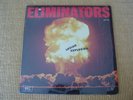
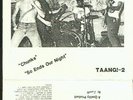
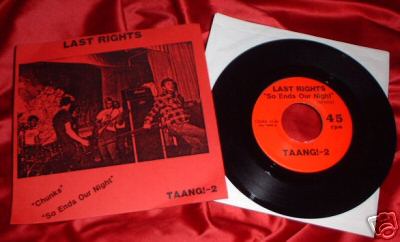
LAST RIGHTS*Chunks*45 Orig Taang2 NM negative FX
$
123


Favourite Auctions
To save auctions to your favourites, please login
If you don't have an account, please register
Description
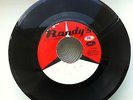
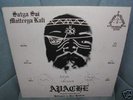
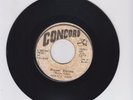
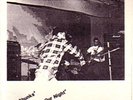
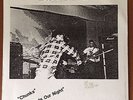
Last Rights Chunks / so ends our night 7" Taang. 2 / 2 tracks / 1984 Original press Both Vinyl and Insert/Sleeve are in NM condition. Black Vinyl with Red labels 900 made, 5 different sleeves: 100 made with Hitler cover, unknown number of the others. Two 10" acetates. Feat. Choke (ex-Negative FX, later in Slapshot).. It is said that the band was formed in a 24-hour foodmart where the founders Steve Risteen and Jack Kelly kept bumping into each other. Steve Risteen, Mark McKay who both hailed from the band Terminally Ill and Jack Kelly who was not currently playing and was formerly of the bands Negative FX and Last Rights decided to create Slapshot. An early name pick for the band was Straight Satan, after the motorcycle gang, which protected Charles Manson. The three members started to write songs and were later joined by Jonathan Anastas who was friends with Jack Kelly through Boston Crew and used to play for Decadence and DYS. There was quiet a bit of hype around the band prior to they even played a gig. Some of this was a result of the two band members Jack Kelly and Jonathan Anastas who had developed a reputation in the Boston Hardcore scene. Humorously Mike Gitter, who had a zine named “xXx”, also started to hype the band and wrote that "Slapshot was a great live act" before the band had even played in front of an audience.[1]. Negative FX was a hardcore band from Boston formed in 1982. Though the band lasted only a short time, playing only a total of five shows (six flyers exist), the band was well known for their involvement in the local straight edge scene of the early '80s. Along with members of the bands DYS and SS Decontrol, Negative FX helped to form a group known as the Boston Crew, a notoriously violent group of kids who held a strict, and almost militant, view of the straight edge mentality. Negative FX played an incredibly fast and largely unmelodic form of hardcore punk that featured frequent gang vocals shouted along with the chorus. The band members consisted of Patrick De Motingay on guitar, Richard White on Bass, Dave Grohl on drums, and their high profile vocalist Jack Kelly, who frequently went by the name of Choke. Choke went on to later form the band Last Rights, then Slapshot. Negative FX has released only one self-titled album, which was recorded in April and November 1982 at Radiobeat studios in Kenmore Square but wasn't released until 1984 on Taang! Records. It was re-released on blue vinyl by Taang! in 1989 and more recently on the German label Reflex Records in 2002. It is also known that punk band NOFX got their name from Negative FX….
Payment by Paypal, Bidpay, Money Order. Payment must be rcvd within 10 days after auctions conclusion. 14 days for international bidders/winners. Please add $ 7.00 PRIORITY shipping & handling or $3.50 for MEDIA mail. CD’s and 45’s are $3.00 first class mail. Cassettes are $2.00 and the odd video is $3.50, both first class mail. Insurance, if you want it is $1.30 for up to $50.00 and $2.20 up to $100.00, additional
I pack and mail items with care, but cannot be held responsible for lost or damaged items that are not insured (available USA only) PACKAGING/SHIPPING/POSTAGE: PLEASE NOTE: I have set my shipping prices to cover my cost on an average basis. Your box may cost me a bit less to mail than I charged you, or a bit more. Priority postage can vary from zip code to zip code and Records and jackets don't all weigh the same amount, therefore I can't set a "perfect" price for everyone, ESPECIALLY INTERNATIONAL! Speaking of which, since most of my recent single LP shipments overseas have cost between $10.00 and $11.00 and my mailers cost me 75 cents apiece, my going rate is $12.00/LP, $5.00/45 or CD airmail as of 08/01/04. I cannot ship surface mail overseas due to an abundance of lost packages, sorry… I ship all LP’s in a new rigid custom LP mailer and filler pads with the disc in inner sleeve placed behind cover to prevent seam splitting in transit. Part of my postage fee covers the cost of the mailer and pads. I DO NOT use flimsy "freebie" post office priority mailers!
GRADINGS-- (M) Mint : Absolutely perfect in every way - certainly never played, possibly even still sealed. (More on still sealed below). Should be used sparingly as a grade, if at all. #(NM or M-) Near Mint : A nearly perfect record. Many dealers won't give a grade higher than this implying (perhaps correctly) that no record is ever truly perfect. The record shows no obvious sign of wear. A 45-rpm sleeve has no more than the most minor defects, such as almost invisible ring wear or other signs of slight handling. An LP jacket has no creases, folds, seam splits or any other noticeable similar defect. No cutout holes, either. And of course, the same is true of any other inserts, such as posters, lyric sleeves, and the like. Basically, Near Mint looks as if you just got it home from a new record store and removed the shrink-wrap. # (VG+) Very Good Plus: Shows some signs that it was played and otherwise handled by a previous owner who took good care of it. Record surfaces may show some slight signs of wear and may have slight scuffs or very light scratches that don't affect one's listening experience. Slight warps that do not affect the sound are OK. The label may have some ring wear or discoloration, but is should be barely noticeable. The center hole is not misshapen by repeated play. Picture sleeves and LP inner sleeves will have some slight wear, lightly turn-up corners, or a slight seam-split. An LP jacket my have slight signs of wear also and may be marred by a cut-out hole, indentation or corner indicating it was taken out of print and sold at a discount. In general, if not for a couple of minor things wrong with it, this would be Near Mint. All but the most mint-crazy collectors will find a Very Good Plus record highly acceptable. # (VG) Very Good : Many of the defects found in a VG+ record are more pronounced in a VG disc. Surface noise is evident upon playing, especially in soft passages and during the song's intro and fade, but will not overpower the music otherwise. Groove wear will start to be noticeable, as will light scratches (deep enough to feel with a fingernail) that will affect the sound. Writing may mar labels, or have tape or stickers (or their residue) attached. The same will be true of picture sleeves or LP covers. However, it will not have all of these problems at the same time, only two or three of them. # (G) Good, (G+) Good Plus: Good does not mean bad! A record in Good or Good Plus condition can be put onto a turntable and will play through without skipping. But it will have significant surface noise and scratches and visible groove wear. A jacket or sleeve has seem splits, especially at the bottom or on the spine. Tape, writing, ring wear or other defects will start to overwhelm the object. If it's a common item, you'll probably find another copy in better shape eventually. Pass it up. But if it's something you have been seeking for years, and the price is right, get it. # (P) Poor , (F) Fair: The record is cracked, badly warped, and won't play through without skipping or repeating. The picture sleeve is water damaged, split on all three seams and heavily marred by wear and/or writing. The LP jacket barely keeps the LP inside it. Inner sleeves are fully seam split, and written upon. Except for impossibly rare records otherwise unattainable, records in this condition should be bought or sold for no more than a few cents each. # (SS) Still Sealed: Let the buyer beware, unless it's a U.S. pressing from the last 10-15 years or so. It's too easy to reseal on. Yes, some legitimately never-opened LPs from the 1960s still exist. But if you're looking for a specific pressing, the only way you can know for sure is to open the record. Also, European imports are not factory-sealed, so if you see them advertised as sealed, someone other than the manufacturer sealed them.
Abbreviations: WOC- writing on cover, WOL-writing on label, DH-drillhole/punchhole, PRST-promo stamp or sticker, RSST-radio station stamp, TSM-taped seam, SPSM-split seam, TOC-tear on cover, SMW-seamwear/scuffed seams (not split), STKRES-sticker residue/glue, RW-ringwear, CC-cut corner