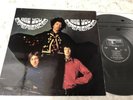
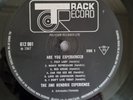
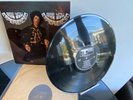
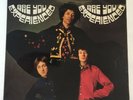
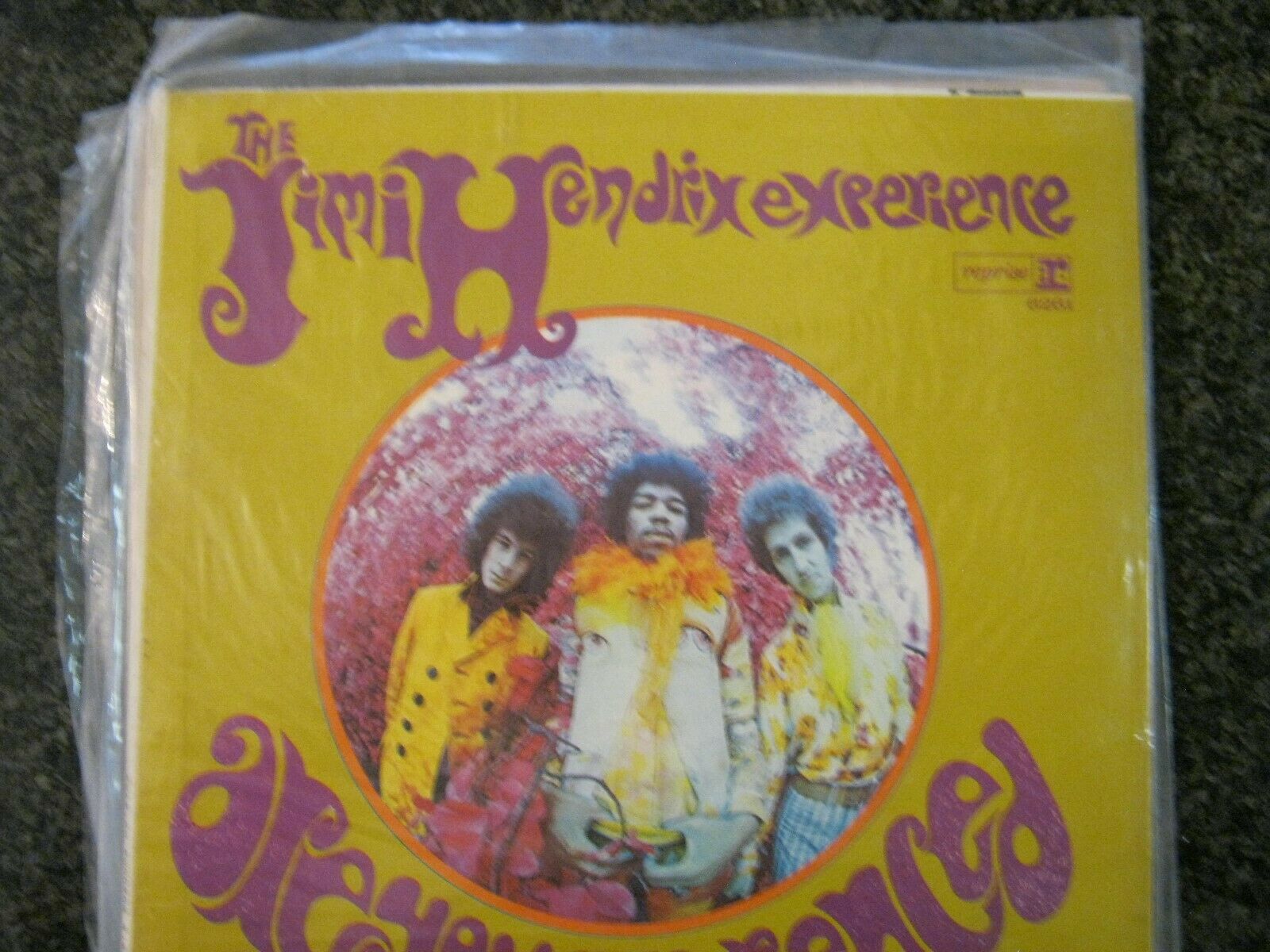
Jimi Hendrix Experience Are you Experienced original white label MONO promo
$
800


Favourite Auctions
To save auctions to your favourites, please login
If you don't have an account, please register
Description
It's time to let go of most of my high end Hendrix collectable vinyl records for others to enjoy. Will list a few on Ebay and see how it goes before I list more. See my items for additional titles. Jimi Hendrix Experience Are you Experienced original white label 1967 MONO promo. Cover VG+, disc excellent condition. Looks like it was not been played. Some surface marks from storage.
he Album: After performing in Boston, The Doors arrive in New York a few days before their scheduled shows at the Fillmore East. On his first night back in town, Jim Morrison visits Steve Paul's The Scene with his friend Paul Ferrara. Jimi Hendrix is jamming there with the band Eire Apparent. Morrison starts shouting from the audience and soon jumps on stage and begins an encounter between two rock icons. Morrison continually moans into the microphone, screaming obscenities, falling to the floor, knocking over microphones, and grabbing at Hendrix who manages to keep jamming throughout his crazed antics. In addition to Hendrix and Morrison, Lester Chambers plays the harmonica and likely supplies some vocals during this jam. Other players that night are believed to include members of the band Eire Apparent, a group from Northern Ireland that toured and shared management with Hendrix and were playing at The Scene from March 18-30. Their line-up at the time featured Michael 'Mick' Cox on guitar, Ernie Graham on guitar, Chris Stewart on bass, and Dave Lutton on drums. Buddy Miles is also thought to perform on some songs. Many sources claim members of The Scene's house band The McCoy's played, including bassist Randy Jo Hobbs and drummer Warren 'Bugs' Pemberton. As this was an informal jam and the known recording contains several cuts, almost anyone could have joined in so it's difficult to know for sure who played on which songs. Suffice it to say, it's likely more than one set of performers joined Hendrix that night. It's often claimed that Johnny Winter was present, likely due to his connection with The McCoys, but Winter has said he never met Jim Morrison and did not remember playing that night. Neither did Noel Redding or Rick Derringer. For some reason, this jam has long been dated to March 7, 1968 but there is very little to substantiate that date in The Doors' chronology. The band was in the studio from late February through early March and had no reason to be on the east coast until March 15th for a show in upstate New York. Eire Apparent did not play The Scene until the 18th making a date prior to this rather unlikely. Fortunately Hendrix had his Sony 7" reel-to-reel recorder running and captured this unusual jam on tape. He had recently started carrying around with him a tape recorder for these occasions so he wouldn’t lose any musical ideas that would occur while he played. All of these tapes were stolen when Jimi died.
At one point in the Jam, Jimi suggests to Morrison to sing into the recording microphone. The same master tape also includes a show by Eire Apparent at The Scene, further connecting it to their run of shows there. The recording was later obtained by Eire Apparent's Michael Cox and first released on a bootleg LP in 1972. It has since been released under various other bootleg titles over the years. The Hendrix estate eventually acquired the master in an effort to prevent further releases. Obviously, Morrison's drunken hollering was never meant to be released commercially, and it's important to stress that this bootleg should be taken for what it is -- a group of rockers getting together for an informal jam session and having some wild, raucous, obnoxious fun. Nothing on this LP can be considered essential, but these performances are exciting if you're seriously into Hendrix, and should interest many collectors and historians.
Later Releases of the Jam Session: Bleeding Heart is a posthumous live album by American singer/guitarist Jimi Hendrix. The album documents Hendrix's jam session at the Scene club, 301 West 46th Street, New York City, in March 1968. After being extensively bootlegged, the album was released officially in 1994 by Castle Communications. The album is notable for guest vocals from Jim Morrison (improvised lyrics with a strong sexual theme, and showing signs of drunkenness). Other personnel were bassist Randy Hobbs and drummer Warren "Bugs" Pemberton of Liverpool band the Undertakers who was living in Greenwich Village at the time. It has been rumored that guitarist Johnny Winter and Hendrix's bassist Noel Redding both appeared on the album. Winter himself has denied that he took part in the jam, saying he never met Jim Morrison. At times during the recording a second lead guitar (at a lower volume than Hendrix's) can be heard playing in an electric blues style. Harmonica playing on the title track is concurrent with Morrison's voice, making the presence of a sixth musician likely. Hendrix can be heard on tape announcing Morrison's presence and offering him a better microphone.
Bleeding Heart was released at various times in the past under various names including High, Live 'n Dirty (1978), Woke Up This Morning and Found Myself Dead (1980, with cover text by Tony Brown, who claimed this was the 'first genuine release' of these recordings 'thanks to Peter Shertser', published by Surprise Records in Brussels (Belgium). Tracking list is unaltered, but for the 'Woke up one morning title: this now reads 'Wake up this morning and you find yourself dead'.)', Sunshine of Your Love, Sky High, Live at the Scene Club, Red House, New York Sessions and Tomorrow Never Knows, though all were unofficial releases.
The Venue: The Scene was a well-known New York nightclub and was operated by Steve Paul between 1964 and 1970. It was notable for historic performances by The Doors and Jimi Hendrix, among others. The Scene, also known as "Steve Paul's The Scene", was located in the basement of 301 West 46th Street, in the Hell's Kitchen area of New York City. Steve Paul had started his entertainment career as a publicist for the Peppermint Lounge. Paul opened the club in 1964, initially as a club for actors, musicians and theatre workers from Broadway. At the time, the only musician in the club was a resident pianist. Regular musical acts commenced in 1966. The shift in focus to musical acts was quite popular, and involved such acts as The Young Rascals, The Lovin' Spoonful, and Sammy Davis, Jr. It also became a popular club with Andy Warhol and those associated with him, including Edie Sedgewick. The club's initial popularity waned, resulting in a period of closure until reopened with the assistance, financial and otherwise, of such persons as Peter Yarrow, Allen Ginsberg and Tiger Morse. In its second incarnation, the club became particularly popular with Jimi Hendrix, who regularly performed there after hours, in jams with other notable musicians. The first New York performances of the Jimi Hendrix Experience were at The Scene, on June 3 and 4, 1967, subsequent to Steve Paul seeing the band at the Monterey International Pop Festival. Other acts featured included The Velvet Underground, Pink Floyd, Jeff Beck, Traffic, Fleetwood Mac and The Chambers Brothers. Admission to the club was strictly controlled by Steve Paul, who was twenty-three years old at the time of the commencement of the club's second incarnation. Other regular attendees included photographer Linda Eastman, who later married Paul McCartney, and Tiny Tim, who often opened the sets. In 1967, The Doors played for three weeks at The Scene, becoming the biggest draw in the history of the club. Much of the 1970 documentary Groupies was shot in and around The Scene. The club closed in 1970. According to Sterling Morrison, then of the Velvet Underground, the closure was prompted by Steve Paul's refusal to pay protection money to the New York Mafia. This resulted in fights being started at the club, placing its liquor license in jeopardy.
When Bootlegs Started: In late 1968 a couple of California teenagers stumbled upon several reels of tapes that have become known as Minnesota Hotel tapes. How they came to acquire these tapes has never exactly been explained and is the stuff of legend. Before the 1960's, record companies usually held onto all tapes from artists' recording sessions. But artists like Dylan and the Beatles took more control of the process of making records, recording where they felt like it, in a house in Woodstock, for example and the record labels lost control of the process. The tapes these two teenagers stumbled upon contained some previously unreleased Dylan songs and alternate versions of some songs that had already been released. Open-reel tape decks were expensive at the time, and beyond the budget of these kids, so they approached a record manufacturing plant to master and press the tapes in the lowest quantity allowed, which was 100 pieces.
In the 1960's, cassette tapes were not commonly available, and everyone had a turn-table, so it was not unusual for people to make records to pass on information as they do with tapes today. High school bands made records of their annual concerts and church groups made records of their favorite hymn performance. Pressing 100 records was considerably cheaper than buying a tape deck and at the time there was nothing illegal about it. The kids made these 100 Dylan records, thinking of them more as novelties rather than as albums per se. They gave them away to friends and soon friends of friends began to inquire about them. People began to offer money for the discs, which were packaged in a plain white sleeve. A record store approached the kids to ask if they could have 100 copies at $4 a piece. So the kids made 500 more, started to sell them for a couple of bucks each, and the modern American bootlegging industry was born. The record became known as "The Great White Wonder" and over the next decade it sold so many copies some claimed it should have made it onto the Bill-board charts.
The teenagers went on to form the Trade Mark of Quality (TMQ) record label and to become the biggest bootleggers in music history. Today The Great White Wonder is recognized as the first significant bootleg album. By the mid 1970's a whole host of smaller bootleg labels had sprung up including Rubber Dubber, Immaculate Conception Records (ICR), Contraband Music (CBM), Dittolino Discs, Kustom Records, Idle Mind Productions (IMP), K&S Records, Berkeley Records, Smilin' Ears, and Ze Anonym Plattenspeiler. Their product was a thick, black record in a white jacket. To simplify matters they are referred to in this text as White Cover Folks (WCF).
When bootlegging began in the late 1960's, it was not illegal. Those first copies of The Great White Wonder were sold in legitimate record stores over the counter and were stuck in the Dylan section in the records racks. In the early 1970's, every hip record store in town had stacks of bootlegs for sale, and many times they were cheaper and occasionally better than the regular record company releases. The law changed in February 1972, when the U.S. Congress passed a bill that outlawed the exhumation of pet cemeteries for the purpose of road construction. In an effort to quickly pass a law to deal with the increasing number of bootleg albums, the recording lobby persuaded Congress to attach an amendment to the pet cemetery bill making it a felony to manufacture bootleg, pirate, or counterfeit sound recordings for the purpose of resale. The law has been open to interpretation over the years and though court cases are still occasionally fought over the specifics of copyright infringement involving, bootlegging remains illegal.
What is a bootleg: It is important to distinguish between the different forms of music piracy. A "bootleg" is defined as an illegally manufactured disc or tape that includes previously unreleased live or studio recordings. A "pirate" is considered a copy of a commercially available recording that has been repackaged in its own unique packaging. A "counterfeit", finally, is a copy of a commercially available recording that duplicates all aspects of the original official copy, including the packaging. These distinctions are important because the perpetrators of each different level approach the project with a different intention. Pirates and counterfeits are usually made by professionals with the sole intent of high profits. Most bootlegs are manufactured by fans. Even the Recording Industry Association of America (RIAA), the body that actually takes bootleggers to court) admits that bootlegging is small potatoes compared to the millions of dollars in losses record companies face from pirates and counterfeits. Usually the RIAA does not distinguish between the various forms of bootlegging when they report on raids or actions they have taken, so when you read about 100,000 records being seized they usually aren't talking about copies of The Great White Wonder. (Source: look on the world wide web at .argenteumastrum.com)
Vinyl LP Album Details:
Release Date: 1970
Recorded: Likely , Monday, March 18, 1968
Location: The Scene, 301 West 46th Street, New York, New York
Country: USA
Genre: Rock
Format: Live Jam, Unofficial Release
Style: Classic Rock
Catalog Number: None
Manufactured by: Assumed Herbie Howard
Channels: Stereo
Speed: 33-1/3
Binding: Vinyl
Language: English
Media: LP
Run Out Groove Side 1: Hand Etched HH Jam Side 1
Run Out Groove Side 2: Hand Etched HH Jam - 2
Side 1 label: 1
Side 2 label: 2
Credits:
Bass – Randy Jo Hobbs
Drums – Buddy Miles, Randy Z Derringer (Rick Derringer brother)
Guitar – Johnny Winter (probably Rick Derringer)
Vocals, Guitar – Jimi Hendrix
Vocals, Harmonica – Jim Morrison
Tracks:
A1 Red House (Unlike other versions of Red House Hendrix used a guitar figure similar to Cream's Crossroads".
B1 People People, People
B2 Tomorrow Never Knows
B3 Sunshine Of Your Love
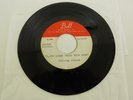
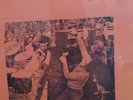
Album Condition: Based on the matrix it appears that this album is from by independent, Herbie Howard out of Los Angeles. It is in the TMOQ style with the album cover is a flimsy gatefold typical of the bootleg and is in good condition having been stored in a plastic sleeve for the last 40 years. The track listing, recording info & pictures consists of nothing more than a photocopy and is an insert that has been taped to the front of the album cover. The vinyl is in very good shape. Under an incandescent light there appears to be with one minor scuff on side one and one minor scratch side two none of which can be felt to the touch. The original blank record labels are clear and crisp with only the side number printed on them. There are no other writing, markings or spindle wear. The original heavy weight paper album liner is included which has some minor creases (see images). This is the original, authentic, first pressing of the unofficial release. It is not a reissue.
The Auction: This is a No Reserve Auction. Your album will be shipped in a 200 lbs test corrugated cardboard mailer box with a 32 lb. edge crush rating. The buyer pays for handling, packaging and shipping in the US by USPS Media Mail at a flat rate of $4.00. PayPal, Cashiers Checks, and Personal Checks accepted as payment. Payment is expected within five days from the close of the auction. Please allow up to seven days for personal checks to clear. Shipping and Handling charges will include Parcel Tracking and Delivery Confirmation services via the internet. Please email me for international mailing rates and USPS Priority Mail if requested. This item is guaranteed to be as described above. If you do not agree with my description then you may return these items for a refund (less fees, shipping and handling) by providing us notice of your intent within 14 days. No return if the album, liner or the record has been damaged in any way.
Click Here to Listen to Red House Version of Jim Hendrix and Jim Morrison
Jimi Hendrix/Jim Morrison/Johnny Winter "Jam" Rare Vinyl LP
Vinyl 1972 Bootleg LP of March 1968 Jam Session recorded at The Scene,
recorded in 301 West 46th Street, New York, New York
price rating