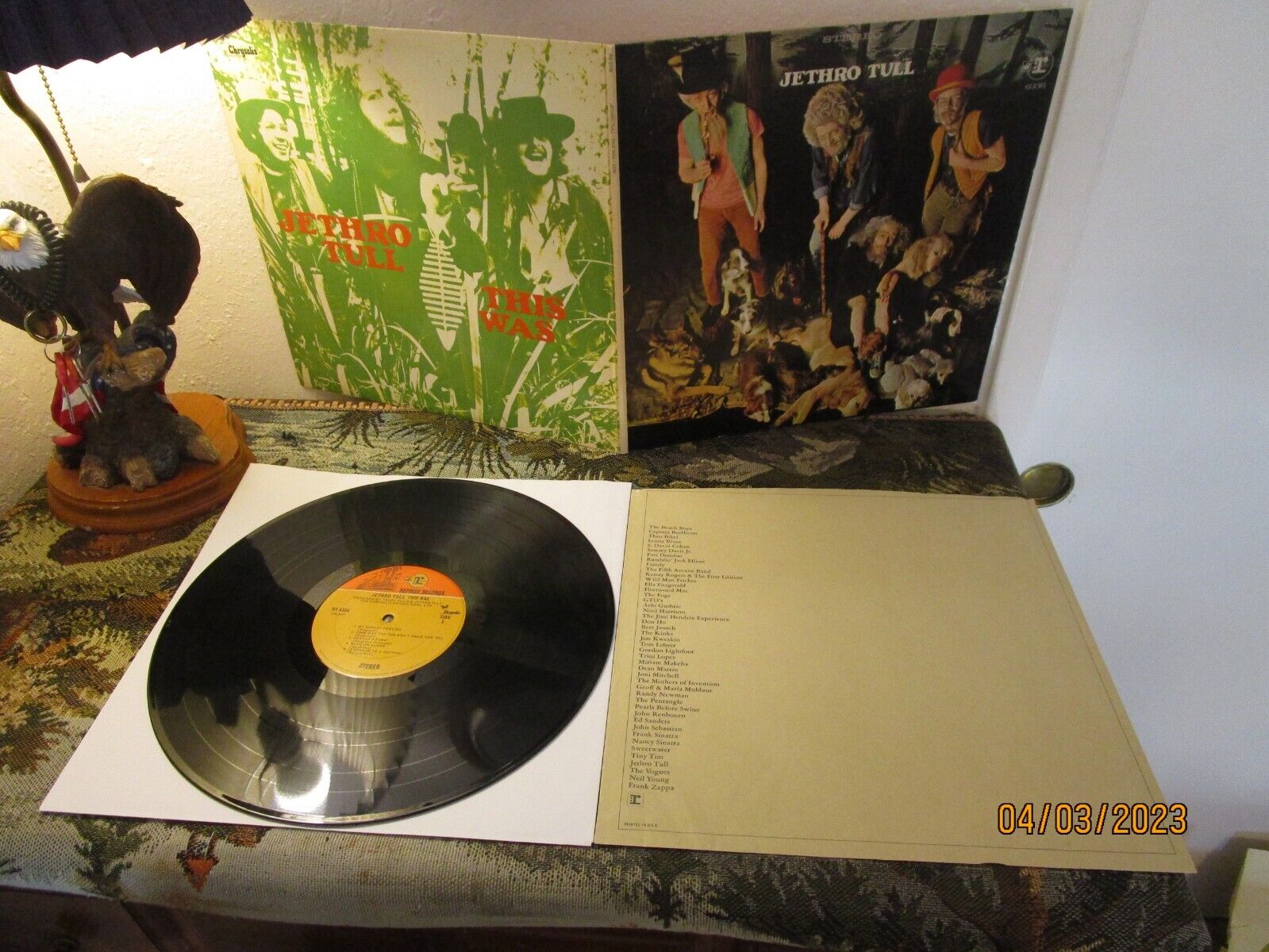
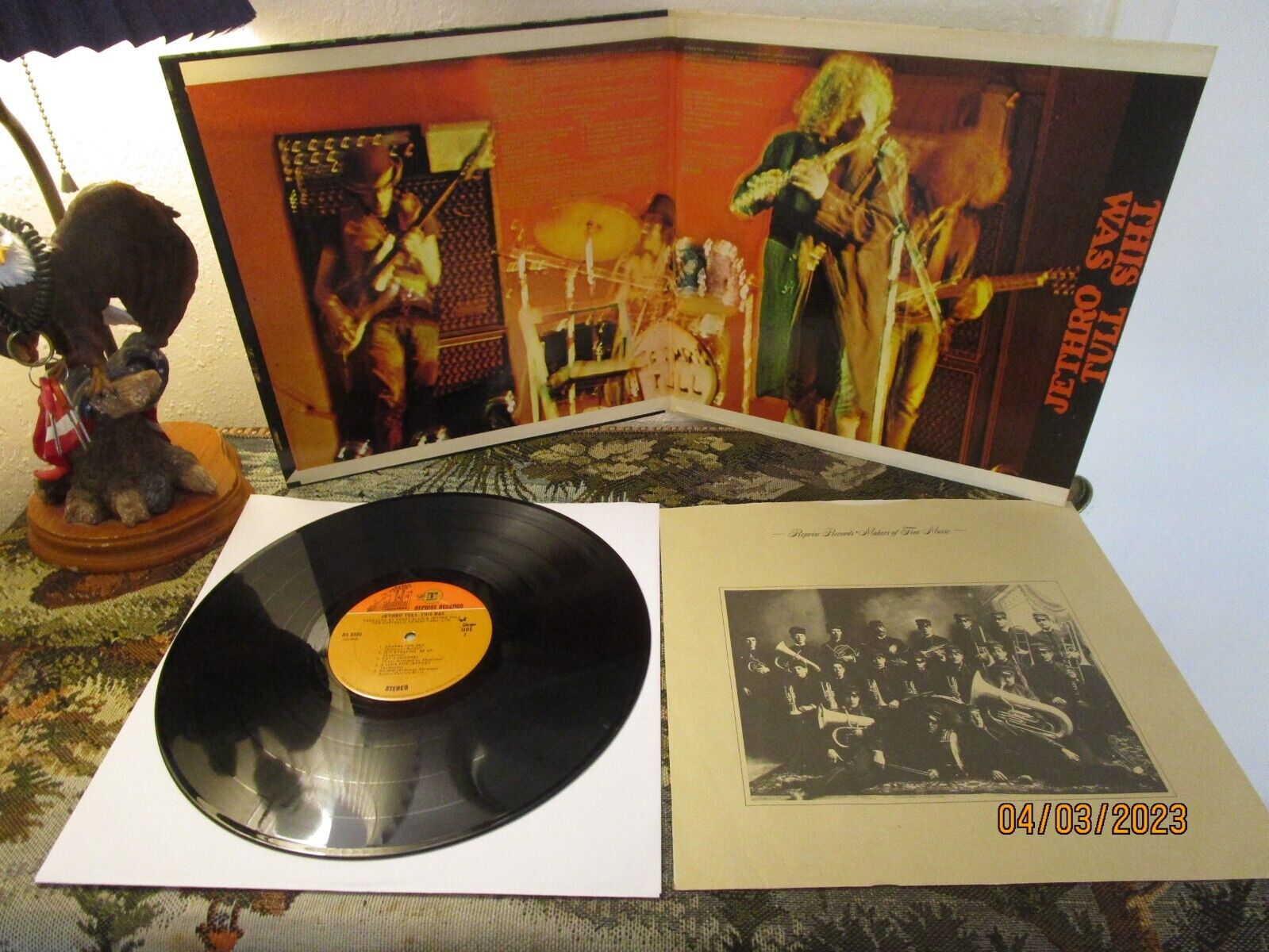
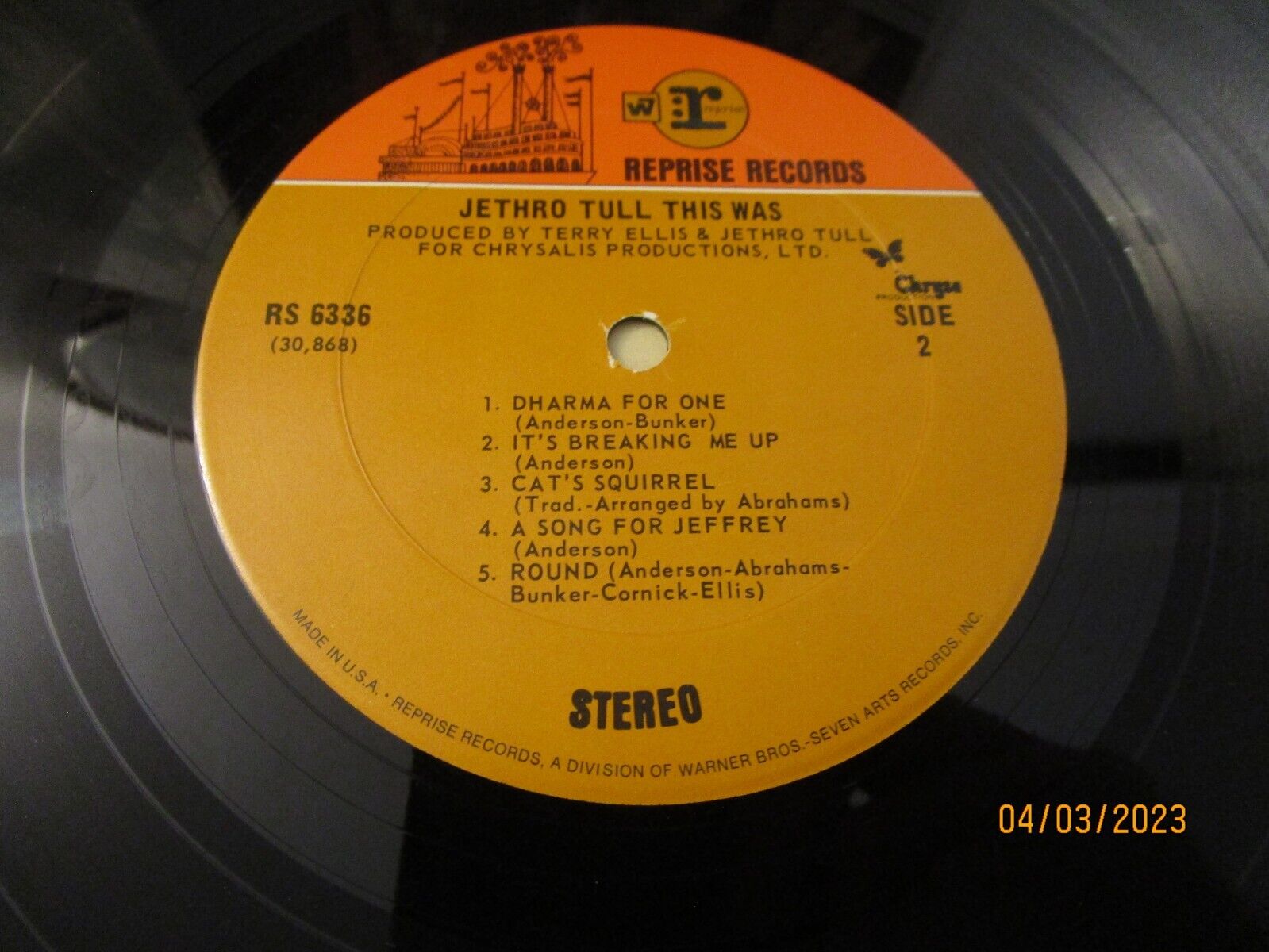
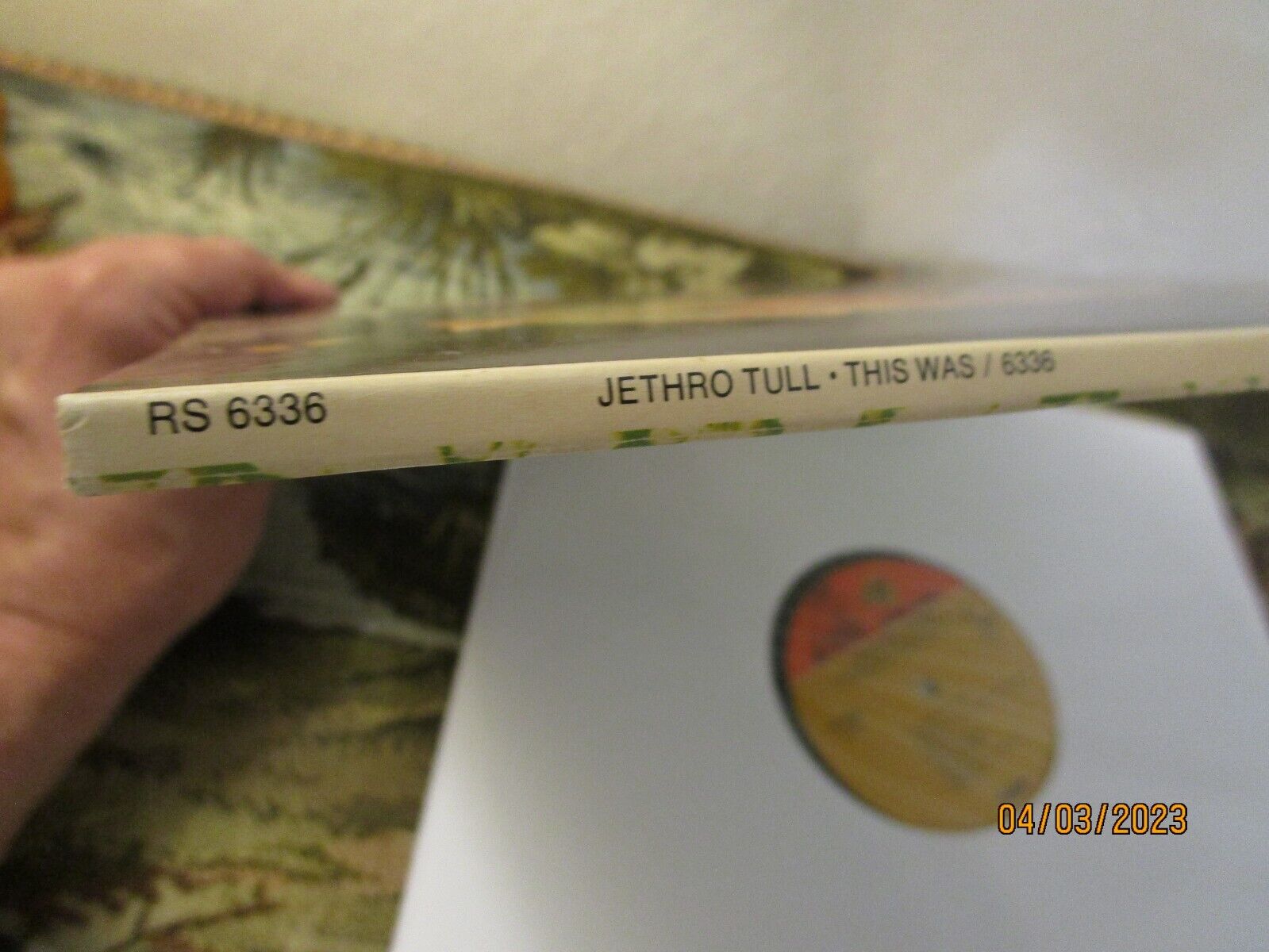
Jethro Tull - This Was- LP Gatefold ex/ex first press 1968
$
26

Favourite Auctions
To save auctions to your favourites, please login
If you don't have an account, please register
Description
Please read my Conditions!
My only method of cleaning is a soft brush and cloth and some Audio Advisor product. That requires to listening to the LP with my turntable & needle... (Which cost more money these days) and collecting the dust from the grooves. If a stubborn noise erupts, I will then look under a light and microscope. It is quite time consuming. So, I may miss a thing or two sometimes on my listings, like overlook a defect or to over grade; but it is not intentional! I will always be here to help resolve the issue! I am a one man show, while taking care of an elder... That being said... Please play record a few times if I mentioned I have cleaned it and do not use another product until u do so! The enzymes work at eating the debris and play gets better, each time, usually much better If after a few plays you could try cleaning again with your product if stubborn static persists... All I ask is my buyers realize these points and be rest assured I offer a refund policy, but I would prefer you email me so we can work something out first, I may have a backup copy... I have been collecting records since my 20's... It has been a passion and a part-time hobby, I hope you love and enjoy music as much as I do, and selling is another way to get to know other people with a likeminded interest as I. I offer a refund policy, so please give me the opportunity to make good if there is a problem with a transaction. I reserve the right to cancel a transaction after the sale If I find a missed defect on your behalf. Feel free to compare prices elsewhere you will find I am very reasonable. Don't waste your time if the seller does not listen to the lp's, I have return 100's because of defects. Also please be aware I am A human being, and I do make mistakes! So be gentle and straight forward if you are having any issues, I do not like having debates, I would rather listen to my music! Happy Hunting!
Jacket ~ ex Record ~ ex
Played &cleaned ***A Top Copy
Ian Anderson, the lead vocalist, flautist, acoustic guitarist and principal songwriter of Jethro Tull, performing with the band in Oxford shire, UK in 2004
Ian Anderson, Jeffrey Hammond and John Evan (originally Evans), who would become members of Jethro Tull, attended grammar school together in Blackpool. Anderson was born in Dunfermline, Scotland and grew up in Edinburgh before moving to Blackpool in January 1960. Evans had become a fan of the Beatles after seeing them play "Love Me Do" on Granada Television's Scene at 6:30. Though he was an accomplished pianist, he decided to take up the drums, as it was an instrument featured in the Beatles' line-up. Anderson had acquired a Spanish guitar and taught himself how to play it, and the pair decided to form a band. The pair recruited Hammond on bass, who brought along his collection of blues records to listen to.
The group initially played as a three piece at local clubs and venues, before Evans became influenced by Georgie Fame and the Animals and switched to organ, recruiting drummer Barrie Barlow and guitarist Mike Stephens from local band the Atlantic's. By 1964 the band had recruited guitarist Chris Riley and developed into a six-piece blue-eyed soul band called the John Evan Band (later the John Evan Smash). Evans had shortened his surname to "Evan" at the insistence of Hammond, who thought it sounded better and more unusual. The group recruited Johnny Taylor as a booking agent and played gigs further afield around northwest England, playing a mixture of blues and Motown covers. Hammond subsequently quit the band to go to art school. He was briefly replaced by Derek Ward, then by Glenn Cornick. Riley also quit and was replaced by Neil Smith. The group recorded three songs at Regent Sound Studios in Denmark Street, London in April 1967, and appeared at The Marquee club in June.
In November 1967 the band moved from the north of England, subsequently basing themselves in Luton, Bedfordshire, 43 miles from central London. They signed a management deal with Terry Ellis and Chris Wright and replaced Smith with guitarist Mick Abrahams. They quickly realized that supporting a 6-piece band was financially impractical and the group split up. Anderson, Abrahams and Cornick decided to stay together, recruiting Abrahams' friend Clive Bunker on drums, and they became a British blues band. Cornick recalled that although Evan left, the band said he was welcome to rejoin at a later date. Anderson shared a ground-floor flat with Cornick in a large house at the top of Sutley Road in Luton and worked as a cleaner for the Luton Ritz Cinema to pay the rent. According to Cornick, "we were so poor that we would share one can of stew or soup between us each evening."
Early years (1967–1968)
The band are named after the 18th-century British agriculturist, Jethro TullAt first the new band had trouble getting repeat bookings and they took to changing their name frequently to continue playing the London club circuit. A few of the names include Navy Blue, Ian Henderson's Bag o' Nails, and Candy Colored Rain. Anderson recalled looking at a poster at a club and concluding that the band name he didn't recognize was his. Band names were often supplied by their booking agent's staff. One of whom, a history enthusiast, eventually christened them Jethro Tull, after the 18th-century agriculturist. The name stuck because they happened to be using it the first time a club manager liked their show enough to invite them to return. They recorded a session with producer Derek Lawrence, which resulted in the single "Sunshine Day". The B-side "Aeroplane" was an old John Evan Band track with the saxophones mixed out. It was released in February 1968 on MGM Records, miscredited to "Jethro Toe". Anderson has since queried the misnomer as a possible attempt by the producer to avoid paying royalties to the band. The more common version, with the name spelled correctly, is actually a counterfeit made in New York. Anderson later met Hammond while in London and the two renewed their friendship, while Anderson moved into a bedsit in Chelsea with Evan. Hammond became the subject of several songs, beginning with their next single, "A Song for Jeffrey".
Anderson possessed a large overcoat, his father having given it to him with the words "You'd better take this. It's going to be a cold winter". This overcoat and, slightly later on, the flute, became part of his early stage image. It was around this time that Anderson purchased a flute after becoming frustrated with his inability to play guitar as well as Abrahams or Cream guitarist Eric Clapton, and because their managers thought he should remain a rhythm guitarist, with Abrahams becoming the front man.
I didn't want to be just another third-rate guitar player who sounded like a plethora of other third-rate guitar players. I wanted to do something that was a bit more idiosyncratic, hence the switch to another instrument. When Jethro Tull began, I think I'd been playing the flute for about two weeks. It was a quick learning curve ... literally every night I walked onstage was a flute lesson.
The group's first major break occurred at the National Jazz and Blues Festival at Sunbury-on-Thames in August 1968, where the band drew a rapturous reception and positive reviews in the music press. The band have since claimed that the success at Sunbury was a result of their persistent touring, which had generated a grassroots following who had all assembled at the festival and encouraged the rest of the audience. Cornick recalled, "from that moment on, we were a big band".
The group recorded their first album, This Was, between June and August 1968, and it was released in October, reaching number 10 in the charts. In addition to original material, the album included the traditional "Cat's Squirrel", which highlighted Abrahams' blues rock style, while the Rahsaan Roland Kirk-penned jazz piece "Serenade to a Cuckoo" gave Anderson a showcase for his growing talents on the flute. The overall sound of the group at this time was described in the Record Mirror by Anderson in 1968 as "a sort of progressive blues with a bit of jazz".
Following the album's release, Abrahams left the band in December to form his own group, Blodwyn Pig. There were a number of reasons given for his departure. Abrahams had heard that Ellis wanted Anderson to be the front man and group leader, at his expense, and realized he was unlikely to have the majority share in songwriting. Other reasons given were that Abrahams was a blues purist while Anderson wanted to branch out into other forms of music, and that Abrahams was unwilling to travel internationally or play more than three nights a week. Abrahams himself described his reasons more succinctly: "I was fed up with all the nonsense, and I wanted to form a band like Blodwyn Pig."
The group tried several replacements for Abrahams. The first was David O'List, who had recently left the Nice. After a week's rehearsal, O'List didn't show up and lost contact with the group. The next choice was Mick Taylor, who turned the group down because he felt his current gig with John Mayall's Bluesbreakers was a better deal. Following this, they approached Tony Iommi, guitarist for Earth (soon to be renamed Black Sabbath). Iommi had impressed Tull when Earth opened for them at a show in Birmingham. He briefly joined Jethro Tull, however, feeling closer to his old band, he quit after a few weeks and returned to Birmingham to rejoin Earth.[43] At Anderson's request, Iommi agreed to stand-in with Jethro Tull in The Rolling Stones Rock and Roll Circus on 11 December 1968. The group performed "A Song for Jeffrey", but only Anderson's singing and flute were live; the rest was mimed to the studio track, which featured Abraham's guitar playing.
The next choice was Martin Barre, who had seen the band perform at Sunbury, and had been tried out at the same audition as Iommi. Barre arranged a second audition with Anderson, who showed him some new songs that were in a different style from the blues they had been recording. Anderson was impressed by Barre's technique and offered him the job as the new guitarist. Barre played his first gig with Jethro Tull on 30 December 1968 at the Winter Gardens, Penance.
Stand Up through Aqualung (1969–1971)
After Barre joined, the group did a few shows supporting Jimi Hendrix in Scandinavia, then set out on an extensive tour of the US, supporting Led Zeppelin and Vanilla Fudge. Having attracted a substantial live following, Ellis and Wright asked Anderson, who had become the dominant songwriter, to write a hit single. The result was "Living in the Past", which reached No. 3 in May on the UK singles chart and No. 11 in the US, and resulted in an appearance on Top of the Pops. Although other so-called "serious" groups actively resisted issuing stand-alone singles at the time, Jethro Tull felt a hit single was a positive move for the group, if not their priority.
John Evan, an old schoolfriend and bandmate of Ian Anderson, joined the band in April 1970, after several invitations to do soThe next album was Stand Up, recorded during April–May and August 1969. t was released in September, and quickly reached No. 1 in the UK charts, the only album by the group to do so. Anderson had now established himself as the group's leader and songwriter, and wrote all of the material, aside from his jazzy rearrangement of J. S. Bach's "Bourrée in E minor BWV 996 (fifth movement)". The album cover unfolded to a photo insert of the band attached to the covers like a pop-up book.
Immediately after releasing Stand Up, the group set off on their first headlining tour in the US, including an appearance at the Newport Jazz Festival. Barre recalled, "It was really the turning point for Jethro Tull—for everything that we were to become and everything we were to inspire in others." The band was invited to play in the Woodstock Festival, but Anderson declined, being afraid that the band would be permanently associated with the hippie movement and molded into one type of sound.
On 29 January 1970 the band appeared on BBC's Top of the Pops again, performing "Witch's Promise". Evan rejoined the band in early 1970. He had stayed in London since the John Evan Band broke up, living with Anderson, and began studying music at the University of London. The pair did not see much of each other because of Jethro Tull's increasing workload, and Evan was reluctant to rejoin because of his studies, which gave him access to a free studio. He played as a session musician on the next album, Benefit (1970), following which Anderson said they needed somebody to play the keyboard parts on tour. His tutor eventually persuaded him that it was a good idea, and Evan formally joined. The album reached No. 4 in the UK and No. 11 in the US, and allowed the group to sell out 20,000-seat arenas, establishing themselves as a premier live act. In August, the band played to one of their largest audiences at the 1970 Isle of Wight festival.
The Isle of Wight appearance was followed by another US tour, during which Jethro Tull became only the second rock band after The Beatles to perform at Carnegie Hall in New York City. Cornick left the band at the tour's conclusion. He was keen to socialize on tour, while the other members became more reclusive and introverted. Cornick said he was fired by Anderson, while the band's official website said he was "invited to leave" by Ellis but given full support and encouragement to form his own band. Cornick subsequently formed Wild Turkey, a band which he revived for Jethro Tull fan conventions decades later. He died in August 2014.
Anderson invited Jeffrey Hammond to replace Cornick, buying a new bass for this purpose. However, Hammond had not played an instrument since going to art school shortly after his time in the John Evan Band, and was chosen more for his social compatibility with the other band members than for his musical skills. This line-up recorded Aqualung in late 1970, releasing it in 1971. The album was split into two sides, subtitled Aqualung and My God, and featured Anderson's opinions about organized religion. Recording the album was problematic because of technical issues in the studio and Hammond's rusty musical skills. On "Locomotive Breath", Anderson recorded the backing track on his own, singing along to a hi-hat accompaniment, which the rest of the band recorded on top of later. Despite Anderson's concerns that it may have been "too radical" compared with the band's previous albums, Aqualung was the first Jethro Tull album to reach the top ten in the US, peaking at No. 7. It sold over one million copies, earning it a gold disc by the RIAA in July 1971.
Progressive rock (1971–1976)
Because of the heavy touring schedule and his wish to spend more time with his family, drummer Bunker quit the group in May 1971, and was replaced by Barrie Barlow, whom Anderson rechristened "Barrymore". Barlow had first recorded with the band for the five-track EP Life Is a Long Song. Except for Barre, the line-up of Jethro Tull now consisted entirely of former John Evan Band members from Blackpool. In July 1971, the band wished to avoid the increasingly strict UK tax laws in order to keep more of their income. They became tax exiles and relocated to Switzerland. The move put strain on Anderson's marriage to his first wife, which lasted for another year before they divorced.
Anderson had become annoyed with music critics calling Aqualung a concept album, which he did not intend it to be. In 2005, Anderson later insisted, "I always said at the time, this is not a concept album. It's an album of varied songs...in which three or four are kind of the keynote pieces for the album, but it doesn't make it a concept album."
In response to the many critics who called Aqualung a concept album, Anderson decided to "come up with something that really is the mother of all concept albums". He had become influenced by Monty Python's humor and wrote a suite that combined complex musical ideas with a sense of humor to make fun of the band, its audience and its critics. The album, released in 1972, became Thick as a Brick, which was co-credited to a fictional schoolboy, Gerald Bostock. It consisted of a single track running over 43 minutes, split over two sides, which was uncommon for rock albums. Although the finished album was a continuous piece of music, it was written and recorded in stages, with the whole band helping with the arrangements. Thick as a Brick was the first Tull album to reach number one on the (US) Billboard Pop Albums chart with the following year's A Passion Play being the only other to do so.
Ian Anderson and Martin Barre of Jethro Tull in Chicago, 19731972 also saw the release of Living in the Past, a double-album compilation of remixed singles, B-sides and outtakes (including the entirety of the Life Is a Long Song EP, which closes the album), with the third side recorded live in 1970 at New York's Carnegie Hall on 4 November 1970. The album was successful, as it allowed new fans to catch up with early singles, particularly in the US where they had not been popular on initial release. New Musical Express called Jethro Tull one of "Britain's most important and successful 2nd generation progressive bands".
In 1973, the band attempted to produce a double album at France's Château d'Hérouville studios, something the Rolling Stones and Elton John among others were doing at the time, but supposedly they were unhappy with the quality of the recording studio and abandoned the effort, subsequently mocking the studio as the "Chateau disaster". They returned to England, and Anderson did some rewriting before Jethro Tull quickly recorded and released A Passion Play (1973), another single-track concept album, with allegorical lyrics focusing on the afterlife. Like Thick as a Brick, A Passion Play contained instrumentation rather uncommon in rock music. The album also featured an eccentric interlude, "The Story of the Hare Who Lost His Spectacles", which was co-written (along with Anderson and Evan) and narrated by bassist Hammond. A Passion Play sold well but received generally poor reviews, including a particularly damning review of its live performance by Chris Welch of Melody Maker. Anderson angrily shut himself away from all communication with the press in the wake of the negative critical response to A Passion Play.
Even as the band's popularity with critics began to wane around this time, their popularity with the public remained strong, as evidenced by high sales of their follow-up album, 1974's War Child. Originally intended to be a companion piece for a film, it reached number two on the US Billboard charts and received some critical acclaim and produced the radio mainstays "Bungle in the Jungle" (#12 on the US singles chart) and "Skating Away on the Thin Ice of the New Day". It also included a short acoustic song, "Only Solitaire", widely thought to be aimed at L.A. Times rock music critic Robert Hilburn, who had written a harsh review of the A Passion Play concerts at the Santa Monica Civic Auditorium. However, Anderson said the song was written before Hilburn's review and was aimed at music critics in general. The War Child tour also featured a female string quartet playing along with the group on the new material.
In 1975, the band released Minstrel in the Gallery, an album which resembled Aqualung (1971) in that it contrasted softer, acoustic-guitar-based pieces with lengthier, more bombastic works headlined by Barre's electric guitar. Written and recorded during Anderson's divorce from his first wife Jennie Franks, the album is characterised by a markedly more introspective tone than their previous album, and critics gave it mixed reviews. By this point Jethro Tull had been awarded six RIAA gold records for sales of Stand Up (1969), Aqualung (1971), Thick as a Brick (1972), Living in the Past (1972), A Passion Play (1973), and Minstrel in the Gallery (1975). For the 1975 tour, Dee Palmer, who had long been the band's orchestra arranger, officially joined the band's stage show on keyboards and synthesisers. In February 1975 Jethro Tull sold out five nights at the 20,000-seat Los Angeles Forum, prompting Melody Maker to run the headline "Jethro – Now the World's Biggest Band?" After the tour, bassist Hammond quit the band to pursue painting. John Glascock, who earlier was playing with flamenco-rock band Carmen, a support band on the previous Jethro Tull tour, became the band's new bassist.
1976's Too Old to Rock 'n' Roll: Too Young to Die! was another concept album, this time about the life of an ageing rocker. (On the live version of the album's title track released two years later, Anderson denies that the song is about himself.) Glascock made his first appearance on this album, contributing harmony and second vocals in addition to the bass lines. Palmer continued to arrange, and she recorded as a guest on two songs. For the 1976 tour, Jethro Tull became one of the first bands to use giant projection screens for the larger stadium shows. Although Too Old... did not sell as well as the other 1970s albums, the 1976 compilation M.U. - The Best of Jethro Tull achieved Platinum Album in US and Gold record in UK. A television special was recorded showing the development of the album's concept in a live show with the band (fully dressed in the most rock-hard-tongue-in-cheek outfits), but the programme was never officially released.
thx u wiki!
price rating