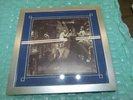
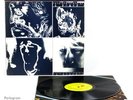
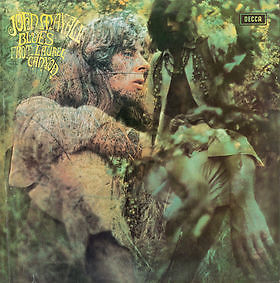
JOHN MAYALL-BLUES FROM LAUREL CANYON LP SKLI 4972 1969
€
59
$
67


Favourite Auctions
To save auctions to your favourites, please login
If you don't have an account, please register
Description
PREMESSA: LA SUPERIORITA' DELLA MUSICA SU VINILE E' ANCOR OGGI SANCITA, NOTORIA ED EVIDENTE. NON TANTO DA UN PUNTO DI VISTA DI RESA, QUALITA' E PULIZIA DEL SUONO, TANTOMENO DA QUELLO DEL RIMPIANTO RETROSPETTIVO E NOSTALGICO , MA SOPRATTUTTO DA QUELLO PIU' PALPABILE ED INOPPUGNABILE DELL' ESSENZA, DELL' ANIMA E DELLA SUBLIMAZIONE CREATIVA. IL DISCO IN VINILE HA PULSAZIONE ARTISTICA, PASSIONE ARMONICA E SPLENDORE GRAFICO , E' PIACEVOLE DA OSSERVARE E DA TENERE IN MANO, RISPLENDE, PROFUMA E VIBRA DI VITA, DI EMOZIONE E DI SENSIBILITA'. E' TUTTO QUELLO CHE NON E' E NON POTRA' MAI ESSERE IL CD, CHE AL CONTRARIO E' SOLO UN OGGETTO MERAMENTE COMMERCIALE, POVERO, ARIDO, CINICO, STERILE ED ORWELLIANO, UNA DEGENERAZIONE INDUSTRIALE SCHIZOFRENICA E NECROFILA, LA DESOLANTE SOLUZIONE FINALE DELL' AVIDITA' DEL MERCATO E DELL' ARROGANZA DEI DISCOGRAFICI .
JOHN MAYALL
blues from laurel canyon
Disco LP 33 giri , 1968, decca , SKLI 4972, italy, stereo, first pressing
ECCELLENTI CONDIZIONI, vinyl ex++/NM , cover ex++/NM
John Mayall è stato per lungo tempo il punto di riferimento fondamentale per la scena blues inglese. Il suo complesso, i Bluesbreakers, ha rappresentato la formazione di transizione e di connessione tra il blues revival degli anni cinquanta ed il rock-blues degli anni sessanta.
Particolarmente capace nella scoperta di grandissimi talenti, dal gruppo di Mayall sono nati musicisti come Eric Clapton, Mick Taylor, Larry Taylor e Peter Green, tutta gente che con lui si è forgiata ed affinata e ha imparato moltissime cose, tra cui a zoppicare con perizia ed eleganza..
Il suo sound e il suo carisma sono stati fonte di influenza, estasi e ispirazione per molti famosi e celebrati artisti plastici, tra cui spicca Walt Disney con la creazione del personaggio di Pietro Gambadilegno, di cui Mayall al cinema è stato il doppiatore e la controfigura nelle scene più rischiose in cui occorreva un esperto e vero stuntman claudicante.
On the 14th of July '68 The Bluesbreakers were disbanded following my decision to work in more of a solo capacity with a small 'backing group'. This boiled down to choosing the right personnel for the new quartet formation. I doubt if there could be a better choice than guitarist Mick Taylor who really shows his brilliance on this new album. He has worked with me longer than any other guitarist I've had and I hope that we'll continue as a team for a long time to come. I also have great faith and high hopes for the new rhythm section of Stephen Thompson and Colin Allen who, after an amazingly short time of being 'thrown in the deep end', are already settling down extremely well. This album is the story of my 3 weeks vacation in Los Angeles after the abolition of John Mayall's Bluesbreakers. I'm very satusfied that the others have been able to interpret in music so accurately all the experiences and feeling I had during this brielf visit to my new found 'home'.
(John Mayall)
3rd September '68
- Etichetta: decca
- Catalogo: SKLI. 5010
- Matrici : ZAL 8532 - 1W / ZAL 8533 - 1W
- Data di pubblicazione: 1969
- Supporto:vinile 33 giri
- Tipo audio: stereo
- Dimensioni: 30 cm.
- Facciate: 2
- unboxed blue label, gatefold / copertina apribile, laminated glossy cover, white paper inner sleeve
Tracklisting:
Credits:
Bass - Stephen Thompson*
Drums - Colin Allen
Engineer - Derek Varnals
Guitar - Mick Taylor
Producer - Mike Vernon
Producer, Written-By, Vocals, Harmonica, Organ, Guitar - John Mayall Notes: Recorded at Decca Studios, West Hampstead,
London, between August 26th and 28th, 1968.
Blues from Laurel Canyon is a 1968 album by John Mayall, featuring British blues music. It was his first album after the breakup of his band the Bluesbreakers on 14 July 1968. It was also his last album with Decca before moving to Polydor.
John Mayall sings and plays harmonica, organ and guitar on the album. Other musicians include a young Mick Taylor (guitar), Colin Allen (drums) and Stephen Thompson (bass). The guitarist Peter Green featured on the track First Time Alone. The engineer was Derek Varnals. All the songs on the album were written by John Mayall. It was recorded at Decca Studios in West Hampstead, London, England between 26 and 28 August 1968, and was released on the Decca label.
The title of the album derives from Laurel Canyon, California, USA (in the Los Angeles area) where John Mayall subsequently lived from 1969 to 1979. It forms a record of his visit there before moving to the US on a more permanent basis. The area was favoured by many musicians at the time.
The album was innovative for its time, especially by the standards of blues recordings. The first track opens with a recording of a jet airliner landing, dissolving into the driving rhythm of the song. There were no visible track divisions on the vinyl album. Some songs fade or segue into the next track, others stop on a chord which is immediately followed by the introduction of the next track. Tabla drums are used, as is the technique of hitting guitar strings with a drumstick. The final track is a short song which moves into an extended lead guitar solo underscored by Mayall's Hammond organ, fading into a simple unaccompanied guitar figure which repeats until it too fades.
The lyrics are autobiographical and refer, if obliquely, to people Mayall met on his first visit, such as Frank Zappa and Moon Unit Zappa (on 2401) and the band Canned Heat (on The Bear). The identity of Miss James, the romantic interest described in loving detail in the second half of the album, is not known.
From a technical point of view, the album demonstrates the limitations of the recording technology of the time. A substantial number of vinyl albums were issued in monophonic format, since many home record players, at least in the United Kingdom, could not reproduce stereophonic sound. On the stereophonic releases, including the CD re-releases, the stereo imaging separates the instruments quite strongly. For instance, in the song Walking on Sunset, the drumkit, situated on the left, is inaudible in the right hand channel. The overall impression is that of being in a hallway with several rooms off it, each one containing a particular instrument. There is no sense of being in a room with several instruments playing and generating an ambient sound-field, as might be expected from a live recording, or one mixed with more available sound inputs.
JOHN MAYALL, FORTE DI UNA carriera ultra-ventennale, è considerato all'unanimità il "padre" del british blues. Il suo è un blues tipicamente "bianco", quindi secco e stringato nelle sonorità, che spesso tende a trasfigurarsi nel rythm'n'blues. Nella leggendaria band di Mayall, i Bluesbreakers, hanno fatto gavetta praticamente tutti i grandi chitarristi inglesi degli anni sessanta, da Clapton a Green, fino a Mick Taylor, futuro Rolling Stone, che è protagonista di un'ispiratissima ed infuocata performance su questo "Blues from Laurel Canyon". Il disco è comunque un vero capolavoro: qui infatti il blues di Mayall, recatosi nel mitico Laurel Canyon americano, tende a rilassarsi, a far fluire la musica liberamente, in forma di magiche jam sessions. La mitica "summer of love", e l'assunzione di droghe psichedeliche, influenzano il nostro tanto da rielaborare il suo sound in maniera decisiva; accanto a blues fiammeggianti ("Long Gone Midnight", "Miss James", "Walking on sunset") in questo disco sono presenti uno stupendo mantra/blues, "Fly Tomorrow", e un capolavoro come "First Time Alone", blues bucolico e misticheggiante che da solo vale l'acquisto del compact. E' insomma il blues degli "stati alterati di coscienza": tremendamente seducente nonché davvero intramontabile nel tempo. Disco imperdibile.
Biografia
Mayall è il figlio di Murray Mayall, chitarrista e appassionato di musica jazz. Fin dall'infanzia, fu avvicinato alle sonorità di musicisti blues americani fra cui Leadbelly, Albert Ammons, Pinetop Smith, and Eddie Lang, e imparò da autodidatta a suonare il piano, la chitarra e l'armonica.
Mayall frequentò la scuola d'arte e dopo fece tre anni di servizio militare con l'Esercito Britannico in Corea. Nel 1956, cominciò a suonare blues con gruppi quasi professionistici, "The Powerhouse Four" e, in seguito, "The Blues Syndicate". Sotto l'influenza di Alexis Korner, si trasferì a Londra e formò i "John Mayall's Bluesbreakers".
I Bluesbreakers erano una specie di banco di prova e di allenamento per musicisti blues, e ci furono diversi cambi di componenti prima dell'arrivo di Eric Clapton, con il quale il gruppo raggiunse il suo primo successo commerciale. Dopo che Clapton lasciò per fondare i Cream, i Bluesbreakers presero fra le loro file una serie di altri musicisti notevoli, fra cui Peter Green, John McVie, Kal David, and Mick Taylor. Si riportano le parole di Eric Clapton, "John Mayall ha gestito una scuola per musicisti incredibilmente buona."
Nei primi anni '70, Mayall raggiunse il successo commerciale negli Stati Uniti a si trasferì al Laurel Canyon, a Los Angeles. Là ebbe un'importante influenza sulle carriere di musicisti emergenti come Blue Mitchell, Red Holloway, Larry Taylor, and Harvey Mandel.
Mayall da allora ha continuato a suonare e dare concerti, ricostituendo anche i Bluesbreakers nel 1982.
Il 29 novembre 2003 ha effettuato un grande concerto a Liverpool portando sul palco, tra gli altri, Eric Clapton e Mick Taylor.
Biography
Mayall's father was Murray Mayall, a guitarist and jazz music enthusiast. From an early age, he was drawn to the sounds of American blues players such as Leadbelly, Albert Ammons, Pinetop Smith, and Eddie Lang, and taught himself to play the piano, guitars, and harmonica. Mayall served three years of national service in Korea and, during a period of leave, he bought his first electric guitar. Back in Manchester he enrolled at Manchester College of Art, now part of Manchester Metropolitan University, and started playing with semi-professional bands. After graduation he obtained a job as an art designer but continued to play with local musicians. In 1963 he opted for a full time musical career and moved to London. His previous craft was put to good use in the designing of covers for many of his own albums. John Mayall married twice and has six grand-children. Mrs Maggie Mayall is an American blues performer and since the early 1980s takes an active part in the management of her husband's career. In 2005 Mayall was appointed Officer of the Order of the British Empire (OBE) in the Honours List.
The Early Years
In 1956, with college fellow Peter Ward, Mayall had formed the Powerhouse Four which consisted of both men plus other local musicians with whom they played at local dances. In 1962, Mayall became a member of the Blues Syndicate. The band was led by trumpeter John Rowlands and included drummer Hughie Flint who Mayall already knew. It was Alexis Korner, another blues enthusiast, who persuaded Mayall to opt for a full time musical career and move to London. There, Korner introduced him to many other musicians and helped them to find gigs. In late 1963, with his band, which was now called the Bluesbreakers, Mayall started playing at the Marquee Club. The lineup was Mayall, Ward, John McVie on bass and guitarist Bernie Watson, formerly of Cyril Davies and the R&B All-Stars. The next spring Mayall obtained his first recording date with producer Ian Samwell. The band, with Martin Hart at the drums, recorded two tracks: "Crawling Up a Hill" and "Mr. James." Shortly after, Hughie Flint replaced Hart, and Roger Dean took the guitar from Bernie Watson. This lineup backed John Lee Hooker on his British tour in 1964.
Mayall was offered a recording contract and on 7 December 1964 a live performance of the band was recorded at the Klook's Kleek. A single, "Crocodile Walk", was recorded later in studio and released along with the album but both failed to achieve any success and the contract was terminated.
In April 1965 former Yardbirds guitarist Eric Clapton replaced Roger Dean and John Mayall's career entered its decisive phase.
The Late Sixties
The Bluesbreakers with their new guitar player started to attract considerable attention. However Clapton departed without notice and had to be replaced urgently. John Weider, John Slaughter and Geoff Krivit attempted to fill in but finally Peter Green took the charge. John MacVie was dismissed and during the next six months Jack Bruce, from Graham Bond Organization, held the bass. In November Clapton came back and Green departed. Sometime later in the month, the band entered the studio to record a single, Sitting on Top of the World. Also, a live date recorded at the Flamingo provided tracks that appeared later on the 1969 compilation Looking Back and the 1977 album Primal Solos.
In April 1966, the Bluesbreakers returned to (Decca) Studios to record a second LP with producer Mike Vernon. The sessions with horn arrangements for some tracks (John Almond on baritone sax, Alan Skidmore on tenor sax and Dennis Healey on trumpet) lasted just three days. Bluesbreakers with Eric Clapton was released in the UK on 22 July 1966. Today the album has gained the status of a classic, but it was also Mayall's commercial breakthrough, rising to #6 on the chart. In the mean time Clapton announced the formation of Cream with Jack Bruce and Ginger Baker.
Mayall had to replace him and persuaded Peter Green to come back. During the following year with Peter Green on guitar and various other sidemen some 40 tracks were recorded. The album A Hard Road was released in February 1967. Today its expanded versions include most of this material and the album itself also stands as a classic. Peter Green gave notice and soon started his own project Peter Green's Fleetwood Mac which was to include the three former Bluesbreakers.
Mayall's first choice to replace Green was 16-year-old David O'List, guitarist from The Attack. However O'List declined and went to form The Nice with organist Keith Emerson. Mayall found two other guitarists for the Bluesbreakers, Terry Edmonds and 19-year-old Mick Taylor.
In a single day of May 1967 Mayall alone had put together in a studio an album which was released in November with the apt title The Blues Alone. Only former Artwoods drummer Keef Hartley appears on half of the tracks which showcase Mayall's ability as multi-instrumentalist.
A six-piece lineup (consisting of Mick Taylor on lead guitar, John McVie on bass, Hughie Flint or Keef Hartley on drums, Rip Kant and Chris Mercer on saxes), recorded the album Crusade on 11 and 12 July 1967. These Bluesbreakers spent most of the year touring and Mayall taped the shows on a portable recorder. At the end of the tour he had over sixty hours of tapes which he edited into an album in two volumes: Diary of a Band, Vols. 1 & 2, released in February 1968. Meanwhile a few lineup changes had occurred: McVie had departed and was replaced by Paul Williams who quit to join Alan Price and was replaced by Keith Tillman; Dick Heckstall-Smith had taken the sax.
Following a U.S. tour, more lineup changes occurred as Mayall replaced Tillman by 15-year-old Andy Fraser, who left within six weeks to join Free and Tony Reeves, previously a member of the New Jazz Orchestra, replaced him. Hartley also left to form his own band, the Keef Hartley Band, and was replaced by New Jazz Orchestra drummer Jon Hiseman, who had also played with the Graham Bond Organization. Henry Lowther who played violin and cornet joined in February of 1968. Two months after the Bluesbreakers recorded Bare Wires, co-produced by Mayall and Mike Vernon. Hiseman, Reeves and Heckstall-Smith moved on to form Colosseum; the new lineup retained Mick Taylor and added drummer Colin Allen, formerly of Zoot Money's Big Roll Band, Dantalian's Chariot and Georgie Fame, and a young bassist Stephen Thompson. In August 1968, the new quartet recorded Blues from Laurel Canyon.
After nearly two years with Mayall, Taylor left and joined officially the Rolling Stones on 13 June 1969. Chas Crane filled in briefly. Allen then left for Stone the Crows, leaving as the only holdover bassist Thompson (who would also eventually join Stone the Crows). Mayall recruited acoustic finger-style guitarist Jon Mark and flautist/saxophonist John Almond. Mark was best known as Marianne Faithfull's accompanist for three years and for having been a member of the band Sweet Thursday (which included Nicky Hopkins); Almond had played with Zoot Money and Alan Price. The new band was markedly different from previous Mayall projects. A performance at the Fillmore East provided the tracks for the live album The Turning Point. A studio album, Empty Rooms, was recorded with the same personnel and Mayall continued the experiment of formations without drummers on two more albums. On USA Union a violin replaced the wind instruments and on Memories the band was stripped down to a trio.
In November 1970 Mayall launched a recording project involving most of the notable musicians with whom he had played during the last few years. The double album, Back to the Roots, features Clapton, M. Taylor, Harvey Mandel and Jerry McGee on guitar, Thompson and L. Taylor on bass, Keef Hartley and Paul Lagos on drums. Back to the Roots did not promote new names and USA Union and Memories were recorded with American musicians: Mayall had exhausted his catalytic role on the British blues-rock scene. The list of musicians who had benefited from association with him remains impressive.
The Seventies and beyond
At the start of the seventies Mayall had relocated in the USA where he spent most of the next 15 years, recording with local musicians for various labels. In August 1971, Mayall produced a jazz oriented session for bluesman Albert King and a few months later took on tour the musicians present in the studio. A live album Jazz Blues Fusion was released next year, with Mayall on harmonica, guitar and piano, Blue Mitchell on trumpet, Clifford Solomon and Ernie Watts on saxophones, Larry Taylor on bass, Ron Selico on drums and Freddy Robinson on guitar. A few personnel changes are noted at the release of a similar album in 1973, the live Moving On. During the next decade Mayall continued shifting musicians and switching labels and released a score of albums. Tom Wilson, Don Nix and Allen Toussaint occasionally served as producers. At this stage of his career most of Mayall's music was rather different from electric blues played by rock musicians, incorporating jazz, funk or pop elements and adding even female vocals. A notable exception is The Last Of the British Blues (1978), a live album excused apparently by its title for the momentanous return to this type of music.
The Return of The Bluesbreakers
In 1982 Mayall was reunited with M. Taylor, John McVie and Colin Allen, three musicians of his sixties lineups, for a brief tour from which a live album would emerge a decade later. In 1984 Mayall restore the name Bluesbreakers for a lineup comprising the two lead guitars of Walter Trout and Coco Montoya, bassist Bobby Haynes and drummer Joe Yuele. The mythic name did perhaps something to enhance the interest in a band which by all standards was already remarkable. A successful world tour and live recordings achieved the rest. In the early 1990s most of the excitement was already spent and Buddy Whittington became the sole lead guitarist in a formation which included then organist Tom Canning. Mayall's 70th birthday was the occasion for a get together concert with some previous sidemen, including Clapton, Taylor and a few other well known names.
Trivia
- As a teenager, Mayall lived in a tree house in his mother's large garden. His father, by this time with a new wife, lived next door, and had built a similar tree house for his new family. The Manchester Evening News ran a feature on Mayall's tree-dwelling habit. In his early twenties Mayall destroyed the house, pulling it out of the tree, and, in the process damaging a significant proportion of his huge record collection. The song 'Home in a Tree' appeared on 'Memories' (1971)
- On 12 May 1965, the Bluesbreakers were in a studio backing Bob Dylan with Tom Wilson producing. According to Mayall the session was a "fiasco" and recordings have not been released. Mayall makes a brief appearance in the film Dont Look Back[sic].
- In January 1968 Mayall played at the Fillmore and Winterland in San Francisco on triple bills featuring the Bluesbreakers, Jimi Hendrix and Albert King.
- In 1979 a brush fire destroyed Mayall's house in Laurel Canyon, damaging seriously his musical collections and archives.
- On the occasion of the 40th year of his career Mayall received carte blanche to invite fellow musicians for the recording of a celebratory album. Along for the Ride appeared in 2001, credited to John Mayall and Friends with twenty names listed on the cover, including some Bluesbreakers, old and new, and also Gary Moore, Jonny Lang, Steve Cropper, Steve Miller, Otis Rush, Billy Gibbons, Chris Rea, Jeff Healey, Shannon Curfman and a few others.
- In 2005, Mayall was awarded an OBE in the Honours List. "It's the only major award I've ever received. I've never had a hit record or a Grammy or been in the Rock and Roll Hall of Fame." commented Mayall.
Discography
Original John Mayall Albums
- 1965 John Mayall Plays John Mayall (Decca) [live, Dec. '64]
- 1966 Bluesbreakers with Eric Clapton (Decca) UK # 6
- 1967 A Hard Road (Decca) UK # 10
- 1967 Crusade (Decca) UK # 8
- 1967 The Blues Alone (Ace of Clubs) UK # 24
- 1968 The Diary of a Band Volume 1 (Decca) UK # 27
- 1968 The Diary of a Band Volume 2 (Decca) UK # 28
- 1968 Bare Wires (Decca) UK # 3
- 1968 Blues from Laurel Canyon (Decca) UK # 33
- 1969 The Turning Point (Polydor) UK # 11
- 1970 Empty Rooms (Polydor) UK # 9
- 1970 USA Union (Polydor) UK # 50
- 1971 Back to the Roots (Polydor, 2LP) UK # 31
- 1971 Memories (Polydor)
- 1971 (<-1968) John Mayall - Live In Europe (London PS 589) [a USA release of The Diary Of A Band Vol. 2]
- 1972 Jazz Blues Fusion (Polydor) [live, USA, Nov.-Dec. '71]
- 1973 Moving On (Polydor) [live, USA, July '72]
- 1973 Ten Years Are Gone (Polydor, 2LP/ no CD reissue) [studio + live NY'72]
- 1974 The Latest Edition (Polydor)
- 1975 New Year, New Band, New Company (ABC - One Way)
- 1975 Notice to Appear (ABC - One Way)
- 1976 Banquet in Blues (ABC - One Way)
- 1977 Lots of People (ABC - One Way) [live LA, Nov. '76]
- 1977 A Hard Core Package (ABC - One Way)
- 1977 Primal Solos (Decca) [live '66 and '68, UK]
- 1978 The Last of the British Blues (ABC - One Way) [live USA]
- 1979 Bottom Line (DJM)
- 1980 No More Interviews (DJM)
- 1982 Road Show Blues (DJM) (Reissue 1995 : Why Worry. 2000 : Lost and Gone. 2001 : Reaching for the blues. 2006 : Godfather of the Blues. 2007 : Big Man)
- 1985 Return Of The Bluesbreakers (AIM Australia) ['81 and '82]
- 1985 Behind the Iron Curtain (GNP Crescendo) [live Hungary](Reissue 2004:Steppin' out)
- 1987 Chicago Line (Entente - Island)
- 1988 The Power of the Blues (Entente) [live Germany '87] (Reissue 2003 : Blues Forever)
- 1988 (<-1971) Archives to Eighties (Polydor)
- 1990 A Sense of Place (Island)
- 1992 Cross Country Blues (One Way) ['81 and '84]
- 1993 Wake Up Call (Silvertone) UK # 61
- 1994 The 1982 Reunion Concert (One Way) [live, USA]
- 1995 Spinning Coin (Silvertone)
- 1997 Blues for the Lost Days (Silvertone)
- 1999 Padlock on the Blues (Eagle)
- 1999 Rock the Blues Tonight (Indigo) [live 2CD '70-'71, Canada]
- 1999 Live at the Marquee 1969 (Eagle) [live '69, London]
- 1999 The Masters (Eagle) [live 2CD, UK '69 +interv.]
- 2001 Along For The Ride (Eagle/Red Ink)
- 2002 Stories (Eagle/Red Ink)
- 2003 (<-1987-8) Blues Forever (Fuel) ['87 & '88]
- 2003 70th Birthday Concert (Eagle) [live in Liverpool]
- 2005 Road Dogs (Eagle)
- 2005 Rolling with the Blues (Recall) [live '72-73 and '80+'82, various countries, 2CD +DVD interview] (Reissue 2006 The private Collection (Snapper 2CD)
- 2007 Live at the BBC (Decca) ['65-67 & '75]
- 2007 In the Palace of the King (Eagle)
- 2007 Live from Austin, Tx (NWRecords) [live'93]
Unofficial, Limited editions & Bootlegs
- 1990 Crocodile Walk
- 1984 Blues Alive (RCA/Columbia)
- 199? Bulldogs For Sale (bootleg)[same as Crocodile Walk]
- 199? Beano's Boys (bootleg)
- 199? The first 5 years (Pontiac)[Crocodile Walk+BBC Sessions +unreleased]
- 1999 Horny Blues (Massive Attack) [live '72]
- 1999 Mayallapolis Blues (Blues Tune BT09)[live in Minneapolis 03/03/93]
- 2000 Time Capsule (Private Stash) Limited release (J.Mayall's private archive 57-62)
- 2001 UK Tour 2K (Private Stash) Limited release
- 2001 Boogie Woogie Man (Private Stash) Limited release
- 2001 Archive:live (Rialto)
- 2003 No Days Off (Private Stash) Limited release
DVD
- 2003 70th Birthday Concert (Eagle) live '03 CD & DVD
- 2004 Live at Iowa State University DVD live'87
- 2004 Cookin' Down Under DVD (Private Stash) Limited release
- 2004 The Godfather of British Blues/Turning Point DVD (Eagle)
- 2005 Rolling with the Blues (Recall) live'72-82 2CD+DVD
- 2007 Live at the Bottom Line, New York 1992
John Mayall's Sidemen
A comprehensive list of musicians who have recorded and/or toured with John Mayall.
A few notable names
- Guitar: Eric Clapton, Roger Dean, Peter Green, Mick Taylor, Harvey Mandel, Jerry McGee, Jimmy McCulloch, James Quill Smith, Don McMinn, Kal David, Walter Trout, Coco Montoya, Randy Resnick, Sonny Landreth, Buddy Whittington, Eric Steckel, Robben Ford
- Bass: Jack Bruce, John McVie, Steven Thompson, Larry Taylor, Tony Reeves, Rick "RC" Cortes, Hank Van Sickle
- Drums: Hughie Flint, Keef Hartley, Aynsley Dunbar, Soko Richardson, Jon Hiseman, Colin Allen, Mick Fleetwood, Keith John
- Keyboards: Dr. John
- Vocals/Harmonica: Paul Butterfield
John Mayall was born 29th of November 1933 in Macclesfield, a small English village near the industrial hub of Manchester--a far cry at that time from the black American blues culture we are familiar with today. The eldest of three from humble working class origins, and in the shadow of WWII, this skinny English lad grew up listening to his guitarist father’s extensive jazz record collection and felt drawn to the blues. Strongly influenced by such greats as Leadbelly, Albert Ammons, Pinetop Smith, and Eddie Lang, from the age of 13 he taught himself to play and develop his own style with the aid of a neighbor's piano, borrowed guitars, and secondhand harmonicas.
John Mayall's first brush with fame, however, was not for his music. As a teenager, he decided to move out of the house, and, showing the signature eccentricities and artistic qualities that have added to his legendary status, he moved into his backyard treehouse. This gained him notoriety enough to receive newspaper attention. Even more so, since, upon returning from a stint in Korea, he brought his first wife Pamela to live with him there.
From an art college training, to three years with the British Army in Korea, to a successful career in graphic design, his blues singing and playing took a back seat until he reached the age of 30. From 1956 until 1962, John was performing publicly on a part-time basis fronting The Powerhouse Four and, later on, The Blues Syndicate. It was then that Alexis Korner's Blues Incorporated pioneered what was to become known as The British Blues Boom of the Late 60's. Alexis was quick to encourage and help John make his move to London where he soon secured enough club work to be able to turn professional under the name John Mayall's Bluesbreakers. After a couple of years and a constant turnover of musicians, he met his soulmate in Eric Clapton, who had quit the Yardbirds in favor of playing the blues. This historic union culminated in the first hit album for the Bluesbreakers and resulted in worldwide legendary status.
After Clapton and Jack Bruce left the band to form Cream, a succession of great musicians defined their artistic roots under John's leadership, and he became as well known for discovering new talent as for his hard-hitting interpretations of the fierce Chicago-style blues he'd grown up listening to. As sidemen left to form their own groups, others took their places. Peter Green, John McVie and Mick Fleetwood became Fleetwood Mac. Andy Fraser formed Free, and Mick Taylor joined the Rolling Stones. As Eric Clapton has stated, "John mayall has actually run an incredibly great school for musicians."
In 1969, with his popularity blossoming in the USA, John caused somewhat of a stir with the release of a drummerless acoustic live album entitled "The Turning Point", from which his song "Room To Move" was destined to become a rock classic. He received a gold record for this album. Attracted by the West Coast climate and culture, John then made his permanent move from England to Laurel Canyon in Los Angeles and began forming bands with American musicians. Throughout the 70's, John became further revered for his many jazz/rock/blues innovations featuring such notable performers as Blue Mitchell , Red Holloway, Larry Taylor, and Harvey Mandel. He also backed blues greats John Lee Hooker, T-Bone Walker, and Sonny Boy Williamson on their first English club tours.
The year 1979 proved to be a pivotal, transitional, and climactic year for John Mayall, both personally and professionally. With the public climate being at an all-time low for blues music, Mayall struggled to keep his live and recording career afloat. Personally, however, he began the 20+year relationship with his current wife Maggie (Parker, née Mulacek), a singer/songwriter from Chicago who had been hired with Harvey Mandel’s band as Mayall’s backup. And extreme misfortune came his way when a brush fire destroyed his hand-crafted and legendary Laurel Canyon home, taking with it his scrupulously-kept diaries, his father's diaries, master recordings, extensive book & magazine collections, Mayall artwork, and much much more. Determined to rise from the ashes, Mayall persevered.
Motivated by nostalgia and fond memories, in 1982, John (together with Mick Taylor and John McVie) decided to re-form the original Bluesbreakers for a couple of tours and a video concert film entitled Blues Alive, which featured Albert King, Buddy Guy, Junior Wells, Etta James, and Sippie Wallace and others. A whole new generation of followers could get a taste of how it all sounded live two decades before at the birth of the British Blues explosion. By the time Mick and John had returned to their respective careers, public reaction had convinced Mayall that he should return to his driving blues roots. As John McVie returned to Fleetwood Mac and Mick resumed his solo career, mayall returned to Los Angeles to select his choices for a new incarnation of the Bluesbreakers. Officially launched in 1984, it included future stars in their own right, guitarists Coco Montoya and Walter Trout, as well as drummer Joe Yuele, who is still john's rhythmic mainstay.
With onstage popularity gaining each year, the 90's kicked in with the release of several John Mayall albums that have set new standards in rock blues: "Behind The Iron Curtain", "Chicago Line", "A Sense of Place", and the Grammy-nominated "Wake Up Call" that featured guest artists Buddy Guy, Mavis Staples, Albert Collins, Mick Taylor. In 1993, Texas guitarist Buddy Whittington joined the Bluesbreakers and during the last seven+ years he has energized the band with his unique and fiery ideas. Making his recording debut on Mayall's "Spinning Coin" album , he has proven to be more than equal to following in the footsteps of his illustrious predecessors. Since then, John released another two modern classics: "Blues For the Lost Days" and "Padlock On The Blues", (the latter co-produced by John and his wife Maggie, featuring a rare collaboration with the great blues legend John Lee Hooker,who has been Mayall's close friend since the early 60's). These albums have all garnered great reviews, critical and popular acclaim and represent Mayall's ongoing mastery of the blues and his continuing importance in contemporary music. In addition, he has released three CD's available on his new Web site. They are "Time Capsule" (containing historic 1957-62 live tapes-no longer available), "UK Tour 2K" (live recordings from the Bluesbreakers 2000 British tour), and a selection of solo performances from John entitled "Boogie Woogie Man". Mayall continues to strive to remain true to the timeless music that first inspired this skinny young British lad, living in the shadow of WWII, to teach himself the guitar, harmonica and piano so many years ago.
On his 2001 release (under the banner "John Mayall and Friends"), "Along For The Ride", Mayall re-teamed with a number of his former mates, including Peter Green, Mick Taylor, Mick Fleetwood and John McVie, as well as ZZ Top's Billy Gibbons, Jonny Lang, Steve Miller, Billy Preston, Steve Cropper, Otis Rush, Gary Moore, Jeff Healey, Reese Wynans of Steve Ray Vaughan's band and Shannon Curfman for an amazing display of blues power at its finest.
Produced by David Z, this album featured Mayall duets with soul great Billy Preston, blues legend Otis Rush and young blues/rock teen sensation Shannon Curfman. "Along For The Ride" also features the first appearance together in over 30 years by Bluesbreakers alumni Peter Green, Mick Fleetwood and John McVie, who last appeared together as members of the original Fleetwood Mac.
Following the recording of this album, Mayall expanded the Bluesbreakers to 5 to include keyboardist Tom Canning, while Hank Van Sickle firmly anchors the band on bass guitar, with fellow veterans Joe Yuele and Buddy Whittington completing the powerful lineup.
Barely back from touring in support of that album, Mayall returned to the studio in February 2002 with the Bluesbreakers. This time they recorded a BLUESBREAKERS album, without a string of guest artists, again produced by David Z. The outcome is the August 27, 2002 release "STORIES", which debuted the Billboard blues charts at #1.
John Mayall and The Bluesbreakers continue yet another full year of touring in support of this incredible album and are making plans for exciting projects in 2003. As for the man himself, the father of six and grandfather of six, at 69 years young, John Mayall shows no signs of slowing down and plans to keep the blues alive for many years to come.
Una volta definito l'acquisto, paga immediatamente con la tua carta di credito tramite PayPal!
price rating