HORACE SILVER 'SONG FOR MY FATHER' BLUE NOTE BST-84185 'LIBERTY' BLACK 'b' PRESS
$
25
Favourite Auctions
To save auctions to your favourites, please login
If you don't have an account, please register
Description
HORACE SILVER QUINTET 'SONGS FOR MY FATHER' BLUE NOTE EARLY 70's 'LIBERTY' BLACK 'b' ANALOG PRESSING
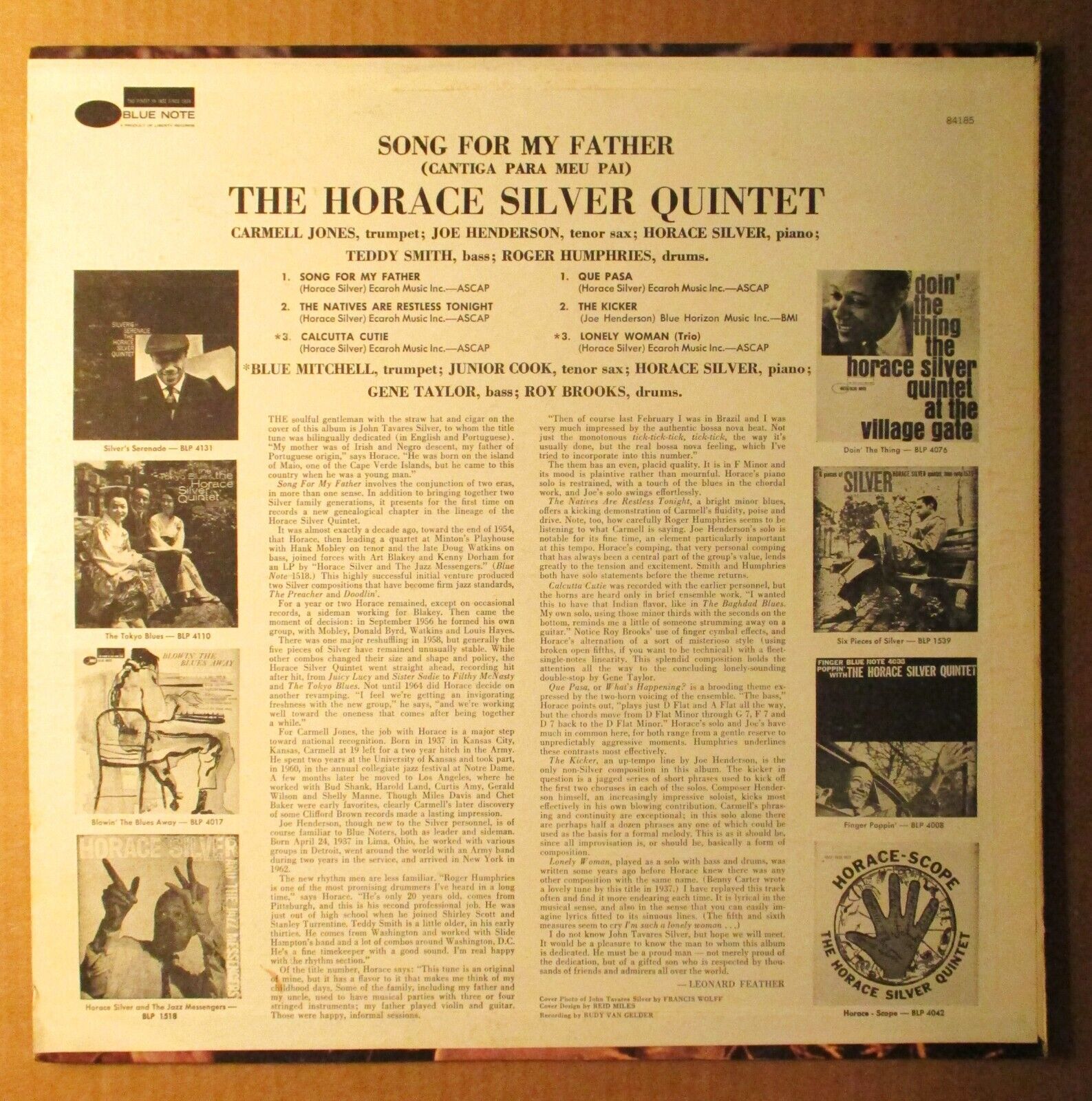
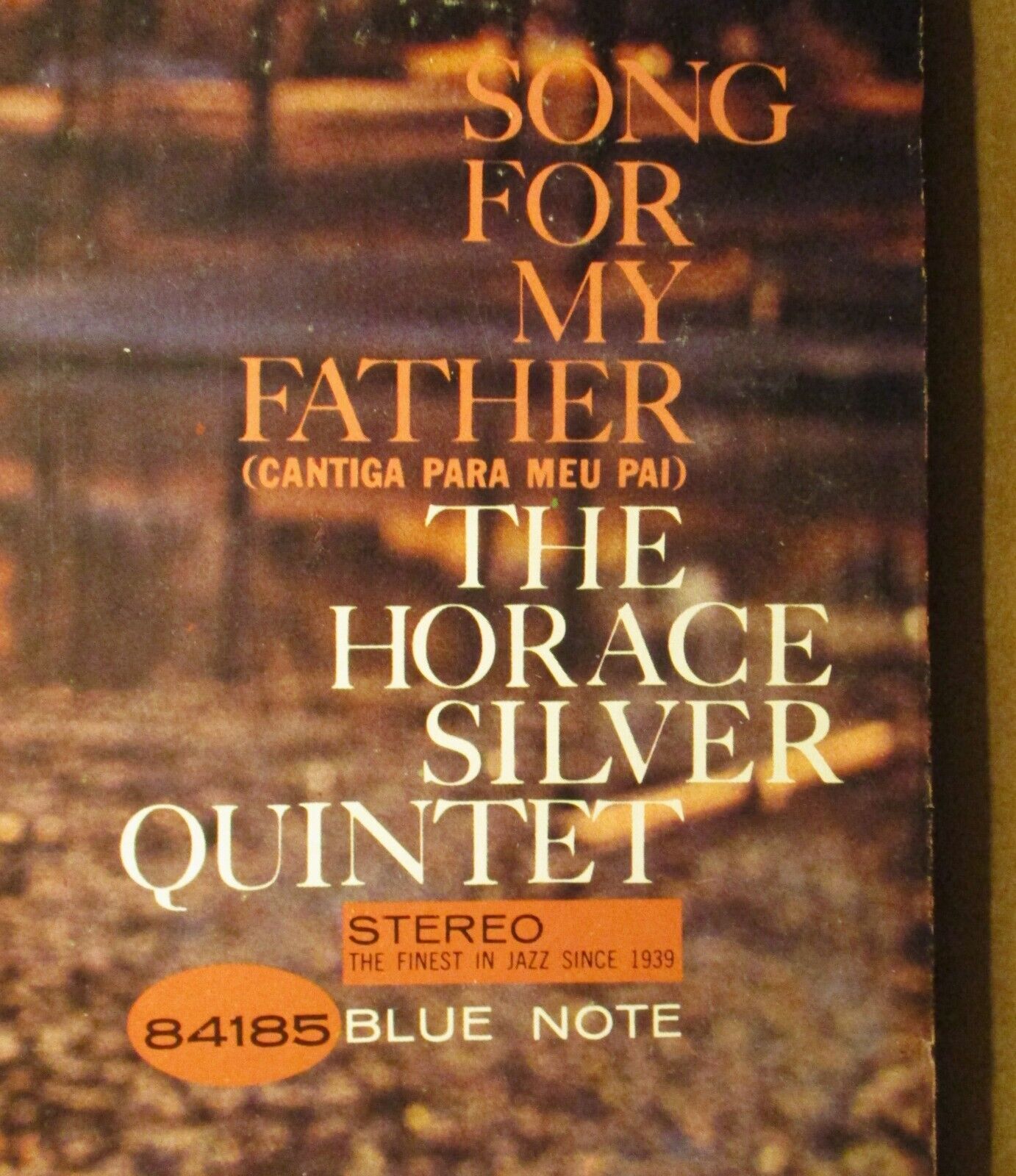
HORACE SILVER QUINTET 'SONG FOR MY FATHER' LABEL: BLUE NOTE BST-84185 STEREO EARLY 70's PRESSING ON BLACK 'b' LIBERTY BLUE NOTE LABEL ORIGINAL RELEASE DATE: EARLY 1965 RECORDING DATES: October 31, 1963 & October 26, 1964 RECORDING LOCATION: RUDY VAN GELDER STUDIOS ~ ENGLEWOOD CLIFFS, NJ MATRIX: (SIDE A): BNST-84185 A. 'VAN GELDER' 22 'STEREO'
CONDITION: VINYL: VG++ TO EX- JACKET: VG+ to VG++
~~~~~~~~~~~~~~~~~~~ I've been going thru my massive vinyl record collection these past few weeks and pulling out some LPs that I thought that someone else would want for their collection. I've been collecting records for over 45 years and it's time to pass some of them on to the next generation of collectors.
This week on EBay I am offering up this fantastic sounding Blue Note pressing of Horace Silver's classic 'Song For My Father.'
This is a beautiful, stereo, all-analog, 'Van Gelder' stamped pressing from the early 70's. It's on the all-blue early 'Liberty' Blue Note label, with the earlier, small black 'b' design, before they switched to the white 'b' label design later in the 70's.
This is my original copy, purchased back in the mid 70's. I've taken great care of it for many years. See details on Condition below.
~~~~~~~~~~~~~~ Horace Silver is one of the originators, incubators and masters of the Hard-Bop sound.
Coming out of the NYC BeBop scene, Horace Silver and drummer Art Blakey put together a group of musicians in the early 50's, which Silver named 'The Jazz Messenges'. Thru that band, both Art Blakey and Horace Silver took the roots of BeBop, and shaped it into classic Post-Bop and Hard Bop.
Their Band was very important in the NYC jazz scene of the late 50's. The 'Jazz Messengers' had a rotating cast of up-and-coming talent, many of whom would go on to become bandleaders and master musicians themselves.
Horace Silver split with Art Blakey in 1956 and formed his own similar Hard Bop band, which also had it's own group of revolving master musicians. Art Blakey's Messengers and Horace Silver's Quintet were similar groups, and both were innovators in the NYC Hard Bop scene. Horace Silver, by this time, epitomized hard-bop.
Art Blakey and his group of 'Messengers' stayed in the Hard Bop tradition, but Horace Silver's Quintet expanded their style in the early 60's to include gospel, blues, soul and funk, well before 'funk' was established as a style later in the 60's and early 70's.
The gifted Pianist was responsible for shifting the jazz landscape of the early '60s with his bluesy, funky music, which introduced a hipper groove and a soul feel.
Working in New York City for most of his early career, Horace Silver had his ears on the streets and was well aware of the hip new sounds coming out of the city. Silver's early 1960's sound was more soulful and funkier, a maturation and progression of the Hard Bop sound of the 1950's.
Silver has written many songs that have gone on to become Jazz standards, and he recorded exclusively for Blue Note Records for over two decades.
Of all the iconic Blue Note recordings of the 50’s and 60’s, Horace Silver’s 1965 release, 'Song for my Father' will always be considered as one of the finest.
This album was very popular due to the fact that it blurred the lines between bop and so-called 'Soul-jazz.' This classic album contains a much more accessible form of be-bop; smooth, soulful and funky.
The title track is among one of the most recognizable jazz songs of all time. Timeless music.
Unlike lots of cheesy 60's 'Soul Jazz' albums, this album is pure, soulful, horn-filled jazz and does not contain any Organ, which many jazz purists think 'waters down' many later 60's soul jazz albums. One can only handle so much Hammond organ in their jazz.
~~~~~~~~~~~~~~~~~~~~~~~~~ Horace Silver was from the Cape Verde islands, off the coast of Africa, which was a distinctive melting pot of West African and Portuguese cultures.
He brings those influences to the music on this album, developing a uniquely smooth, soulful, Hard Bop sound with his Portuguese and Caribbean influences, driven by the rhythmic and percussive styles popular in both New York and African American music at the time. The result is 'smooth funk' and a fantastic timeless record.
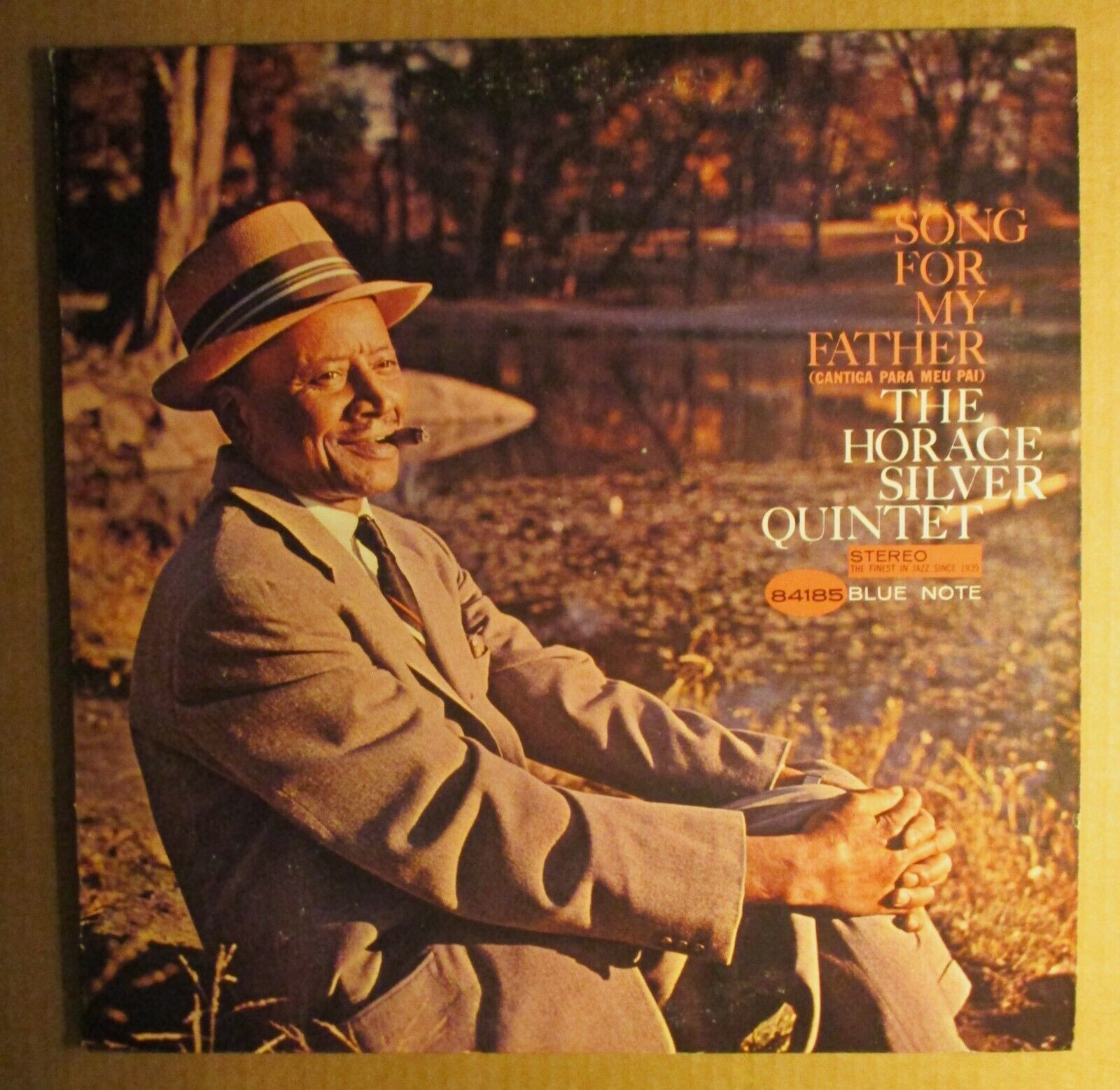
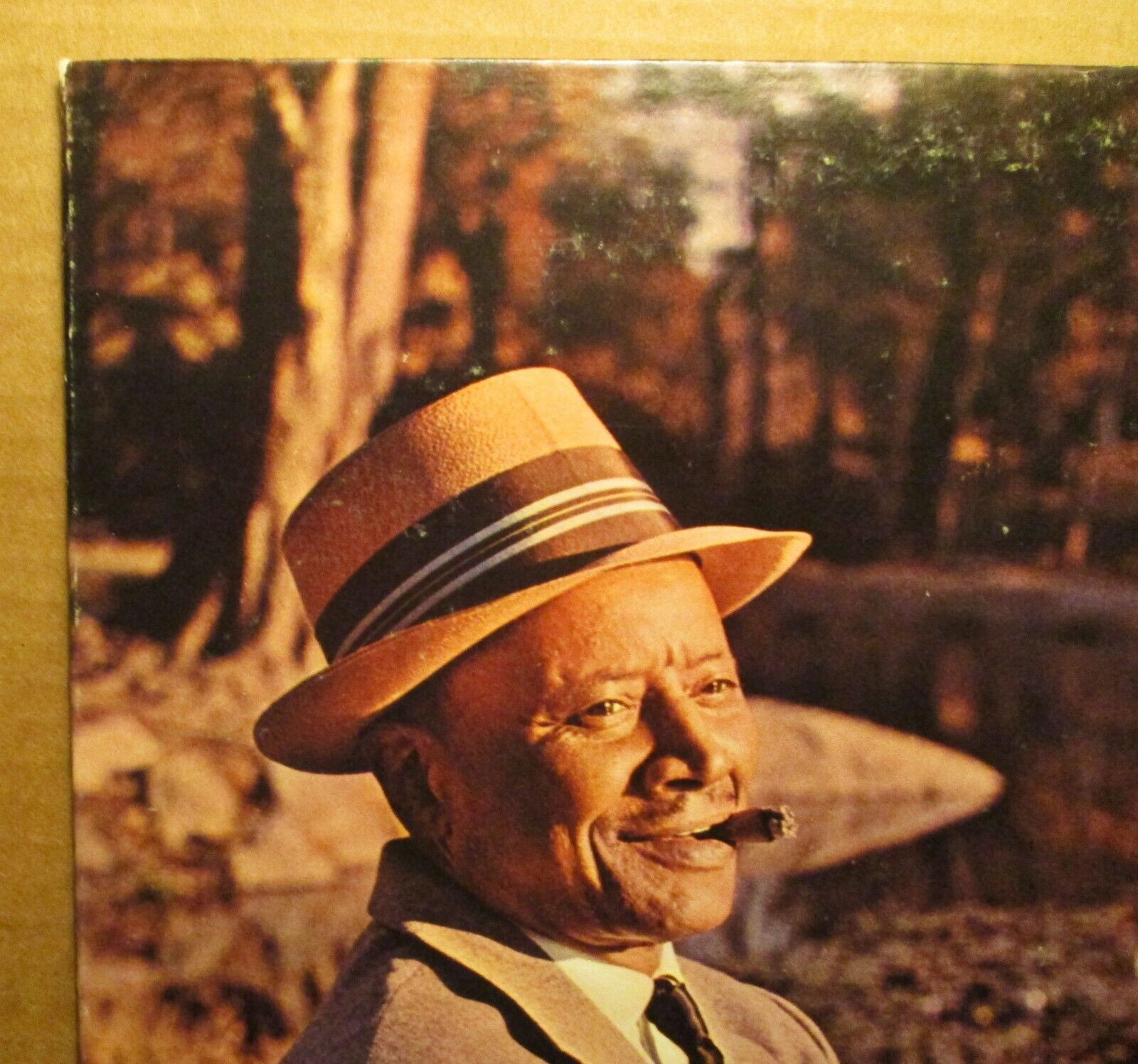
~~~~~~~~~~~~ The title of this album is 'Song for my Father' and the man on the cover of the record jacket is indeed John Tavares Silver, Horace Silver’s father, and a musician himself in his native Cape Verde. According to Horace Silver, “Dad played the violin, guitar, and mandolin, strictly by ear".
Silver explains that "My mother was of Irish and Negro descent, my father of Portuguese origin" He gives more of his personal background in the extensive liner notes written by Jazz Critic Leonard Feather.
The album design is a Reid Miles Blue Note classic, featuring a terrific Fances Wolff photo of Horace Silver's father soaking up the sun, enjoying life, and smoking a fine cigar. Silver's father is dressed in a very hip suit, and wearing an even hipper hat. One of the classic Blue Note album jackets.
~~~~~~~~~~~~~~~~~~ This album was released in early 1965, but the 6 songs presented were actually recorded by two different Silver-led ensembles, during 3 different recording sessions at Rudy Van Gelder’s Studio, that took place nearly a year apart, from October 1963 to October 1964.
This album was patched together at a time when Horace Silver was going thru some personnel changes in his band.
Horace Silver's Quintet, consisting of trumpeter Blue Mitchell, tenor saxophonist Junior Cook, bassist Gene Taylor and drummer Roy Brooks, had been together for 5 years and made some fine recordings, but Silver wanted to explore new sounds and disbanded the old quartet.
Horace Silver was known to be a perfectionist during recording sessions and he was not happy with some of the early sessions for this album with his old Quintet and refused to release them. Instead, he took a break, disbanded the old group, and came up with some fresh, young musicians that he liked the sound and style of.
In place of his veteran players, Silver put together a new Quintet of young musicians including trumpeter Carmell Jones, tenor saxophonist Joe Henderson, bassist Teddy Smith and drummer Roger Humphries.
On this album, Silver’s old Quintet contributes two numbers, while the bulk of the album introduces the talents of his brand-new quintet.
~~ The earlier quintet are featured on 'Calcutta Cutie' recorded on October 31, 1963, and on 'Lonely Woman', recorded on January 28, 1964. 'Lonely Woman' is recorded as a trio and only includes Horace Silver, with Gene Taylor on Bass and Roy Brooks on drums.
The rest of the tracks feature his newly formed quintet composed of bassist Teddy Smith, drummer Roger Humphries, trumpeter Carmell Jones, and tenor saxophonist Joe Henderson.
The bulk of the tracks on this album, including the famous title track, were recorded on October 26, 1964 at Van Gelder's studio.
~~ Horace Silver had a keen ear and was always very selective and outspoken about the musicians he chose to work with, not just for this recording, but all of his work, and the new musicians on these sessions are all outstanding, despite not being 'known' jazz artists at the time.
The young trumpeter Carmell Jones has a distinctive hot sound, in the Clifford Brown style.
Joe Henderson's unique tone on tenor saxophone, and his flights of notes, was new and exciting at the time. The young Joe Henderson heard on this album would go on to a long career as a sideman and leader, becoming a very well-known tenor player and releasing many outstanding albums.
Drummer Roger Humphries had terrific timing, groove, and had a skittering, tumbling percussive sound.
Sometimes, especially in Jazz, someone you've never heard of can come up with some amazing, satisfying, and swinging performances. That's the case on this album. These young musicians were just what Horace Silver needed to take his music and compositions to the next level.
~~~~~~~~~~~~~~~~~~~~~~~~~~~~~~~~~~~~~~~~~~~~~~~~~~ THE MUSIC ON "SONGS FOR MY FATHER"
There are 6 great tunes on this album, 3 per side. They include:
1. "Song for My Father" 2, "The Natives Are Restless Tonight" 3. "Calcutta Cutie" 4. "Que Pasa" 5. "The Kicker" (Joe Henderson) 6. "Lonely Woman"
The classic soulful tune 'Song For My Father' leads off this fantastic album.
In-between the recording sessions for this album, in early 1964, Silver spent some time in Brazil enjoying Carnival. He then returned home to New York filled with ideas based on the hip new bossa nova rhythms that he had heard there. That Brazilian influence can clearly be heard on the title track as well as a few other tracks on this album.
Returning to Van Gelder studios in October, 1964, he had worked out a new tune that had those smooth Brazilian rhythms, but also referenced the Cape Verdean West African and Portuguese folk music of his father. The song also incorporated the funky street grooves of early 60's New York City.
The result was the bluesy, funky, swinging. piano-flavored "Song for My Father."
The song had a universal, smooth, infectious, and oh-so-funky groove to it, and the song and the album both became an instant hit when it was released.
'Song for my Father' was very hip and cutting edge at the time, and remains iconic and easily recognizable today. A timeless piece of music. Although recorded in October 1964, ‘Song For My Father,’ sounds as good today as the day it was recorded.
A decade later, the rock group Steely Dan lifted the catchy funky bass lines from “Song for My Father” for it's own song “Rikki Don’t Lose That Number” featured on their 1974 album 'Pretzel Logic'.
Silver was a master of creating complex harmonies, but cleverly hiding them under tight, slinky soulful rhythms, creating hip, smooth, catchy, but sophisticated songs.
Silver has said, “I’ve always tried to write the kind of music that would stand the test of time. Always, in the back of my mind, I would be thinking, ‘Will this stand up 20, 30 years from now?’ I’ve tried to write songs that would be easy to listen to, and easy to play. It’s a difficult task. It’s easy to write something simple but dumb, or something that has depth but is too complex. But simplicity with depth, (like 'Song For My Father'), that’s the hardest thing for me to do.”
The rest of the compositions on this album are just as brilliant and timeless as 'Song For My Father'.
After the great lead-off title track, Silver and his bandmates turn up the heat with some great Hard Bop on “The Natives Are Restless Tonight.”
The brisk tune opens with Carmell Jones and Joe Henderson setting the memorable theme before everyone gets a chance to solo. Jones' trumpet solo is fantastic; fast, flowing and exuberant.
‘Calcutta Cutie‘ is an Eastern flavored tune that features Silver's earlier quintet. It starts slowly, but then picks up both tempo and attitude.
Trumpeter Blue Mitchell and the great tenor saxophonist Junior Cook are fantastic, out front and ahead of drummer Roy Brooks' tasteful playing. Silver plays some fantastic, tinkling, right-handed piano breaks that he later claimed were meant to sound like a strummed guitar.
The 2nd side of this album opens with the tropical-sounding rhythms of "Que Pasa?"
This medium tempo song is a perfect example of Silver's piano style, with his left hand doing some strong, percussive comping, while his right hand flows over lyrical single note melodies. Classic Horace Silver. Both Silver and Joe Henderson also take intense bubbly solos on this one.
Next up, Joe Henderson contributes one of his own iconic tunes, “The Kicker”, which is the most intense, aggressive track on the album. The whole band is on fire, but tight, on this straight up hard bop tune.
Joe Henderson's energetic tenor and Carmell Jones' blistering trumpet both cut loose, and they are driven by Teddy Smith's strong basslines and thunderous drumming from Roger Humphries, who also takes a short intense solo.
Henderson's "The Kicker" literally just Kicks and it's the only track on this album not written by Horace Silver.
The album closes off with one of Silver’s best loved compositions, the gorgeous, beautiful ballad ‘Lonely Woman.‘
It's the only trio piece on the album and the setting really lets Horace Silver's piano shine. Gene Taylor on Bass and Roy Brooks on drums rounds out the trio.
The music fits the title perfectly, as Silver creates a gorgeous. melancholic, lonely mood. Silver is equally confident and brilliant in a Trio setting or in a larger Quartet or Quintet outfit.
This trio track was recorded during the 2nd session for the album in January 1964 over at Rudy's place, and the piano has that early Blue Note piano sound that limited so many of the label's piano-based records. The piano sounds a little restrained, compressed and 'boxy', but luckily, it's the only song on this album that has that 'sound'.
On the rest of this album, and almost all of Horace Silver's Blue Note recordings, his piano sounds fantastic, full, open and bright, better than usual.
~~~ HORACE SILVER'S PLAYING STYLE
Horace Silver's piano style, by the early 60's, had become very distinctive and unmistakable. Although he was capable of harmonic complexity and deep introspection, Silver's playing by the early 60's was often very smooth and accessible, just clean, fun, positive and soulful.
"Musical composition should bring happiness and joy to people and make them forget their troubles.” ~ Horace Silver
Silver's left hand has a rhythmic, stabbing, syncopated, percussive bounce, while his right hand plays catchy, rhythmic melodies, giving his songs a truly funky feel.
The title track, 'Song For My Father', is a perfect example of his evolving style; with the pianist’s typical strong comping in the left hand, and flowing lyrical single note lines in the right. The song is rhythmic, yet soulful.
Critics and fans have said that Horace Silver's playing would make his piano 'smile.' This whole album will make the listener smile as well.
~~~~~~~~~~~~~~~~~~~~~~~~~~~~~~~~~~~~~~~~~~~~~~~~~~~~~~~~ SOUND & PRESSING DETAILS
This classic album was recorded by Blue Note Engineer Rudy Van Gelder at his iconic studio in Englewood Cliffs, NJ.
As you know if you're reading this, the amazing Blue Note sound was due to the meticulous recording methods developed by Van Gelder. His choice of, number of, and placement of microphones, and room dynamics, reverb tweaks on the fly, were translated onto record by his meticulous mastering on the Scully cutting lathe.
This is a fantastic sounding album. It's all-analog and pressed from early Van Gelder mastered plates. The 'Van Gelder' stamp is on both sides.
It does have that classic 'Blue Note' sound, with the top end boost and mild compression that was favored by Van Gelder, but that's not a bad thing. It sounds amazing. This album sounds fantastic, has great room ambiance, and a nice soundstage. It sounds like the drums and bass are next to you, with the horns out front.
It's full of incredible detail and dynamics. The stereo mixing is excellent, not too harshly panned. By the time Van Gelder recorded these sessions in 1964, he was recording directly to two track tape for stereo and had the stereo mixing process fully figured out.
The Van Gelder stamp in the deadwax is a sign that the mastering goes all the way back to Rudy's original versions.
These early Blue Note recordings, with the 'Van Gelder' or 'RVG' stamp in the deadwax, sound amazing and reveal a freshness and detail that gets lost on the later Liberty and UA pressings.
~~~~~~~~~~~~~~~~~~~~ This is a beautiful, stereo, all-analog, 'Van Gelder' pressing from the early 70's. It's on the all-blue early 'Liberty' label, with the earlier, small black 'b' design. It's from early in the Liberty years when they were still using older 'Van Gelder' metal plates.
By the late 70's, many of the older original metalwork was worn out and many Blue Note records were remastered, causing a drop in sharpness and quality. Once Liberty started using other mastering engineers, much of Rudy's 'magic' was lost.
On the later, post-Liberty reissues of this album, the original master tapes used had deteriorated to the point where the title track as well as 'Lonely Woman' had to be digitized and sent thru the new Plangent system in order to salvage them. The title track had somehow acquired speed problems and slight 'warbling', which can be heard on later pressings, but not on these early 'Van Gelder' ones.
The only way to listen to and appreciate this classic album is on all-analog, original Blue Note, or early Liberty Blue Note records, like this one.
This copy was pressed from high quality, early Van Gelder metalwork and sounds amazing. This isn't a classic Deep Groove, New York , Plastylite 'Ear' pressing, but it is an early Liberty pressing that still has that classic, bold, crisp, all-analog Blue Note sound. I'm sure you'll be pleased with it.
This is a STEREO pressing. Some 'purists' don't appreciate early stereo Blue Notes, with the hard-panned instrument separation, but by 1965, when this album was released, Van Gelder had pretty much perfected his fine sense of stereo balancing, and this stereo pressing sounds amazing; well mixed, and beautifully balanced.
I have an old Mono copy of this album, which also sounds great, but I think songs like 'Song For My Father' and 'Que Pasa' sound much better in stereo.
~~~~~~~~~ Many 'purists' also don't like the way Rudy recorded piano. Often, on Rudy Van Gelder's early Blue Note recordings, the studio's Steinway D piano often gets a strange treatment, making it not as bright and forward as the horns and other instruments.
Once Rudy Van Gelder built his new studio in Englewood Cliffs, in 1959, the sound of the piano on his recordings greatly improved, and on this 1965 album, Silver's piano sounds fantastic; full, clear and rich.
Actually, most all of Horace Silver's Blue Note albums sound fantastic. As mentioned, he was very particular about his group's sound and made sure Rudy got it right.
~~~~~~~~~~~~~ 'Song for My Father' is Horace Silver's signature album and a highlight of his long career.
One of the most famous jazz albums of all time, it's catchy and hypnotic, warm and inviting, yet funky and cool, all at the same time. Hard bop rarely comes as good as this.
This classic timeless record is one of Blue Note's best mainstream hard bop dates, and is an essential record for any Jazz vinyl collection.
~~~~~~~~~~~~~~~~~~~~~~~~~~~~~~~~~~~~~~~~~~~~~~~~~~~~~~~~ CONDITION: I tried to show good hi-resolution photos of the cover, labels and vinyl in my pictures.
I purchased this re-issued Blue Note classic 'new' back in the mid 70's, 50 years ago, and have taken great care of it since.
VINYL: The vinyl looks excellent. Clean and bright. Maybe a tiny hairline, but no visual flaws. No scuffs, scratches, or dings. It looks fantastic and I'm sure you'll be very happy with it. A beautiful copy.
The Deadwax has the mastering engineer's 'Van Gelder' stamp on both sides. See the full Matrix numbers above.
I tried to show some close-up pictures of the vinyl to show how good it looks. I'm sure you'll be happy with it.
I haven't messed with it or cleaned it, other than my trusty 'DiscWasher' brush, in 50 years, so it could use a good deep cleaning to make it even better looking and sounding than it already is.
LABELS: This is pressed with the all-blue 'Liberty' Blue Note labels, with the earlier, small black 'b' design. Later 70's pressings switched to the white 'b' design. It's from the 'Liberty' years when they were still using older 'Van Gelder' metal plates.
The labels are clean and bright. No marks or damage. The spindle holes are still sharp and clean, suggesting minimal playing and my careful handling over the years.
JACKET: As you can see from my pictures, this still looks very nice for a 50 year old copy.
These thick, sturdy Blue Not jackets are notorious for showing ringwear, dirt, scuffs and damage, but this copy is still quite nice.
The back cover has the Blue Note logo in the top left corner, and the catalog number '84185' in the top right corner.
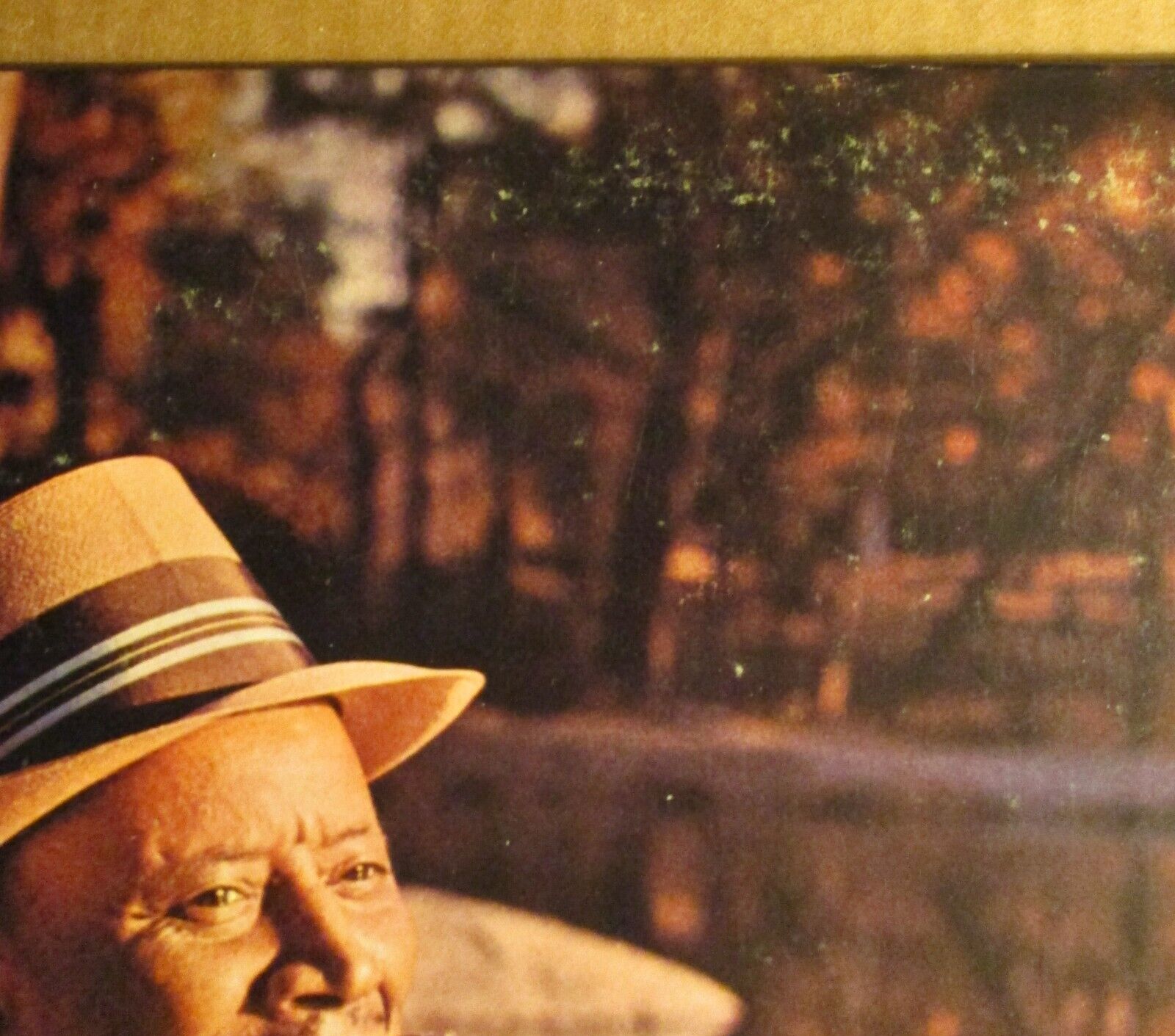
Some very mild early ringwear at the top front, but it blends in nicely with the 'trees' and is barely noticeable. The back cover is clean, white and bright.
The seams, corners and spine look great. The fantastic, iconic, artwork is bold and bright, and the original gloss is still present. A nice survivor.
Overall, I'll call the whole record a strong VG++/EX-, but EBay doesn't allow those terms, so I'll list it as 'VG+' to keep everyone happy, but you can see from my pictures how nice it is.
This record has been sleeved and stored properly for decades, and is still quite nice for an early 70's pressing. A beautiful copy and a real gem. I'm sure you'll love it.
~~~~~~~~~~~~ ** NOTE: I'm selling this rare 'Collector' record "AS IS" and "NO RETURN". It's rare and as described and I'm sure you'll be very happy with it.
~~~~~~~~~~~~~~~ I’m recently retired and downsizing and letting go some gems and rarities from nearly 45 years of vinyl record collecting. Check out the many other fantastic 45s and 33s coming soon to my page!
All records have been carefully evaluated and graded by me. I visually inspect all records under bright light, personally gently clean them with a soft cloth and then, if unsure, play them on a modern high-end turntable to get a true picture of condition. Please look at all the high-resolution pictures I added. They are all my own and are of the actual record being sold. The pictures are part of the description and can show small details, label variations, and condition better than I can put into words.
My grading is fair and honest. I have had over 3,500 happy and satisfied EBay customers over the years, with 100% positive feedback, and I have been buying/selling on EBay for well over 25 years, so please bid with confidence!
I'm a 0ne-man operation, this is a hobby, not my job. I do this for fun. I do this because I love music, love collecting vinyl and want others to share in that same experience. I take my time listening, researching, grading, listing and packaging. I will NOT sell any record that I personally would not want in my collection.
As you well know, packing and shipping rare records requires special care and attention, therefore, shipping cost within the lower 48 states is $5.00 on this item. If you would like insurance, or anything faster than Media/Economy Mail, please let me know and I can arrange it for you. I’ll work with you to make sure you’re happy!
I will gladly combine multiple records, or other items on my page, and make the shipping much less for you. I don’t inflate the shipping costs; they are what they are. I strive to keep them as low as possible. See my feedback for comments on my quality packing and shipping.
All items are packaged with sturdy cardboard mailers and appropriate padding. I take pride in my packaging and shipping and package all my records as if I were sending them to myself. I refuse to use cheap flimsy packaging material when sending my vinyl. I treat them as if they were my own and mail them the same way.
All orders are processed and shipped within 2 business days of receipt. We package and ship our vinyl records with the greatest care, using proper packaging to ensure that your rare and collectible vinyl records arrive in pristine condition.
Payments can be made by any of the multiple options that Ebay offers. I will be happy to exchange feedback with anyone I complete a transaction with.
THANK YOU for looking and reading if you got this far. -- JOHN
price rating