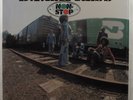
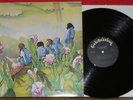
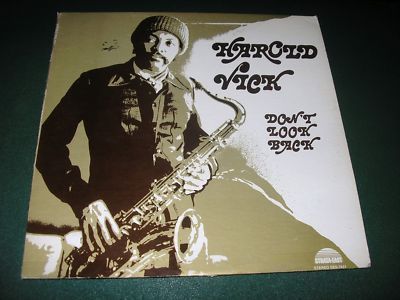
HAROLD VICK DONT LOOK BACK RARE LP 1974 FENDER RHODES
€
51
$
59


Favourite Auctions
To save auctions to your favourites, please login
If you don't have an account, please register
Description
Harold Vick – Don't Look Back Label: Strata-East Catalog#: SES-7431 Format: Vinyl, LP, Album US PRESSING TRES BON ETAT AVEC UN STICKER RADIO FRANCE AU VERSO Country: US Released: 1974 Genre: Jazz Style: Tracklist Hide Credits A1 Don't Look Back Bass – Sam Jones Flute [Alto] – George Davis (2) Tenor Saxophone – Harold Vick Euphonium – Kiane Zawadi Drums – Billy Hart Piano, Tuba – Joe Bonner Trumpet – Virgil Jones 5:59 A2 Melody For Bu Bass – Sam Jones Flute [Alto] – George Davis (2) Flugelhorn – Virgil Jones Flute [Concert] – Harold Vick Euphonium – Kiane Zawadi Drums – Billy Hart Piano – Joe Bonner 7:21 A3 Senor Zamora Bass – Sam Jones Flute [Alto] – George Davis (2) Electric Piano [Fender Rhodes] – Joe Bonner Tenor Saxophone – Harold Vick Euphonium – Kiane Zawadi Drums – Billy Hart Trumpet – Virgil Jones 5:38 B1 Stop And Cop Bass – Sam Jones Drums, Percussion – Billy Hart Piano, Percussion – Joe Bonner Guitar – George Davis (2) Percussion – Jimmy Hopps Bass Clarinet, Flute – Harold Vick 6:34 B2 Lucille Tenor Saxophone – Harold Vick Piano – Joe Bonner Bass – Sam Jones Drums – Billy Hart 9:20 B3 Prayer Bass Clarinet, Flute [Alto, Concert], Soprano Saxophone – Harold Vick Electric Piano [Fender Rhodes] – Joe Bonner 0:56 Credits * Arranged By, Composed By, Producer – Harold Vick * Design [Album Design], Supervised By [Art Supervision] – Creative Hands, Inc. * Engineer [Recording] – Eddie Korvin * Mastered By – David Crawford (2) * Mixed By – Tony May * Photography – Jim Dunn Notes All selections: (Matron Music) BMI. Produced at Blue Rock Studio, New York City. Mixed and mastered at Generation Sound Studio, New York City. Harold Vick emerged in the early 1960s as a saxaphonist with a distinctive, lyrical tone who retained a blues edge as the soul-jazz scene played back and forth with post-bop modernism throughout the decade, then followed the development of new forms in the 1970s. Influenced by Gene Ammons, he played in the band of vocalist Lloyd Price from about 1958-1960 before joining Jack McDuff's band. He became a preferred tenor sax player for all the top-shelf soul-jazz organists like McDuff, John Patton and Jimmy McGriff. In fact, he played with so many hammond organists that he has his own clickable org-hammo-gram. "Don't Look Back" was recorded and released in the wake of Harold Vick's recovery from a heart attack, which may partially explain the passion with which he approaches his playing throughout. The title track "Don't Look Back" is a joyous melodic number that Vick himself attributes to new love experienced in his time of crisis. It was later covered on the Shirley Scott "One For Me" album (with Vick on sax), and also on Nat Adderley's same-titled album "Don't Look Back" in 1976. His work on sax and flute has a harder, more intense edge to it than his other recordings - check out his tenor work on "Lucille" - while still displaying the subtlety of his best work - listen to his multi-tracked coda "Prayer", where Joe Bonner's rhodes mixes in with Vick's clarinet, flutes and saxaphone.Trumpeter Virgil Jones is a strong presence on this album, frequently trading solos with Vick on tracks like the latinesque "Senor Zamora" - his recent work had included a high profile arranger's role on Charles Earland's "Intensity"; and performances on albums as diverse as McCoy Tyner's "Song Of The New World" and Leon Spencer's "Where I'm Coming From". There's great supporting work on piano and rhodes from Joe Bonner, who'd been on the "Sir Edward" album, and was about to record his own albums "Angel Eyes" and "Lifesaver", having recently worked with Azar Lawrence , Pharoah Sanders, and the Oneness Of JuJu. As well as appearing on the aforementioned Tyner and Shirley Scott albums, euphonium player Kiane Zawadi had recently worked on Archie Shepp's "Attica Blues" and Dollar Brand's "African Space Program". He contributes a great solo here on "Melody For Bu", which is dedicated to organist Bu Pleasant, on whose Muse album Vick played the same year, and which also includes the track. Both Zawadi and Virgil Jones had worked with Vick almost a decade before on "Oh! Pharoah Speak" by Pharoah Sanders and the Latin Jazz Quintet. George Davis appears on alto flute on three tracks, as well as wah-guitar on the spiritual-flavoured "Stop and Cop" - see my "sidebar" on his career near the base of the Mike Longo post. Drummer Billy Hart now wins the "Most Labelled" award for this blog. Bass player Sam Jones has a sideman discography even longer than some of my blog posts, but had recently been with Vick on Shirley Scott's "One For Me", as well as appearing on Clifford Jordan's "Glass Bead Games", Eddie Jefferson's "Things are Getting Better" and countless others. Vick's final album as a leader was "After The Dance" in 1977, named after the Leon Ware - Marvin Gaye penned title track. While I'm generally partial to some mixed disco-jazz albums of the period, this one suffers from some unimaginative track choices and arrangements, although I quite like the single "Things Aint Right", an Esther Marrow cover that mixes some blaxploitation-style wah-wah and orchestral textures with the disco beat, even if Vick's sax is a little incidental to the overall plot ... Harold Vick continued to work frequently as a sideman until his death in 1987 from a heart attack. Saxaphonist Sonny Stitt composed a tribute track on his 2000 album "This Is What I Do" called "Did you Hear Harold Vick?", which is more of a funky, playful number rather than a mournful dirge.
Créé par eBay Turbo Lister
L'outil de mise en vente gratuit. Mettez vos objets en vente rapidement et en toute simplicité, et gérez vos annonces en cours.
price rating