COIL 7" Flexi LSD Original Mix Death In June Current 93
€
43
$
49


Favourite Auctions
To save auctions to your favourites, please login
If you don't have an account, please register
Description
COIL
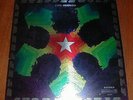
7"-Flexi Love's Secret Domain (Original Mix)
Rare Release! Limited 23 copies!
A very rare release by Coil in 1992, produced by fans for DJ use only.
It contains the first studio version of the track (different from the original album version).
Limited 23 numbered copies.
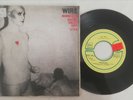
Conditions: The transparent flexi-disc looks like mint. Also the cover is in excellent conditions.
Track: Love's Secret Domain (Original Mix)
Personnel: Johnn Balance - Peter Christopherson - Stephen Thrower - Charles Hayward
Engineer: Danny Hyde
Label: Titan Arch Records
Catalogue: TIAR02244X
Format: Transparent 7"-Flexi
Date: May 1992
Country: USA
Edition: 23
Notes
This single was released by fans in the States in 1992 and free distributed to Djs and Clubs.
History
Formed London, 1983 by John Balance as a solo side project to Psychic TV but developed into a full-scale musical project in 1984, when he cemented a partnership with Peter 'Sleazy' Christopherson. Christopherson had been a founder of Psychic TV and member of Throbbing Gristle, experimenting with tape loops since early days in TG, using the first crude computer samplers live on stage, and later pioneering experiments with the Fairlight. (He had also been a member of graphic designers Hypgnosis, who produced covers for groups like Zeppelin and Floyd in the 70s.)
Psychic TV albums that feature Coil before there was a Coil are Force the Hand of Chance, Themes I (included with the vinyl of Force, later released as "Cold Dark Matter"), Dreams Less Sweet, N.Y. Scum Haters (later reissued as Psychic TV live: Volume three Thee city ov tokyo the e city ov new york), and Berlin Atonal Festival I & II (live recording reissued later as Miain Goettin in Gen), and Live at the Ritz. John Balance is not credited on the first two albums (Force and Themes), just Sleazy. These live recordings may have been the only live performances of John and Peter with Psychic TV. They are the first few PTV live performances.
Transparent was the first ever Coil release as Coil. Where this gets tricky is the fact that Coil and Zos Kia were the same band for a while. By that I mean, not just that John Balance was a member (which was also true of PTV), but several of what would later become Coil tracks were done during this period. By that token, the first-ever Coil release is Zos Kia's "Rape" single, "Rape" being an early version of "Here To Here (A Double Headed Secret)".
The seventeen-minute, one-sided 12" titled "How To Destroy Angels" was released in 1984 and was described on the cover notes as 'ritual music for the accumulation of male sexual energy'. It was dedicated to the god Mars and used predominantly iron and steel instruments, such as swords and gongs. It was a theme echoed on the group's debut album, Scatology (1984), on which Balance and Christopherson collaborated with Stephen Thrower (of Possession), J. G. Thirwell (aka Foetus) and Gavin Friday. Concerned with the alchemical or spiritual process of transforming base material into gold, the album compounded a multitude of apparently banal non-musical sound sources, which were processe d to create a momentum within changing rhythms. The result was an album of considerable intensity that varies from slow dramatic tracks like "At the Heart of it All" to the ferocious celebratory bacchanalia of "Panic".
Coil's next release was a 12" single covering Soft Cell's "Tainted Love" (1984) with "Aqua Regis" and a restructured version of "Panic" on the B-side. Coil produced a video to accompany the single: featuring car crashes, hallucinogenic putrefaction and Marc Almond as the Angel of Death, it was widely banned, but the Museum of Modern Art in New York bought a copy.
Between 1984 and 1986 Coil collaborated with Derek Jarman on the film The Angelic Conversation, the soundtrack to which was reworked and remixed before release under the same title. After Nightmare Culture (1986), a collaboration with Boyd Rice, Coil recruited Stephen Thrower as a full member of the band and released the album Horse Rotorvator (1986) and an EP called Anal Staircase (1986). Horse Rotorvator combined Fairlight brass and clunky percussion with lyrics about sex, death and cannibalism. However, the album's most striking feature was Christopherson's sampling - notably on "Ostia", where a recording of grasshoppers on the Aztec pyramid at Chichen Itza is used as the vehicle for a song about the film maker Pasolini, who was murdered by a rent-boy in Ostia.
These were followed by a mini-album, The Unreleased Themes for Hellraiser (1987), a mix of tracks originally produced as a soundtrack for the Clive Barker film, plus a number of themes written for adverts. The tracks for Hellraiser were sublimely atmospheric Gothic instrumentals, with menacing undercurrents, while the advertising jingles rangde from Satie-styled ambience to Thelonious Monk-influenced be-bop.
In 1987 Coil incorporated Otto Avery into the line-up and went through their archives to produce Gold is the Metal, a remastering and remixing job that embraced a range of music wide enough to offend and inspire most people. Though self-consciously experimental, it stands out as one of their best albums because of the way it concentrates many of their obsessions - magic, bizarre and ambivalent sexuality, shifting states of consciousness, and alchemical transformation.
This sense of summing up continued with the first volume of the Unnatural History retrospective (1990), after which there came a substantial change in musical direction, as Coil began a foray into the techno/rave scene with the "Windowpane" and "Wrong Eye". These prepared the way for Love's Secret Domain (1991), a large-scale multi-collaborator production that switched between psychotic dance tracks and freaked-out industrial experimentalism. It manifested an aural inferno, a sonic landscape where psychotropic experiences were played out against a backdrop of Blakean imagery.
This album opened the door to many other fruitful collaborations, notably with Nine Inch Nails, whose Trent Reznor signed Coil to his own label. In 1992, they released Stolen and Contaminated Songs, outtakes from LSD, as well as a full-length album of remixes of How To Destroy Angels. 1994 saw the release of the soundtrack for The Angelic Conversation and two more singles ("Protection" and "Nasa Arab"), and 1995 brought the second volume of Unnatural History and Worship the Glitch. In 1996, they released A Thousand Lights in a Darkened Room and are currently working on new material.
For over ten years Coil have been at the forefront of European experimentalism and electronic music. They have been outstanding innovators, always seeking to drag the mainstream into the darker margins of the occult.
Il 18-Ott-07 alle 14:04:55 CEST, il venditore ha aggiunto le seguenti informazioni sull'oggetto:
More info from the period:
At last - no more compilations! We're back on track again, with another mock-concept, pseudo-philosophical, and sincerely awe-inspiring record. And since it's now been five years since their last grand artistic triumph, the entire population of the world, including those fifty million or so Chinese added to it in the interim, have a right to expect something that would look to the future rather than the already faraway past of Horse Rotorvator. Such is the unhappy fate of experimental bands - they have to experiment all the time; once they've stopped, they immediately go down, rather like a fish deprived of its air-bladder. Fortunately for us, in 1991 Coil were still going strong and ready to take us in a different direction.
Which direction isn't too "different" today, but in 1991 the elements of 'house' and 'trance' were still considered fresh, and the Great Electronic Revolution which would bring these cold loops and freezing cycles into the masses was, at best, in its initial stages. Love's Secret Domain is widely considered Coil's dance album, and it is: apart from a few particularly chaotic tracks, this whole thing is strictly rhythmic and conforms to the standards of techno, trip-hop, and whatever other terms they may have invented while I was still listening to my Creedence Clearwater Revival. But, of course, Coil wouldn't be Coil if they'd forgotten to add (a) weirdness, (b) atmospherics, and (c) diversity. Since all of the three are firmly in place, Love's Secret Domain is, quite naturally, Coil's third great piece of work. I'm not sure about how Balance and Co. themselves were viewing this new direction. If 'Teenage Lightning' is any indication, obviously, with irony; this song, divided into a short 'intro' part and the main 'body', is one of the lightest and funniest excursions in the band's catalog. Not techno at all, rather a bit Latin in rhythm, but punctuated with all kinds of bleeps and bloops from their electronic armoury and encoded vocals that sing lyrics like 'don't be alarmed/It will not harm you/It's only lightning/Teenage lightning'. Certainly it's a bit far-fetched to put forward the song as a "mockery" of the new values of the younger generation (and what does this calypso-like melody have to do with early Nineties teenagers anyway?), but it's good food for thought anyway. (More food for thought is given by the fact that the song is later reprised a third time, now only supported by a couple overdubbed Spanish guitars, and re-titled 'Lorca Not Orca'. Mmm... yeah). Once they really cut through the techno groove, though, there's no signs of true irony out there. The most obvious experiment is 'The Snow', a six minute dance track that packs more ideas than your average DJ's entire album. Not only is the simple-as-heck bassline absolutely unforgettable, but they keep piling layers of Floydish synths, unexpected vocal harmonies, and, most importantly, numerous keyboard parts that sound like they actually belong on a professional jazz-fusion album instead of a techno rave. There's some really classy playing concealed there in the background - dig it out. Unlike so many 'compositions' that fall under the 'trance' category in name but really just pass by unnoticed, 'The Snow' is truly able to put you into such a state by combining smooth, monotonous rhythms with this soft jazzy keyboard texture. And ooh that bassline. On the other hand, they do not forget about how they used to sound epic - and Love's Secret Domain does include several stately, "post-Goth" pieces like 'Windowpane', throwing you back into the macrocosm after driving you through the micro- one. If I could be allowed to coin the term 'industrial psychedelia' for 'Windowpane', I probably would, although spare me any future responsibility; but doesn't the song really convey the idea of flying, even if the instrumentation really hints at flying through rows and rows of squeaky machine-tools rather than blue skies and white clouds? Or, at worst, the idea of flying through the sky all the time being chased by Thor's hammer? Neither do they forget about their former successes as "ambientalists"; check out 'Dark River' for yet another first-rate 'melodically static' composition; the great invention here is to make their keyboards sound like a real mandolin (I'm presuming they didn't actually use a real mandolin, did they?), which then contrasts beautifully with the overall gloomy overtones, perfectly justifying the song title. And later on, they give David Tibet one more run for his money on the apocalyptic, Boschian 'Titan Arch', which I personally would very much desire to use were I to film the Inferno part of The Divine Comedy. You can just feel the howls of all the sinners down there in the seventh circle even if you don't get to actually hear them distinctly. Never mind the lyrics - the lyrics seem to actually be about the realm of the Antichrist ('angels are poisons in rotten pavilions'... 'crown the dark animal'), but let them play these games if they want to. And then, back to your sick head once again, 'Love's Secret Domain' is a horrorific three-minute exploration of... well, of what love really is, or can be, according to the theory of Mr Balance. Actually, trim some of the noises, add a bit of avantgarde guitar, destroy the synth loop (which, funnily enough, almost happens to coincide with the loop used by Pete Townshend for 'Eminence Front'!), and, once again remembering an analogy I already used in my Rotorvator review, you could easily have Nick Cave sing this one. 'The blood sickle cuts... The honey sucks... My heart is a rose, this is mad love in love's secret domain?' Right up Mr Cave's alley, don't you think? Except that 'Love's Secret Domain' pretty much seems to squeeze every possible drop of 'humanism' out of itself, something that Cave could never do even on his wildest records. As usual, not nearly everything works; some of the experiments are bound to go nowhere, and I could easily do without 'Disco Hospital', for instance, which is essentially a bunch of noises created by fidgeting around with tape speed and suchlike; and 'Chaostrophy', which is like a watered-down version of 'Revolution # 9'. A couple of other tracks overstay their welcome - 'Further Back And Faster' has quite a lot of percussion rolling in every direction, but hardly anything else, and various percussion loops alone aren't nearly enough to make me yearn for eight minutes of this stuff. But, just the way we'd be writing in a review of a scientific work, "the attested flaws are hardly sufficient to change the overall positive impression of the work in general" (at least, that's more or less the standard formula here in Russia, you know). Love's Secret Domain remains cool, groundbreaking, and thought-provoking, and that's that.price rating