Bloc Party-Silent Alarm (Vinyl Rare Mint)
£
30
$
39


Favourite Auctions
To save auctions to your favourites, please login
If you don't have an account, please register
Description
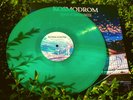
Please note all my records are very well looked after- this condition is mint the best you can get - but it's a classic album. PLEASE CHECK OUT MY OTHER RECORDS AS THEY ARE AMAZING FEEL FREE TO ASK ANY QUESTIONS- HAPPY BIDDING (all my records are original presses)
Silent Alarm
From Wikipedia, the free encyclopedia Silent Alarm Studio album by Bloc Party Released 2 February 2005 Recorded June–July 2004 at Deltalab Studios, Copenhagen; Miloco and The Exchange, London Genre Indie rock, post-punk revival Length 50:35 Label Wichita Producer Paul Epworth Bloc Party chronology Silent Alarm(2005) A Weekend in the City
(2007) Singles from Silent Alarm
- "So Here We Are/Positive Tension"
Released: 31 January 2005 - "Banquet"
Released: 25 April 2005 - "Pioneers"
Released: 18 July 2005 - "Two More Years"
Released: 3 October 2005 (on re-release) - "Helicopter"
Released: 21 February 2006 (US only)
Silent Alarm is the debut studio album by British indie rock band Bloc Party. Recorded in Copenhagen and London in mid-2004 with producer Paul Epworth, it was released in February 2005 on Wichita Recordings. The record peaked at number three on theUnited Kingdom Albums Chart. In the United States, it entered the Billboard 200 at number 114 and the Billboard Top Independent Albums at number seven. The double A-side "So Here We Are/Positive Tension", "Banquet", and "Pioneers" were released assingles. Silent Alarm went on to achieve worldwide sales of over one million copies.
Bloc Party aimed to create an album that appealed to followers of different musical genres. Building on the arrangements in theirdemo songs recorded in 2004, the band members moulded tracks largely through live takes during the Silent Alarm studio sessions. The compositional focus was on rhythm and the drum and bass parts, while lyricist Kele Okereke's writing examined the feelings and hopes of young adults, including views on global politics. Following the album's completion, Bloc Party embarked on promotional tours before its release.
Four singles were released from the album: "So Here We Are/Positive Tension", "Banquet", "Pioneers" and "Two More Years" (the latter only appeared on the re-released version of the album). The album also included the previously released singles "She's Hearing Voices" (which was re-recorded for the album) & "Helicopter" on the original release of the album, with "Little Thoughts" also added to the re-released version of the album. A remix of the song "Like Eating Glass" was also released as a split-single with the band The Futureheads by Oxfam.
Silent Alarm garnered widespread critical acclaim. Praise often centred on its fast tempo and passionate delivery. The record was generally treated as showcasing the potential high quality of British music. Later in 2005, it was remixed as Silent Alarm Remixedand was re-released with bonus tracks to coincide with Bloc Party's worldwide touring schedule. The album has received accolades throughout the music industry since its release.
Contents
[hide]- 1 Background
- 2 Recording
- 3 Composition
- 3.1 Lyrics
- 3.2 Music
- 4 Promotion and release
- 5 Reception
- 5.1 Commercial
- 5.2 Critical
- 6 Tours and supporting releases
- 7 Accolades
- 8 Track listing
- 9 Personnel
- 10 Chart positions
- 11 References
- 12 External links
[edit]Background
In 2003, Bloc Party consisted of guitarists Kele Okereke and Russell Lissack, and bassist Gordon Moakes.[1] After drummer Matt Tong auditioned and joined the trio, the band members' songwriting evolved and they started crafting tracks for Silent Alarm. Discussing the first demo "She's Hearing Voices", Okereke has stated that it "was really just a drum beat, which was something we couldn't do before because we relied on writing songs only with guitars".[2] Self-recorded in a small, hired space in Acton, London, the song was followed by the May 2004 double A-side single, "Banquet/Staying Fat", produced by Paul Epworth. The Bloc Party EP was subsequently released by Moshi Moshi Records in the UK, containing all three previous songs and new material.[3]
After exposés in British magazines and newspapers and a successful performance on BBC Radio 1,[4] Bloc Party received a contract offer from Parlophone. The band members declined the opportunity because they did not want to work for a major record label and instead signed a recording contract with East London independent labelWichita Recordings,[5] chosen because it did not want to stamp its agenda on the conception of records.[6] Frontman and chief writer Okereke wanted Silent Alarm to emphasise the importance of finding pleasure in small mundane things, because "those are the sort of things that can be incredibly touching". The album was borne out of "a nagging youthful urgency" and the realisation that responsibility has to be taken for the first time as a young adult.[7] Before recording started, Okereke attended singing lessons to open up his voice.[6]
[edit]Recording
In June 2004, Bloc Party convened at Deltalab Studios in Copenhagen to make Silent Alarm with Paul Epworth.[8] The band had already written demo songs to record, but Okereke has noted that "it is a creative process and you have to let yourself be inspired while you're in the studio as well".[2] The Deltalab set-up posed problems, because it included bare mains cables and dated, malfunctioning equipment from the 1960s and 1970s.[3] Bloc Party took three sessions to get acquainted with Epworth's methodology. The producer has called the recording time a "growing process" because Okereke was not wholly comfortable singing in front of people, especially after tonsil problems.[9]Although the band members had preliminary ideas about a track's rhythm, they did not know how songs were going to start or end. Okereke often asked Tong to play something on the drums, which inspired him to mould a track by adding guitar chords to the beat.[2]
"There is a real sense of space and atmosphere that you will hear in a techno-house style [but] you will not hear in a three-minute guitar pop song. It is a very difficult thing to try to put the two together without sounding lame. We are excited by it. The two songs 'Positive Tension' and 'She's Hearing Voices' are examples..."[10]
—Kele Okereke, on Bloc Party's goal when makingSilent AlarmBloc Party's priority when recording Silent Alarm was "to give the music more depth, sonically speaking" rather than focus on making a punk funk record.[11] The band believed that 21st-century rock music could only survive if people started "mixing styles that aren't supposed to be together". Okereke has suggested that forward-thinking bands reach a plateau and start to question the boundaries of their medium; this leads to experimentation with elements from other genres. Bloc Party set out to explore the idea of merging different styles in the debut album, rather than in later work.[10] Silent Alarm was crafted to appeal to R&B, electro, and pop fans, on top of the band's core indie rock fanbase.[12] Okereke wanted the album to sound "very rich and full".[11]
Preferring live recording takes for better sound authenticity,[9] Epworth's style separated the band's elements by accentuating the bass and by allowing the guitarists space to improvise.[13] The producer meticulously tuned and retuned the components of the drum kit for a specific sound and used ribbon or condenser microphones lined up in an equidistant formation.[9]According to Lissack, the basic idea was to emulate the "optimum audio representation" of songs heard in a club environment by adding guitar lines on top of boosted drum and bass tracks.[14] Epworth advised Bloc Party to shape dynamics "a bit more subtly". As the sessions progressed, the band members started experimenting with distortion pedals to add to their "chiming, clean guitar sound",[9] although they did not listen to the producer about song structure.[11] In the end, 15 tracks were recorded in 22 days in Copenhagen,[3] while the vocal overdubbing was subsequently done at London locations.[9] Throughout the studio sessions, Okereke focused closely on the nuances of songs by often amending "microscopics".[15]
Epworth's bass-oriented production was key to creating a universally appealing album and was also used as a musical background to the lyrics.[16] Okereke has explained that the songs were crafted to balance dark lyrics with uplifting melodies.[10] He called the final version of Silent Alarm "technicolour" due to its stylistic choices and indicated that Bloc Party achieved the aim of making the songs sound "better and bigger" when they were recorded in the studio.[2][17] Moakes later pointed out that the band members were relative novices when they entered the recording sessions, and that for the most part they only did what they were advised; this is an additional reason why the album is disjunct and not focused on any particular musical style.[16]
[edit]Composition
[edit]Lyrics
Silent Alarm does not contain a solitary lyrical centre and simply observes people's lives.[10] Okereke wanted to leave individual listeners space to make their own conclusions, but has admitted that the record "operates in the realm of cultural politics".[18] Much of the songwriting is inspired by the style of confessional poetry authors likeAnne Sexton and musicians Thom Yorke and Björk.[19] In general, Silent Alarm tries to make clear an existential pointlessness in life. With hindsight, Okereke noted themes of "helplessness and weariness" because of the album's focus on how he was feeling between the ages of 18 and 20.[10] Professor John Sutherland has pointed out literary elements, often similar to Sylvia Plath's work, in the lyricist's writing. Discussing the opening track "Like Eating Glass", he explained, "It strikes me that whoever did the lyrics must have read some of her work. It has the same rather jagged, surprising imagery. It could sit fairly comfortably in a poetry anthology." The recurring line "We've got crosses on our eyes" is inspired by cartoon characters who have crosses on their eyes when they die. Okereke tried to convey the feelings in a failing relationship, "of being completely disorientated", using childhood metaphors.[19]
According to Heather Phares of Allmusic, "Pioneers" and "Price of Gas" exemplify the political undercurrent on Silent Alarm, the latter including the explicit chant "War / War / War / War".[20] "Helicopter" focuses in equal measure on America's "red states" and on UK apathy and "the people queueing for the McDonald's by [Okereke's] house".[21]"Positive Tension" concerns boredom and its dangers, focusing on how it "can lead you into dark places",[22] while "Banquet" details "how sex is about power, submission, domination and real rapacious desire".[23] The lyrics in the chorus of "She's Hearing Voices", "Red pill / Blue pill / Milk of amnesia", are in reference to the medications a friend of Okereke's took to relieve the symptoms of schizophrenia.[1] The lyricist has described the moment in "This Modern Love" when the backing vocals enter the mix before the second chorus as "perfect", because it evokes the idea of "two people on the telephone, who can't touch each other, and as the song and the conversation progress, everything amplifies".[15]
[edit]Music
"Banquet" The syncopated forward rhythm andstaccato guitar style in "Banquet" are typical of the rest of Silent Alarm.[24] Problems listening to this file? See media help.Many of the arrangements on Silent Alarm are strongly percussive. The leading song, "Like Eating Glass", was inspired by a remix of The Smiths' "There Is a Light That Never Goes Out" Okereke heard in 2002.[15] Its drum track was deliberately mixed louder than usual to add emphasis to the album's opening.[25] "Helicopter" has a quick tempo of 171 beats per minute, while "Positive Tension" begins with a solitary bassline and builds up pace, first with a rhythmic drumming pattern, and then with a guitar solo towards its conclusion. "Banquet" involves lead guitar and rhythm guitarplaying in syncopation, while "Blue Light" has a slower tempo and a crescendo towards the end.[24] During the studio sessions, the Bloc Party EP version of "She's Hearing Voices" was reworked to include reverberation and stereoseparation of the instrumental parts.[14] "This Modern Love" begins minimally with panned vocals before the rhythm section enters the mix and the song intensifies.[15]
The second half of Silent Alarm includes more studio effects. "Pioneers" opens with a series of delayed guitar harmonics,[24] while "Price of Gas" is driven by a marching-like sound created by Moakes walking in the studio with planks of wood strapped to his feet.[11] "So Here We Are" is the only track on the album to not include vocal overdubbing.[9] The song contains layered audio tracks of guitar and is followed by "Luno", which begins with 32 bars of bass guitar and drums. "Plans" has a slower tempo and uses a synthesiser and effects such as flanging during the chorus. The final track, "Compliments", incorporates an electronic drum kit and the use of reverberation.[24]
[edit]Promotion and release
Bloc Party on stage at Manchester Academy 3 on 29 January 2005 during the NME Awards TourThe Bloc Party EP was distributed in America in September 2004 by Dim Mak Records, while the band performed several gigs at the end of the year in the US and Canada.[6] The release of Silent Alarm was preceded by the marketing of Little Thoughts EP in Japan in December 2004, containing previous UK singles "Little Thoughts/Tulips" and "Helicopter" and new material.[26] Bloc Party commenced UK promotional touring in January 2005 by performing during the NME Awards Tour.[27] "Tulips" was released from Little Thoughts EPin the US on 25 January.[28] The first single from Silent Alarm, "So Here We Are/Positive Tension", was released on 31 January and peaked at number five on the UK Singles Chart, the bands second highest peaking release on the chart (behind 2007's "The Prayer" which reached number 4).[29] Between 31 January and 4 February, Bloc Party performed after autograph signing sessions in UK HMVstores.[27] The band achieved exposure largely because of word-of-mouth and favourable press reviews.[30]
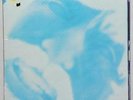
Silent Alarm was released on 2 and 14 February 2005, in Japan and Europe respectively.[30] Chosen because the album has a sense of disquiet, the name comes from an article in New Scientist about an early detection system for earthquakes in Japan,[12] while thecover art is based on a bare winter landscape by freelance photographer Ness Sherry.[8] Bloc Party followed the album's release with a short European promotional tour in early March 2005.[31] Between 17 March and 9 April, the band undertook a first headlining US tour to coincide with the American release of Silent Alarm through Vice Records on 22 March.[32] The US marketing was geared to establish a long-term fan base among "tastemakers and early-adopter rock enthusiasts", rather than a short-term emphasis on radio play. At the time, Okereke stated, "All I’m concerned about is playing live shows here to people who want to see us."[30]
[edit]Reception
[edit]Commercial
Silent Alarm entered the UK Albums Chart and the Irish Albums Chart at number three,[29][33] selling 61,737 copies during the first week in the former country.[34] The album achieved gold certification within 24 hours of its European release.[35] 350,000 copies were shipped worldwide by the first week of March 2005; 20,000 were sent to America, double the record labels' January forecast.[30] In the US, the record entered the Billboard 200 at number 114 and the Billboard Top Independent Albums at number seven.[36]With little radio support, it became the best-selling release in Vice's history as a label.[37] 123,000 copies of Silent Alarm were sold in the US by the end of July 2005.[38] The record was listed at number 75 in the end-of-year UK Album Chart and was certified platinum by the British Phonographic Industry after more than 500,000 copies were sold in the UK during 2005.[37][39] According to Nielsen SoundScan, 280,000 copies of the album were sold in the US by January 2007.[40] More than one million copies have been sold worldwide.[41]
[edit]Critical
Media response to Silent Alarm was highly favourable; aggregating website Metacritic reports a normalised rating of 82% based on 32 critical reviews which indicates "universal acclaim".[42] Drowned in Sound's Gen Williams described the album as "mature and expansive" and wrote that "the autonomy, creativity and sheer, elastic beauty that spans this debut more than justifies the rapidly accelerating hype".[5] Andrew Romano of Newsweek similarly noted that it "lives up to the hype".[43] Summing the record up as "dance rock, but highly caffeinated", Barry Walters of Rolling Stone explained that the tracks are emotive and rhythmic in equal measure,[44] while Nick Southall ofStylus thought that every song is "full of thrilling ideas and inspired moments".[45] Johnny Davis of Q labelled Silent Alarm "an arty, confident and exhilirating debut",[46] while Joshua Glazer of URB compared Bloc Party to "every legendary band ever who followed an EP with an even better album and on into greatness".[47] The Guardian's Alexis Petridis was less receptive and commented that the "reedy vocals and lyrical evocations of suburban ennui ... induce a worrying ennui of their own".[48] Heather Phares of Allmusic stated that the record is not perfect, but praised its "passion and polish".[20]
Romano and Glazer compared Silent Alarm to U2's early work,[43][47] while Walters claimed that it distills "twenty-five years of spiky British rock, from the Cure to Blur to hot Scots Franz Ferdinand".[44] Pitchfork Media's Nitsuh Adebe noted particular similarities between "Banquet" and Franz Ferdinand's debut single "Take Me Out", calling both songs "wonderfully tight and energetic—the same kind of spiffy half-dancing rock".[17] Phares suggested that Bloc Party are more comfortable with lyrical proclamations than their contemporaries Franz Ferdinand or The Futureheads,[20] while Imran Ahmed of NME concluded, "Silent Alarm is no Franz Ferdinand. In fact, listen to it with the words 'popular' and 'arty' in mind and its spirit is closer to the Manic Street Preachers' The Holy Bible."[49]
price rating