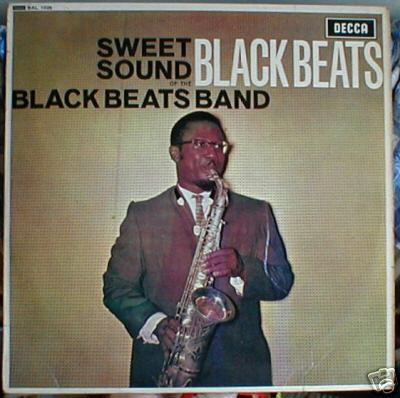
Black Beats Band UK 1963 10" LP Decca High Life RARE
£
135
$
179


Favourite Auctions
To save auctions to your favourites, please login
If you don't have an account, please register
Description
Black Beats Band Sweet Sound of the Black Beats UK 1963 10” LP Decca Records Catalogue Number WAL 1029, Super collectable and rare Decca West African Series 10” LP from the BlackBeats. In 1998 Ghana lost one of its greatest highlife exponents, the Accra born King Bruce who composed many highlife classics, particularly in his native language Ga. He had a particular ability to write his Ga lyrics in a poetic way and put to haunting and relaxed melodies.
King Bruce was born in James Town, Accra, in 1922. His musical experiences started early and were varied. His mother belonged to a traditional women's singing group called Etsi Penfo. His eldest brother Kpakpo Thompson taught him piano. Another brother, Eddie Bruce, played palm wine guitar styles like "fireman" and "dagomba wire," in a band with a group of seamen called Canteen. At the same time and much against his parent's wishes, King was a keen follower of the Accra street music, such as the alaha (also called adaha), kolomashie, tsibode, koyin, and other popular dance-styles played by the local Ga-Adangme ethnic group.
At the prestigious Achimota College secondary school, King continued to be inspired by music, particularly by some of the teachers who taught there. These included Phillip Gbeho, who composed Ghana's national anthem, and Doctor Ephraim Amu. Doctor Amu was, as King recalled, "my house-master as well as my music teacher and taught us his Twi and Ewe songs. He had come to Achimota after he lost his appointment as a teacher at the Akropong Training College because of his strong African tendencies. He didn't believe in the idea of going to classes or church in Western-style suits, but always wore traditional kente cloth or batakari. He had these strong feelings about African culture as far back as the 1930s and was welcomed at Achimota, as the founders of the school--Guggisberg, Fraser, and Aggrey--were strongly interested in promoting African ways."
It was at the end of his schooldays at Achimota that King developed a taste for swing and dance-band music, for as he told me, "These were the war years and we had British and American army units stationed here. They had bands for their entertainment and so ballroom music progressed very much. The airport was virtually taken over by the Americans and one wing of Achimota College itself was taken over by he British resident minister, who was taking care of the British war effort here. So this was the time of musicians like Glenn Miller, Benny Goodnmn and Artie Shaw; so by the time I left Achimota, I had a definite taste for jazz and swing."
King did not actually start playing in dance band, however, until he had spent a couple of years in England studying to be a civil servant with the P & T (Posts and Telegraphs) and learning to play the trumpet. On returning to Accra in 1951 he hung around for awhile with top musicians like Adolf Doku, E.T. Mensah, Kofi Ghanaba (Guy Warren), Joe Kelly, and Papa Hughes. He occasionally played clips (claves) for Ghana's leading highlife dance-band, the Tempos. When King felt he was ready to go on stage with his trumpet, he joined Teacher Lamptey's Accra Orchestra.
King stayed with this group until 1952, when he and tenor saxophonist Saka Acquaye formed the Black Beats band. King recalled, "The name just came out spontaneously. One evening when we were coming home from rehearsals, Saka asked me what name we were going to use. Without hesitation, I said `Black Beats.' The reason was that Doctor Amu at Achimota had impressed on us the necessity for doing things African. At the same time, we were all very much enamored with jazz, swing and music with a beat. So we were all interested in playing good dance-band music, but keen on giving everything a recognizably African beat."
In contrast with other Ghanaian dance-bands, the Black Beats vocalists (the Black Birds, Lewis Wadawa, and Frank Barnes) dominated the instrumental line-up; and in this they were influenced by the swing and "jump" music of Afro-American Louis Jordan. It was with this high vocal profile that the Black Beats began to release a string of highlife hits for the labels of the day, HWV, Senophone, and Decca. The titles King composed included "Teemon Sane" (A Confidential Matter), "Laimomo" (Old Lover), "Nkuse Mbaa Dong" (I'll Never Return), "Nomo Noko" (A Thing of Joy), "Srotoi Ye Mli" (Distinctions), and "Agoogyl" (Money - a song composed by Oscarmore Ofori).
In 1961 disaster struck the band. Alto saxophonist Jerry Hansen and nine musicians left the semi-professional Black Beats to form the fully professional Ramblers dance band. Nevertheless, within a few months King had reorganized his band and with this second-generation Black Beats began releasing more hits for Decca, like "Se Nea Woti Ara" (1 Love You Just as You Are), "Kwemo Ni Okagbi" (Take Care You Don't Dry Up), and "Odo Fofor" (New Love) all of which are on this LP. Sleeve EX-- Record EX-, P&P UK £2.99 Overseas at cost please wait for an invoice
On 13-May-07 at 22:59:53 BST, seller added the following information:Use the FREE Counters 1 million sellers do - Andale!
price rating