Bix Beiderbecke & Gang Thou Swell -A UNISSUED Poly Master 78 From Only Copy
$
275
Favourite Auctions
To save auctions to your favourites, please login
If you don't have an account, please register
Description
***NOTE: THIS IS A POLYURETHANE MASTER PRESSING AND NOT AN ORIGINAL ISSUE. MADE FROM A HIGH-RESOLUTION SILICONE MOLD AND EXTREMELY HIGH-VISCOSITY POLYURETHANE RESIN. IT SOUNDS AND PLAYS JUST LIKE AN ORIGINAL WOULD IN FULL ANALOG GLORY, ALL THE SURFACE NOISE AND CHARACTERISTICS OF THE ORIGINAL SHELLAC. I HAVE BEEN MAKING THESE FOR COLLECTORS FOR ABOUT A YEAR NOW, AND MANY SOUND ENGINEERS AND COLLECTORS CAN ATTEST TO THEIR QUALITY. CONTACT ME DIRECTLY IF YOU HAVE ANY QUESTIONS OR WOULD LIKE A LIST OF ITEMS CURRENTLY AVAILABLE***
ARTIST: Bix Beiderbecke and His Gang
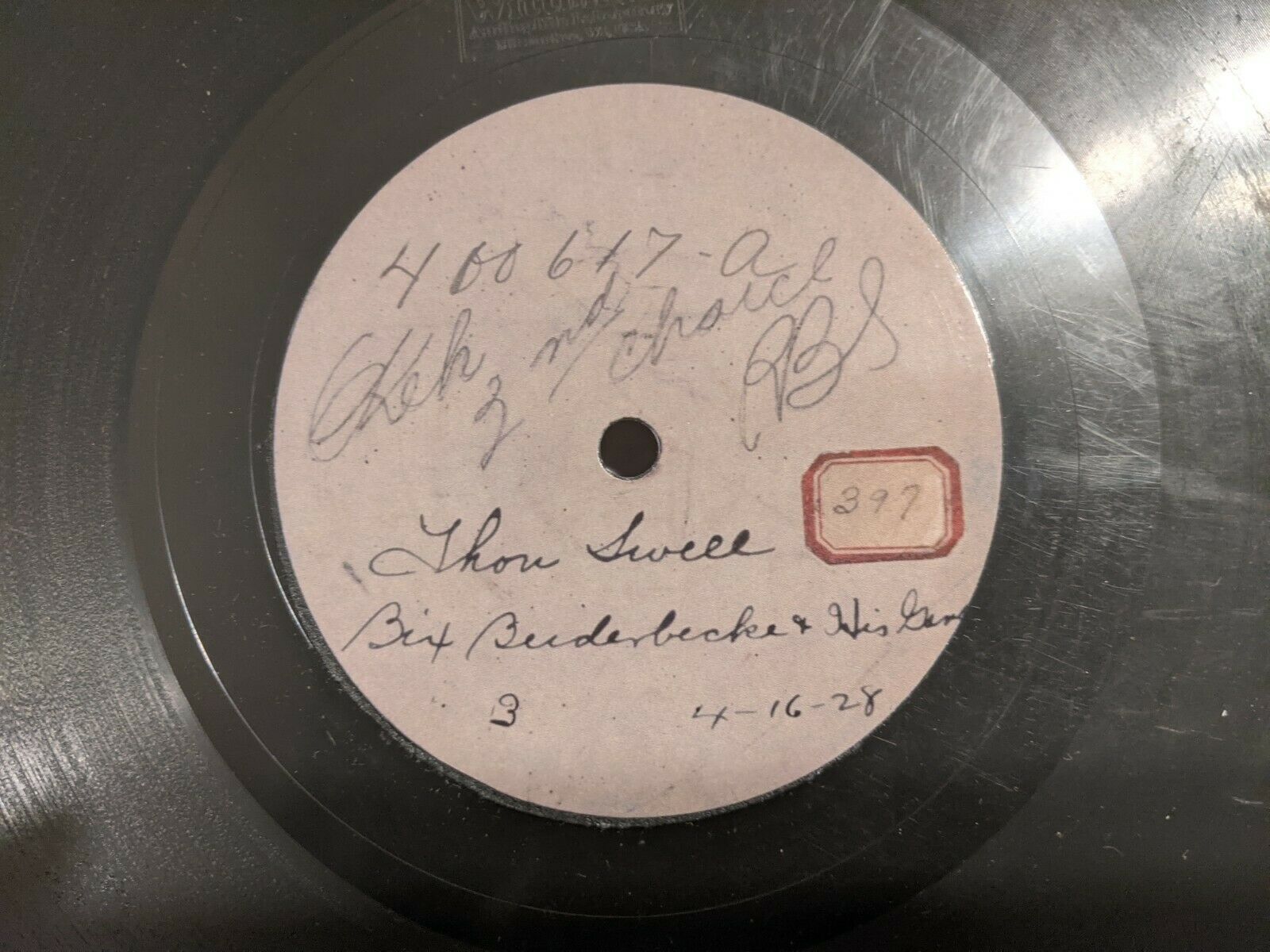
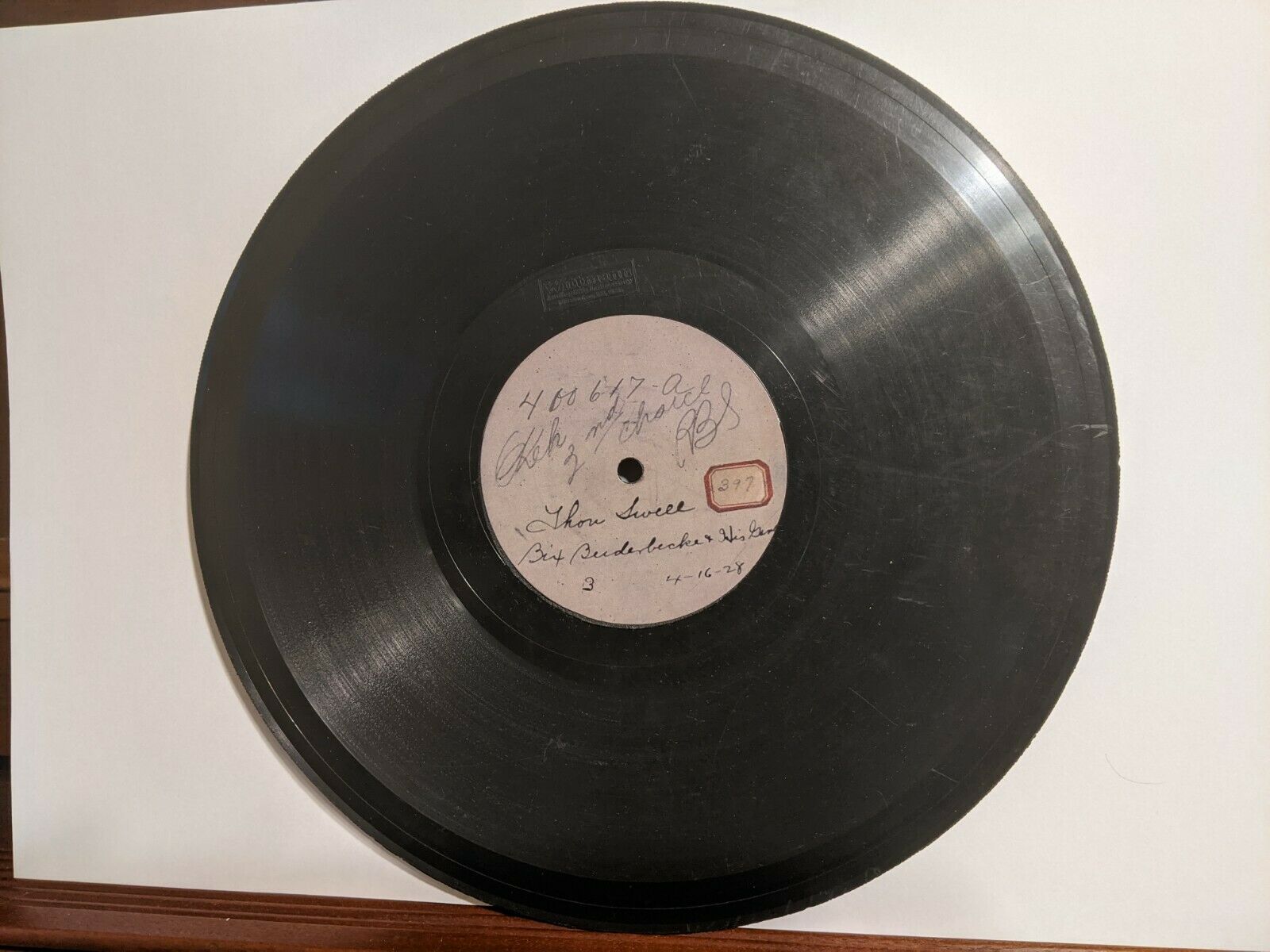
LABEL: Okeh unissued test mx 400617-A
TITLES: Thou Swell
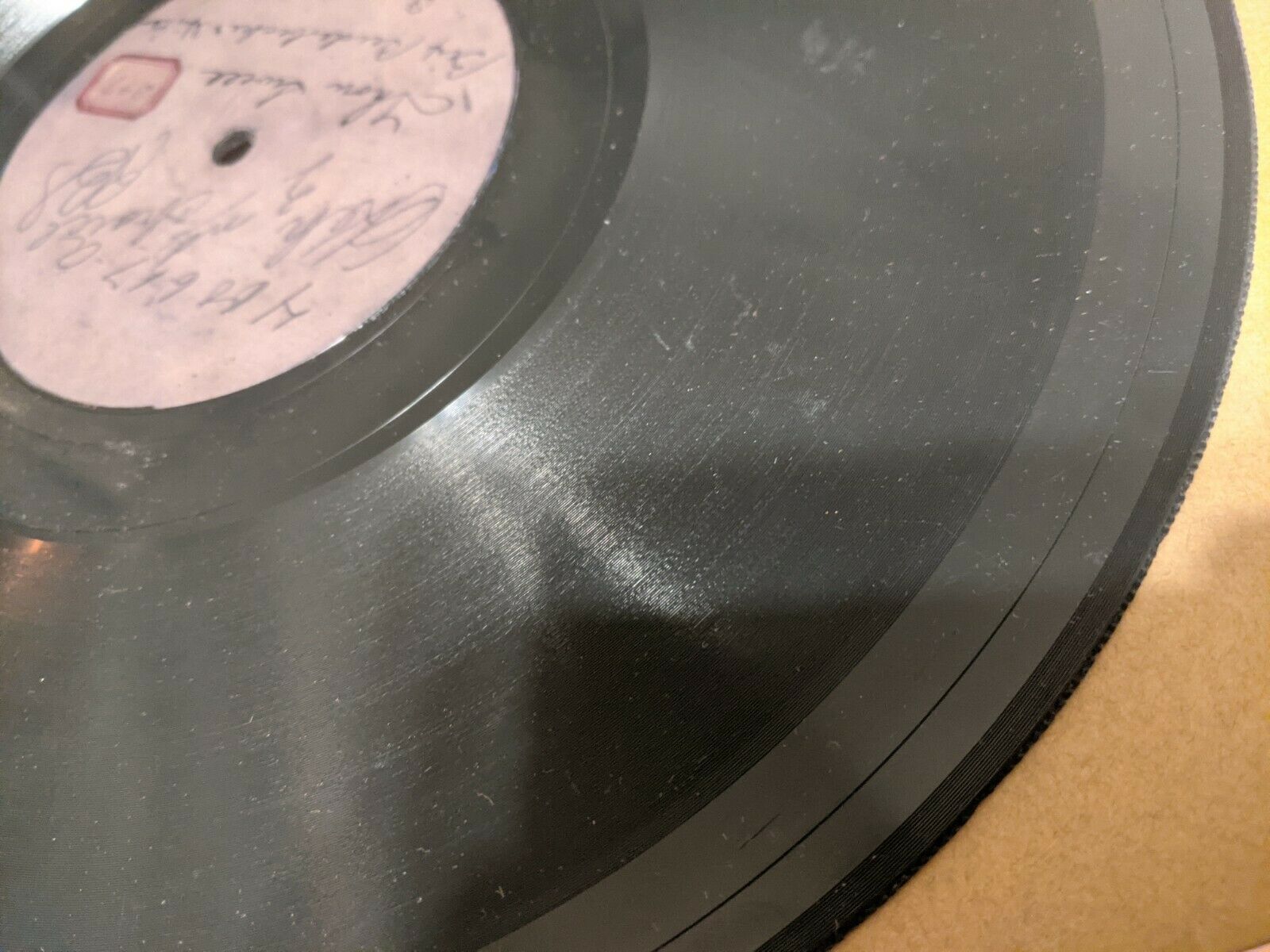
CONDITION: About V+, plays strong E- with scratches and scuffs.
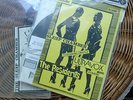
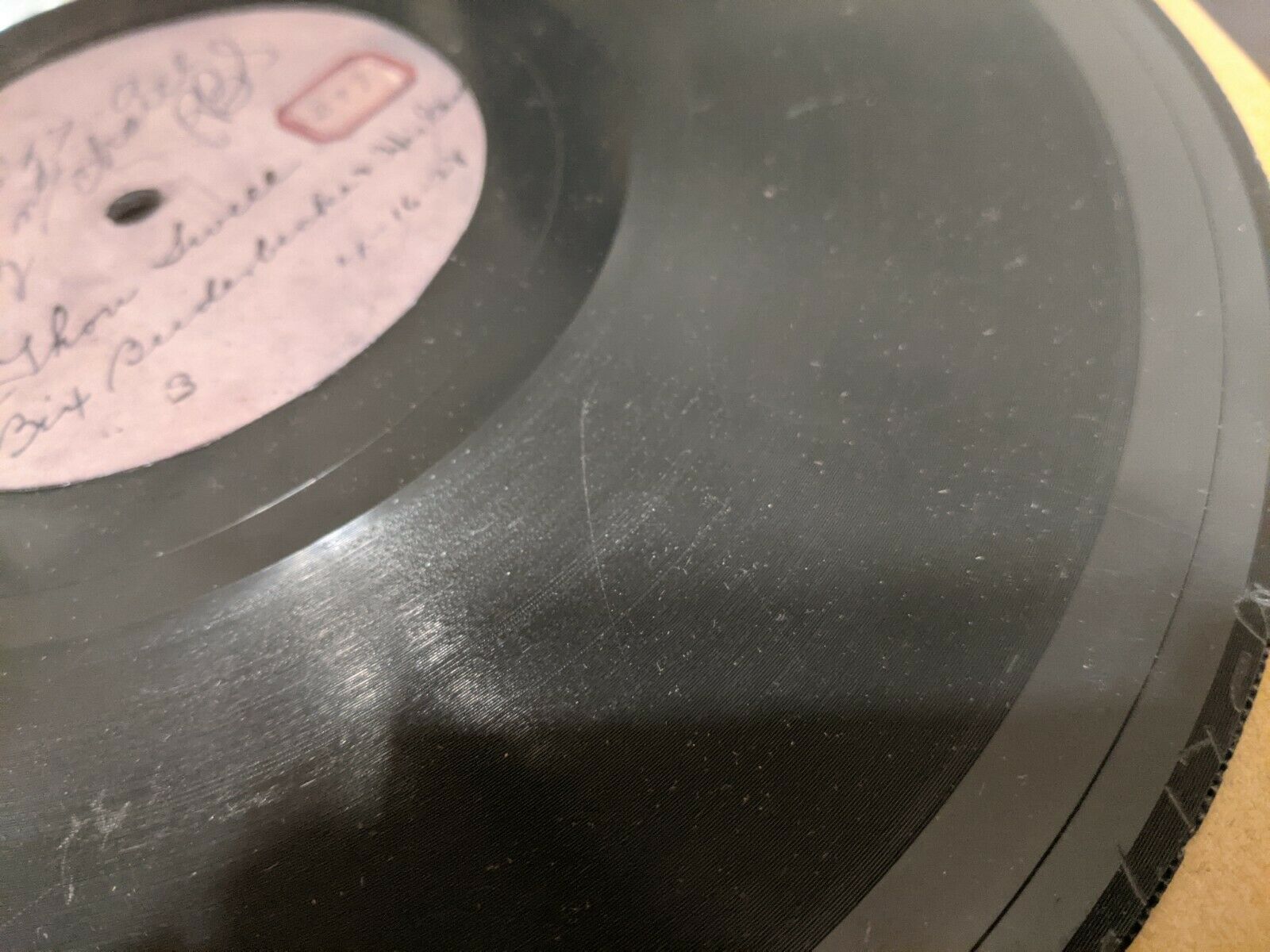
DESCRIPTION: On 17 April 1928 Bix Beiderbecke and his Gang recorded the tune "Thou Swell" for Okeh in New York. 1 Two takes were mastered; take -C was issued on Okeh 41030 and a single test pressing of take -A (designated second choice by Okeh official Robert Stevens, assistant to Tom Rockwell, who signed it "RBS" has also survived. This take has a great number of interesting differences from the issued one, especially in Bix's clear lead all through the ensemble passages. As fellow collector Brad Kay puts it, “This unissued take of "Thou Swell" has a before-coffee-Monday-morning-walkthrough quality about it (even though it's the second tune of the date). Bix sounds like he's just walking through the piece, concerned more with how it hangs together structurally than with playing hot per se. The rehearsal snippet shows that the group put it all together in the studio. The musical distance between this and the issued take -C is enormous.”
The original record is single-sided and on the back are embossed the name and logo of the Columbia Phonograph Company, who by that time owned the Okeh label. The history of this unique record is vague; rumor has it that it was found in a junkshop in New Jersey some 50 years ago, that it was later in Denver and that it travelled the world in a military trunk - this story was printed on the back of the only reissue LP in 1978. None of this has been proven. What is certain is that a friend of Don O'Dette (founder of the Bix Beiderbecke Memorial Society) from Davenport had the record and from him it went to Tom Pletcher 1977. The latter sold the record in 2008 on Ebay via John Wilby (Jazz Oracle label in Canada) to Hans Eekhoff. It was reissued on LP in 1978 after John R.T. Davies did a remastering in England. After this first re-issue, the original record was never again made available and subsequent CD reissues all draw from John Davies' old transfer using the best analog restoration tools available at the time. Hans restored the record using a combination of analog and digital techniques, and the transfer is available for all to hear on YouTube (minus a glitch in the piano solo to prevent piracy). Because the record turned up in Davenport, it is possible that it originally belonged to Bix himself (rejected tests were often given to the artists). Moreover, after careful and extensive analysis, a highly reputable expert from Davenport, the late Giles Weigandt (d. 2015) who was familiar with Bix's handwriting concluded that the writing in ink of the title and band name is probably by Bix himself.
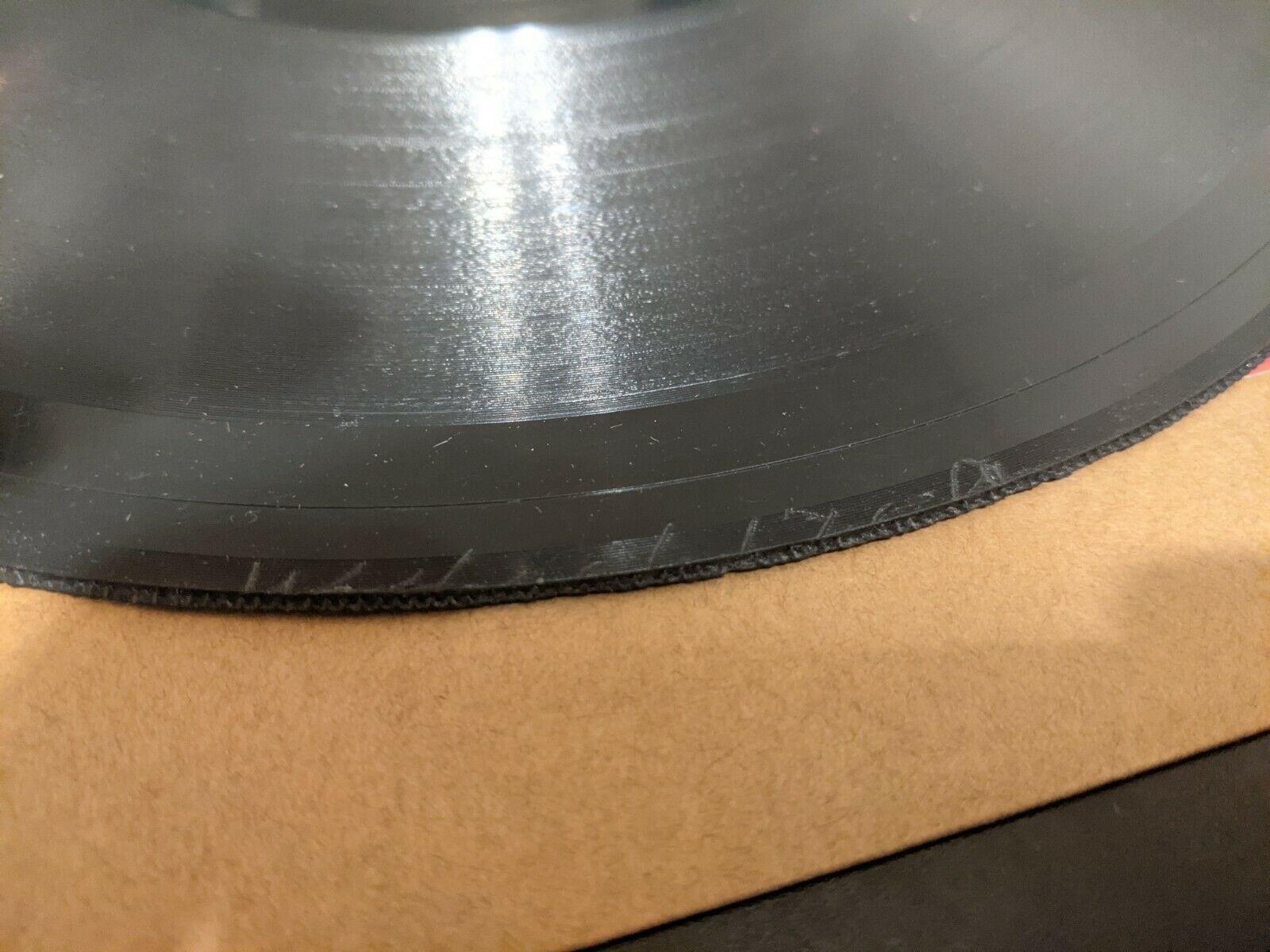
The other exciting aspect of the record is that the format is 11 inch, and a few test-grooves remain at the outer rim (alas heavily damaged by the engraved matrix number which is right into these grooves - see picture) which contain some playing and talking by a few band members. Per Brad Kay: “A wax master for a ten-inch record was actually twelve inches in diameter. Before cutting the side, the engineer would usually drop the stylus on the edge of the disc, outside the limit of a ten-inch pressing, to test the cutter for a few turns. If the mike was live, whatever was happening in the studio would be summarily recorded for several seconds. Sometimes these "test tracks" appear on the very rim of oversized test pressings that take in the whole size of the original master. Thus, we get to hear not only Bix for a few unguarded seconds, but Robert Johnson, Clarence Williams and his Orchestra, Louis Armstrong, Fletecher Henderson and his Orchestra and others.” Here, after some clarinet, bass sax and piano notes the words "Damn", "I got it" and "Take it (from) the last four" and some laughter can be distinguished. The prevailing wisdom is that the voice saying, “Take it (from) the last four” is that of Bix himself, the leader of the session.
I purchased the original record from Hans Eekhoff a few years ago and am making polyurethane copies available at two price points:
1) A mold made directly from the original 2) A mold made from my master copy. Nearly indistinguishable in sound to the former, but one extra generation of signal loss. To be honest, I have a hard time telling these apart from the ones molded directly from the original.
I do not plan to make any more copies directly from the original, so these will probably be collector's items someday--they are the only way to hear the full analog of the original without owning the only copy. It's easier and less risky to mold from my master copy. The direct copies are slightly thicker, but they play virtually identically. The backs are sanded to ensure flatness and proper tracking.
Most copies need about 4 grams to track the test groove. It's tough to properly copy because it's on the very edge of the record, and the original has a light warp. Not to mention, the grooves have he matrix etched in them.
Personnel: Bix Beiderbecke, c / Bill Rank, tb / Izzy Friedman, cl / Min Leibrook, bsx / Roy Bargy or Tom Satterfield, p / Harold MacDonald, d. New York, April 17, 1928.
Don't hesitate to contact me with any questions! I aim for total satisfaction.
78 GRADING: We use the universally recognized VJM (Vintage Jazz Mart) 78 rpm system in grading our 78s with some streamlining as noted, eliminating some of the hair splitting on records graded V- and below (G+, G, G-, F).
E+
Highest grade used. A record that might have minor handling marks but has no visible signs of wear. N, N- and E+ records will all be graded as E+.
E
Record has slight signs of handling and use but groove wear should be barely detectable and grooves should still be glossy and black.
E-
Light groove wear with grey rubbing and light circular gray grooves starting to appear, but record should still retain glossy black grooves for almost all of the surface.
V+
Grey wear, handling and groove wear more apparent, but much of the groove area will still have black.
V
Record is approaching an overall grey surface with uniform wear, but will still play well even though the level of surface noise and distortion could be distracting.
V-
Record has wear throughout, and was subject to continual playing to wring more sound out of it, so even the grey is in a more advanced state of deterioration with groove walls disappearing.
P
This grade generally indicates poor condition on a good title.
Be sure to check out my fixed price listings. Big discounts for bulk purchases:
25% off when you by two or more fixed-price items $12.99 and under! 40% off when you buy three or more fixed-price items $8.99 and under!
price rating