BLACK SABBATH FIRST PRESS 11-SONG GREEN LABEL 'MASTER OF REALITY' WARNER 1971
$
70
Favourite Auctions
To save auctions to your favourites, please login
If you don't have an account, please register
Description
BLACK SABBATH "MASTER OF REALITY" US FIRST PRESS GREEN WARNER MIS-TITLED w/ 11 SONGS
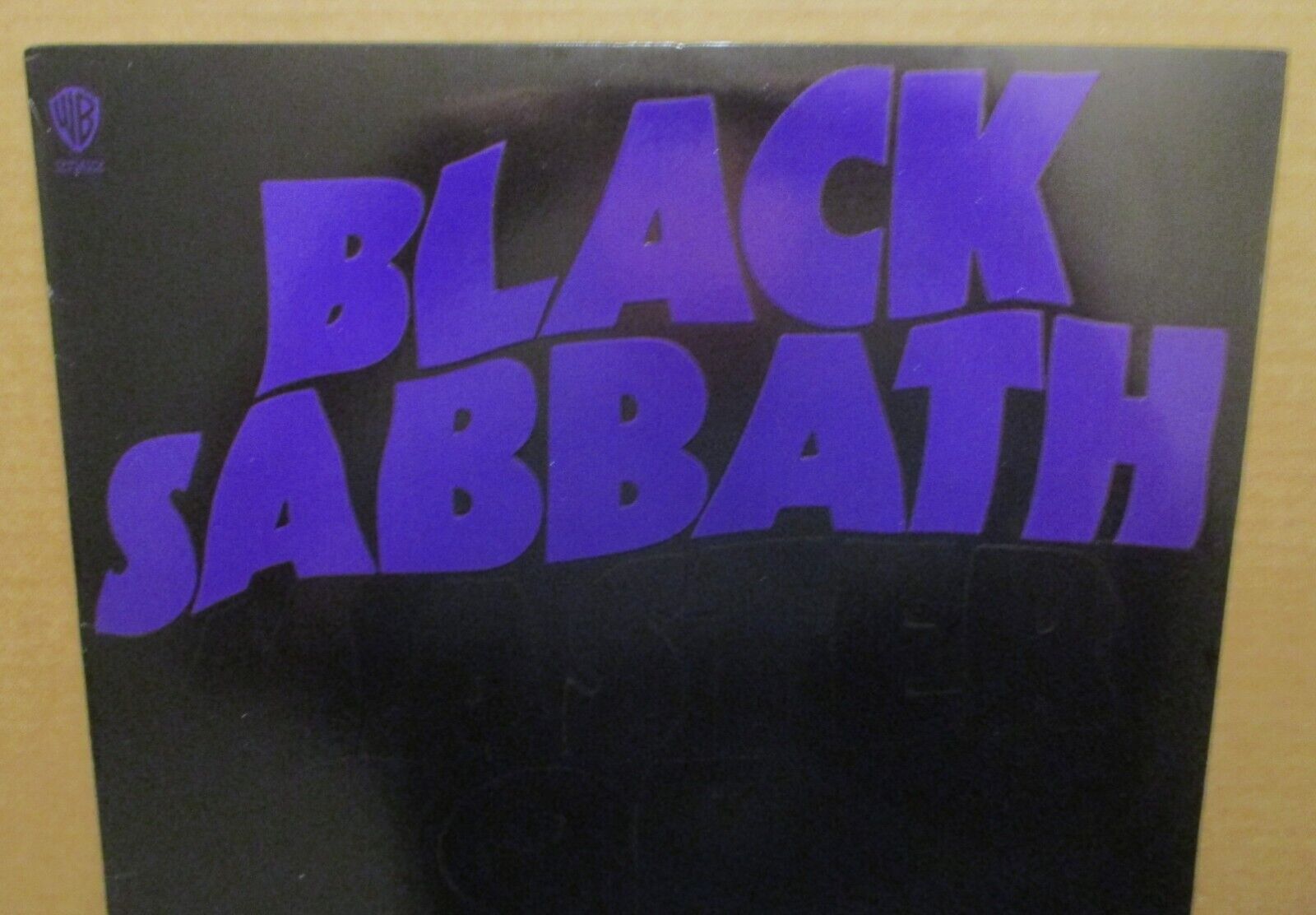
BLACK SABBATH "MASTER OF REALITY" LABEL: WARNER BROTHERS BS-2562 (S39928 / S39929) FIRST PRESSING ~ EMBOSSED COVER ~ 11 SONG MISPRINT LABELS ~ POSTER RELEASED: AUGUST 1971 RECORDED: ISLAND STUDIOS ~ LONDON ~ FEBRUARY - MAY, 1971 MASTERED AT ARTISAN SOUND RECORDERS PRODUCER: RODGER BAIN PRODUCED FOR TONY HALL ENTERPRISES PRESSING: COLUMBIA RECORDS TERRE HAUTE ('T' IN MATRIX) RECORD COMPANY: WARNER BROTHERS RECORDS, INC. PHOTOGRAPHY, JACKET DESIGN & POSTER DESIGN: KEEF MATRIX (SIDE A): (Etched) BS-2562 T 39928-1-3 [Artisan symbol] MATRIX (SIDE B): (Etched) BS-2562 39929-1 I [Artisan symbol]
CONDITION: VINYL: VG+ JACKET: EX- POSTER: EX-
I've been going thru my massive vinyl record collection these past few weeks and pulling out some LPs that I thought that someone else would want for their collection. I've been collecting records for over 45 years and it's time to pass some of them on to the next generation of collectors.
This week on EBay I am offering up this early original 1971 First US Pressing of 'Master of Reality' by Black Sabbath.
This is my original copy, purchased back in the very early 70's, shortly after it's release, that I've taken great care of for many years. It's still in fantastic, all original condition.
See details on Condition below.
~~~~~~~~~~~~~~~~~~~~~~~~~ This is the rare, true original, First US Pressing of 'Master of Reality', the third album by Black Sabbath released in August 1971.
If you're an early fan of Black Sabbath, you can't get much better than this. These original American "Greenie" First Pressings sound amazing. A bit more meat and punch.
They just can't be beat, unless you can get your hands on a clean 1971 UK Vertigo pressing.
These original, first pressing, Green label Warners are a fun listen and sound truly amazing.
These First US pressing 'greenies' are renowned for their raw and powerful sound reproduction, which perfectly captures the gloomy and intense atmosphere of Black Sabbath's music.
The music is relentless, punchy and dynamic and full of that classic, early, Sabbath 'sludge'.
This pressing has the kind of energy, presence, and fullness needed to bring the best out of Black Sabbath. The pure analog sound quality is awesome. Rich, heavy, clear, well balanced, and Ozzy's vocals are right in your face.
This is what Sabbath was meant to be.
These early pressings allow you to hear and experience the raw energy of Black Sabbath in the way the band originally intended, and in a way that remains timeless and impressive.
The sound on this record is deep and rich, with a clear focus on Tony Iommi's guitar playing, whose guitar tones sound so fantastic.
~~~~~~~~~~~ This album is also cut very dynamic. The heaviness really punches thru, but in the quieter sections, like in "Solitude," the softer, subtle, sound textures and nuances also come thru, creating a quiet, haunting atmosphere.
It's a real nod to the 'warmth' that 70's analog recordings can offer.
This early all-analog 'greenie' is a fantastic version of this monumental work. It offers an intensity and sonic depth that was never achieved on later digital pressings.
It's loud and punchy, with perfect tonal balance, decent extension on both high and low ends, and of course a spacious sound stage. Ozzy's vocals are mixed perfectly.
A truly enjoyable and essential way to listen to this classic album!
No heavy rock vinyl collection is complete without an early, original US Green label, 'Artisan' mastered, copy of 'Master of Reality' in it.
~~~~~~~~~~ This album has been remastered, re-mixed, and re-interpreted by all the top recording engineers and top audiophile labels, but, nothing beats a First Pressing 'greenie'.
These early greenies are a 'must have' because of their historical context and their exceptional sound quality. They remain a great listen even half a century later.
This record begs you to crank your system up and play this at top volume.
~~~~~~~~~~~~~~~ As I mentioned, these First Pressing 'greenie' albums were mastered and cut with the mid-range slightly forward to emphasize Tony Iommi's guitar and Ozzy's powerful voice.
Tony Iommi is one of the all time great guitarists, and the tones he gets out of his Gibson SG, through Laney amps, are just incredible. Most guitarists were using Marshalls in those days, but Iommi liked Laneys, which gave him a distinctive tone.
This album is full of Tony's brilliant playing and his fantastic, monstrously heavy, thick, burning. powerful riffs.
Tony Iommi's guitar riffs are heavy, deep, forceful and dynamic
His dark, sludgy, inventive guitar work amazingly compliments the dark lyrics and Ozzy's voice.
Tony is the best kind of rock guitarist ~ simple, clean, yet brilliant.
~~ Many of the songs on this album have Tony Iommi trading off, back and forth, with Ozzy's haunting, powerful voice.
Ozzy at his most powerful and Tommy Iommi at his most creative make for music that's simply spectacular.
Many consider this the definitive Ozzy album. His voice and unique vocal approach perfectly complements the songs and fits Black Sabbath’s music like a glove.
Ozzy sounds deep and emotional, fittingly eerie and alien at times, and his voice is an inextricable part of the whole Sabbath sound.
Ozzy has a very powerful, natural, haunting, iconic voice which perfectly enhances the dark menacing lyrics.
Not only does he (mostly) hit the right notes, but he actually improves the songs with his determinedly demonic execution. It just wouldn't be Black Sabbath without Ozzy's unique voice, as fans would come to find out.
Ozzy was the perfect 'metal' voice for Sabbath's tales of madness and despair. His vocals just leaves you speechless.
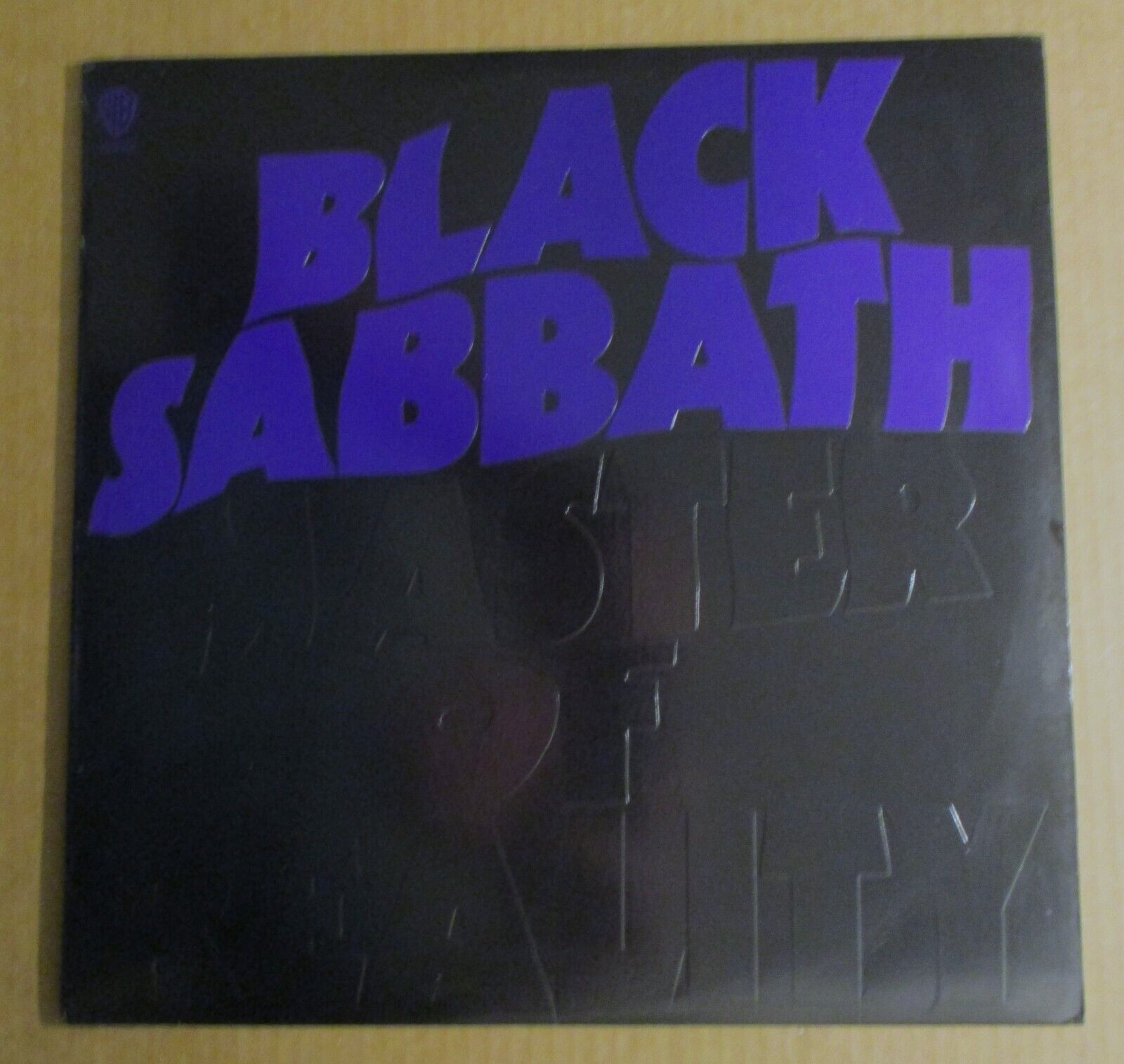
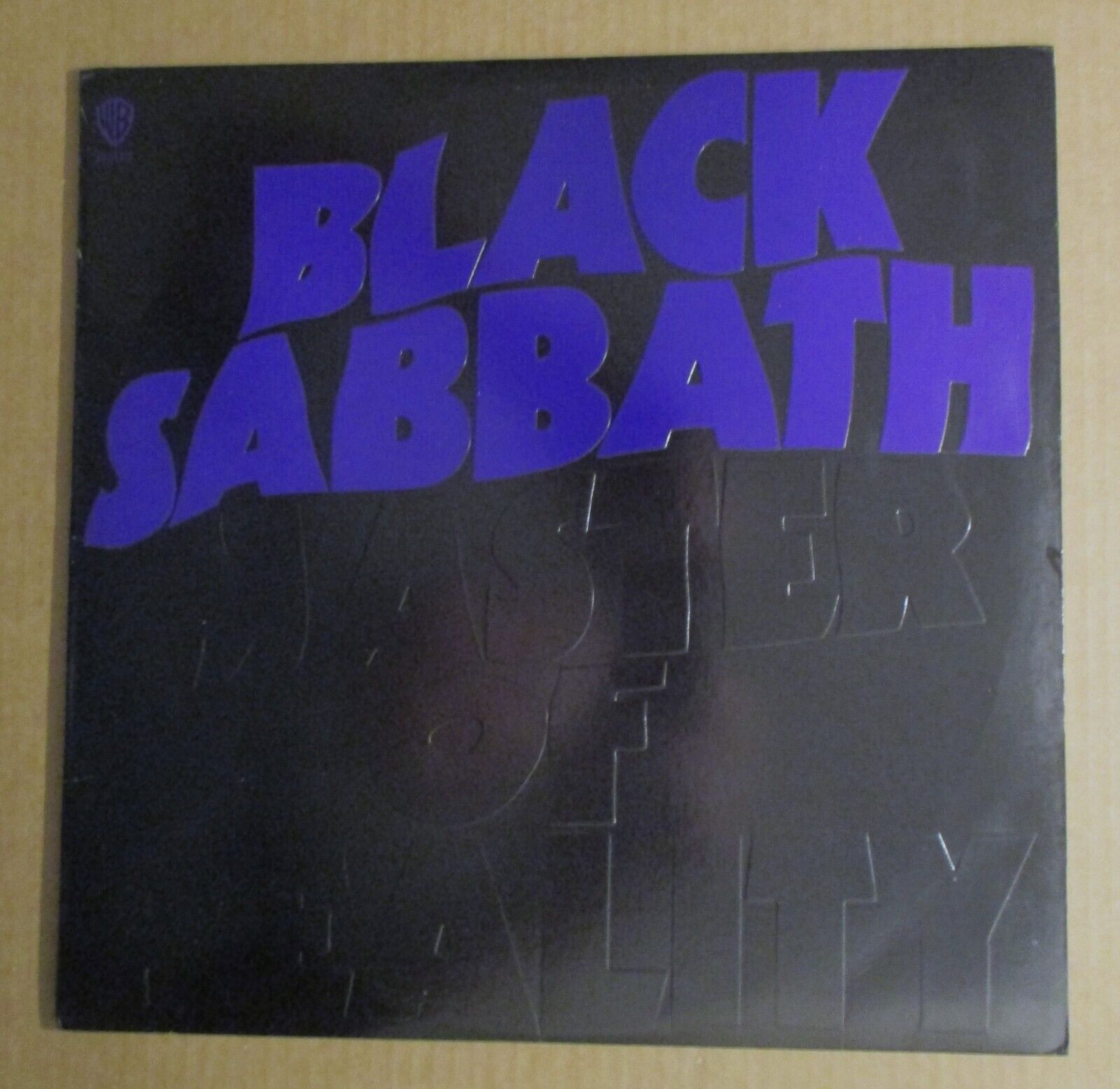
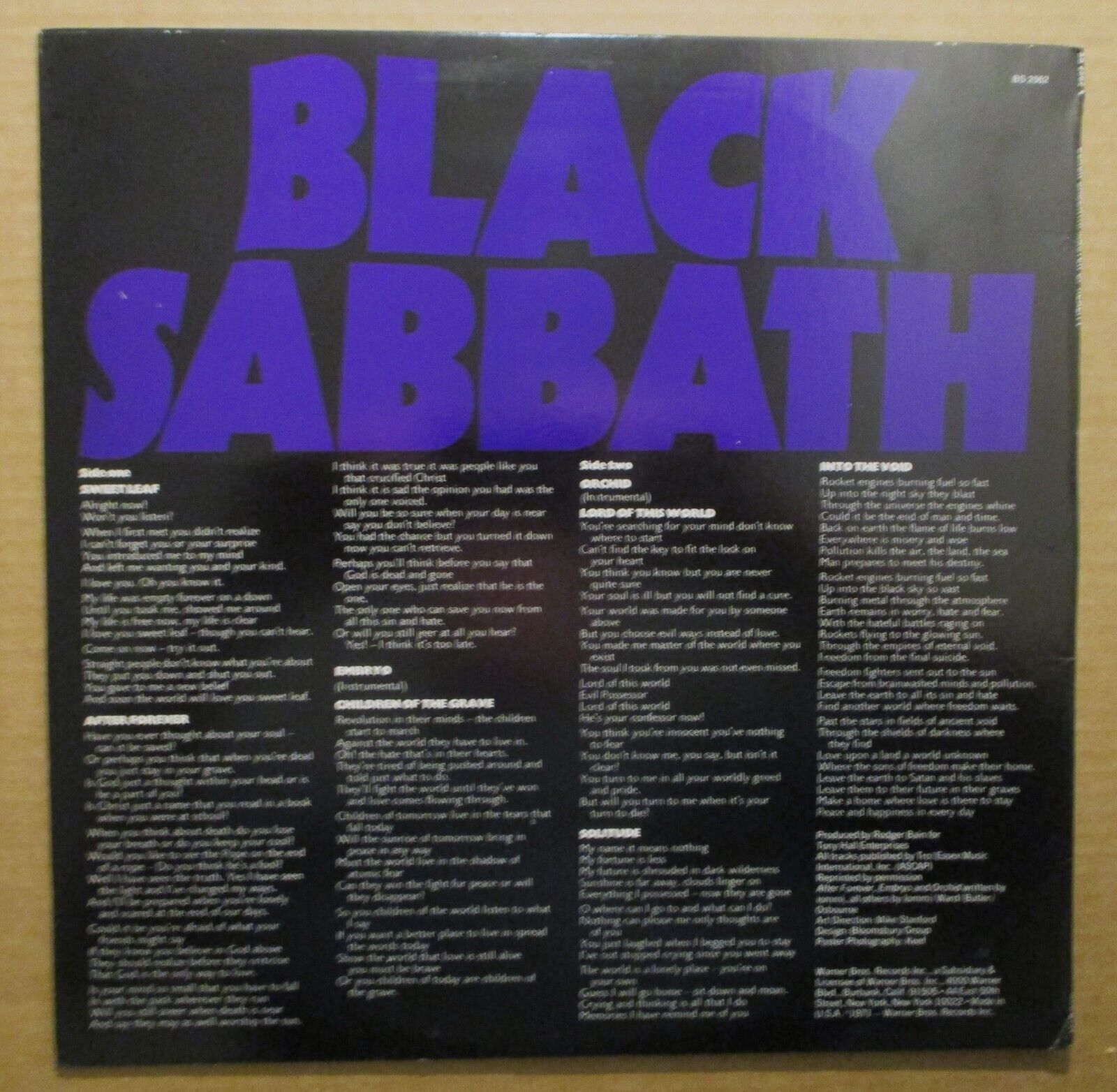
~~~~~~~~~~~~~~~~~~~ This copy is the very rare Terre Haute First Pressing from the Summer of 1971 that has the title of the album misspelled as 'Masters' not 'Master' on the labels, and has 11 tracks listed instead of the normal 8. Like other American First Pressings, it has the very cool, original embossed front cover and comes with the original poster.
True American First Pressings can easily be identified by the Green 'WB Shield' Warner label, with the album title listed as 'Masters of Reality', not 'Master', the extra song titles, 5 listed on side one, and 6 on side 2, the bold 'Stereo' printed at the bottom of the label, and the rim text that reads "Warner Bros. Records Inc. A Subsidiary and licensee of Warner Bros. Inc. Made in USA."
Supposedly, multiple pressing plants intially released this record with the 'wrong' labels, but it was caught and noticed right away, changed rather quickly, and few copies with the 'wrong' labels got released.
For some reason, the Terre Haute plant was slower to change the labels and the very first batch of pressings went out with these 'alternate' labels. There's no way to tell which copies have the 'wrong' labels from the outside, you need to look at the actual labels on the inside.
I purchased this copy 'new' back in the summer of 1971, in Chicago, and it came 'off the shelf' with the misprint labels, which I had never heard about or known about until the mid 70's. We didn't have internet and Discogs in those days, just record shows, Goldmine, and word of mouth. I thought my copy was how they all were.
In all my nearly 50 years of record collecting I've only ever seen a handfull of these 11-song versions and they've all been Terre Haute pressings. If they were also made at other pressing pants that Warner used, like Santa Maria or Pitman, I've never seen one in person. They seem to be quite rare, especially this clean and complete with the poster.
Despite listing 11 songs, not 8, the music contained on this record is identical to the normal 8 song pressings, just the song titles have 'extra' words describing them.
For example, the 2nd track on side One is listed as "After Forever (Including The Elegy)" and is incorrectly credited to "Ioomi-Ward-Osbourne-Butler". The track, "After Forever" was actually written by Tony and the title & songwriting credits were quickly fixed on later First Pressings.
So there are actually 2 US First Pressings of this album; the true First with 11 songs and later First Pressings with 8 songs listed. After these Terre Haute 'oddities', all subsequent First and later pressings show 4 tracks per side and have the 'shorter' song titles listed.
In addition to the intro of "After Forever" being given the title "The Elegy", this 11 song version lists the coda of "Children of the Grave" as "The Haunting", the intro of "Lord of This World" as "Step Up", and the intro of "Into the Void" is listed as "Deathmask" on the labels.
These aren't extra songs or extra music, just the name of 'sections' of the original songs are shown on the labels. Like I said, despite listing 11 songs, the music on this record is identical to the normal 8 song pressings, just with different titles.
~~~~~~ Some of these odd 'mistitled' Terre Haute pressings also contained a slip-sheet insert that was a sort of 'Questionnaire/Contest'. If you answered the question "What Black Sabbath Means To Me", wrote it out on the sheet, and mailed it back to Warner, you were entered into a drawing with a chance to meet the band in person.
Although widely despised by rock critics, parents, and 'real' musicians, Black Sabbath's records were selling like crazy. Warner knew they had captured some new, rare, 'magic in a bottle', they just weren't exactly sure what that magic was, why it was so popular, and how to capitalize on it.
Apparently, from what I've read and learned over the years, Warner was concerned with the growing perception that Sabbath were deeply involved with the dark arts, satanism, and were a bad influence on young minds and were deeply worried about public backlash against their company for promoting and selling it.
With their 'Questionnaire/Contest', Warner were trying to find new and different, less controversial, less dark and evil, perspectives from the band's fans about how to promote and present the band going forward. How to downplay the 'satanic' image and sell more records.
I think it's funny today that Warner, and other record labels, had no idea what this new heavy 'metal' rock was, why it was impactful and popular, and how to promote it way back in 1971.
Warner eventually gave up trying to change the dark, evil public perception of the band, and just let Black Sabbath be themselves.
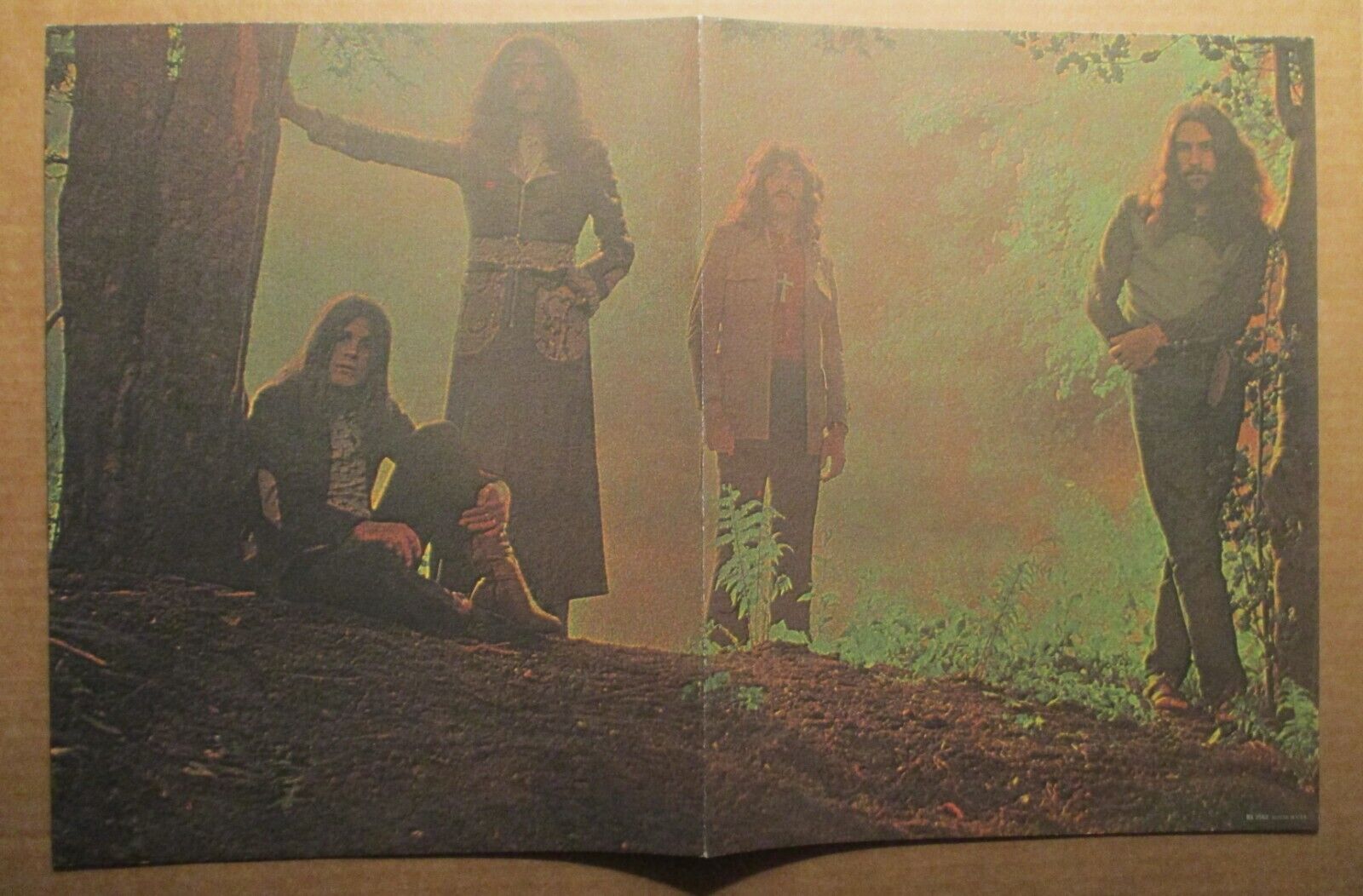
This pressing does NOT include that early questionnaire, but it does include the original, large, 4-sheet, fold-out poster, with Keef's classic photo of the band chilling out in the woods.
The poster has never been hung, or even fully unfolded, has sharp corners, great colors, and only minimal edge wear, from shifting around inside the jacket on my shelves for the past 50 years.
~~~~~~~~~~~~~~~~~~~~~~~~~~~~ By early 1971, Black Sabbath's first 2 albums had proven that 'Power Rock', as it was called back then, was a viable commodity. Their records were selling well and their live shows were in demand and selling out everywhere they played.
“We had proved against all odds that we were a viable band, much to the annoyance of our critics,” bassist Geezer Butler.
Those first 2 albums had swung like a wrecking ball through rock’s established world order, forging and creating a totally new sound and new genre, and their record company, Vertigo in the UK, and Warner in America, wanted more.
Their first 2 albums were recorded on tight budgets over a matter of days, but now the band were given much more time, much more money, and more freedom to record their next album.
In February 1971, full of confidence, swagger and 'substances', the band, along with their long-standing producer Rodger Bain, took over Notting Hill’s Island Recording Studios to make their third album, 'Master Of Reality'.
Black Sabbath were given unlimited studio time, state-of-the-art technology, and access to the studio's new 24-track mixing console to create their new album.
“We were excited to see where our writing would take us,” remembers Geezer. “It was quite an adventure in itself. We wanted the heavier songs to be heavier than anything we’d done before". “Sabbath was all about the dark reality of life,” explains the bassist, and "we had the heaviness to hammer the subjects home.”
~~~~~~~~~~~~~~~~~~~~~~~~~~~~~~ Eventually, after several months in the studio, in July 1971, Sabbath emerged from a period of weed and ambition with their third album complete, an album that would fully capture their sound and change their trajectory.
At first, 'Master Of Reality' didn't seem like much. Only 34 minutes long, and just 8 songs, only 6 of them ‘proper’ songs, but the album had an earth-shaking impact and sent ripples through the rock world.
The Rock press and critics didn't like the new album, or the band in general. In The Village Voice, Robert Christgau called it "a dim-witted, amoral exploitation." and Rolling Stone magazine's Lester Bangs described it as "monotonous", but their opinions didn't really matter.
'Master Of Reality' sold well, hitting #5 in the UK and reaching a surprising #8 in America, going 'Gold' on advance orders alone. It was Sabbath's first and only album to crack the Top 10 in the States until many decades later with '13'.
The album caught the ear of rock’s next generation, proved the potential and power of the music, raised the bar, and made Heavy Rock and 'Metal' the success it is today.
'Master of Reality' is one of the greatest, classic, heavy rock albums of all time, and it's impact and influence is still felt in music today.
~~ With the release of the album, Black Sabbath set off on a Summer Tour of America in July 1971 which started the band's period of 'Excesses of Success'.
The band flew around America on a private jet, accompanied by their opening band Yes, with new keyboardist Rick Wakeman, surrounded by unlimited booze, sacks of marijuana, and snowy white mountains of celebrity-grade cocaine.
“It was like four kids let loose in Toys R Us,” recalls Geezer of the ensuing carnage. “As to be expected of four blokes in their early 20s, we went a bit wild. Booze, women, drugs, nice hotels, private planes – all of it paid for by what we loved doing. But, "too much of a good thing has its downside.”
After returning home to the UK and settling down, cracks in the band started to become exposed that would eventually shatter the classic lineup.
Drummer Bill Ward and Bassist Geezer Butler were getting tired of how "out of control everything had become".
The secret is in 'moderation', and there was no such thing in Black Sabbath. As Geezer summed up, "instead of taking time out to breathe. We wore ourselves out in the end, and the dream became nightmarish"
'Master Of Reality' ended up being the final time that metal’s founding fathers functioned as a fist-tight unit.
~~~~~~~~~~~~~~~~~~~ Ozzy Osbourne's vocals add so much personality to these songs and make them so much more interesting, but many Sabbath fans had trouble understanding Ozzy's unusual voice on the first 2 albums, missing out on much of the 'message', so 'Master of Reality' was the first Black Sabbath album to intentionally include the lyrics, which were printed in bold white letters on the back of the sleeve.
~~~~~~ 'Master of Reality' is a classic, timeless, rock album but a relatively short one, the shortest album of Black Sabbath's catalog. Despite that, with those 8 classic songs they managed to set the foundation of several new heavy rock subgenres; Stoner Rock, Doom Metal and Sludge Metal, all in the short space of just over half an hour.
This album introduced many 'new' heavy rock sonic landscapes, many of which are still being idolized, imitated, adored and explored by many of the rock bands that followed in Black Sabbath's wake.
Over the next few years and albums, Black Sabbath changed significantly, progressed, and became slightly more sophisticated, but this 1971 album is considered by many to be the point in time where Black Sabbath was at it's true peak.
~~~~~~~~~~~~~~~~~~~~~~~~~~~~~~~~~~~~~~~~~~ This classic album kicks off like no other, with guitarist Tony Iommi coughing uncontrollably in the studio after taking a massive hit on a giant joint.
"That’s me,” recalled Tony. “Ozzy rolled this big joint… I had a couple of puffs and nearly choked myself" The tape was fortunately running and a fragment of Iommi's coughing was later added by producer Rodger Bain to make the perfect intro for 'Sweet Leaf'.
Sabbath had hinted at marijuana and drug use on it's previous 2 albums, but here, the album starts off with the classic "Sweet Leaf", an obvious ode to marijuana.
After Tony's coughing, 'Sweet Leaf' begins with that classic heavy, menacing guitar riff. Loud, heavy, primal rock & roll.
This whole album, and this song in particular, represents the classic Sabbath 'sound' that they were working so hard to develop over the first 2 albums.
During these sessions, the classic Black Sabbath 'sound' had truly finally arrived. Nobody else, no other band, sounded anything like them at the time.
To many, 'Sweet Leaf' has become the quintessential stoner anthem and 'Master of Reality' is considered one of the first Stoner Rock albums.
“We used to smoke pounds of the shit, man,” Ozzy told High Times. “We used to buy it by the f-kin’ sack full." Bill Ward ruminates: "That was part of our lifestyle at that time."
Although "Sweet Leaf" was admittedly an ode to marijuana, it didn't start out that way. Geezer claims "I'd just come back from Dublin, and they'd had these cigarettes called Sweet Afton, which you could only get in Ireland. We were going: "What could we write about?" I took out this cigarette packet, and as you opened it, it's got on the lid: "it's the sweetest leaf that gives you the taste".
The band quickly wrote the song about their other favorite Sweet Leaf.
'Sweet Leaf' is a great metal song and does a fantastic job of setting the tone and feel for the rest of the album.
~~~~~~~~~~~~~~~~~~~~~~~~~~~~~~~~~~~ There were plenty of heavy, fuzzy, sludgy sounds on the band's first 2 albums, especially on 'Paranoid', but the deep, dark, heavy songs and lyrics on this 3rd album by Black Sabbath helped establish and confirm the band as the Godfathers and originators of Sludge Metal and Doom metal.
Much of this album's vicious heavy punch came from Tony Iommi’s pivotal move to experiment and down-tune his Gibson SG by multiple half-steps to C#, to reduce string tension, thus making the guitar less painful for him to play.
This 'down-tuning' was partially done to ease the pain and difficulty of playing with fingertips that had been chopped off in an industrial accident years earlier, but when Geezer Butler also down-tuned his bass guitar to match Iommi, together they created a new 'thicker' sound that was darker, deeper, and sludgier than anything they had done previously. Iommi called it a "bigger, heavier sound".
That new "bigger, heavier sound" was used on the tracks "Children of the Grave", "Lord of This World", and "Into the Void", and those songs have been pointed out as the birth of 'doom metal'.
The down-tuning took the Black Sabbath sound into even greater darkness. It also served to help Ozzy's voice match and fit better with the songs.
~~~~~~~~~~~~~~~~~~~~~~~~~~~~~ By late 1971, after 3 albums, the extreme dark heaviness of the music, dark lyrics, and their image, suggested 'evil', so the music industry's and public's image of Black Sabbath was that Sabbath were deeply involved with the dark arts, satanism, and were a bad influence on young minds.
Black Sabbath were developing a strong perception that they were dark evil Satanists, but that was all hype and deep down untrue.
The music sounded dark and gloomy but Sabbath's lyrics were often actually bright, positive, messages and several of the songs on this album are actually warnings against satanic activity, rather than an invitation to join in.
In an attempt to counteract the growing perception that they were Satanists, many of the lyrics on this album reflect a strong moral sense.
~~~ Tony's jackhammer 'After Forever' philosophizes about death and the afterlife and has clear religious overtones.
Geezer Butler, the band's primary lyricist, had a Catholic upbringing and his lyrics explored organized religion with lines no previous rock lyricist had dared, such as ‘Would you like to see the Pope on the end of a rope?’ One of the darkest Christian song ever recorded.
In addition to all the other trends this album started, you could argue that 'Master of Reality' set the template and blueprint for many Christian doom bands to follow.
The dark sinister "Lord of This World" is sung from Satan's point of view, but he mocks his own followers and suggests worshiping him is a bad thing.
Geezer's socially charged, anti-conflict, manifesto 'Children Of The Grave' has lyrics that suggest that people have a choice between true, christian-like, brotherly love or eventual nuclear annihilation.
Geezer Butler’s lyrics during this early period were thought-provoking and often spot on. Ozzy Osbourne's unique delivery just adds to the message behind each word and Ozzy's yowl perfectly articulates the fears of a generation.
‘Children Of The Grave’ is a timeless environmental horror story that is more important and relevant in today's modern world than it ever was.
"Children of the Grave", one of this album's best and signature songs, has a fast, driving, galloping rhythm that set the standard pace for heavy metal, and would later appear in many other band's music, especially in the music of Iron Maiden.
One critic at the time stated that the song and Tony's riff "galloped like menacing, apocalyptic stallions".
Ozzy Osbourne states that he cannot remember much about recording 'Master of Reality' except that "'Children of the Grave' was the most kick-ass song we'd ever recorded."
~~~~~~~~~~~~~~~~~~~~~~~~~~~~~~~ This album isn't all cruch, riff and sludge. This album also has a couple of lighter, softer, instrumental songs that act as a buffer and interlude between heavier tracks.
The band reasoned that “The mellow tracks make the heavy tracks sound even heavier” and they did.
Side two opens with ‘Orchid’, a short, pretty, 90 second acoustic instrumental song that shows a lighter side to Black Sabbath and sounds like it would be appropriate for a medieval banquet not a Metal concert.
'Embryo' was an even shorter track, with an Eastern-sound and a gentle guitar interlude.
"Solitude" is another softer track that continues to show Black Sabbath's lighter side. It features Tony Iommi playing acoustic guitar, flute, and piano.
It's a melancholic, slow-burn ballad full of sadness and personal loss. Tony's hypnotic lick, mixed with haunting lonely flute, drifts through the air after each line from Ozzy.
Ozzy’s melodic vocals are put through a phaser and double-tracked to give it a softer quieter feel to suggest loneliness.
Ozzy sings this song with a real grace that countered his shouting berserker reputation.
~~~~~~~~~~~~~~~~~~~~~~~~~~~~~~~~~~~~~~~~~~~~~~~~~~~~ The extra studio time allowed by the record company meant that the band could take their time, and try out different things.
The band arranged their schedule so that they didn't have to play any live gigs and could focus on the music.
Bill Ward remembers "We all embraced the opportunity: Tony threw in classical guitar parts, Geezer’s bass was virtually doubled in power, I went for bigger bass drums, also experimenting with overdubs" Tony Iommi expanded his contributions, playing acoustic guitars, flute, synthesizer, piano, and adding his famous 'cough' to "Sweet Leaf".
Having more time and more freedom in the studio meant that they could bring more ideas to the table and expand their horizons past the heavy, sludgy riffs of the first 2 albums.
~~~~~~~~~~~~~~~~~~~~~~~~~~~~~~~~~~~~~~~~~~~~~~ Just like the album opens with 'Sweet Leaf', which finally captured that 'ultimate' Black Sabbath sound, the album perfectly closes with ‘Into The Void’ that sums up everything that Black Sabbath had written and created to this point; every riff, lyric and sound led up to this powerful track.
"Into the Void" is a fast, rumbling sci-fi tale that warns mankind about the effects of pollution and war on the environment.
The song starts out rather lightly, then a brief pause, then Tony Iommi unleashes one of the heaviest, double-tracked guitar riffs he ever recorded, laid down over the powerful, thundering and rumbling rhythm section of Geezer Butler’s bass and Bill Ward’s drums.
Tony's stunning solo section during ‘Into The Void’ features some of his best technique, best tones, and some amazing heavy riffage. It's Black Sabbath at their peak and many fan's favorite song from the first 3 albums.
'Into The Void'’s fast proto-sludge groove was a real challenge for the band to capture on tape.
The song has several shifting time signatures that were hard for drummer Bill Ward to nail just right in the studio and Ozzy hilariously struggled and got tripped up trying to sing Geezer's warped lyrics with the right speed, pronunciation, attitude and 'flow'.
It was a real challenge to catch 'Into The Void' in a bottle, but the final results are amazing. Many feel that it's the best song on the album.
~~~~~~~~~~~~~~~~~~~~~~~~~~ By late 1971, almost every rock band was creating heavy music, but Sabbath proved they still did it best when they released 'Master of Reality'. The album has aged very well.
Rolling Stone consistently ranks the album high in their list of the 500 greatest albums of all time.
In the MusicHound Rock Essential Album Guide, the authors described the album as a "brilliant skull crusher" and described the album as "the greatest sludge-metal band of them all in its prime."
Even drummer Bill Ward ranked 'Master of Reality' as his favorite Black Sabbath album that he has ever worked on.
Black Sabbath went on to do loads more brilliant music, but 'Master of Reality' is an album where every track is simply awesome.
It remains one of the best, and most important metal albums of all time and easily one of the greatest albums of all time.
~~~~~~~~~~~~~~~~~~~~~~~~~~~~~~~~~~~~~ CONDITION: I tried to show good hi-resolution photos of the cover, labels and vinyl in my pictures.
I purchased this copy back in the early 70's, 50 years ago, on one of my regular vinyl digs in those days, and have taken great care of it since.
Right up front I should mention that my pictures, for whatever digital reason, make the lettering on the cover look more 'blue' than it really is. The lettering is actually a much deeper purple color that we are all familiar with, than my camera reveals.
VINYL: The vinyl stil looks very nice, clean and shiny. There is some mild evidence of play, a few hairlines and paper scuffs, but no significant flaws. No serious scuffs, palpable scratches, or dings. It's been played a few times over the years, but always well taken care of. It still looks great. I'll call it at least VG+.
The Deadwax has the early etched matrix numbers, the 'T' for Terre Haute, and the Artisan mastering mark.
See the full Matrix numbers above.
I tried to show some close-up pictures of the vinyl to show how good it still looks. Still very clean and I'm sure you'll be happy with it.
I haven't messed with it or cleaned it, other than my trusty 'DiscWasher' brush, in 50 years, since Nixon was in office. It could use a good deep cleaning to make it even better looking and better sounding than it already is.
LABELS: This is pressed with the 'classic' early green Warner Brothers labels. An original 'greenie'. This First Pressing has the early Green Warner Brothers labels with the orange 'shield' logo at the top, 'stereo' at the bottom, and the odd 11 songs listed, as I discussed above.
The labels are clean and bright. No marks or damage. The spindle holes are still sharp and clean, suggesting minimal playing and my careful handling over the years.
JACKET: As you can see from my pictures, this still looks fantastic for a 50 year old copy.
Usually these dark black jackets show significant wear, damage and ringwear, but this copy still looks terrific.
These albums were typically played to death under unusual, sub-optimal conditions, so clean jackets and vinyl are quite rare. I took care of my records, even 50 years ago, and this one survived quite well. It's a beauty!
The artwork is bold and bright, the colors just Pop and the corners are relatively sharp.
The surface of the jacket is still fantastic. Deeply embossed and no scuffing, rubbing or damage to the embossing. A nice survivor.
This has been stored in a poly-lined inner sleeve for decades.
This record has been sleeved and stored properly for Decades, and, as you can see from my pictures, is still quite nice for an early first pressing.
~~~~~~~~~~~~ Even today 'Master of Reality' by Black Sabbath remains a Quintessential masterpiece of Rock and Metal.
The fact that this amazing album came out 50 years ago just boggles my mind. Black Sabbath isn't everyone's cup of tea, but if you like 70's rock, Heavy Rock and Heavy Metal and collect records, you really need this absolutely essential album in your collection.
Add this classic, First Pressing, green label copy of 'Paranoid' to your collection today.
~~~~~~ ** NOTE: I'm selling this rare 'Collector' record "AS IS" and "NO RETURN". It's rare and as described and I'm sure you'll be very happy with it.
~~~~~~~~~~~~~~~ I’m recently retired and downsizing and letting go some gems and rarities from nearly 45 years of vinyl record collecting. Check out the many other fantastic 45s and 33s coming soon to my page!
All records have been carefully evaluated and graded by me. I visually inspect all records under bright light, personally gently clean them with a soft cloth and then, if unsure, play them on a modern high-end turntable to get a true picture of condition. Please look at all the high-resolution pictures I added. They are all my own and are of the actual record being sold. The pictures are part of the description and can show small details, label variations, and condition better than I can put into words.
My grading is fair and honest. I have had over 3,600 happy and satisfied EBay customers over the years, with 100% positive feedback, and I have been buying/selling on EBay for well over 25 years, so please bid with confidence!
I'm a 0ne-man operation, this is a hobby, not my job. I do this for fun. I do this because I love music, love collecting vinyl and want others to share in that same experience. I take my time listening, researching, grading, listing and packaging. I will NOT sell any record that I personally would not want in my collection.
As you well know, packing and shipping rare records requires special care and attention, therefore, shipping cost within the lower 48 states is $5.00 on this item. If you would like insurance, or anything faster than Media/Economy Mail, please let me know and I can arrange it for you. I’ll work with you to make sure you’re happy!
I will gladly combine multiple records, or other items on my page, and make the shipping much less for you. I don’t inflate the shipping costs; they are what they are. I strive to keep them as low as possible. See my feedback for comments on my quality packing and shipping.
All items are packaged with sturdy cardboard mailers and appropriate padding. I take pride in my packaging and shipping and package all my records as if I were sending them to myself. I refuse to use cheap flimsy packaging material when sending my vinyl. I treat them as if they were my own and mail them the same way.
All orders are processed and shipped within 2 business days of receipt. We package and ship our vinyl records with the greatest care, using proper packaging to ensure that your rare and collectible vinyl records arrive in pristine condition.
Payments can be made by any of the multiple options that Ebay offers.
I will be happy to exchange feedback with anyone I complete a transaction with.
THANK YOU for looking and reading if you got this far.
HAPPY HOLIDAYS TO YOU AND YOURS AND WE WISH YOU MUCH PEACE AND PROSPERITY IN THE YEAR TO COME!! ~~ JOHN
price rating


![Saturday Night Fever (Soundtrack) [2LP] Bee Gees 2017 double vinyl](https://www.popsike.com/php/thumbnail.php?url=https://www.popsike.pics/pix/20190902/372756292660.jpg)