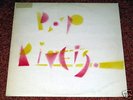
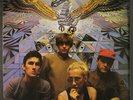
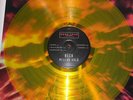
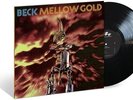
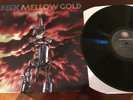
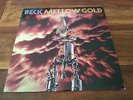
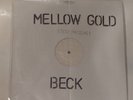
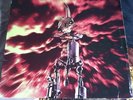
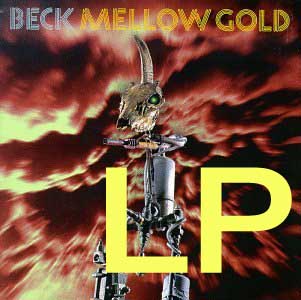
BECK Mellow Gold LP Bongload ORIGINAL mint with inserts
$
55


Favourite Auctions
To save auctions to your favourites, please login
If you don't have an account, please register
Description
Beck
Mellow Gold
ORIGINAL PRESSING on Bongload Records!!!
Condition: Mint- NOTE: I also have the 180g limited edition pressing of "Midnite Vultures" up for auction right now. Buy both and save on shipping !!!
LP Review:
In 1994 former coffee house music hustler Beck Hanson burst onto a floundering post-Grunge alternative music scene with a brash-yet-slacker infused musical stew consisting of back porch break beats, permeated urban sprawl blues, lo-fi home studio dabbling, and a William S. Burroughs-meets-Hunter S. Thompson lyrical spasm. Thanks to the bubbly, albeit ragged, groove of "Loser" the singularly monikered singer/songwriter/bedroom wizard was turned into a laid back musical icon virtually over night. For all the hoopla that this intriguing amalgamation of mutated blues, folk, and hip-hop garnered, it was still a brilliant pop song that stretched the quickly becoming limited parameters of the Alternative landscape.
"Loser," which is both vilified and deified, became the anthem of Gen X/Y, thanks to swerves of sitar, shuffling rhythms, and the most cut-up, stream of consciousness lyrical escapade since Lewis Carroll unleashed the Jabberwock or Burroughs revealed his junkie excess to the multitude. The choral refrain "I'm a loser baby, so why don't you kill me" seemed to echo the sentiments of millions of wayward suburban youth, even though Beck's delivery was offered up in a Twainian deadpan of epic proportions. No matter, the song struck a chord and most importantly introduced the world to one of the most cocky, chameleonic musical pontiffs of the 21st Century.
Yet while this MTV hit is situated to suck you into the rest of the album, it also falsely entices the mainstream for the rest of Mellow Gold is nothing short of eclectic and at times downright inaccessible. "Pay No Mind (Snoozer)" keeps the bugged out vernacular intact, this time wrapping it in a loping campfire-meets-protest song sense of acousticality. "F@#kin' With My Head (Mountain Dew Rock)" reintroduces the swaggering beat attitude, this time injecting plenty of harmonica and Summer Of Love flange and signals Beck as a mutant Blues revivalist par excellence. The stripped down Blues/Folk aesthetic, albeit tweaked out like a Leary acid reflex, continues on "Whiskeyclone, Hotel City 1997."
The goofiness continues as Beck is caught "runnin' through the mini-mall in my underwear" on the gurgleplex that is "Soul Suckin' Jerk." And his voice gets the low down Solomon Grundy rework on the long haulin', road weary, white trash Zeppelin tangent called "Truckdrivin' Neighbors Downstairs (Yellow Sweat)." The strangeness continues on the turgid beat drenched "Sweet Sunshine." Yet contrary to the song's title, it's a menacing surge in which Beck treats his voice to sound like a rusted oil can singing falsetto. At this point in the album things have slunk far and away from the pop theatrics on his hit single and it's safe to say that all but the sturdiest of musical fanatics have probably checked out by now.
Just as the album begins to settle into its weirdness, "Beercan" flows with bouncy aplomb. Beck's sweet, yet rustic croon keeping the song melodic while the James Brown-meets-redneck hoedown inspired groove is enough to shake the booty of even the most repressed individual. White boy coffee house funk latitude has arrived. Just as quick as it came, however, it's gone, making way for the drone infested lumber "Steal My Body Home," a downer number that is best experienced whilst wearing headphones and in a mental haze. "Nightmare Hippy Girl" returns to the aggressive folk modicum, chopping it up with the sing-a-long chorus of "she's a whimsical, tragical beauty/self-conscious and a little bit…moody." His raking of the New Age hippy chick movement is deadpan dead-on and exposes his continued lyrical wit. "Mutherf@#ker" returns to the dissonant, feedback, bedroom studio wizard wonkery in which Beck treats his voice to sound like a chain smoking troll in heat. The album culminates with the acoustic swoon of "Blackhole," an appropriately titled number that is teeming with shimmering guitar, pervasive drone, and Beck's hypnotic vocal sheen. It's a mesmerizing and haunting conclusion that sounds like an Irish jig filtered through the solemn endeavor of a sordid wake.
Mellow Gold succeeds on several levels. For starters it sucker punches the gullible with a massive radio hit, and then playfully destroys any preconceptions one might have harbored about the musical genius lurking behind the sonic madness. Sure, it's spotty in places, but the eclectic menagerie of songs is what makes the album rise above being a kitschy piss take and serve as a progressive introduction to a schizophrenically diverse artist.
No damaged corners!!
One of the most inventive and eclectic figures to emerge from the '90s alternative revolution, Beck was the epitome of postmodern chic in an era obsessed with junk culture. Drawing upon a kaleidoscope of influences -- pop, folk, psychedelia, hip-hop, country, blues, R&B, funk, indie rock, noise rock, experimental rock, jazz, lounge, Brazilian music -- Beck created a body of work that was wildly unpredictable, vibrantly messy, and bursting with ideas. He was unquestionably a product of the media age -- a synthesist whose concoctions were pasted together from bits of the past and present, in ways that could only occur to an overexposed pop-culture junkie. His surreal, free-associative lyrics were laced with warped imagery and a sardonic sense of humor that, while typical of the times, only rarely threatened the impact of his adventurous music. Beck appropriated freely from whatever genres he felt like, juxtaposing sounds that would never have co-existed organically (and his habitual irony made clear that he wasn't aiming for authenticity in the first place). If his musical style was impossible to pigeonhole, his true identity lay in that rootless, sprawling diversity, that determination to acknowledge no boundaries or conventions; everything he did bore the stamp of his distinctively skewed viewpoint. Beck caught his big break when the bizarre Delta blues/white-boy-rap pastiche "Loser" spawned a national catch phrase in early 1994. His debut album, Mellow Gold, became a hit, and the official follow-up, the Dust Brothers-produced Odelay, was widely acclaimed as one of the decade's landmark records. Beck followed those touchstones with genre exercises in folk and funk that still managed to dazzle with their variety, solidifying one of the most creatively vital oeuvres in alternative rock -- or all of modern pop music, for that matter.
Beck David Campbell was born July 8, 1970, in Los Angeles, and came from strong creative stock. His father, David Campbell, was a conductor and string arranger (who later worked on his son's records); however, he left the family early on, and Beck adopted the last name of his mother Bibbe Hansen, a regular on Andy Warhol's Factory scene who appeared in the Warhol film Prison. Moreover, his grandfather Al Hansen was an important figure in the Fluxus art movement, best known for launching the career of Yoko Ono. The young Beck Hansen grew up mostly in Los Angeles, also spending some time with both sets of grandparents (Al Hansen in Europe, and his other grandfather -- a Presbyterian minister -- in the Kansas City area). He dropped out of school in tenth grade, and began playing acoustic blues and folk music as a street busker, as well as trying his hand in the poetry-slam scene; in 1988, he produced a cassette of home recordings called The Banjo Story. In 1989, he moved to New York and tried to break into the city's short-lived "anti-folk" scene, a punk-influenced movement of acoustic singer/songwriters that included Roger Manning and Michelle Shocked. Finding the going tough, he returned to Los Angeles after about a year, and attempted to gain exposure at rock clubs by playing a few songs in between the regular sets.
In the summer of 1991, Beck was discovered separately by Bong Load label owners Tom Rothrock (at one of his club performances) and Rob Schnapf (at the Sunset Junction street fair). The two approached him about cutting some folk songs backed with hip-hop beats, and Beck agreed. Gathering in the kitchen of up-and-coming hip-hop producer Karl Stephenson, Beck recorded "Loser" and a selection of other tracks. In 1992, Beck traveled to Olympia, WA, to record for Calvin Johnson's K label, and also inked a publishing deal with BMG. At the beginning of 1993, Beck finally saw his first official releases: the single "MTV Makes Me Want to Smoke Crack" on Flipside, and the full-length, cassette-only Golden Feelings on Sonic Enemy. In September, Bong Load finally released "Loser" as a 12" single, and it became an instant smash on L.A.'s independent radio stations, so much so that Bong Load had trouble pressing enough copies to keep up with the demand. Combining a funky drum-machine track and Beck's nonsense raps with bluesy slide guitar and a sample of Dr. John's "I Walk on Gilded Splinters," "Loser" sounded like nothing else. Word spread quickly, helped out by Sonic Youth's Thurston Moore, who raved about Beck after seeing him perform at a backyard party. A major-label bidding war ensued, and Beck signed an innovative contract with Geffen that allowed him to continue releasing uncommercial material on smaller independent labels. In the meantime, another indie album, the 10" record A Western Harvest Field by Moonlight, was released in January 1994 by Fingerpaint.
Beck's major-label debut, Mellow Gold, was released in March 1994, and Geffen also reissued "Loser" on a national level. Instantly labeled an anthem for the so-called slacker generation, the song was a sensation, climbing into the Top Ten and hitting number one on Billboard's modern rock chart. Mellow Gold was a hit, climbing into the Top 20 and eventually going platinum. Initial reviews were somewhat mixed; many critics raved over the album, but others were reluctant to lavish praise on an artist they weren't sure would ever be anything more than a one-hit novelty. Meanwhile, Beck immediately took advantage of his Geffen deal to release two more indie albums in 1994. Stereopathetic Soul Manure, issued on Flipside, consisted of lo-fi noise rock, while One Foot in the Grave -- which included the material from Beck's 1992 session for K Records, fleshed out with new recordings -- was a bare-bones acoustic folk collection. Later that year, Bong Load released another indie single, "Steve Threw Up." Beck's low-budget body of work, especially his indie recordings, seemed to place him as part of the emerging lo-fi aesthetic, whose other adherents included Pavement, Sebadoh, and Liz Phair.
In the summer of 1995, Beck undertook his first major promotional tour, appearing as part of the fifth edition of Lollapalooza. For his second major-label album, he entered the studio with producers the Dust Brothers, who'd been a significant force behind the Beastie Boys' groundbreaking masterpiece Paul's Boutique. Odelay was released in June 1996 to massive acclaim, and wound up topping many year-end critics' polls; it was commercially successful as well, reaching the Top 20, selling over two million copies, and spinning off a string of MTV hits that included "Where It's At," "Devil's Haircut," "Jack-Ass," and "The New Pollution." "Where It's At" went on to win a Grammy for Best Male Rock Vocal, and Odelay also won for Best Alternative Music Performance. Late in 1997, Beck contributed the single "Deadweight" to the soundtrack of the film A Life Less Ordinary, which starred Ewan McGregor and Cameron Diaz. In the spring of 1998, Beck's artwork was featured in a joint show with that of his late grandfather.
Also in 1998, Beck began work on a new, folk-styled album -- in the vein of One Foot in the Grave -- that was originally slated for release on Bong Load. However, excited by the results and the presence of Radiohead producer Nigel Godrich, Geffen stepped in and released the album themselves that November. Titled Mutations, the record's quiet, gently trippy tone and relatively straightforward approach made it an unlikely progression from Odelay, and indeed both Beck and Geffen made it clear that the record was never intended as the official follow-up. Although everything about Mutations was low-key, it still became Beck's third straight Top 20 major-label album. In early 1999, lawsuits between Geffen, Bong Load, and Beck began to fly over the abrupt release change of Mutations, but were eventually worked out in friendly fashion. That summer, Beck recorded a duet with Emmylou Harris on "Sin City," a track featured on the Gram Parsons tribute album Return of the Grievous Angel.
The official follow-up to Odelay took an exhausting total of 14 months to record. Released in November 1999, Midnite Vultures was designed as a party record, running the gamut of variations on funk and allowing Beck to play the roles of R&B loverman and horny Prince disciple. Reviews ranged from glowing to indifferent, and Midnite Vultures didn't sell quite as well as its predecessors. Mutations won Beck another Grammy for Best Alternative Music Performance in early 2000, and he embarked on an extensive international tour in support of Midnite Vultures. In 2001, Beck recorded a cover of David Bowie's "Diamond Dogs" with cutting-edge hip-hop producer Timbaland, and also contributed to French electronic popsters Air's 10,000 Hz Legend album.
His next project was another folk-styled album, titled Sea Change, again recorded with Mutations producer Nigel Godrich and released by Geffen in September 2002. Beck promoted Sea Change with a brief acoustic tour beforehand, then announced that he had hired the Flaming Lips as his backing band for the more extensive official tour following its release. For the follow-up to Sea Change, Beck re-enlisted the Dust Brothers as producers; the resulting album, titled Guero, was released in March 2005. Guero spawned hits like "E-Pro" and "Hell Yes" and was seen as a conscious return to the sound and feel of Beck's Odelay days. Guerolito, a remixed version of the album, appeared in December 2005. Godrich was back for 2006's The Information, a hip-hop-influenced effort. The album came with a blank cover and a sheet of stickers that fans could use to make their own cover art.
I have some great stuff up for auction right now, all ending at almost the same time. I will try to combine any items for shipping savings. BUY from a TRUSTED seller! :-) _____________________________________________________ SHIPPING
I use Heavy-Duty cardboard LP Mailers !!!!
Included in shipping charge
Domestic Shipping = $ 7 Priority Mail with delivery confirmation.
Worldwide = $ 18 Registered AirMail (with tracking- guaranteed - this is the BEST and SAFEST way to ship internationally) -OR- $ 12 AirMail (at your own risk). ** If the shipping paid turns out to be too much I will refund the difference via PayPal. I want you to feel like you got a good deal and didn't get ripped off for shipping. I can only guess on heavier items, especially for overseas bidders.
Will ship well packaged, watertight and with delivery confirmation is you live in the US. Otherwise it's UPS to Canada and Registered Ail Mail with insurance to the rest of the world. I will simply Air Mail it without tracking ability, but that's at your own risk.
If there is a special consideration, please email me and we will work it out. All of my shipments to areas outside the US are arriving safe and sound, and are generally trackable. USA shipments always have tracking and everything has been at 100% for as long as I can remember. Shipping out of New York City means that you will get your package FASTER too!
I hope the item is perfect for you!
Buyers: I will send an invoice with the total through the eBay invoicing system, based on your address as you have supplied it to eBay or PayPal.
USA Buyers: I use Priority Mail with Delivery Confirmation, sometimes Parcel Post but usually if it comes to Parcel Post I will just send UPS- all of which are trackable!
OUTSIDE the USA: For international buyers, I use Registered International Mail because it's FAST and it's also trackable. The dollar is so low now that you might as well pay a little more for shipping and get your item FASTER and it's also GUARANTEED! Otherwise, regular AirMail is at your own risk of loss, as it's not trackable.
*** NOTE NOTE NOTE ***
PAYMENTS or ARRANGEMENTS MUST BE MADE WITHIN 3 DAYS OF THE END OF THE AUCTION. **
If you can not abide by that, PLEASE do not bid!
Winner pays as follows:
Cash (at your own risk)
PayPal (preferred- immediate shipping)
Money Order (immediate shipping)
*IMPORTANT: ID (email address) to use for
payment through PayPal is leviauctions-AT-yahoo.com
Click below to...
View my other auctions
email me: leviauctions-AT-yahoo.com
price rating