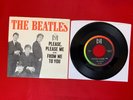
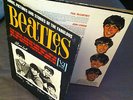
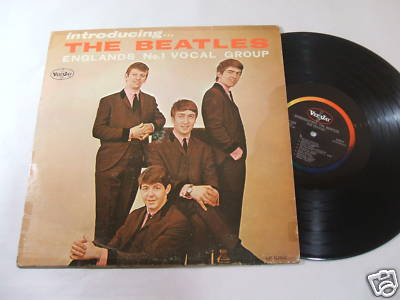
BEATLES LP INTRODUCING LP VEE-JAY VJLP 1062 ORIG RARE
$
99


Favourite Auctions
To save auctions to your favourites, please login
If you don't have an account, please register
Description
the BEATLES
VEE-JAY VJLP 1062
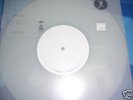
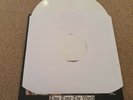
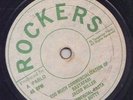
63-3402 SIDE 1(LABEL AND DEAD WAX)
63-3403 SIDE 2 (LABEL AND DEAD WAX)
2-6-64 IS ALSO WRITTEN IN DEAD WAX
THERE ARE ALSO SOME INITIALS STAMPED IN THE DEAD WAX THAT i CAN NOT QUITE MAKE OUT...MAYBE URJ?
SIDE 1 HAS THE BRACKETS LABEL
SIDE 2 HAS THE OVAL LABEL
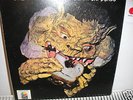
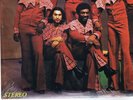
Introducing... The Beatles is the first Beatles album in the United States. Originally scheduled for a July 1963 release, the LP came out on 10 January 1964 Vee-Jay Records in mono (catalogue number VJLP 1062) and stereo (VJLPS 1062), mere days before Capitol's Meet The Beatles!. It was the subject of much legal wrangling, but ultimately, Vee-Jay were permitted to sell the album until the fall of 1964.
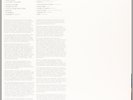
Metal parts were already at Vee-Jay's three primary pressing plants, and 6,000 front covers were already printed. But it had no back cover prepared. So, as a stopgap, the label used a back cover slick made from one side of its standard inner sleeve, consisting of full-color reproductions of the covers of 25 "other fine albums of significant interest". This cover is known by collectors as the "Ad Back" version and is highly sought-after. A second stopgap back cover was used when the "Ad Back" slicks were exhausted; because it is all-white with no printing at all, it is known by collectors as the "Blank Back" edition and is also very rare. Finally, third editions contain Vee-Jay's official back cover, with Introducing the Beatles (no ellipsis) near the top and the song titles in two columns underneath. All of these were available on the market within days of the 10 January release date.
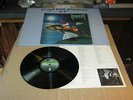
-VINYL= VG
-JACKET= VG HAS CLEAR TAPE ACROSS THE BOTTOM AND UPPER SEAMS
check it out Grading Records
The following is the grading system first developed by Goldmine Records. Virtually all methods currently in use for the grading of records, is based in some way, shape, or form, on this system. Rather than offer some variation of the original system first developed by Goldmine, the Record Collector's Guild will display the Goldmine record grading method in it's entirety.
Visual or Play Grading?
In an ideal world, every record would be played before it is graded. But the time involved makes it impractical for most dealers, and anyway, it's rare that you get a chance to hear a record before you buy through the mail. Some advertisers play-grade everything and say so. But unless otherwise noted, records are visually graded.
How to Grade
Look at everything about a record. It's playing surface, it's label, it's edges...under a strong light. Then based on your overall impression give it a grade based on the following criteria:
- Mint (M) Absolutely perfect in every way. Certainly never been played, possibly even still sealed.(More on still sealed under "Other Considerations"). Should be used sparingly as a grade, If at all.
- Near Mint (NM or M-) A nearly perfect record. Many dealers won't give a grade higher than this implying (perhaps correctly)that no record is ever truly perfect.
The record should show no obvious signs of wear. A 45 RPM or EP sleeve should have no more than the most minor defects, such as almost invisible ring wear or other signs of slight handling.
An LP cover should have no creases, folds, seam splits or other noticeable similar defects. No cut-out holes, either. And of course, the same should be true of any other inserts, such as posters, lyric sleeves and the like.
Basically, an LP in near mint condition looks as if you just got it home from a new record store and removed the shrink wrap.
Near Mint is the highest price listed in all Goldmine price guides. Anything that exceeds this grade, in the opinion of both buyer and seller, is worth significantly more than the highest Goldmine book value. - Very Good Plus (VG+) .
A Very Good Plus record will show some signs that it was played and otherwise handled by a previous owner who took good care of it.
Record surfaces may show some signs of wear and may have slight scuffs or very light scratches that don't affect one's listening experiences. Slight warps that do not affect the sound are "OK".
The label may have some ring wear or discoloration, but it should be barely noticeable. The center hole will not have been misshapen by repeated play.
Picture sleeves and LP inner sleeves will have some slight wear, lightly turned up corners, or a slight seam split. An LP cover may have slight signs of wear also and may be marred by a cut-out hole, indentation or corner indicating it was taken out of print and sold at a discount.
In general, if not for a couple things wrong with it, this would be Near Mint. All but the most mint-crazy collectors will find a Very Good Plus record highly acceptable. - Very Good (VG) Many of the defects found in a VG+ record will be more pronounced in a VG disc. Surface noise will be evident upon playing, especially in soft passages and during a song's intro and fade, but will not overpower the music otherwise. Groove wear will start to be noticeable, as with light scratches (deep enough to feel with a fingernail) that will affect the sound.
Labels may be marred by writing, or have tape or stickers (or their residue) attached. The same will be true of picture sleeves or LP covers. However, it will not have all of these problems at the same time, only two or three of them.
Goldmine price guides with more than one price will list Very Good as the lowest price. This, not the Near Mint price, should be your guide when determining how much a record is worth, as that is the price a dealer will normally pay you for a Near Mint record. - Good (G), Good Plus (G+) Good does not mean Bad! A record in Good or Good Plus condition can be put onto a turntable and will play through without skipping. But it will have significant surface noise and scratches and visible groove wear (on a styrene record, the groove will be starting to turn white).
A cover or sleeve will have seam splits, especially at the bottom or on the spine. Tape, writing, ring wear or other defects will start to overwhelm the object.
It is a common item, you'll probably find another copy in better shape eventually. Pass it up. But, if it's something you have been seeking for years, and the price is right, get it...but keep looking to upgrade. - Poor (P), Fair (F) Generally worth 0-5 percent of the Near Mint price. The record is cracked, badly warped, and won't play through without skipping or repeating. The picture sleeve is water damaged, split on all three seams and heavily marred by wear and writing. The LP cover barely keeps the LP inside it. Inner sleeves are fully seam split, crinkled, and written upon.
Satisfaction is guar-un-teed. :)
We are...
Patapsco Trading Post
SHIPPING
We ship world wide. Arrangements can be made for insurance if desired, and will be an additional handling/insurance fee. **I COMBINE SHIPPING FOR MULTIPLE WINS!!***
U.S....$4.00 FIRST LP...$1.00 EACH ADDITIONAL
CANADA $8.99 FIRST LP $2.00 EACH ADDITIONALOVERSEAS/OTHER...$16.99 FIRST LP...$4.00 EACH ADDITIONAL (UP TO 4 ALBUMS TOTAL. 5TH ALBUM IS $16.99.....6TH IS $4.00 ETC)
***PLEASE TAKE NOTE...ANY OVERSEAS COUNTRY TARRIFFS OR FEES ARE THE RESPONSIBILITY OF THE BUYER!!
PAYMENT
We accept Pay Pal only.
Thanks for your interest, and enjoy your day! Feel free to e-mail me with any questions.
price rating