ARCHER ROAD BAND LP + 45 SOUTHERN ROCK PSYCH BLUES
$
40


Favourite Auctions
To save auctions to your favourites, please login
If you don't have an account, please register
Description
.
ARCHER ROAD BAND
IN THE LAND OF ODD
CONDITION
VG
+
45 RPM
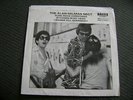
DAVE DURHAM and ARCHER ROAD BAND
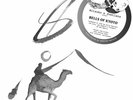
HOGTOWN CO.
1. IN THE WOODS - NOT ON LP
2. BUTTERFLY
CONDITION - M-
Gainesville Bands, Music & Musicians, Part III
1975-1980; The End of the Revolution
and The Abridged History of The Archer Road Band
When the history of the Gainesville Music Scene during the mid to late 70s is written, the bands that will figure prominently are the ones that brought a sense of celebration, fun, artistic creativity and original songs to the scene: The Dixie Desperadoes, The Archer Road Band, The Jim Connor Band, and The Northeast Band were among those who were there.
Why is this true? Because, if the thread of Gainesville music was to survive and to survive as a grassroots expression of the territory, it was necessary to prove that bands playing original music could fight disco and grow artistically and survive commercially.
While Petty and John Cougar Mellancamp and Bob Seger et al fought disco around the country, The Archer Road Band, The Dixie Desperadoes, The Jim Connor Band, and The Northeast Band fought it locally.
Unfortunately, as a member of The Archer Road Band, which was working all the time, I can't tell you much about the other three bands. I can tell you about the times-- ancient though they may seem, and about The Archer Road Band.
Once upon a time...
The period of 1975-1980 was the final end of the cultural revolution that began with Elvis and James Dean and Ferlinghetti and Alan Ginsberg. What started as a rebellion against conformity and “organization man” and corporate mentality and Wally&Beaverism had culminated in an era where there was so much dope you would’ve thought it was legal. Eighteen-year-olds could drink legally. Sex was fun, plentiful, and fearless. And although the militarism of Disco music prefigured the Reagan Era and the “end of permissiveness” long sought by Nixon, in Gainesville there were enough musicians and enough of an audience for rock n roll, blues rock, folk rock, heavy rock, bluegrass, country and folk and jazz to keep those musicians working. And there was also an interest in original songs and musicians having fun-- two factors that made the success of the Archer Road Band possible.
To step back, or take you back for a moment, this was a time that not only predated cell phones and personal computers, it predated MTV, VH-1, and CNN. (In order to see your favorite band you had to go see them, or catch them for a brief set on the Mike Douglas Show, or the Tonight Show or whatever ABC and CBS were throwing up against The Tonight Show, unless your favorite band was The Beatles or The Who, or played at Woodstock, in which case you could wait and hope for those movies to come back and play a local theatre.) Albums still outsold cassettes. Eight-tracks still existed. VCRs, for all practical purposes, didn’t exist. The word “homeless” was not part of the vocabulary. Neither was AIDs. And for all practical purposes, neither was condoms. The absence of readily available nationally known acts for most people in most towns most of the time made local music that much more necessary and vital.
In 1975 there had only been one oil crisis (in ’73), the Vietnam War had only been over for 2 years, Senate and House committees were investigating the CIA, news had yet to become entertainment (which made the movie Network satiric and prescient, rather than the documentary it appears as when viewed today).
In 1975 there was no Blondie, Police, Talking Heads, Madonna. Rolling Stone magazine still featured rock n roll musicians on the cover most of the time. Bruce Springsteen was just starting to get national. Dire Straits were almost but not yet on the horizon. John Lennon was still alive and Ronald Reagan was just a bad B-movie actor turned fascist governor of California.
In Gainesville, most of the town was closed by 9pm and almost nothing was open past 2am. There were only two places to eat late at night: Jerry’s on north 13th (it’s not there anymore) and the Waffle House on south 13th. The Oaks Mall had not been built. Archer Road was a two-lane road west of 34th Street. Newberry Road was two lanes all the way to Newberrry. Television viewing was pretty much limited to three broadcast networks and one PBS channel. There was still a hippie-collective radio station (The Underground Pipeline). And Scene Magazine, the Gainesville Sun weekly entertainment mag, had just begun publication, edited by Dave Hunter.
If you were at home and awake after 2am, well, pretty quiet there too, unless you'd arranged some activity: there was nothing on TV after Tom Snyder, broadcast from 1am to 2am (it followed the 90-minute Tonight Show, with Johnny Carson).
I returned to Gainesville from Atlanta and Chicago in 1975 to discover a town different than the one I left. Quieter. It had grown somewhat, but the growth explosion had yet to occur. The cultural revolution (anti-establishment attitudes, alternative lifestyles, consumption of illegal substances, preferences for jeans, sandals and mellowness as opposed to pursuing a corporate suit career) was still alive, but the campus was not its center. The music scene also seemed to have no center. Later on I realized that a fundamental shift in the culture had already begun. The whereabouts of the music was a clue. In the 60s much of the scene had been at high schools and on and around the college campus, and at various farm fields where festivals could be held. A lot of the music was outdoors, like at the ROTC drill field and the Plaza of the Americas and Lake Alice field, with the idea being to assemble huge open air parties. Music was part of the attraction; so was dope. Alcohol was not really part of the equation. It was present, usually in the form of wine at open air events and beer at frat dances, but it was the drugs (marijuana in particular) and the effort to explore a world of no constraints that was integral to the event.
By the mid-70s that had started to change. Sure, there was still some outdoor music. And, as I mentioned earlier, dope was everywhere. But the music was starting to occur more and more at bars, and the basis of what determined the success or failure-- the quality-- of a band was liquor sales. Movies need to sell popcorn; bands needed to sell liquor. If your band didn’t sell liquor, you did not play live for money very often. And while there have always been bars, as the revolution began to end, more and more people went from the sunshine and clean air into the dark and smoke-filled rooms. A large crowd was no longer the goal, if they were passing a wine bottle and toking; a small crowd that got plastered was more desirable.
But I didn’t realize this then in any more than a simple observation that there was less outdoor music and if you wanted to hear a band, you had to go to a bar-- followed by the observation that if you wanted to get paid in a band, you had to work in bars.
And in Gainesville in 1975 there were some places for bands to play, but not many.
There was a new restaurant on north 6th called Bilbo & Gandolf’s that featured acoustic solos, duos and trios and now and then brought in folks from out of town. (Biff Rose was there for one night in 1978, then he was fired!) There was Mad Monks Inn, on 13th near 5th, also a restaurant, also with some live music at lunch and at night. An outfit called Big Daddy’s had two bars: The Lamplighter on Main & 10th, and the Alibi on west University near 34th. Lillian’s, downtown, had a regular piano duo. A steakhouse (The Beef & Bottle) on south 13th had a bar that sometimes had rock n roll (and sometimes had comedy: Steve Martin used to perform there when he toured the south). And a new restaurant in an older location, Crusty Seans, opened in ’76 on south Main and 16th , also featuring duos, trios and the like. Around ’77 another steak 'n fishhouse, The Sea Fox, also on south 13th, featured show bands wearing similar costumes and doing medleys.
And there were a few out-of-town bars: Catch-22 on the Newberry Road, and a bar just outside of Archer. And a place called The Cellar Door, south on the way to Ocala. And Bluewater Bay, a restaurant in Melrose that featured solos and duos.
In early ’76 my friend Marc Gaynes, in Chicago, was working on the Fred Harris for President Campaign. So when a friend of Slier’s called me in the middle of February to work the Harris table on campus, at the Plaza of the Americas one afternoon, I said sure.
That was fate. The history of Gainesville music during this period and later on in the late 80s would have been very different if that had not happened. It's possible the history of Gainesville politics would've been much different, too. (And I know I’m making an egotistical statement here, and I would never make such a claim about the 50s or 60s or even early 70s, nor would I make such a claim about the 90s; but when you’re at what becomes the center, and your actions make a difference, best to acknowledge it and enjoy it, and remember it fondly without humility, because it doesn’t last.)
That day on the Plaza, two other people had made a critical decision. Dave Durham and Mike Ambrose, who were forming a duo, chose to sing in front of the library.
Dave played guitar with a confident, lyrical touch, and they sang harmonies well. I enjoyed their songs and after we folded up the Harris table, I walked over to tell these two that I enjoyed their music. That was another fateful decision, for which I thank my mom, who always encouraged us to compliment artists and performers we enjoyed.
The three of us got to talking, Dave said they were looking for a lead guitarist, I said I played some lead and Dave, in what I was to learn was his unshakable forthright manner, thrust his guitar at me and said, “Play something.”
I played and sang Dylan’s “Don’t Think Twice”, which did not feature any lead work, and Dave invited me to rehearse with them that Saturday. I had been thinking of auditioning for the role of Jesus in the Hippodrome theatre production of The Ruling Class that Saturday, but in the last of this series of fateful decisions, I went to Dave’s house off Archer Road instead.
And it worked. At least, we thought it did. The two of them sang, Dave played rhythm, and I played lead like I had with Don Beth and Howard Platt in Chicago. (Those guys, along with Ken Lewis, had given me confidence, and I'd picked up enough along the way, much of it based on what Steve Soar showed me in high school and when we played together briefly in "The Band From Atlanta" in college, and much of it based on countless listenings to the Allman Brothers Live At The Fillmore and David Bromberg's first album.)
We played Simon & Garfunkel, Loggins & Messina and more.
Within a few weeks we talked about getting gigs.
My dad’s department at UF was sponsoring a conference, so he hired us as the music for a happy hour poolside party. (For those who think we unfairly hit the deep pockets of the university, our pay was $75, or $25 each.)
A week after that Ambrose disappeared. Later we learned he’d bolted for California.
So it was Dave and me. And we sat at Lums, on south 13th, talking about whether we should go on. And Dave said, without hesitation, of course we should. We were going to be the best band in Gainesville. And we made a deal. We’d play his originals, and I’d get to say whatever I wanted to say to the audience. Original music, original humor. Rhythm and lead guitars. Singer and back-up singer. He taught me harmony. I taught him about establishing rapport and joking with the audience. He taught me about songwriting and business. I taught him about comedy. And we taught each other how to work together.
We played at Crusty Sean’s: we had two sets of material, so we played one, then Dave did half a solo set, then I did half a solo set, then we did our second duo set, then we repeated our first set.
We worked on more material, including some of Dave’s originals.
We found a spot on campus, at the foot of the stairs in the Reitz Union, and we played there. We drew an audience. People sat on the stairs and stood all around, listening, watching. We played, we joked. It was so unreal that we could turn that area into a performance space-- but it was some of the most fun I’ve ever had playing, because it was so pure. No amps. No PA. No barrier between us and whoever chose to listen. And no campus cops or authorities of any kind ever told us to stop. And every time we played there, unannounced, we were better than before, and we drew more and more people.
And one day Dave played one of his songs for me: Kayopectate Blues. And I remembered him from the Dylan birthday party.
As they say, fate is pretty fuckin’ weird.
I wish I could remember how we got the gig at Joe’s Deli. It could've been Dave was eating there and just talked to Joe. Anyway, it became a regular deal, and soon we started collecting some folks, hanging out with us. We played at a bowling alley a few times. We got and lost a lunchtime gig at Mad Monks (then owned by John Schroepfer, who later became a County Commissioner and was a political enemy of mine when he was on the County Commission and I was on the City Commission-- Okay, I confess: despite the fact that Gainesville is a university town with an umpteen-thousand seat stadium, there’s really only about 15 people who live there.
MINT VALUE $300.00
IMMEDIATE PAYMENT REQUIRED !
Winning bidders are to pay for items AT END of auction or I Re-List!I pack all items very securely, and insurance is required.(insurance cost is determined by the final selling price of the item) LARGE ITEMS TAKE LONGER TO SHIP !!United States buyers pay actual USPS Priority Mail shipping costs.****WE ACCEPT PAYPAL ONLY!!Using PayPal insures the fastest shipping time. Thanks for your interest, and good luck!
.
price rating