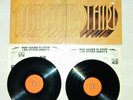
2xLP Rutherford project THE BEATLES WHITE ALBUM + POSTER Avant garde psych
$
77


Favourite Auctions
To save auctions to your favourites, please login
If you don't have an account, please register
Description
PLEASE READ BEFORE BIDDING: Please read the entire auction listing, including shipping costs, before writing to ask a question. OUR GOAL IS CUSTOMER SATISFACTION. In order to meet that goal, we will ALWAYS work with our customers on any concerns that may arise. In the unlikely instance that you feel the need to open a resolution dispute before working with us, you will immediately be blocked from any further chance to acquire the rare music we present each and every week. Payment is required within seven days. We mail all paid items ONE WEEK after auctions end. Please keep in mind our listings are time consuming in detail and we are often traveling to find these gems, which at times delays the delivery schedule by a day or two. We ALWAYS process and ship every paid order. We have no control over parcels once they are mailed from our local Post Office.Overseas mail to some countries (Italy, Russia, France, in particular) has became very slow. Opening a dispute for slow mail is unacceptable and will result in blocking the bidder. We work hard to provide excellent service as is represented by our 8000 plus positive feedback. We use a VPI machine and thoroughly clean all records. Each order is carefully packaged by removing the LP from the jacket to avoid seam splits, use of 3 ml plastic cover sleeves over each LP and jacket, cardboard pad inserts, and placed in sturdy record mailers for safe delivery. We take Customer Service seriously, and want you to be satisfied. Please give us 5 stars in each category through the feedback system, and we will be able to effectively continue to fulfill your passion for rare and collectible music! We have served thousands of satisfied customers - far more than our feedback records indicate - and our aim is to continue to do so. Thank you for your interest and support. ~~~~~~~~~~~~~~~~~~~~~~~~~~~~~~~~~~~~~~~~~~~~~~~~~~~~~~~~~~
SHIPPING: USA ~ 1 LP = $4.00 Media Priority rates vary by area; please inquire. All Canadian and Overseas shipping ~ Please inquire about rates. Priority shipping rates required on any order $200+ ~ Also, in the best interest of all of us, safe Express shipping rates on any order totaling $400+ Discount shipping on multiple LPs in same order. ~~~~~~~~~~~~~~~~~~~~~~~~~~~~~~~~~~~~~~~~~~~~~~~~~~~~~~~~~~
ORIGINAL PRESSING ~~ MINT CONDITION
The Beatles
"White Album"
\ (PRIVATE PRESS - NO LABEL)
HARD TO FIND...completely MINT ... this was a very strange limited edition produced by an accentric cat (as you read below)...heard Capitol shut the project down, re- the hard to find as well as ther were not many copies intended for release in the first place::::
This album was made from an ongoing collection of over 900 first-pressings of The White Album.
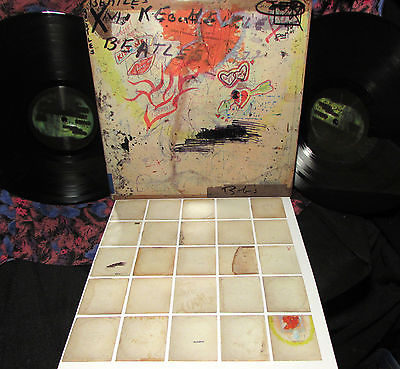
Created by layering 100 unique copies of The Beatles' White Album, this 96 minute double-LP captures how every copy of the iconic album has been distinctly shaped by its history, both visually and sonically. The 46 year-old albums, with scratches and physical imperfections accumulated with age, all play slightly differently, causing the 100 layers to gradually drift out of sync over the course of each side.
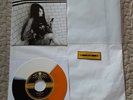
The gatefold cover and disc labels are composites of the weathered and graffitied originals. Also included is a 24 x 24 inch poster insert featuring images of the individual covers.
Side One
1. Back in the USSR (2:43)
Recorded: August 22, 1968 at Abbey Road, London, England with overdubs added Aug 23, 1968
Master tape: 4-track 2d Generation
Mono-mixed: 23 Aug 1968
Stereo-mixed: 13 Oct 1968
John Lennon – 6-string Fender Bass VI, background vocal
Paul McCartney – lead vocal, lead guitar, piano, drums, background vocal
George Harrison – Fender Jazz bass, background vocal
Notes: This song was written while on Meditation by Paul with help from Mike Love of the Beach Boys. It is a parody of Beach Boys songs such as “Surfin’ USA.” The mention of “Ukraine girls” and “Georgia” was thought by many to be sympathetic to Communism and was denounced. The plane sound effects differ in mono and stereo. Mono has louder piano, a yell after the opening plane sound, and drumbeats under the closing plane sound. Stereo has extra guitar chords at the start of the solo, and shouts and piano during the guitar solo.
2. Dear Prudence (3:57)
Recorded: August 28, 1968 at Trident Studios, London, England with overdubs added August 29-30, 1968
Master tape: 8-track
Stereo-mixed: 13 Oct 1968
Mono-mixed: 13 Oct 1968
John Lennon – lead vocal, lead guitar, tambourine, background vocal
Paul McCartney – lead vocal, bass guitar, piano, drums, flugelhorn, background vocal
George Harrison – acoustic guitar, background vocal
Mal Evans – tambourine
Notes: John wrote “Dear Prudence” for Prudence Farrow, the younger sister of Mia Farrow, who was on the meditation trip with the Beatles. She was much more involved in the meditation process and spent her free time in meditation. John wrote the song as a plea for her to “come out and play”, to interact, with the rest of the group.
3. Glass Onion (2:17)
Recorded: September 11, 1968 at Abbey Road, London, England with overdubs added September 12, 13, 16 and October 10, 1968
Master tape: 8-track
Stereo-mixed: 10 Oct 1968
Mono-mixed: 10 Oct 1968
John Lennon – double-tracked lead vocal, acoustic guitar
Paul McCartney – bass guitar, piano, flute
George Harrison – lead guitar
Ringo Starr – drums, tambourine
Session musicians – orchestra
Notes: Much like “I Am The Walrus”, “Glass Onion” was written by John as a sort of joke for people who analyzed Beatles songs looking for meanings. The song is filled with nonsense lyrics and wild images. The title “Glass Onion” came from the name that John wanted The Iveys, a new band on the Apple label, to use. They later used “Badfinger”. The stereo version has slightly more treble and fades to a lower volume at the end.
4. Ob-La-Di, Ob-La-Da (3:09)
Recorded: July 3, 1968 at Abbey Road, London, England with overdubs added July 4-5, 1968, a remake July 8, 1968 and more overdubbing July 11, 1968 and July 15, 1968
Master tape: 4-track 3d Generation
Stereo-mixed: 12 Oct 1968
Mono-mixed: 12 Oct 1968
John Lennon – maraccas, background vocal
Paul McCartney – lead vocal, bass guitar, piano
George Harrison – acoustic guitar, background vocal
Ringo Starr – drums
Session musicians – brass
Notes: The phrase “Ob-La-Di, Ob-La-Da” is from the Yoruba tribe (Nigerian) and it means “life goes on”, a phrase used frequently by conga player Jimmy Scott, whom Paul had met. After Paul used the phrase Scott wanted a royalty, however Paul insisted that it was a common phrase. “Ob-La-Di, Ob-La-Da” is cited as the first white reggae; involving Jamaican people and genre. During the recording sessions the Beatles went through numerous takes with several different sounds until John, who hated the song to begin with, just went up to the piano and banged out the opening notes, which they kept for the master. Paul wanted to use the song as a single, but when John refused the song was rerecorded by the band Marmalade and became a British hit. A derivative of “Ob-La-Di, Ob-La-Da” was used in the theme song to the 1980s television show “Life Goes On”. The stereo version is lacking Paul’s added vocal “oh yeah” at the end of the break. The mono-mix unearthed for “Anthology 3? has various sound effects, of which only the whistle after “fool on the hill” was used in the standard mix. This edit adds the end orchestral piece. The orchestra was added on Oct 10 and used for the standard versions.
5. Wild Honey Pie (1:02)
Recorded: August 20, 1968 at Abbey Road, London, England
Master tape: 4-track
Mono-mixed: 20 Aug 1968
Stereo-mixed: 13 Oct 1968
Paul McCartney – vocals, bass guitar, electric guitar, acoustic guitar, drums
Notes: “Wild Honey Pie” was taken from a singalong/jam session while on meditation. Patti Harrison liked the song very much, so it was included on the album. The mono-mix lacks handclaps in the intro, heard in stereo.
6. The Continuing Story of Bungalow Bill (3:05)
Recorded: October 9, 1968 at Abbey Road, London, England
Master tape: 8-track
Stereo-mixed: 9 Oct 1968
Mono-mixed: 9 Oct 1968
John Lennon – lead vocal, acoustic guitar, organ
Paul McCartney – bass guitar, background vocal
George Harrison – acoustic guitar, background vocal
Ringo Starr – drums, tambourine, background vocal
Yoko Ono – background vocal, harmony vocal (chorus), lead vocal (“not when he looked so fierce”)
Maureen Starkey – harmony vocal (chorus)
Chris Thomas – mellotron
Notes: “Bungalow Bill” was actually an American named Richard Cooke, III, who had met the Beatles and was on a tiger hunt with his mother three hours away from Rishikesh, where the Beatles were meditating. Cooke shot a tiger on the hunt when it jumped at him and his mother. When she started talking about the kill to the Maharishi and some of his followers, the Maharishi became visibly disturbed. It was then that Cooke began to think that maybe it wasn’t such a good idea. Maharishi asked, “You had the desire Rik and now you no longer have the desire?” to which John asked, “Don’t you call that slightly life destructive?” Cooke replied, “Well, John, it was either the tiger or us. The tiger was jumping right where we were.” Those words became, “If looks could kill it would’ve been us instead of him”. Of the two vocal tracks, one is louder in stereo, the other in mono.
7. While My Guitar Gently Weeps (4:45)
Recorded: July 25, 1968 at Abbey Road, London, England, remade August 16, 1968 with overdubs Sept 3, 1968, and remade again September 5, 1968 with overdubs September 6, 1968
Master tape: 8 track
Mono-mixed: 14 Oct 1968
Stereo-mixed: 14 Oct 1968
John Lennon – acoustic guitar, organ, harmony vocal
Paul McCartney – bass guitar, piano, harmony vocal
George Harrison – double-tracked lead vocal, acoustic guitar, lead guitar
Ringo Starr – drums, castanets, tambourine
Eric Clapton – Gibson Les Paul lead guitar
Notes: George was reading the Chinese book I Ching (the book of changes) when he decided that his songwriting would start to be written based on chance. He took a book off the shelf intending to write a song based on the first words he read, which were “gently weeps”. This is the first 8 track recording (by anyone) at EMI Abbey Road. The Clapton guitar remains loud in mono after the solo break, not in stereo. Near the end of the fadeout only the stereo has “yeah yeah yeah”, even though it is a few seconds shorter than the mono mix.
8. Happiness is a Warm Gun (2:44)
Recorded: September 23-24, 1968 at Abbey Road, London, England with overdubs added Sept 25, 1968
Master tape: 8-track 2d Generation
Mono-mixed: 26 Sep 1968
Stereo-mixed: 15 Oct 1968
John Lennon – lead vocal, lead guitar, tambourine, background vocal
Paul McCartney – bass guitar, background vocal
George Harrison – lead guitar, background vocal
Ringo Starr – drums
Notes: The 2d generation master is an edit of (copies of) two takes with more material overdubbed. Mono has tapping (organ) on the beat from the start until the drums come in, but it is soft and mixed out 4 beats earlier in stereo. In the “I need a fix” section in stereo, by error, although the first line was mixed out, the last “down” is just audible. Mono has louder bass in the “I need a fix” section. Mono has laughter near the very end, just before the last drumbeat, not heard in stereo. “No, it’s not about heroin. A gun magazine was sitting there with a smoking gun on the cover and an article that I never read inside called “Happiness Is a Warm Gun.” I took it right from there. I took it as the terrible idea of just having shot some animal…it was at the beginning of my relationship with Yoko and I was very sexually oriented then. When we weren’t in the studio, we were in bed…I call Yoko Mother or Madam just in an offhand way. The rest doesn’t mean anything. It’s just images of her.” – John Lennon, Playboy, 1980
Side Two
1. Martha My Dear (2:29)
Recorded: Oct 4, 1968 at Trident Studios, London, England with overdubs added Oct 5, 1968
Master tape: 4-track 2d Generation
Mono-mixed: 23 Aug 1968
Stereo-mixed: 13 Oct 1968
John Lennon – bass guitar
Paul McCartney – double-tracked lead vocal, piano
George Harrison – lead guitar
Ringo Starr – drums
Session musicians – strings, brass
Notes: The recording contains an unusually excessive amount of tape hiss.
2. I’m So Tired (2:03)
Recorded: October 8, 1968 at Abbey Road, London, England
Master tape: 8-track
Mono-mixed: 15 Oct 1968.
Stereo-mixed: 15 Oct 1968
John Lennon – lead vocal, acoustic guitar, lead guitar, organ
Paul McCartney – bass guitar, harmony vocal
George Harrison – lead guitar, rhythm guitar
Ringo Starr – drums
Notes: Paul’s harmony at the first “You’d say” is louder in mono. The muttering after the song is part of this recording.
3. Blackbird (2:18)
Recorded: June 11, 1968 at Abbey Road, London, England
Master tape: 4-track
Stereo-mixed: 13 Oct 1968
Mono-mixed: 13 Oct 1968
Paul McCartney – double-tracked lead vocal, acoustic guitar, percussion
Notes: The tapping song heard throughout the song is Paul tapping his foot on the floor.
4. Piggies (2:05)
Recorded: September 19, 1968 at Abbey Road, London, England with overdubs added September 20, 1968 and October 10, 1968
Master tape: 8-track 2d Generation
Mono-mixed: 11 Oct 1968
Stereo-mixed: 11 Oct 1968
John Lennon – tape loops
Paul McCartney – bass guitar
George Harrison – lead vocal, acoustic guitar
Ringo Starr – tambourine
Chris Thomas – harpsichord
Session musicians – strings
Notes: The overdubs of bird sounds were done differently in mono versus stereo, during mixing.
5. Rocky Raccoon (3:41)
Recorded: August 15, 1968 at Abbey Road, London, England
Master tape: 4-track 2d Generation
Mono-mixed: 15 Aug 1968
Stereo-mixed: 10 Oct 1968
John Lennon – harmonica, harmonium, background vocal
Paul McCartney – lead vocal, acoustic guitar
George Harrison – bass guitar, background vocal
Ringo Starr – drums
George Martin – honky-tonk piano
6. Don’t Pass Me By (3:42)
Recorded: June 5, 1968 at Abbey Road, London, England with overdubs added June 6, 1968 and July 12, 1968 and an edit piece (tinkling piano intro) recorded July 22, 1968
Master tape: 4-track 3d Generation
Mono-mixed: 11 Oct 1968 edited
Stereo-mixed: 11 Oct 1968 edited
(Remixed in 1996 for the “Anthology 3? CD)
John Lennon – acoustic guitar, tambourine
Paul McCartney – bass guitar
George Harrison – lead guitar
Ringo Starr – lead vocal, drums, piano
Jack Fallon – violin
Notes: The Mono version runs faster, and it has more fiddle throughout the song, and different fiddle at the end. The fiddle at the end of stereo seems to a repeat of a bit of the chorus. The edit added the intro.
The Anthology mix has only work from 5 and 6 June without the fiddle or intro added in July. It’s at the speed of the stereo mix.
7. Why Don’t We Do It in the Road? (1:41)
Recorded: Oct 9, 1968 at Abbey Road, London, England with overdubs added Oct 10, 1968
Master tape: 4-track 2d Generation
Mono-mixed: 16 Oct 1968
Stereo-mixed: 16 Oct 1968
Paul McCartney – double-tracked lead vocal, bass guitar, lead guitar, piano, drums
Notes: The Mono version lacks handclaps in the intro.
8. I Will (1:47)
Recorded: Sept 16, 1968 at Abbey Road, London, England with overdubs added Sept 17, 1968
Master tape: 8-track 2d Generation
Mono-mixed: 26 Sep 1968
Stereo-mixed: 14 Oct 1968
Paul McCartney – double-tracked lead vocal, bass guitar, acoustic guitar
Ringo Starr – drums, bongos, maraccas
Notes: This started as 4 track and was copied to 8 track, so it’s 2d generation. The “bass” (vocal) starts later in mono, after the first verse. The bass line is actually performed vocally by Paul.
9. Julia (2:45)
Recorded: October 13, 1968 at Abbey Road, London, England
Master tape: 4-track
Stereo-mixed: 13 Oct 1968
Mono:mixed: 13 Oct 1968
John Lennon – double-tracked lead vocal, double-tracked acoustic guitar
Notes: “The song is for her – and for Yoko.” – John Lennon, Playboy, 1980
Side Three
1. Birthday (2:43)
Recorded: September 18, 1968 at Abbey Road, London, England
Master tape: 8-track 2d Generation
Mono-mixed: 18 Sep 1968
Stereo-mixed: 14 Oct 1968
John Lennon – lead guitar, background and occasional lead vocal
Paul McCartney – lead vocal, piano
George Harrison – bass guitar, tambourine
Ringo Starr – drums
Yoko Ono, Patti Harrison – chorus
Notes: The last “daaaance” starts twice, maybe a double-track error or a leak from a guide vocal, as heard on stereo, but covered up by other sound in mono.
2. Yer Blues (4:01)
Recorded: August 13, 1968 at Abbey Road, London, England with overdubs added August 14, 1968 and the ‘counted intro’ added August 20, 1968
Master tape: 4-track 2d generation
Mono-mixed: 14,20 Aug 1968
Stereo-mixed: 20 Oct 1968
John Lennon – lead vocal, lead guitar
Paul McCartney – bass guitar
George Harrison – lead guitar
Ringo Starr – drums
Notes: The 2d generation tape is an edit of two takes, each of the two tapes being itself a mixdown from the original 4-track. The edit causes an abrupt transition at the end of the guitar solos. In stereo, traces of other vocal and guitar parts can be heard throughout the song in the left channel, including something shouted over parts of the vocal and what sounds like another different guitar solo. After the edit, the trace lead vocal suggests we are hearing the first part of the song from the other take. The edit in the mixes added the countdown intro, which is louder in mono. Mono is also 11 seconds longer, long fade.
3. Mother Nature’s Son (2:48)
Recorded: August 9, 1968 at Abbey Road, London, England with overdubs added August 20, 1968
Master tape: 4-track 2d Generation
Stereo-mixed: 12 Oct 1968
Mono-mixed: 12 Oct 1968
Paul McCartney – double-tracked lead vocal, acoustic guitar, bongos, timpani
Session musicians – horns
4. Everybody’s Got Something to Hide Except for Me and My Monkey (2:55)
Recorded: June 27, 1968 at Abbey Road, London, England with overdubs added July 1, 1968 and July 23, 1968
Master tape: 4-track 4th Generation
Stereo-mixed: 12 Oct 1968
Mono-mixed: 12 Oct 1968
John Lennon – lead vocal, lead guitar, maraccas
Paul McCartney – bass guitar, background vocal
George Harrison – rhythm guitar, firebell
Ringo Starr – drums
Notes: The screaming after “come on” in the last verse is different in mono and stereo.
5. Sexy Sadie (3:15)
Recorded: July 19, 1968 at Abbey Road, London, England but remade July 24, 1968 and remade again August 13, 1968 with overdubs added August 21, 1968
Master tape: 4-track 4th Generation
Mono-mixed: 21 Aug 1968
Stereo-mixed: 14 Oct 1968
John Lennon – lead vocal, rhythm guitar, acoustic guitar, organ, background vocal
Paul McCartney – bass guitar, piano, background vocal
George Harrison – lead guitar, background vocal
Ringo Starr – drums, tambourine
Notes: Stereo version has an extra tap at the start. Mono lacks bass until the vocal starts.
6. Helter Skelter (4:30)
Recorded: Sept 9, 1968 at Abbey Road, London, England with an overdub added Sept 10, 1968
Master tape: 8-track
Mono-mixed: 17 Sep 1968
Stereo-mixed: 12 Oct 1968
John Lennon – bass guitar, lead guitar, saxophone, background vocal
Paul McCartney – lead vocal, bass guitar, lead guitar
George Harrison – rhythm guitar, background vocal
Ringo Starr- drums
Mal Evans – trumpet
Notes: The basic song runs about 3:10 to a pause shortly after Paul’s distorted vocal, too close to the microphone. Mono then is edited into more of the same take, with sound effects noises, and fades at 3:36. Stereo is edited instead to a different part of the take, fading out and then back in again, with another edit, ending finally at 4:29 after Ringo shouts “I’ve got blisters on my fingers!”.
Is the distorted vocal “Can you hear me speaking– woo!” or “My baby is sleeping, ooh!, dreaming”?
7. Long Long Long (3:04)
Recorded: Oct 7, 1968 at Abbey Road, London, England with overdubs added Oct 8-9, 1968
Master tape: 8-track
Stereo-mixed: 10 Oct 1968
Mono-mixed: 14 Oct 1968
John Lennon – acoustic guitar
Paul McCartney – bass guitar, piano, Hammond organ
George Harrison – double-tracked lead vocal, acoustic guitar
Ringo Starr – drums
Notes: Double-tracking starts at the first “long” in stereo, the third “long” in mono, and sounds somewhat different thereafter. In mono the rhythm guitar is softer but the lead guitar is louder, especially in the later part of the song.
Side Four
1. Revolution 1 (4:16)
Recorded: May 30, 1968 at Abbey Road, London, England with overdubs added May 31, June 4 and June 21, 1968
Master tape: 4-track 4th Generation
Stereo-mixed: 25 Jun 1968
(mono-mixed from the stereo mix)
John Lennon – lead vocal, guitar, harmony vocal
Paul McCartney – bass guitar, piano, harmony vocal
George Harrison – guitar, harmony vocal
Ringo Starr – drums
Session musicians – brass
2. Honey Pie (2:41)
Recorded: October 1, 1968 at Trident Studios, London, England with overdubs added October 2, 1968 and October 4, 1968
Master tape: 8-track
Mono-mixed: 5 Oct 1968 at Trident Studios
Stereo-mixed: 5 Oct 1968 at Trident Studios
John Lennon – lead guitar
Paul McCartney – lead vocal, piano
George Harrison – bass guitar
Ringo Starr – drums
Fifteen session musicians – brass
Notes: Mono version has the full lead guitar break, slightly shortened in stereo.
3. Savoy Truffle (2:55)
Recorded: October 3, 1968 at Trident Studios, London, England with overdubs added October 5, 11 and 14, 1968
Master tape: 8-track
Mono-mixed: 14 Oct 1968
Stereo-mixed: 14 Oct 1968
John Lennon – lead guitar
Paul McCartney – bass guitar
George Harrison – double-tracked lead vocal, lead guitar, organ
Ringo Starr – drums, tambourine
Session musicians – two baritone saxophones, four tenor saxophones
Notes:: Mono version has sound effects during the instrumental break, and the lead guitar continues through the break into the refrain after it. The organ is missing from the last verse in mono.
4. Cry Baby Cry (3:11)
Recorded: July 16, 1968 at Abbey Road, London, England with overdubs added July 18, 1968
Master tape: 4-track 2d Generation
Stereo-mixed: 15 Oct 1968
Mono-mixed: 15 Oct 1968
John Lennon – lead vocal, acoustic guitar, piano, organ
Paul McCartney – bass guitar
George Harrison – lead guitar
Ringo Starr – drums, tambourine
George Martin – harmonium
Notes: The US Apple release has a drop in sound level during “by the children” in the last verse, probably a tape problem.
(Can You Take Me Back)
Recorded: Basic Recording: 16 Sep 1968
Additional Recording: None
Master Tape: 4-track
Mono-mixed: 16 Oct 1968
Stereo-mixed: 17 Oct 1968
Notes: Revolution 9 is preceded on the white album by a short song not listed on the album, Can You Take Me Back, which was recorded after Revolution 9 was mixed. A segment of this improvisation was placed between Cry Baby Cry and Revolution 9; it was recorded as a take of I Will.
5. Revolution 9 (8:13)
Recorded: May 30, 1968 at Abbey Road, London, England with effects added June 6, 10, 11, 20 and 21, 1968
Master tape: 4-track
Stereo-mixed: 21, 25 Jun 1968
(mono-mixed from the stereo mix in 1968)
John Lennon – voice, tape loops
Paul McCartney – piano (at the beginning)
George Harrison – voice
Ringo Starr – voice
Notes: Tape loops prepared on June 6-11 were fed into the master on Jun 20-25. The basic track was the end of Revolution 1 (see above). Editing shortened the piece by almost a minute. Although the mono was made from the stereo, the opening lines are more clear in mono: “I would’ve gotten claret for you but I’ve realized I’ve forgotten all about it, George, I’m sorry. Will you forgive me?” This is evidently a separate piece of tape added during mixing.
6. Good Night (3:12)
Recorded: July 22, 1968 at Abbey Road, London, England
Master tape: 4-track
Mono-mixed: 11 Oct 1968
Stereo-mixed: 11 Oct 1968
Orchestrations: George Martin
Notes: Stereo version fades in; mono does not.
*All songs written and composed by Lennon/McCartney, except where noted
CONDITION: The cover: MINT ...fresh original colors, no delete marks, no split seams, no bends, and no writing ... collection worthy rarity ...
The vinyl: Clean and glossy over both sides, rated: MINT expect play grade to play with exact audio as first released (no scratches anywhere)...
A cool addition to anyone's music library!
SEE: SELLERS OTher items for similar cool sounds for "head" people...
EFFICIENT/CAREFUL GRADING
All imperfections are noted both cover & record
NOTE: All Items backed by money back guarantee! IF you have a problem PLEASE let us solve for you BEFORE leaving ANY negative feedback. Thanks! GRADING SCALE: M, M-, EX, VG++,VG+, VG, VG- M Completely clean, no marks M- Carefully used, looks clean, plays clean, shiny gloss, no marks EX Faint scuff or superficial mark, near M-, high gloss, plays clean VG++ Glossy with minimal scuffing or light mark playing very nice, clean VG+ a bit more scuff or markls still plays well with very minimal surface at worse VG more marks/scratches only minor, nothing deep, no loud clicks or pops this grade is abused by many, VG here does not mean "trashed" VG- surface noise present, will not have skips or jumps ALL PAYMENTS SHOULD BE MADE WITHIN 5 DAYS Of AUCTIONS END BIDDERS PLEASE = Do Not Bid If You Are Not Serious About Following Through The Transaction! ALL ITEMS GUARANTEED FOR WINNING BID - LESS SHIPPING!
price rating