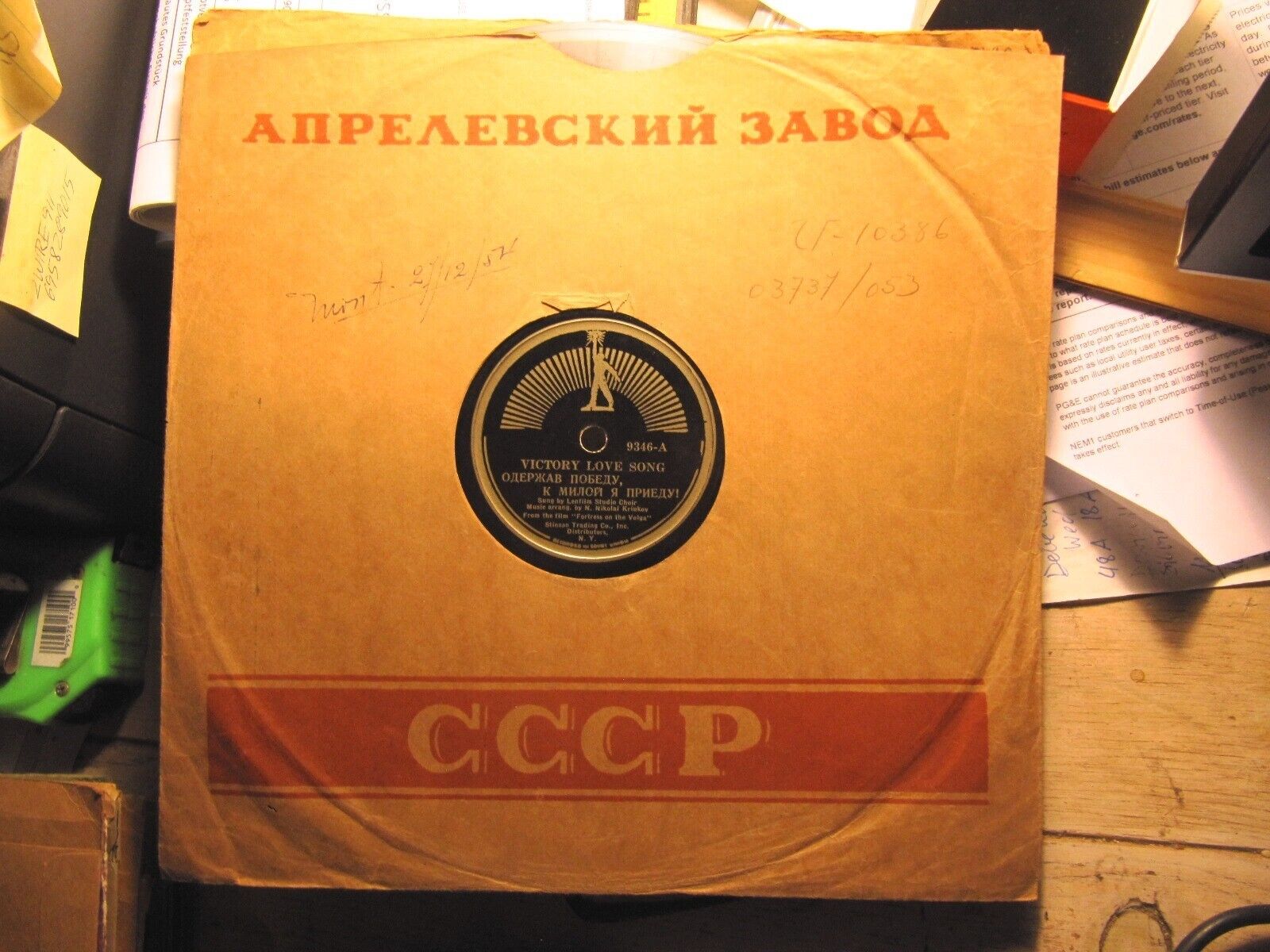
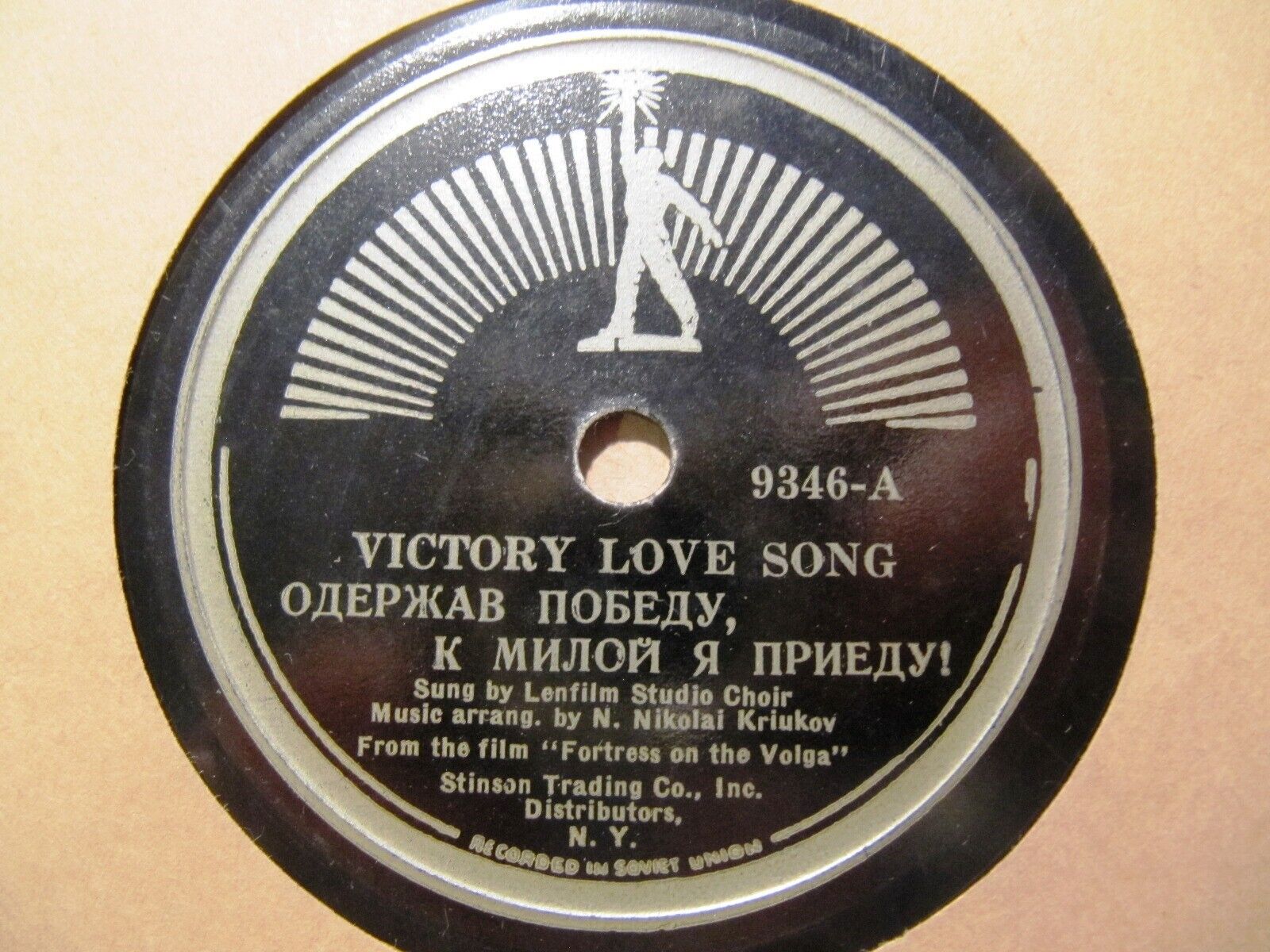
1942 UKRAINIAN Propaganda Movie VICTORY LOVE SONG SERGEI LEMESHEV Russian .
$
25


Favourite Auctions
To save auctions to your favourites, please login
If you don't have an account, please register
Description
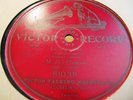
A series of great Russian, Ukrainian, Polish, Czech and Yugo-Slav Records from early G&Ts to World War II recordings on 78 rpm Victrola Records
Click this link for more Russian and Slavic Records in my other listings!
Click this link for more great Opera and Vocal Records in my other listings!
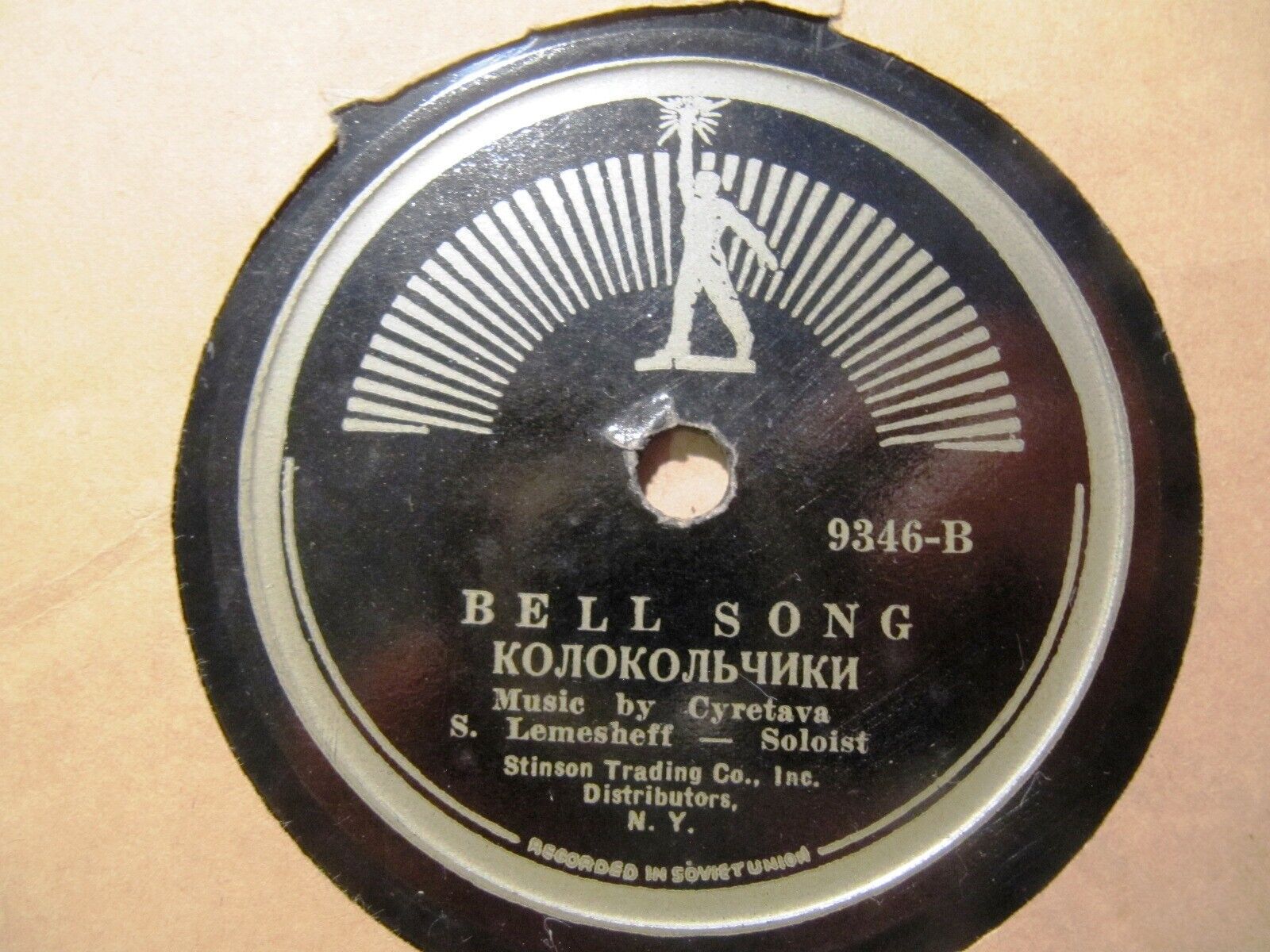
Soviet Russian recording issued during the war of famous Opera star Sergei Lemeshev.
He is arguably the greatest of Russian light tenors, with a fluid enchanting voice that puts Sobinoff to shame
The A side is from a 1942 Soviet propaganda movie of the Red Army liberating a Ukrainian town, something that never happened.
Here is what the label says:
9346-A (mx 9346-A) [= red 3009-B (?)] (phonogram of the film "Alexander Parkhomenko"; on the label
they mixed up the film: they called it "Fortress on the Volga", which is "Defense of Tsaritsyn")
Chorus and orchestra (on the label - Lenfilm studios, but this is unlikely)
Lizaveta ("We will win - I will come to you")
Here is the actual recording:
341
russian baritone with accordions
Lizaveta , song (Film «Aleksandr Parkhomenko») (Nikita Bogoslovsky, lyrics by Yevgeny Dolmatovsky)
Pyotr Kirichek, acc. F. Chorny, L. Chorny (accordions) 1943
4838
russian tenor with piano
The Little Bell (Kokolchik), song (Alexander Gurilev, lyrics by I.Makarov)
Sergey Lemeshev, acc. Semen Stuchevsky (piano) 1936
Please see top of the page for condition
Alexander Parkhomenko, (Russian: ????????? ??????????) is a 1942[1] Soviet adventure film directed by Leonid Lukov.[2]
Plot
The film tells the story of the life of Alexander Parkhomenko, the commander who served in times of civil war, which goes to Tsaritsyn and there, leading the "Red" battalions, forcing the enemy to leave the city.[3]
The portrayal of the actual participation of the Red army in Ukraine is questionable, as "the Red Army had never engaged the Germans, except for some minor skirmishes, let alone defeated them."
Peter Kirichek[1] (1902 — 1968) was a Soviet singer, a bass-baritone. After graduating from the Moscow Conservatory, he worked as a soloist at the Bolshoi Theater (1934–1944) and then mostly toured with programs devoted to romances and contemporary Soviet songs. He was awarded the title of Meritorious Artist of the RSFSR in 1960. Kirichek performed or recorded such songs as "March of the Soviet Tankmen" ("???? ????????? ?????????"), "Anthem of the International Union of Students" ("???? ?????????????? ????? ?????????"), "Goodbye, Rocky Mountains" ("????????, ????????? ????"). Composer Anatoly Novikov praised him as a real tribune and a real fighter who didn't care about the conditions under which he had to sing, who performed in factories, at field camps and on ships and gave about 1,500 concerts on the front line during the Great Patriotic War.
Lemeshev as Lensky in Eugene Onegin
Sergei Yakovlevich Lemeshev (Russian: ?????´? ?´???????? ??´?????; 10 July [O.S. 27 June] 1902 – 26 June 1977) was one of the most well-known and beloved Russian operatic lyric tenors.
Biography
Early Life and Career
Lemeshev was born into a peasant family, and his father wanted him to become a cobbler. In 1914, he left a parish school and was sent to be trained to make shoes in St Petersburg. In 1917, he graduated from school in Tver, where he received vocal training. He began first at a local workers' club and later moved to Moscow.
Between 1921 and 1925, he studied at the Moscow Conservatory with Nazari Raisky. In 1924, he sang in the opera studio of Konstantin Stanislavsky. From 1926 and 1931, he sang in the theatres of Sverdlovsk, Harbin, and Tbilisi.
In 1931 Lemeshev was invited to the Bolshoi Theatre, made his debut and eventually became the theatre's soloist. His lyrical tenor of an unusually soft and light timbre almost at once brought him love and popularity among admirers of the operatic art. Nevertheless, Lemeshev was a great worker and worked hard to develop each of his opera roles. His vocal and artistic qualities, evident to every listener, are beauty of timbre, musicality, effortlessness of vocal production, expressiveness, very clear diction and incredible pianissimo. The best years of his operatic career were from 1931 to 1942. He was also an outstanding concert singer and a brilliant performer of traditional Russian folk songs. In 1938, he became the first artist to sing all 100 romances by Tchaikovsky in 5 concerts. Folk songs broadcast on the radio further sealed his stature as a truly national singer.
Health
The beginning of the Great Patriotic War was crucial for Lemeshev; during one evacuation he caught a very bad cold which resulted in two attacks of pneumonia, complicated by pleurisy and tuberculosis of the right lung. He was treated with artificial pneumothorax, which induced the therapeutic collapse of one lung. Although singing was forbidden, he adapted by being more conscious and sensitive with regard to his technique, and continued to sing with one lung from 1942 to 1948, when the other lung was also artificially collapsed and re-inflated. During that period he recorded Lakme, The Snow Maiden, Les pêcheurs de perles, Mozart and Salieri and pieces from operas like The Barber of Seville and Rigoletto.
In 1947, he toured and performed at the Berlin State Opera. Along with his friendly rival, tenor Ivan Kozlovsky, he was the leading tenor at the Bolshoi until 1956.
Repertoire
Lemeshev's operatic repertoire consisted primarily of Russian works along with a particularly significant number of French and a few Italian and German pieces. Almost all works were performed in the Russian language. Unfortunately, very few complete recordings are available, with only excerpts available in spite of Lemeshev's numerous performances on stage in roles such as the Duke in Rigoletto and Almaviva in The Barber of Seville.
Rodolfo in La Bohème by Giacomo Puccini
Duke in Rigoletto by Giuseppe Verdi
Romeo in Roméo et Juliette by Charles Gounod
Almaviva in The Barber of Seville by Gioachino Rossini
Levko in May Night by Nikolai Rimsky-Korsakov
Alfredo in La Traviata by Giuseppe Verdi
Astrologer in The Golden Cockerel by Nikolai Rimsky-Korsakov
Vladimir Igorevich in Prince Igor by Alexander Borodin
Rodolfo in Luisa Miller by Giuseppe Verdi
Indian guest in Sadko by Nikolai Rimsky-Korsakov
Lohengrin in Lohengrin by Richard Wagner
Nadir in Les pêcheurs de perles by Georges Bizet
Doctor Faust in Faust by Charles Gounod
Tsar Berendei in The Snow Maiden by Nikolai Rimsky-Korsakov
Boyan in Ruslan and Ludmila by Mikhail Glinka
Prince Sidonal in The Demon by Anton Rubinstein
Dubrovsky in Dubrovsky by Eduard Napravnik
Gérald in Lakmé by Léo Delibes
Werther in Werther by Jules Massenet
Fra Diavolo in Fra Diavolo by Daniel Auber, among others.
Signature Role as Lensky in Eugene Onegin
Lemeshev's signature role was as Lensky in Eugene Onegin by Pyotr Tchaikovsky, and he performed it more than 500 times from 1927 onwards. He performed it for the last time on his 70th birthday, after suffering three heart attacks and having a lung removed.
Other Key Roles
In 1953 Lemeshev was given the prestigious title People's Artist of the USSR. He was also appointed assistant manager of the Bolshoi from 1957 to 1959. He debuted as director in 1951, with the production of La Traviata in the Maly Opera Theatre in Leningrad (now known as the Mikhaylovsky Theatre). Following this, he was made director for the production of Massenet's Werther in 1957 at the Bolshoi.
Toward the end of his career, he mainly gave concerts of Russian classic romances and folk songs, with performances aired on the radio, and taught in the Moscow Conservatory as associate professor.
He was buried in the Novodevichy Cemetery in Moscow.
Lemeshev-mania
Lemeshev's talent, artistry, acting skills and conspicuous charm very quickly made him a public idol. Almost all his performances during the 1930s and 1940s were accompanied by crowds of fans following him through the streets, spending days and nights near his house. [1]
While Lemeshev was one of the leading tenors of the Bolshoi Theatre, he was admired by female fans, who were jokingly called "lemeshistki." The theatre lobby was a venue for scuffles between the "lemeshistki" and the "kozlovityanki" (female fans of Lemeshev's rival Ivan Kozlovsky).[2]
Additionally, the film "The Musical Story" (1941) [3] in which he played the main role, brought him the Stalin prize, and even more widespread furore and fame all over the USSR.
Personal life
Six marriages and numerous affairs focused the attention of Lemeshev's fans on his personal life. His fourth wife was the famous soprano Irina Maslennikova, who gave birth to Lemeshev's daughter Maria. Ultimately, he found his life partner in singer Vera Kudryavtseva. Their marriage lasted for over 20 years, until Lemeshev's death in 1977.
Legacy
He authored the book "The Way to Art", published in 1968.
Asteroid number 4561 received the name Lemeshev in 1978, a year after Sergei Lemeshev's death.
price rating